 Osaka City Guide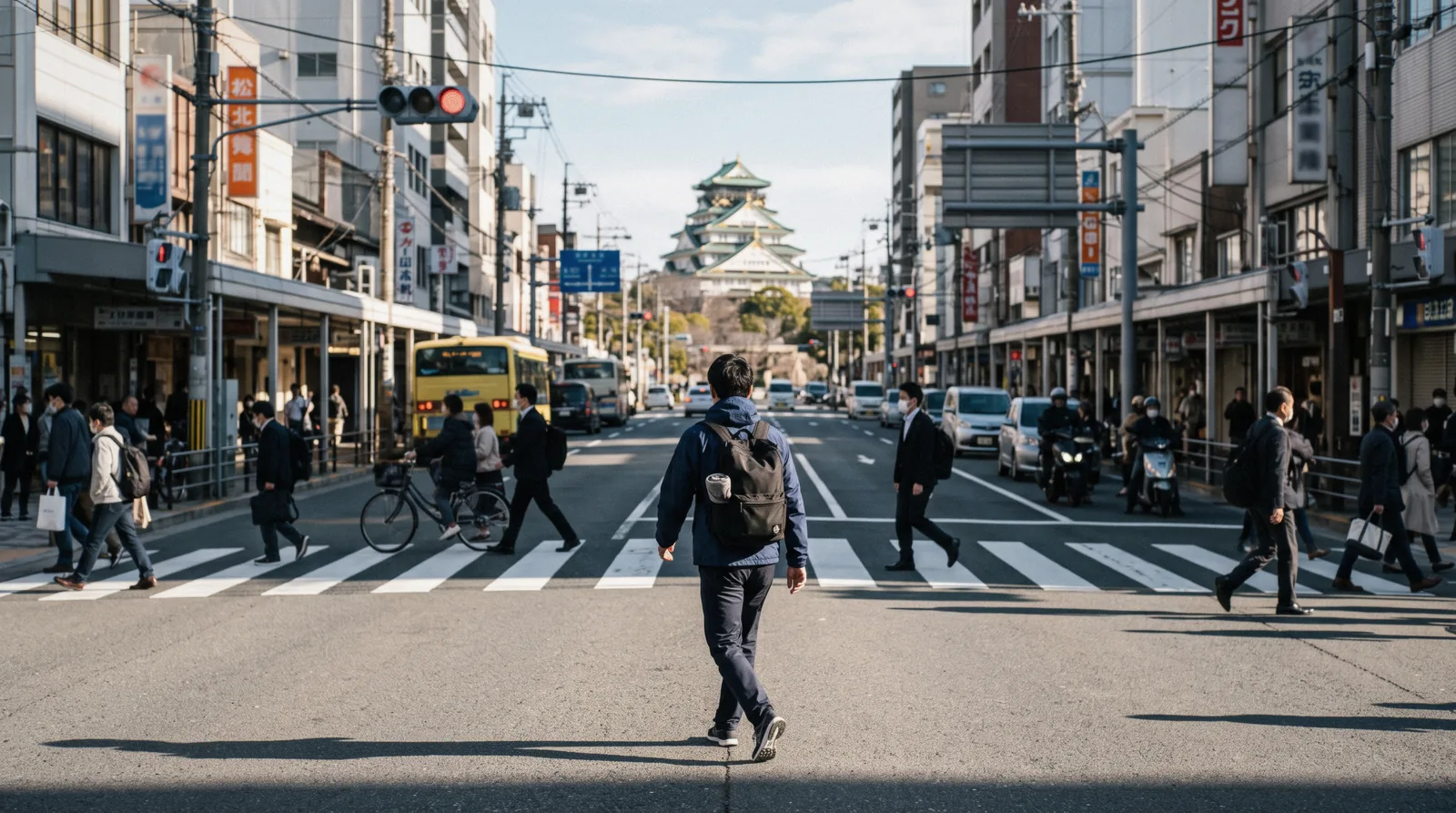
Osaka in 1 Day
Osaka in 1 day is a route problem, not a shortlist problem. The city's headline sights sit on one north-south line — the castle at the top, the canal and the arcades in the middle, the tower and the tall deck at the bottom — and the whole plan turns on three published hours: Osaka Castle does not open its keep until 09:00 and stops admitting at 17:30, Tsutenkaku now sells nothing but timed entry, and the observation decks stay open long after everything else has shut. Build the day in that order and you walk downhill through the city with the light; build it the other way and you queue. Every figure below is the venue's own, with dollar glosses at ¥1,000 ≈ $6.27 — the European Central Bank reference rate of that day. The longer versions are two days and three; the city as a whole is covered by top places to visit in Osaka.
Quick answer The route, the cost, the one thing to book — in four lines
Osaka Castle keep at 09:00, the Museum of History across the road at 10:45, Kuromon Ichiba for lunch, Dotonbori and Hozenji Yokocho in the early afternoon, Shinsekai and a booked Tsutenkaku slot at 15:15, the Abeno Harukas deck for sunset and the canal again after dark. About six kilometres on foot, four Metro hops and roughly $38.20 (¥6,090) in admissions and fares before food. Hours are the venues' own.
Key takeaways
- Only one thing on this route sells a time: Tsutenkaku requires a timed reservation for every ticket, so buy that slot before you leave the hotel
- The castle keep is $7.52 (¥1,200) and takes no admission reservations at all — the 09:00 opening is the whole reason this day starts where it does. What the ticket window sells
- Buy the Abeno Harukas ticket online by the day before and it is $12.41 (¥1,980) rather than $13.79 (¥2,200) — a 10% saving the walk-up counter will not give you. The deck compared
- Short on nerve for the navigation? A guided castle hour at $17.79 covers the one stop where a queue can eat the morning
How this one-day route is built
Three published hours decide the order. Everything else in the day is negotiable around them.
Rule one: the castle sets the start. The Tenshukaku keep opens at 09:00 and closes admission at 17:30 (osakacastle.net), and the castle states plainly that it takes no admission reservations — there is no timed ticket, no skip-the-line door, nothing to buy that moves you up the queue. The only lever you have is the hour you arrive. At nine there is no line at all; by eleven the coach groups are in and the ticket window is the slowest twenty minutes of your day. That single fact rewrites most one-day plans you will read, because they start in Namba at ten and reach the castle at two.
Rule two: walk south with the day. From the castle the city descends in a straight commercial line — Nippombashi and the Kuromon market arcade, then Dotonbori and the canal, then Shinsekai and the tower, then Tennoji and the tall deck. Each of those hops is one or two Metro stops at the ¥190–¥240 zone fare, and each district is busier and better lit than the last, so the route gets more interesting as the light goes.
Rule three: end high. Abeno Harukas 300 runs to 22:00 with last admission at 21:30, and Umeda Sky Building to 22:30 with last admission at 22:00. Both are still open long after the castle, the market and the museums have shut, which makes an observation deck the only sensible way to spend the hour after sunset — and makes it a waste of the middle of the day.
What this day deliberately leaves out
Universal Studios Japan and Osaka Aquarium Kaiyukan are both excluded, and neither omission is an oversight. USJ is a whole day by design — a 1-Day Studio Pass starts at $52.70 (¥8,400) and the park's own calendar was showing 09:00–20:00 when we read it — so it replaces this itinerary rather than joining it. Kaiyukan sits out on the bay at Osakako, twenty-odd minutes and a ¥290 zone-3 fare from the centre, and its own recommended visit runs long enough that fitting it in costs you the castle. Both are in the two-day plan, where they have room.
Also out: the day trips. Kyoto is 29 minutes and ¥580 away on the JR Special Rapid, Nara 38 minutes and ¥680 on the Kintetsu Express, and both are genuinely close — which is exactly why people ruin a single Osaka day by trying to add one. If you have one day and you spend three hours of it on trains, you have not seen Osaka; you have seen a station.
What the day costs before you eat
Four admissions, four Metro hops and one decision about a pass. These are the venues' own published figures, glossed at ¥1,000 ≈ $6.27; the yen figure is the one the ticket window charges.
The running total below is the full route as written, with the Abeno Harukas web-advance rate rather than the walk-up. Metro fares are the operator's zone bands — ¥190 up to 3 km, ¥240 to 7 km, ¥290 to 13 km — applied to the length of each hop; the machine at the gate prints the exact figure, and every one of this route's hops falls in the first two bands.
| Item | Yen | USD gloss | Running total |
|---|---|---|---|
| Osaka Castle keep | ¥1,200 | about $7.50 | ¥1,200 |
| Osaka Museum of History, permanent exhibition | ¥600 | about $3.75 | ¥1,800 |
| Metro, castle to Nippombashi (zone 1) | ¥190 | about $1.20 | ¥1,990 |
| Metro, Namba to Ebisucho (zone 1) | ¥190 | about $1.20 | ¥2,180 |
| Tsutenkaku, timed ticket | ¥1,500 | about $9.40 | ¥3,680 |
| Metro, Dobutsuen-mae to Tennoji (zone 1) | ¥190 | about $1.20 | ¥3,870 |
| Abeno Harukas 300, web advance | ¥1,980 | about $12.40 | ¥5,850 |
| Metro, Tennoji back to Namba (zone 2) | ¥240 | about $1.50 | ¥6,090, about $38 |
Does a pass beat paying at the gate?
Two of them are worth the arithmetic, and the answer is different for each.
The Osaka Amazing Pass is $21.90 (¥3,500) for one day in its standard form — the ¥3,800 version is the Itami Airport edition, and the tourism bureau's own comparison table still prints an out-of-date ¥2,800, so take the pass's own page. It covers Metro and city buses plus free entry, once each, at 41 listed attractions. Three of this route's stops are on that list as the pass prints it: the castle keep, the Museum of History and the Tsutenkaku deck. That is ¥3,300 of admissions plus about ¥810 of Metro — call it ¥4,110 of value against a ¥3,500 price, so the pass wins by roughly $3.82 (¥610) and buys you the freedom to add the Tombori River Cruise or the HEP Five wheel for nothing. Abeno Harukas is not among the venues the pass's own free list names to us, so price that ¥1,980 separately either way. One trap worth knowing: a pass "day" runs 03:00 to 02:59, not 24 hours from activation.
The Enjoy Eco Card is the transport-only alternative at ¥820 on a weekday and ¥620 at weekends and on public holidays. This route's four hops come to about ¥810, so the weekday card is a wash and the weekend card saves you around ¥190 — real, but not a reason to change anything. The Osaka e-Pass at ¥2,000 covers entries only, with no transport and a rule that you must wait 30 minutes after leaving one attraction before entering the next; on a day this tightly timed, that waiting rule is a liability rather than a bargain. Full comparison on the tickets page.
Morning: the castle and the ground it stands on
Walking times are ours, paced at an ordinary walk from the map distances; admissions and opening hours are the venues' own. The morning is two stops and about 1.5 km on foot.
-
Osaka Castle keep
$7.52 (¥1,200)Tanimachi 4-chome station on the Tanimachi and Chuo lines, then ten minutes through the Otemon gate and across the inner moat. Be at the ticket window at nine: the keep opens then, the castle sells no timed ticket and takes no reservation of any kind, so arrival time is the only queue-management tool that exists here.
Inside, the lift runs up only, as far as floor five, and everybody walks the rest — floors five to eight up and eight to one down are stairs. Wheelchair users and anyone who cannot manage them get the lift in both directions on every floor; ask at the gate. There are no coin lockers in the keep, but the ticket window checks a bag for ¥100 an item between 09:00 and 17:30, and you must collect by 18:00.
Give it 75 minutes: the top-floor gallery, the eighth-floor balcony for the view down Otemae-dori, and the walk back out along the moat. If the trees are the point of your visit, the Nishinomaru Garden below the keep went from ¥200 to $1.88 (¥300) on 1 April 2026, with ¥350 kept for the cherry-blossom evening openings — and nobody publishes its opening hours at all, because the park operator's own site is still an unfinished template with placeholder text in every content slot. That absence is the honest answer; ring the park centre if the garden is the reason you came.
walk about 12 min to next
-
Osaka Museum of History
$3.76 (¥600)Directly across the junction from the castle's south-west corner, which is the entire reason it is on a one-day plan: it costs you eight minutes of walking and gives the castle its context — the Naniwa Palace excavation is under the building, and the tenth-floor windows look straight back at the keep you have just climbed.
¥600 for the permanent exhibition, 09:30–17:00 with last admission at 16:30, closed on Tuesdays (the next day when the Tuesday is a public holiday) and 28 December to 4 January. Allow an hour. There is a free Naniwa Palace site tour included with admission at 14:00 and 15:00, twenty places, first come — not compatible with this route, but worth knowing if you reshuffle the day.
The combined castle-and-museum ticket that half the internet still recommends was withdrawn on 27 December 2024, and the castle's Aqua-bus set went on 24 March 2025. Do not go looking for either at the window.
If it is Tuesday, skip this stop and put the hour into the castle park instead — the closed-day table below has the swap.
Afternoon and evening: market, canal, tower, deck
Five stops, four short Metro hops and about 4.5 km of walking. The order is fixed by two things — the market trades in the middle of the day and the deck is at its best after sunset.
-
Kuromon Ichiba for lunch
Free to walk; counters roughly $3.14 (¥500)–$12.54 (¥2,000) a plateOne Metro stop from Tanimachi 4-chome down the Tanimachi line to Nippombashi, ¥190, and the arcade starts at the station exit. About 580 metres of covered market and around 150 shops, on the tourism bureau's own count — its other page says almost 170, which tells you how firm the counting is.
Here is the thing nobody prints honestly: the market publishes no hours and no closed day. The bureau's entry says only "varies by location" for both, and the market association's own site could not be read at all — it sits behind a bot challenge that refused every browser we tried. So every "09:00 to 18:00, closed Sundays" you have read is somebody's guess. What is safe is the middle of the day: the counters that cook for visitors are working through lunch, and an arrival between about eleven and two is the version of this stop that reliably works.
Eat standing at the stall you bought from. There is no published Osaka rule against eating as you walk — we looked, and no district publishes one — but there is a rule that bites: street smoking has carried a ¥1,000 fine city-wide since 27 January 2025, heated tobacco included, and the arcades are exactly where people forget it.
walk about 9 min to next
-
Dotonbori and Hozenji Yokocho
Free to walk; the river cruise from $12.49Nine minutes west through Sennichimae and you are on the canal. Do the daylight version now and come back after dark — this route brings you past twice, and the two visits are genuinely different places.
The canal is not a natural feature: the tourism bureau credits Doton Yasui, "who devoted his wealth to have this river excavated in 1612". On the sign everyone photographs, the honest position is that nothing official is published — not its height, not which generation is lit, not its switch-on time. The bureau lists it among "giant three-dimensional signs" and stops there, and every precise figure in circulation comes from a blog.
Step two minutes south into Hozenji Yokocho, a flagstone alley that the bureau does not even mention on its Dotonbori page. The moss-covered Mizukake Fudo takes a ladle of water rather than a coin, and the lane is thirty seconds off a street with a million people on it.
If the twenty-minute Tombori River Cruise appeals, it is free on the Amazing Pass and about $12.49 on its own — and it is the one thing here that is better at dusk than at two in the afternoon.
walk about 6 to Namba station min to next
-
Shinsekai and the Tsutenkaku tower
Tower $9.41 (¥1,500); the streets freeMidosuji line from Namba to Daikokucho, then the Sakaisuji line one stop to Ebisucho, or simply walk it in about 25 minutes; either way it is a ¥190 zone-1 fare. The district dates from 1903 and the 5th National Industrial Exposition, and it has been Osaka's loud, unfashionable, deep-fried quarter ever since.
Tsutenkaku is the one booking on this whole itinerary. The tower now requires a timed-entry reservation for every ticket — the general and special outdoor decks are sold only as a ¥1,500 set, and even Amazing Pass holders have to book a time at the counter on arrival. Evening slots go first. Hours are 09:00–21:45 with last admission at 21:15 (21:35 for the open deck), and the tower publishes no closed days at all, announcing any unscheduled closure only on its official X account.
Underneath it, Janjan Yokocho runs about 130 metres and holds roughly 50 places, most of them kushikatsu counters. The rule there is famous and real: one dip in the communal sauce, never two. Cabbage is free and is what you use to scoop more.
Holding a Tsutenkaku ticket also gets you into Tennoji Zoo for ¥720 instead of ¥800, valid to the end of the following month — irrelevant today at half past three, useful if you restructure.
walk about 10 to Dobutsuen-mae min to next
-
Abeno Harukas 300 for sunset
$12.41 web advance (¥1,980); $13.79 (¥2,200) walk-upTen minutes down to Dobutsuen-mae, one Metro stop to Tennoji, ¥190, and the tower is on top of the station. ¥2,200 at the counter, ¥1,980 if you buy online by the day before — the fee was revised on 23 July 2026, so any figure you read from before that date is stale. Open 09:00–22:00, last admission 21:30.
The practical warning is about the walk-up: it is sold only at the 16th-floor counter, first come, and the venue reserves the right to suspend it or issue numbered tickets on busy days. Ten minutes of phone work the night before removes that risk and saves ¥220 as well.
The deck is glass on three levels with an open-air atrium in the middle, and at 300 metres it looks down on everything in this itinerary at once — the castle to the north-east, the canal in the middle distance, the bay behind it. There is a ¥3,000 EDGE THE HARUKAS harness walk on the outside of the building and a ¥1,500 heliport tour sold at the 60th-floor counter, if you want a bigger evening than the one this route plans.
One caveat on the view: nobody publishes a visit duration for this or any other Osaka venue except the Science Museum's 45-minute planetarium show. Forty minutes is our routing, not the venue's.
walk about 5 to Tennoji station min to next
-
Dotonbori after dark
Dinner $9.41 (¥1,500)–$25.10 (¥4,000); a guided food walk from $53.37Midosuji line back from Tennoji to Namba, ¥240, about eight minutes. The canal at night is what everybody came for, and the reason it is last rather than first is simply that it is the only stop on this list with no closing time.
The two dishes Osaka is searched for cannot honestly be pinned to a named shop on this site. The MICHELIN Guide's 2026 Bib Gourmand selection for Osaka runs to 67 addresses and contains no takoyaki and no okonomiyaki venue at all — the closest street-food genres it recognises here are kushiage and tonkatsu. So: eat the takoyaki from the counter with the queue of office workers rather than the one with the English photo menu, and understand that the recommendation is the street, not the shop.
If a first evening in a new city is not the moment to gamble, a two-hour Dotonbori tasting walk at $53.37 does the choosing for you and rates 4.6 on the platform's own reviews.
Still got legs at ten? Umeda Sky Building admits until 22:00 and closes at 22:30 — it is the only open-air deck in the city, and a ¥240 Metro hop from Namba. That is the ending this route gives you if the weather is clear.
If your day lands on a Monday or a Tuesday
Osaka's closed days do not agree with each other, which is the single most common way a one-day plan collapses. These are the venues' own published closures, read on in Q3 2026, with the swap we would make and what it costs.
| Venue | Closed | What we would do instead | Cost of the swap |
|---|---|---|---|
| Osaka Museum of History | Every Tuesday | Stay in the castle park: Nishinomaru Garden and the outer bailey, then start the market hour early | $1.88 (¥300) instead of $3.76 (¥600) |
| Cup Noodles Museum, Ikeda | Every Tuesday | Not on this route anyway — it is a Hankyu ride out of the city, so save it for three days | Free either way |
| Tennoji Zoo | Every Monday | Shitennoji's central precinct, ten minutes north — but it stops admitting at 16:00 | $3.14 (¥500) instead of $5.02 (¥800) |
| Osaka Science Museum and the National Museum of Art | Every Monday | The bay instead: Osaka Aquarium Kaiyukan has no weekly closure at all | $17.56 (¥2,800)–$21.90 (¥3,500) instead of $2.70 (¥430)–$3.76 (¥600) |
| teamLab Botanical Garden | Irregular Mondays — 14 and 28 September, 26 October 2026 | The Tsutenkaku deck after dark, which this route already books | $9.41 (¥1,500) instead of $11.29 (¥1,800)–$15.05 (¥2,400) |
Nothing on the core route — the castle, the market, the canal, the tower, the deck — has a weekly closed day. The castle shuts 28 December to 1 January and the Museum of History 28 December to 4 January; those are the only calendar dates that break this itinerary outright.
Three versions of the same day
The route above is the default. Two common arrival patterns and one weather problem need a different shape, and all three reuse the same stops.
If you arrive at Kansai Airport in the morning
The transfer is the first decision and it is worth getting right, because the wrong one costs an hour of a day you only have one of. The Nankai Airport Express reaches Namba in about 44 minutes at the base fare with no surcharge and no reservation — that is the option we would take. The Rapi:t limited express does the same run in about 34–38 minutes for ¥700 more, or ¥1,560 all-in on the Kanku Toku-wari ticket sold at station counters. JR's discounted HARUKA is ¥1,800 to Osaka or Shin-Osaka for passport holders. The limousine bus is ¥1,400 to Namba in 50 minutes and ¥1,800 to Umeda in 60.
With a 09:00 landing you will not make the castle at nine. Invert instead: leave the bags in a locker or at a staffed counter — Metro's smart lockers at Hommachi and Nipponbashi run ¥300 for three hours in the small size and ¥900 for 24 hours, and n·e·s·t at Nankai Namba takes a bag for ¥800 a day — then do the market and the canal first, the tower mid-afternoon, the castle from about 15:30 (it admits to 17:30) and the deck at closing time. One warning about the pass: the Osaka Amazing Pass is not valid to or from Kansai Airport, so buying it for the airport leg is money thrown away.
If you are day-tripping in from Kyoto
This is the most-searched version of the day and the arithmetic is friendlier than people expect. JR's Special Rapid runs Kyoto to Osaka in 29 minutes for ¥580; the Hankyu Limited Express does Kyoto-kawaramachi to Osaka-umeda in 43 minutes for ¥410. Leave Kyoto at eight and you are at the castle gate by nine, exactly as written — the route needs no changes at all, only an earlier alarm.
What does change is the ending. Work back from your last train rather than from the deck: if you must be on a 21:30 departure, drop Abeno Harukas and put the canal at seven, or keep the deck and eat in Kyoto. Do not attempt both cities' evenings in one day.
The pass maths shift too. A Kansai Railway Pass Lite at ¥5,200 for two days covers the private railways but not JR and not the Kyoto Municipal Subway — and, unlike the old Kansai Thru Pass it replaced on 1 April 2026, no buses at all. For a single day trip, buy the ¥410 Hankyu ticket and stop thinking about it.
If it rains
Osaka's wet window is narrower than the reputation. The Japan Meteorological Agency's 1991–2020 normal puts the Kinki rainy season from about 6 June to about 19 July; in 2026 the confirmed table has it running from around 2 June to around 9 July, with rainfall at 116% of normal. Outside that, and outside the August–September typhoon months — nationally, JMA's normals give 3.3 approaches in each of those two months — a washed-out day in Osaka is bad luck rather than a season.
When it does rain, this route holds up better than most, because four of its seven stops are indoors or covered: the keep, the museum, the 580 metres of roofed market and the tower. The two to swap are the canal walk and the deck. Put the aquarium in the afternoon instead — it never closes weekly and its own e-ticket carries a date and a time — or take the Museum of History up to two hours rather than one. Do not buy the Harukas ticket in advance on a day of low cloud: a 300-metre deck inside a cloud is ¥1,980 of grey.
The five practical things that decide how this day feels
Small, checkable, and every one of them is something we watched a published source get wrong.
1. There is no free station wifi. Osaka Free Wi-Fi was withdrawn from every Metro, Kintetsu, Keihan and Nankai station on 31 March 2023 after the carriers pulled out, and no replacement was provided. The tourism bureau's own visitor page still says the opposite; the closure notice is newer and more specific. Non-station venues kept the service, and mobile coverage does reach every subway station and the tunnels between them. Bring an eSIM or a router and plan the day offline.
2. One IC card covers every operator you will touch. ICOCA works on JR West, Osaka Metro, Hankyu, Hanshin, Keihan, Kintetsu, Nankai and the buses. A physical card is ¥2,000 including a ¥500 deposit, cash only — the machines do not take credit cards. On iPhone you can skip the plastic entirely: ICOCA in Apple Wallet has worked with an overseas-issued card since 27 June 2023, with a ¥1,000 minimum first top-up. There is no Google Wallet ICOCA; Android needs a Japan-market handset with the Osaifu-Keitai app.
3. The castle checks bags, the tower does not lend lockers. ¥100 an item at the castle ticket window, collected by 18:00. If you are carrying luggage on a day-trip version of this route, deal with it before you start: Metro's smart lockers are free under an hour and ¥300 for three hours in the small size, and the staffed counters at Nankai Namba (¥800 a bag) and Crosta Osaka (¥1,000) will take it all day. Crosta will even deliver to one of 153 city hotels if you drop by 14:00.
4. Street smoking is fined. ¥1,000, city-wide, on roads, squares, parks and every other public place the city manages, since 27 January 2025 — heated tobacco included. The old six designated districts became the whole city.
5. Nobody publishes how long a visit takes. Not the castle, not the tower, not the deck. The only official duration in Osaka we could find is the Science Museum's 45-minute planetarium show. Every timing in this itinerary — 75 minutes for the keep, an hour for the museum, 40 minutes on the deck — is our routing, tested against the walking distances, and we say so rather than dressing it up as a venue figure. Since this itinerary is self-timed rather than venue-published, travellers who would rather hand the routing to someone else can compare the best tours in Osaka and pick a guided Osaka tour that covers the same stops.
Guided versions of this day, compared
Four of these are the same stops with someone else doing the navigating; two are single tickets that save a counter queue. Prices are the platform's own listings in US dollars, and they are what you pay at checkout — the yen figures elsewhere on this page are the venues' gate prices.
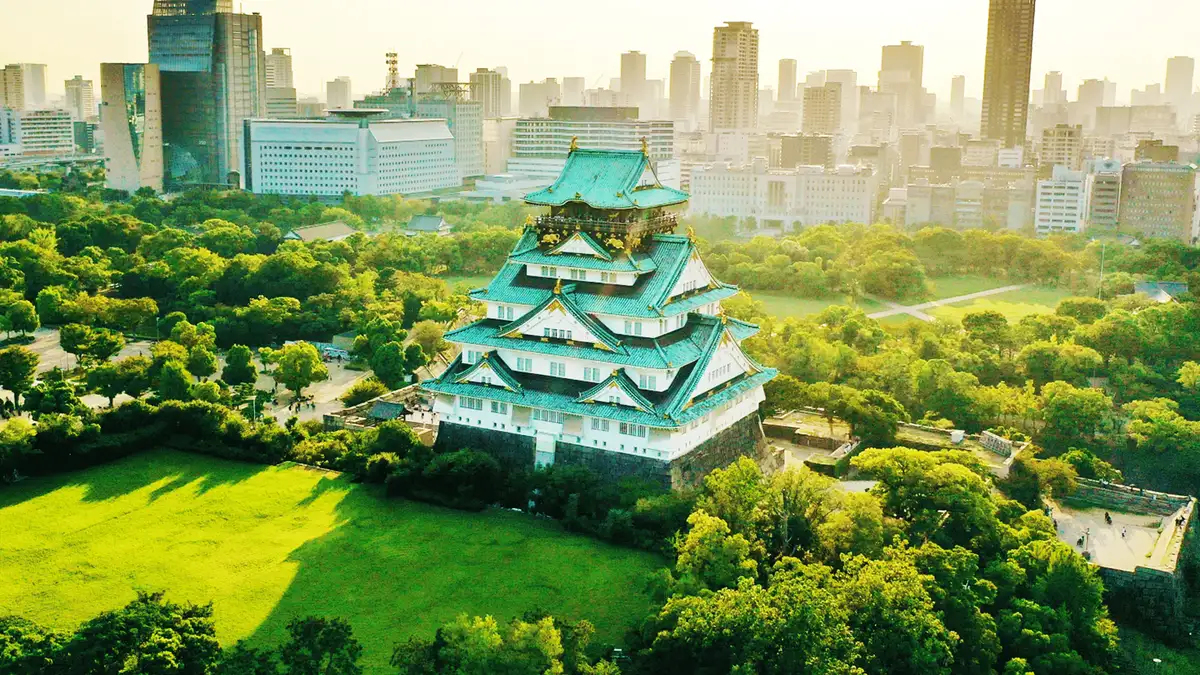 from $17.79
Osaka: Castle Tower Admission / Guided Walking Tour
An hour to 90 minutes through the keep's floors with the ¥1,200 admission included, so the guiding costs about ten dollars on top. Best rated of the castle group, and the museum's Japanese-heavy display captions are the reason a guide earns its fee.
Check Availability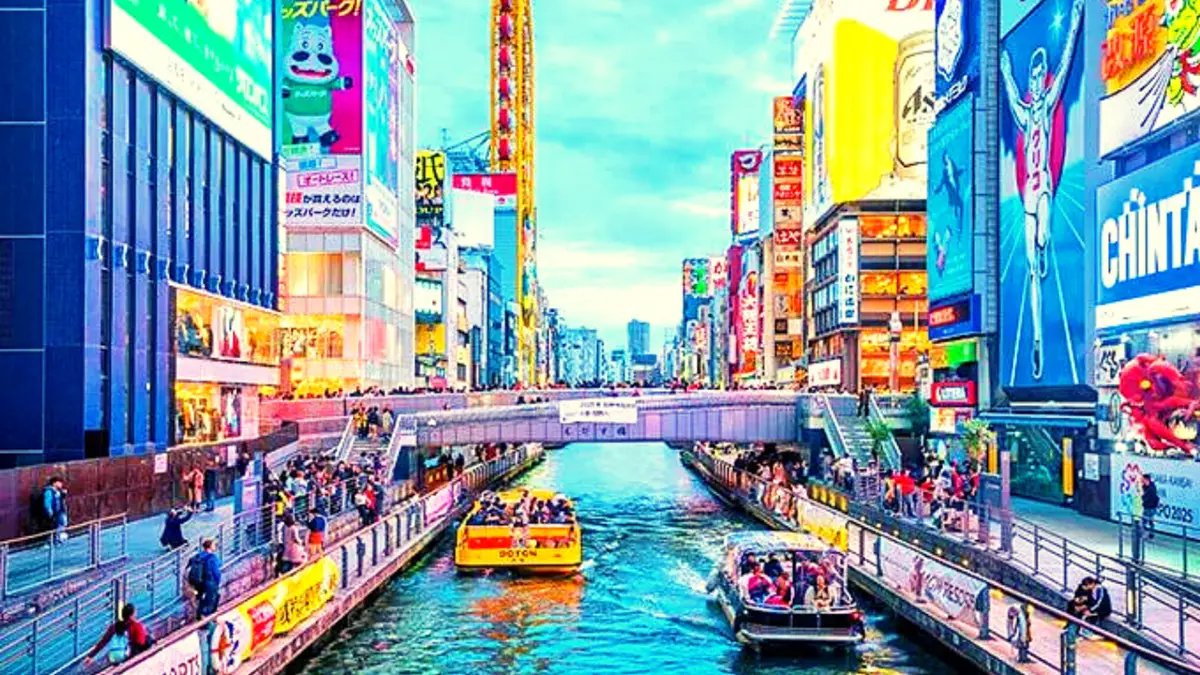 from $35.71
Osaka: Private or Group Hotspots & Hidden Gems Walking Tour
A three-hour walk that stretches to seven if you want it to, private or shared, with a takoyaki and a retro vending-machine drink included. The longer options use trains, which you pay for — usually under ¥1,000 a head.
Check Availability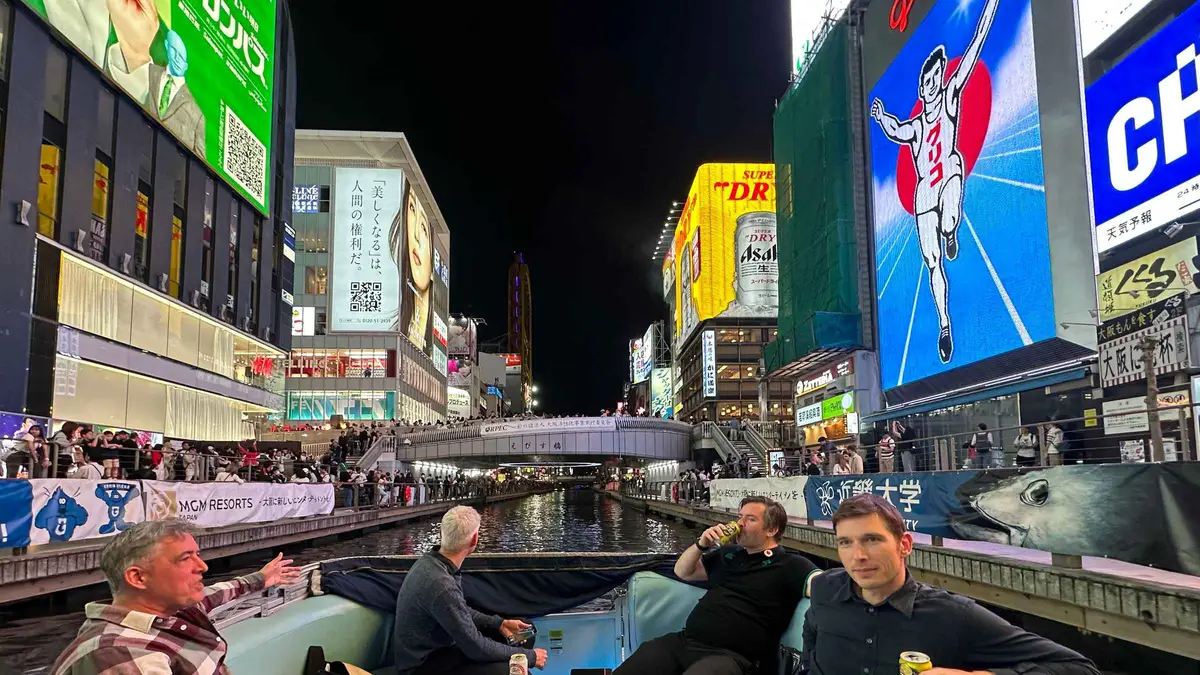 from $12.49
Osaka: Dotonbori River Cruise with Glico Sign & Neon Views
Twenty minutes on the water past the Glico sign, boarding at Minatomachi Pier rather than the Tombori River Walk, and you may bring your own drinks. The rival Tombori River Cruise is free with the Osaka Amazing Pass; this boat is not.
Check Availability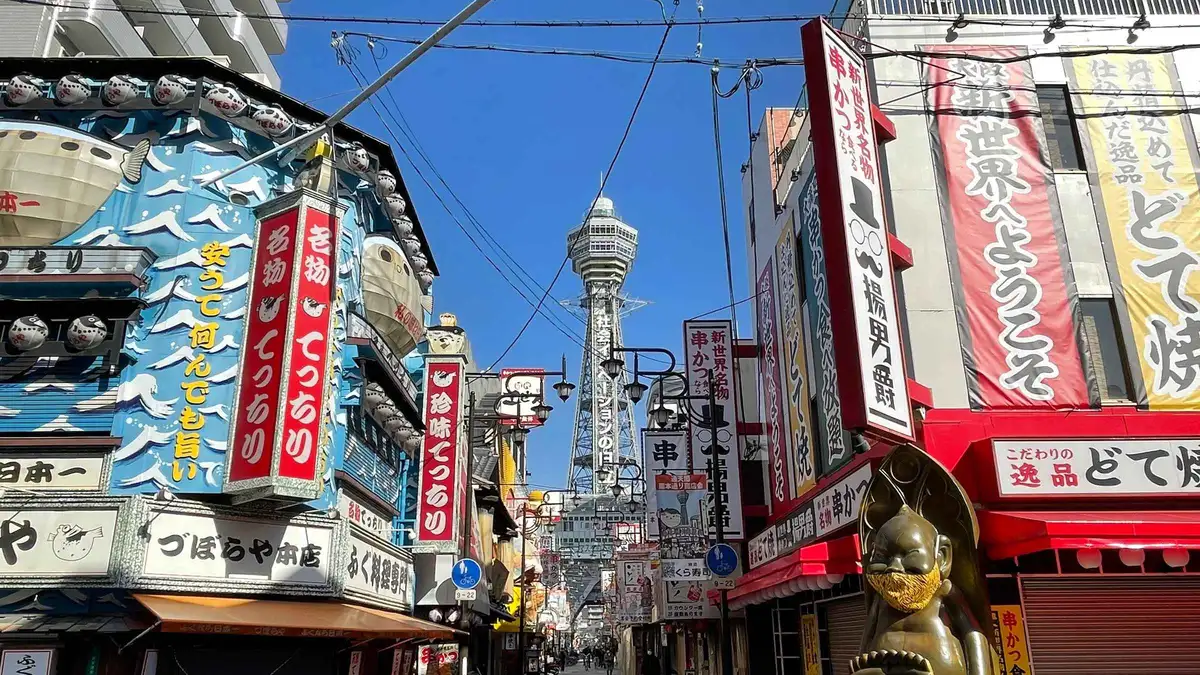 from $6.87
Official ticket
from $6.87
Official ticket
Osaka: Tsutenkaku Tower Experience Ticket
Options run from the 87.5-metre general deck up to the all-in ticket with the outdoor deck, the Tower Slider and Dive & Walk. The tower now requires a timed reservation for every ticket, pass holders included, so booking a slot is the point.
Check Availability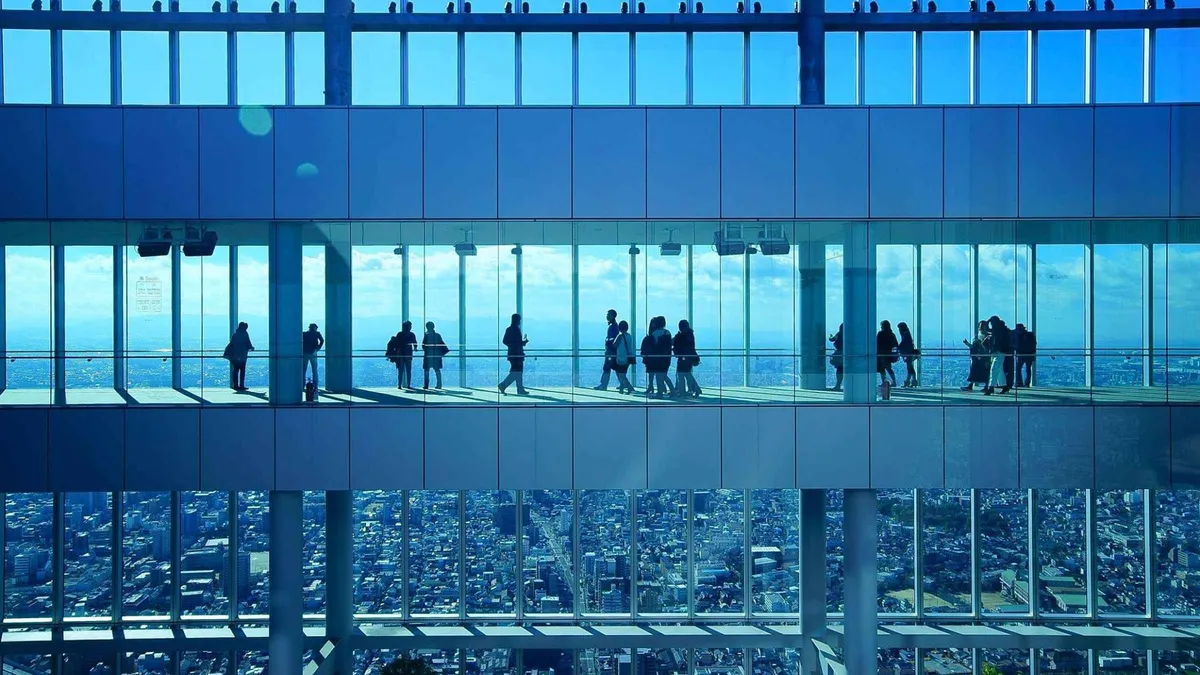 from $9.89
Cheapest way in
from $9.89
Cheapest way in
Osaka: Panoramic Observatory Abeno Harukas 300 E-Ticket
Admission to the 300-metre deck on Japan's tallest building, at roughly ¥1,580 against the venue's ¥1,980 web-advance rate and ¥2,200 walk-up. There is no timed slot, and the 16F counter can cap walk-up sales on busy days.
Check Availability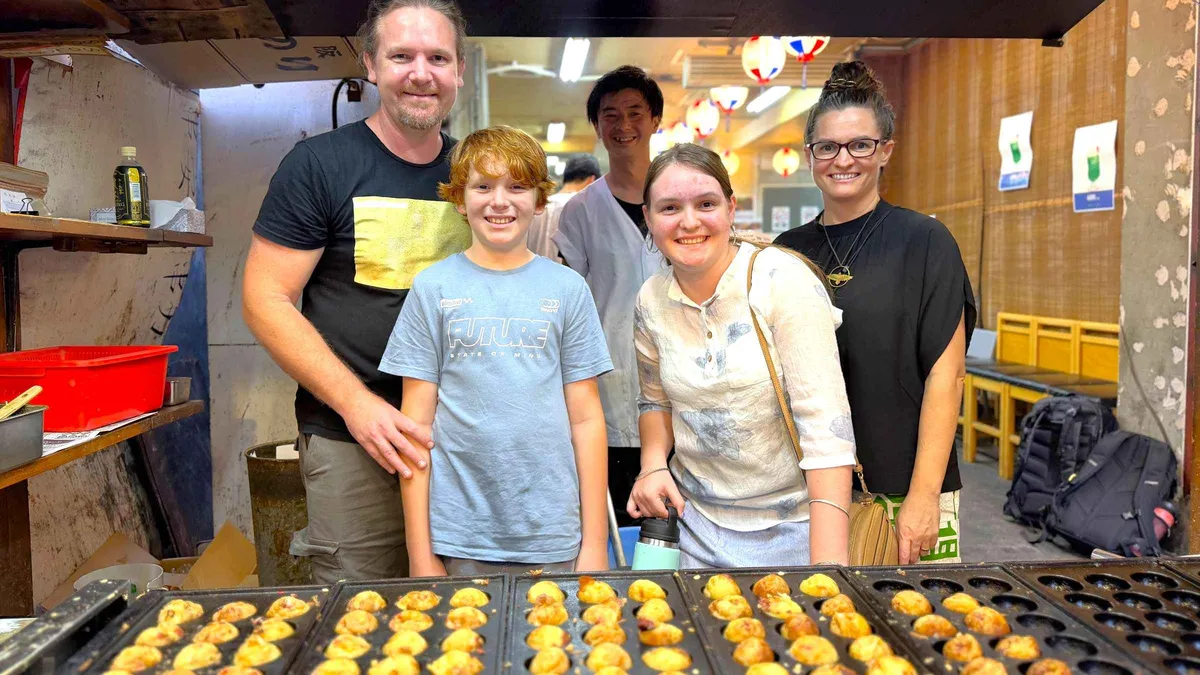 from $53.37
Osaka: Dotonbori Street Food Tour with Tastings
Two hours of street food along Dotonbori with a temple stop and the Glico sign, guide included. The listing never says how many tastings you get, which the 12- and 15-dish tours in this group do.
Check AvailabilityPrices, ratings and details are the platform's own. Dollar figures are the listed prices. The platform bills in your account's currency.
The one-day route, mapped
Seven stops in order, north to south, with the two Metro lines that connect them. Coordinates are the venues' own where they publish one; where they do not, the pin sits on the station or the district point named on that venue's page.
If you have longer, or less
What the same city looks like at two other lengths, and where the individual stops are written up in full.
Osaka in two days
Adds the bay and Kita: the aquarium at opening, the Tempozan waterfront, then the arcades and the open-air deck at Umeda in the evening.
Day twoOsaka in three days
Adds the southern temples, an evening at teamLab in Nagai and the choice between a day trip and a full day at Universal Studios Japan.
Day threeEvery sight, priced
The sights this route skips, each with its own gate price, its hours and its closed day, numbered to a city map.
The full listPasses and tickets compared
The Amazing Pass, the e-Pass and the Enjoy Eco Card set against the gate prices, with the arithmetic for each kind of day.
Before you goOne day in Osaka: the questions
Is one day in Osaka enough?
Enough for the spine of the city, not for its edges — and yes, it is worth going to Osaka for one day rather than skipping it. This route gets you the castle keep, the covered market, the canal, the tower and a 300-metre deck with time to eat properly twice, which is more than most visitors manage in two. What one day cannot hold is Universal Studios Japan, a full day by design at ¥8,400 and up, or the aquarium out on the bay, or any day trip. If those matter to you, you need the two-day version.
What time should a one-day Osaka itinerary start?
09:00, at the Osaka Castle ticket window. The keep opens then, it sells no timed ticket and it states that it takes no admission reservations of any kind — so the arrival hour is the only thing that decides whether you queue. Everything downstream of that stop is flexible by half an hour in either direction; the castle is not.
What has to be booked in advance for one day in Osaka?
One thing: Tsutenkaku, which now requires a timed-entry reservation for every ticket, pass holders included — and evening slots go first. Everything else on this route is pay-at-the-gate. Two are cheaper booked online, which is not the same as required: Abeno Harukas is ¥1,980 rather than ¥2,200 if you buy by the day before, and the aquarium prices by date and recommends a dated e-ticket, though it is not on this itinerary.
How much does one day in Osaka cost?
About ¥6,090, roughly $38, for the full route as written — four admissions and four Metro hops, before any food. With the Osaka Amazing Pass at ¥3,500 carrying the castle, the museum and the tower, plus the ¥1,980 Harukas ticket bought separately, the same day is about ¥5,480 or $34. Add ¥2,000–5,000 for two meals. Figures are the venues' own, at ¥1,000 ≈ $6.27.
How much walking is in this one-day Osaka route?
About six kilometres, spread across seven stops, plus four Metro hops that total roughly ¥810. Nothing on it is steep. The one physical demand is inside the castle keep, where the lift runs up only as far as floor five and everyone else takes the stairs to eight and back down to one — wheelchair users and anyone who cannot manage that get the lift both ways on all floors if they ask at the gate.
Can you do Osaka in one day from Kyoto?
Yes, and the trains make it easy: 29 minutes and ¥580 on JR's Special Rapid, or 43 minutes and ¥410 on the Hankyu Limited Express. Leave Kyoto by eight and this route runs exactly as written from the 09:00 castle gate. The change to make is at the other end — work backwards from your last train rather than from the sunset deck, and pick one city's evening rather than trying for both.
Which day of the week is worst for one day in Osaka?
Tuesday, narrowly, because the Museum of History and the Cup Noodles Museum both close; Monday takes out Tennoji Zoo, the Science Museum and the National Museum of Art. None of those breaks the core route — the castle, the market, the canal, the tower and the deck have no weekly closure between them — but the swap table above sets out what to do with the hour either way.
One day in Osaka, on film
Three videos we checked ourselves: each id was verified against YouTube's own record and its thumbnail, so none of them is a dead player. They load only when you press play.
1 DAY OSAKA ITINERARY 🐙 Japan Travel Guide 🇯🇵
A single day run end to end, at the pace a visitor actually moves.
Video: Sunny in JapanOsaka 1 Day Itinerary (13 Iconic Spots in 24 Hours)
The maximalist version — useful for seeing what gets lost when you add stops.
Video: Trip MoitoHow to Spend One Day in Osaka, Japan 🇯🇵 What to Do, See & Eat!
Heavier on the eating half of the day than this page is.
Video: Jay and KarolinaVideos load from YouTube only when you press play.
Prices, hours and terms are set by the venue or operator and confirmed at checkout.
We may earn a commission if you book through one of our links, at no extra cost to you. Full affiliate disclosure