 Osaka City Guide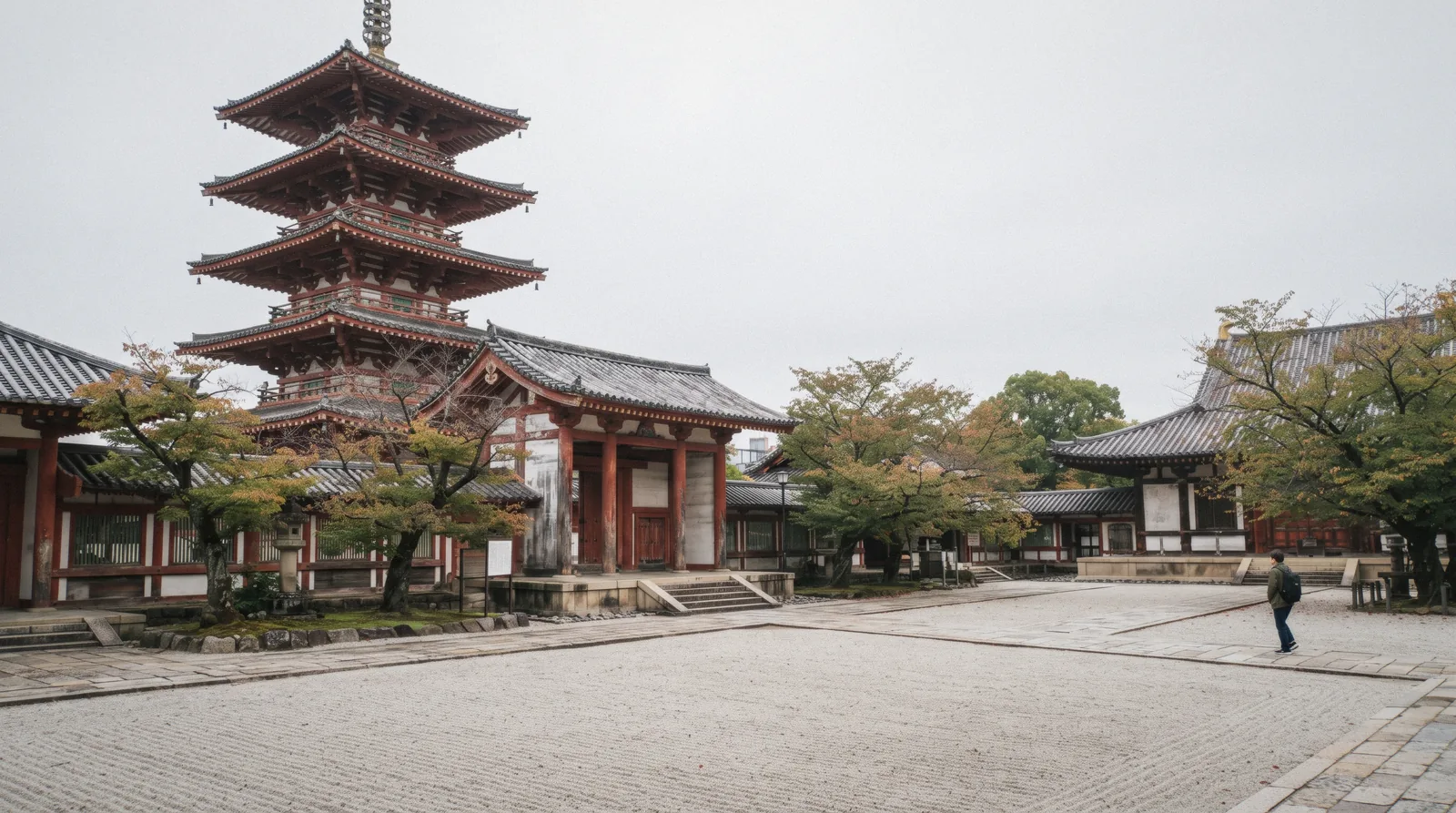
Shitennoji Temple
Shitennoji was founded in 593 and is usually described as the first Buddhist temple the Japanese state ever built — and the first thing most visitors notice is that it looks nothing like a 1,400-year-old monument. The temple has burned, been bombed and been knocked down by a typhoon; the pagoda and halls you photograph were rebuilt in reinforced concrete in 1963 to the original Asuka-period plan. The other thing nobody warns you about is the ticketing: the grounds are free and the gates never close, but three separate counters sell three separate tickets, and on two days of every month the most expensive of them is given away. This page prints what each part costs, the seasonal hours, and the days that change both. For the rest of the city, see top places to visit in Osaka.
Quick answer Free grounds, three paid halls, two free days a month
Shitennoji charges nothing to walk in and its gates stand open 24 hours a day, so the pagoda, the Great South Gate and the stone torii cost you nothing at any hour. Money buys three things and they are sold separately: the walled Central Precinct at $3.14 (¥500), the Gokuraku-jodo garden at $1.88 (¥300) and the Treasure Hall at ¥500. Halls open 08:30 and close 16:30 from April to September, 16:00 from October to March. Yen figures convert at ¥1,000 to about $6.27, the European Central Bank reference rate the same day.
Key takeaways
- On the 21st and 22nd of every month, and during the spring and autumn equinox services, the temple opens the Central Precinct free — the two days that change the price
- There is no online ticket and no combined ticket: you pay at each hall's own counter, in cash, and the table below shows which of the three is worth it if you only buy one
- Shitennoji is on the free-entry list of the city sightseeing pass, which is the one way the precinct becomes part of a bigger ticket
- No operator sells a temple tour here, so the guided option is a private city walk you route yourself — the three-to-seven-hour private walk is the only one that will do it
Key facts
Opening hours
| Halls, Central Precinct and garden, April to September | 08:30–16:30 |
|---|---|
| Halls, Central Precinct and garden, October to March | 08:30–16:00 |
| Rokujido hall | 08:30–18:00 |
| Grounds and worship from outside the halls | 00:00–24:00 |
Closed None published for the precinct. The garden closes 12–14 January, 1–10 February, 1–10 March, 1–10 May, 1–10 June, 1–10 July, 1–10 September, 1–10 October and 1–10 November, and the Treasure Hall opens only for its exhibition periods
Admission
- Adult
- Central Precinct $3.14 (¥500) · garden $1.88 (¥300) · Treasure Hall $3.14 (¥500)
- Reduced
- High school $1.88 (¥300) / $1.25 (¥200) / $1.88 (¥300); elementary and junior high free in the precinct and the Treasure Hall, $1.25 (¥200) in the garden
- Free
- Kindergarten children, and a disability-certificate holder with one companion on an individual visit; the whole precinct is free on the 21st and 22nd of each month
Planning it
- Time needed
- Not stated by the temple; our routing: 45 minutes for the grounds and the precinct, 90 minutes if you add the garden and the Treasure Hall
- Address
- 1-11-18 Shitennoji, Tennoji-ku, Osaka 543-0051 (temple office 06-6771-0066)
Three counters, three tickets, and a fourth option that is not a ticket at all. Prices and hours were read on the temple's own admission page in Q3 2026.
The grounds are free around the clock, so the question is how much of the inside you want: $3.14 (¥500) for the Central Precinct, $1.88 (¥300) for the garden, $3.14 (¥500) again for the Treasure Hall — three separate counters, cash only.
| Option | Price | What it opens | Book | Book |
|---|---|---|---|---|
| Walk in — grounds, gates and halls from outsideAnyone passing; the pagoda, the gates and the halls read from outside the wall | Free, 24 hours | The whole temple site: pagoda seen over the wall, Great South Gate, Gokuraku-mon, stone torii, Rokujido | Nothing to book | Official site |
| Central Precinct (Chushin Garan)Visitors who want the pagoda, the Kondo and the lecture hall from inside the cloister | $3.14 (¥500) adult, $1.88 (¥300) high school, free below | Inside the cloister: the five-storey pagoda, the Kondo and the Kodo lecture hall | Counter only, cash | Official site |
| Honbo garden (Gokuraku-jodo no Niwa)A quiet half-hour in the Pure Land garden — check its own closed days first | $1.88 (¥300) adult, $1.25 (¥200) high school, $1.25 (¥200) elementary and junior high | The Pure Land garden behind the abbot's quarters, with its own closed days | Counter only, cash | Official site |
| Treasure HallOnly when an exhibition is running; the hall is shut between them | $3.14 (¥500) adult, $1.88 (¥300) high school, free below | The temple's own collection, open only during exhibition periods | Counter only, cash | Official site |
| Private city walking tour, 3 to 7 hoursThe only realistic way to be walked around this temple with a guide | From $35.71 | A guide and a route you set — the only realistic way to be walked around this temple | Free up to 24 hours before | Check Availability |
The Central Precinct fee has applied since 1 October 2024 and the Treasure Hall fee since 14 September 2024; tour prices are the platform's own USD listings. Nobody sells skip-the-line here because there is no line to skip: the counters are small wooden windows and the queue at each is rarely more than a few people. If you buy one ticket, buy the Central Precinct — it is the only one that puts you inside the seventh-century layout the temple is famous for. If you are here on the 21st or 22nd, buy none of them until you have walked to the precinct gate and checked, because that ticket is being given away.
Guided walks that can take in Shitennoji
Be clear about what these are. Not one operator on GetYourGuide sells a Shitennoji tour — none of the 44 Osaka products listed on this site names the temple in its itinerary. What is shown here are the city's three general guided walks, and they are here for one reason: the first is a private tour, three to seven hours, with a route you agree with the guide, which makes it the only product that can be pointed at this temple at all. The second and third are fixed-route city walks that pass through Tennoji and Namba without entering the precinct — useful for the city, not for this page's subject. Prices are the platform's listings in USD.
 from $35.71
Osaka: Private or Group Hotspots & Hidden Gems Walking Tour
A three-hour walk that stretches to seven if you want it to, private or shared, with a takoyaki and a retro vending-machine drink included. The longer options use trains, which you pay for — usually under ¥1,000 a head.
Check Availability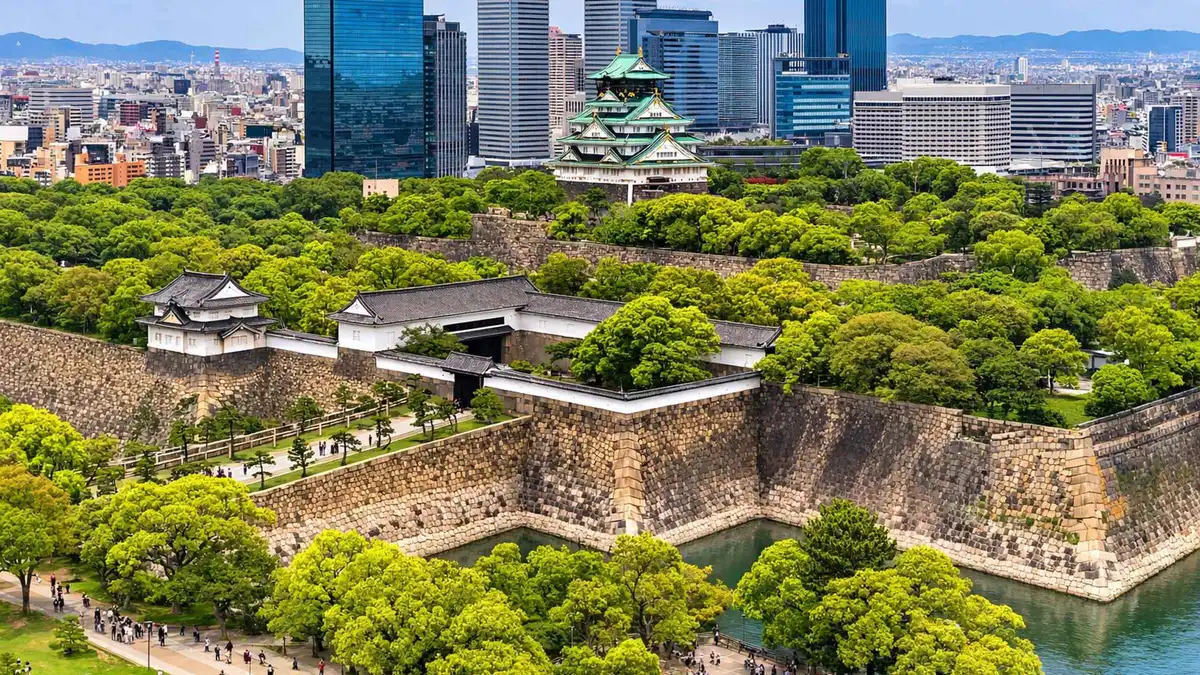 from $54.56
Osaka: Guided Walking Tour with a Native Expert – Top Sights
Four hours linking Osaka Castle, Tsutenkaku and Namba by metro, with the ¥1,200 keep admission included and the ¥430 of train fares not. A Japan Rail Pass buys you nothing here — the route runs on Osaka Metro.
Check Availability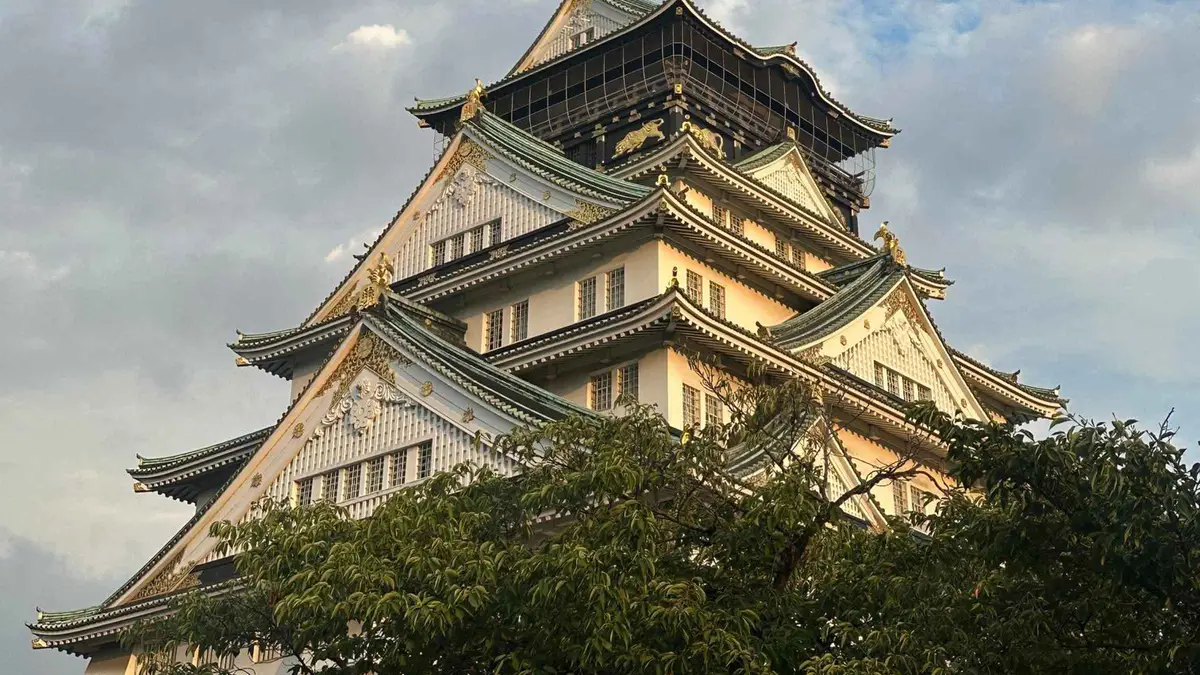 from $49.74
Osaka: Essential City Loop Tour with Local Guide
Five hours in a group of eight covering the castle, the Showa-era backstreets and the neon strip in one loop, with food bought stop by stop instead of a sit-down lunch. Only four people have rated it so far.
Check AvailabilityPrices, ratings and details are the platform's own. Dollar figures are the listed prices. The platform bills in your account's currency.
Founded in 593, rebuilt in 1963: why the oldest temple in Japan looks new
The date on every sign is 593. The concrete is from 1963. Both are true, and understanding why is most of what makes a visit here interesting.
Shitennoji — the Temple of the Four Heavenly Kings — was commissioned by Prince Shotoku as part of a state project to establish Buddhism in a country that had barely encountered it. Wikipedia's account, drawing on the standard histories, records that carpenters were brought from the Korean kingdom of Baekje to build it, and that one of those builders founded Kongo Gumi, the temple-carpentry firm that went on to be the oldest company in the world until it was absorbed by the Takamatsu Construction Group in 2004. The temple's own site calls it Japan's first officially administered temple, and since the Second World War it has been independent of the Tendai school, heading its own Wa sect.
What did not survive is the fabric. The complex has been destroyed and rebuilt repeatedly; the five-storey pagoda came down in the Muroto typhoon of 1934, the site was flattened again in the war, and the present buildings date from a complete reconstruction in 1963. They follow the original Asuka-period plan closely enough that archaeologists use the layout as the type-specimen for the arrangement now called Shitennoji-style: a straight north-south line of gate, pagoda, Kondo and lecture hall, all inside one rectangular cloister.
The four institutions, which are the reason the temple mattered
Prince Shotoku's foundation was not only a place of worship. It was organised as the Shika-in, four institutions around the temple core: a house of religion and learning, a welfare house, a hospital and a dispensary. Three of the four are documented as still existing in the Kamakura period.
That is the intellectual content of a visit here — this was the state's first attempt at a public institution, and the buildings around you are a modern reconstruction of the idea rather than of the wood.
What is genuinely old
The stonework. In the Kameido hall stands a seventh-century turtle-shaped stone basin, carved from Tatsuyama stone, once used for state water rituals and still used for memorial rites in which wooden slips carrying ancestors' names are floated on the water. West of the precinct the stone torii — a Buddhist temple with a torii, which surprises people — was raised as the symbolic eastern gate of the Western Pure Land, and the sunset seen through it is the reason the district to the north is called Yuhigaoka, evening-sun hill.
What each part of Shitennoji costs
The whole fee structure on one screen, from the temple's own admission table and converted at ¥1,000 to about $6.27. Group rates apply from the temple's own group booking form; the disability rate is free for the holder and a companion on an individual visit.
| Place | Adult (incl. university) | High school | Elementary and junior high | Group rate |
|---|---|---|---|---|
| Central Precinct — the cloister with the pagoda | $3.14 (¥500) | ¥300 | Free | ¥400 / ¥200 |
| Honbo garden — Gokuraku-jodo no Niwa | $1.88 (¥300) | ¥200 | ¥200 | ¥200 / ¥100 / ¥100 |
| Treasure Hall — exhibition periods only | $3.14 (¥500) | ¥300 | Free | ¥400 / ¥200 |
| Grounds, gates, Rokujido, stone torii | Free | Free | Free | Free |
| All three paid halls on one visit | $8.15 (¥1,300) | ¥800 | ¥200 | — |
Kindergarten children are free everywhere, including the garden. There is no combined ticket and no discount for buying all three — the last row is simply the arithmetic. Compare that with the ¥1,200 the city charges to enter Osaka Castle's keep and the shape of the decision is clear: this is a cheap morning, and the cheapest version of it costs nothing at all.
Hours: seasonal, with a monthly exception most guides miss
Two figures circulate for Shitennoji's closing time and both are right — the temple runs a summer and a winter table, and then breaks its own table on the 21st of every month. All of it is from the admission page.
The halls, the Central Precinct and the garden keep the same clock as each other. The gates around the site do not keep a clock at all: the temple states plainly that its gates are open 24 hours and that worship from outside the halls is possible at any time. That is what makes an early or late visit worthwhile — at 06:30 in June the pagoda is lit by low sun with nobody in the grounds, and the ticket counters that would have taken your ¥500 are not even open.
| What | April to September | October to March | The 21st and observance days |
|---|---|---|---|
| Halls, Central Precinct, garden | 08:30–16:30 | 08:30–16:00 | 08:00–17:00 in summer; 08:00–16:30 in winter, and 08:00–17:00 on 21 October |
| Rokujido hall | 08:30–18:00 | 08:30–18:00 | 08:00–18:00 |
| Grounds and gates | 24 hours | 24 hours | 24 hours |
| Treasure Hall | Exhibition periods only | Exhibition periods only | Last admission 20 minutes before closing |
The winter closing is the one that catches people
From October to March the halls shut at 16:00, which in December is well before sunset and about the time most visitors reach Tennoji after a morning elsewhere. If your day has Osaka Castle in it, do the temple first: the castle keep takes last admission at 17:30 and stays open until 18:00, an hour and a half later than the temple in winter. Reverse that order and you will be photographing the pagoda through a locked cloister gate.
The 21st and the 22nd: the days the precinct is free
This is the single most useful line on the page and it is published in one sentence at the top of the temple's admission page, in Japanese only.
The temple states that the Central Precinct is opened free of charge on the Daishi-e service on the 21st of each month, the Taishi-e service on the 22nd, and during the spring equinox services in March and the autumn equinox services in September. On those days the ¥500 ticket does not exist: you walk through the cloister gate with everyone else. The hours stretch too — 08:00 to 17:00 from April to September, 08:00 to 16:30 from October to March, and 08:00 to 17:00 on 21 October specifically.
So the honest advice about paying at Shitennoji is a calendar question. If your Osaka days include a 21st or a 22nd, the temple is worth moving to that morning; the fee, the extended hours and the busiest, most alive version of the site all land on the same date.
Autumn equinox 2026, as published
The temple's own events listing gives the autumn Higan-e as 20 to 26 September 2026 — the equinox day and the three days either side, seven days of memorial services in the halls across the grounds, with the north bell tower running a separate outside-worship period from 17 September. Those are free-precinct days as well.
What you are actually looking at, hall by hall
The site is bigger than it photographs and most of it is outside the paid wall. Walk it in this order and the ¥500 makes sense at the end rather than the beginning.
- Great South Gate and the Niomon. The formal approach from the south, through the guardian gate the temple also calls the chumon. The two Nio figures are the ones people photograph on the way in.
- The Central Precinct. The paid rectangle: five-storey pagoda, the Kondo housing a Kannon image, and the Kodo lecture hall, all inside a covered corridor. This is the Asuka-period plan, rebuilt in 1963 and laid out in one straight line — a shape you cannot read from outside the wall, which is what the ticket is really for.
- Rokujido. Free, and open until 18:00, later than everything else. This is where the working temple is most visible in the late afternoon.
- Gokuraku-mon, the Great West Gate. The gate towards the Pure Land, and beyond it the stone torii with the sunset behind it in the equinox weeks.
- Honbo garden. Ponds, a waterfall and the Pure Land theme carried into landscaping, behind the abbot's quarters. Quiet, small, and closed for ten days at the start of most months — check the closed-day list before you pay for it.
- Treasure Hall. Open only for exhibitions; the 2026 spring show ran 7 March to 5 May, and the temple's own address for it is inside the grounds on 06-6771-0066.
Getting to Shitennoji, and which gate to aim for
Three stations serve it and they are not equivalent — one is five minutes away and two are fifteen. Routes and walking times are the temple's own; fares are Osaka Metro's published zone bands.
The subway station named after the temple is the right answer for almost everyone. From Namba it is two stops on the Midosuji line and a change at Tennoji, or straight through on the Tanimachi line from the Umeda side; a single ride inside the city costs $1.19 to $2.45 (¥190 to ¥390) depending on the zone band.
| From | Route | Walk | Which gate you arrive at |
|---|---|---|---|
| Shitennoji-mae Yuhigaoka | Osaka Metro Tanimachi line | 5 minutes south | The north-west corner, by the stone torii and Gokuraku-mon |
| Tennoji | JR loop line and Osaka Metro Midosuji and Tanimachi lines | 15 minutes north | The south side, at the Great South Gate |
| Osaka Abenobashi | Kintetsu Minami-Osaka line | 15 minutes north | The south side, same approach as Tennoji |
| City bus | Stops at Shitennoji Nishimon-mae and Shitennoji Higashi-daimon-mae | Immediately | West gate or east gate, straight off the bus |
If you are walking from the tower district
Shitennoji sits about twenty minutes on foot north of Abeno Harukas and a similar walk east of Shinsekai, which is why the sensible shape of a day here is temple first thing, tower or tower-district afterwards. The Tennoji area page sets out the whole loop; the practical point is that all three are inside one ¥190 metro zone of each other, so nothing here justifies a taxi.
Shitennoji map: the gates, the paid precinct and the three stations
The temple pin is the coordinate published on the temple's own access map; station coordinates are from Wikidata.
Next stop from Shitennoji
Walking times are ours, measured at an unhurried pace; fares and admissions are the operators' own.
Abeno Harukas
The tallest building in Japan and the observatory whose fee changed on 23 July 2026. A morning at the temple and an afternoon three hundred metres above it is the classic Tennoji pairing.
20 minutes on foot, or one stop from TennojiShinsekai
Kushikatsu, hand-painted signage and the tower at the end of it. The natural lunch after a temple morning, and the walk between them takes you past Tennoji Park.
20 minutes west on footTennoji
The district page: the zoo, the park, the station complex and how the whole southern cluster fits into one day without doubling back.
15 minutes southShitennoji questions
Is Shitennoji free?
The grounds are, and they are open 24 hours a day — you can walk to the Great South Gate, the Rokujido and the stone torii at any hour without paying anything. Three enclosures charge: the Central Precinct at $3.14 (¥500), the Honbo garden at ¥300 and the Treasure Hall at ¥500. On the 21st and 22nd of every month, and during the spring and autumn equinox services, the temple opens the Central Precinct free of charge — the detail is here.
What are Shitennoji's opening hours?
The halls, the Central Precinct and the garden run 08:30 to 16:30 from April to September and 08:30 to 16:00 from October to March. The Rokujido stays open to 18:00 year-round. On the 21st of each month and on observance days everything opens at 08:00 and closes an hour later than usual — 17:00 in summer, 16:30 in winter, and 17:00 on 21 October. The table above sets all of it out; the gates themselves never close.
How much is the entrance fee at Shitennoji, and can I buy it online?
¥500 for the Central Precinct, ¥300 for the garden and ¥500 for the Treasure Hall, with high-school rates of ¥300, ¥200 and ¥300 and free entry for elementary and junior-high pupils in the precinct and the Treasure Hall. There is no online ticket at all — every one of them is sold at its own counter, in cash, and there is no combined ticket. Buying all three costs $8.15 (¥1,300), which is the arithmetic rather than a package.
What is the Shitennoji flea market and when is it?
Traders fill the grounds on the 21st of each month, the day of the Daishi-e service — antiques, tools, plants, second-hand kimono and food stalls. The temple publishes nothing about it: no start time, no closing time, no stall count and no rain policy. What the temple does publish for that date is more useful anyway, which is that the Central Precinct is opened free and the whole site opens half an hour early at 08:00.
How long should I spend at Shitennoji?
The temple states no visiting time. Our routing: 45 minutes covers the grounds, the gates and the paid Central Precinct at an unhurried pace; 90 minutes if you add the garden and an exhibition in the Treasure Hall; two hours or more on the 21st, when the market makes the walk itself the attraction. It is a shorter stop than most first-time itineraries assume, which is why it pairs so easily with the towers to the south.
Does the Amazing Pass include Shitennoji?
Yes — the temple is one of the 41 attractions on the free-entry list of the city's sightseeing pass, alongside the castle museum, Tsutenkaku's deck and Umeda Sky Building. That pass costs ¥3,500 for one day and covers the metro as well, so it only makes sense if the temple is one stop among several; the arithmetic is on the pass page. Nothing else here is a package — the temple sells no combined ticket of its own.
Is Shitennoji worth visiting if I have already seen temples in Kyoto?
It is a different proposition. This is not a preserved wooden monument — it is a 1963 reconstruction on a 593 foundation, and what you come for is the layout, the state-Buddhism story and the fact that a working temple with a monthly market sits in the middle of a Japanese city rather than on a hillside. If you have one hour in southern Osaka and want atmosphere over authenticity of fabric, it earns the stop; if you want old timber, the honest answer is that this is not where it is.
What actually goes wrong here
Four failures account for most disappointed visits, and three of them are timing.
- Arriving after 16:00 between October and March. The gates are open, so the site looks open — but the cloister is locked and the ¥500 you were going to spend buys nothing. In winter, be at the counter by 15:30.
- Paying on the 21st or 22nd. The precinct is free those days. Walk to the gate before you queue at any window.
- Turning up for the garden in the first ten days of a month. It closes 1–10 in February, March, May, June, July, September, October and November, plus 12–14 January. That is a lot of the year, and the temple prints the list rather than a rule.
- Expecting the Treasure Hall to be open. It is not a permanent museum; it opens for exhibition runs, with last admission twenty minutes before closing. Check the temple's current exhibition notice before you count on it.
One more, for photographers
The pagoda is difficult from inside the cloister — it is close, tall and hemmed in. The picture most people want is from outside the wall on the west side, with the Gokuraku-mon or the stone torii in the frame, and that costs nothing. Do it in the last half-hour of light: the temple faces its western gate at the sunset for a reason, and the equinox weeks in March and September are when that alignment is at its most exact.
Shitennoji on film: the grounds, the precinct and the pace of it
Three videos whose ids we verified against YouTube's own record and thumbnails, so none of these is a dead player. They load only when you press play.
Shitennoji temple, The oldest temple in Japan [Deep Japan] 四天王寺
A calm walk through the grounds with the history attached — the best single introduction before you go.
Video: Deep Japan By the Last SamuraiExploring Shitennoji Temple, Osaka | Japan's Oldest Buddhist Temple Walking Tour 4K
An unedited 4K walk-through at real pace, useful for judging how big the site is and where the paid wall starts.
Video: KansaiWalking【Full Guide】The Oldest Temple in Japan. This is the Shitennoji Temple in Osaka!
A hall-by-hall guide that shows what is behind the Central Precinct gate before you decide whether to buy the ticket.
Video: 【travel guide】KANAVideos load from YouTube only when you press play.
Prices, hours and terms are set by the venue or operator and confirmed at checkout.
We may earn a commission if you book through one of our links, at no extra cost to you. Full affiliate disclosure