 Osaka City Guide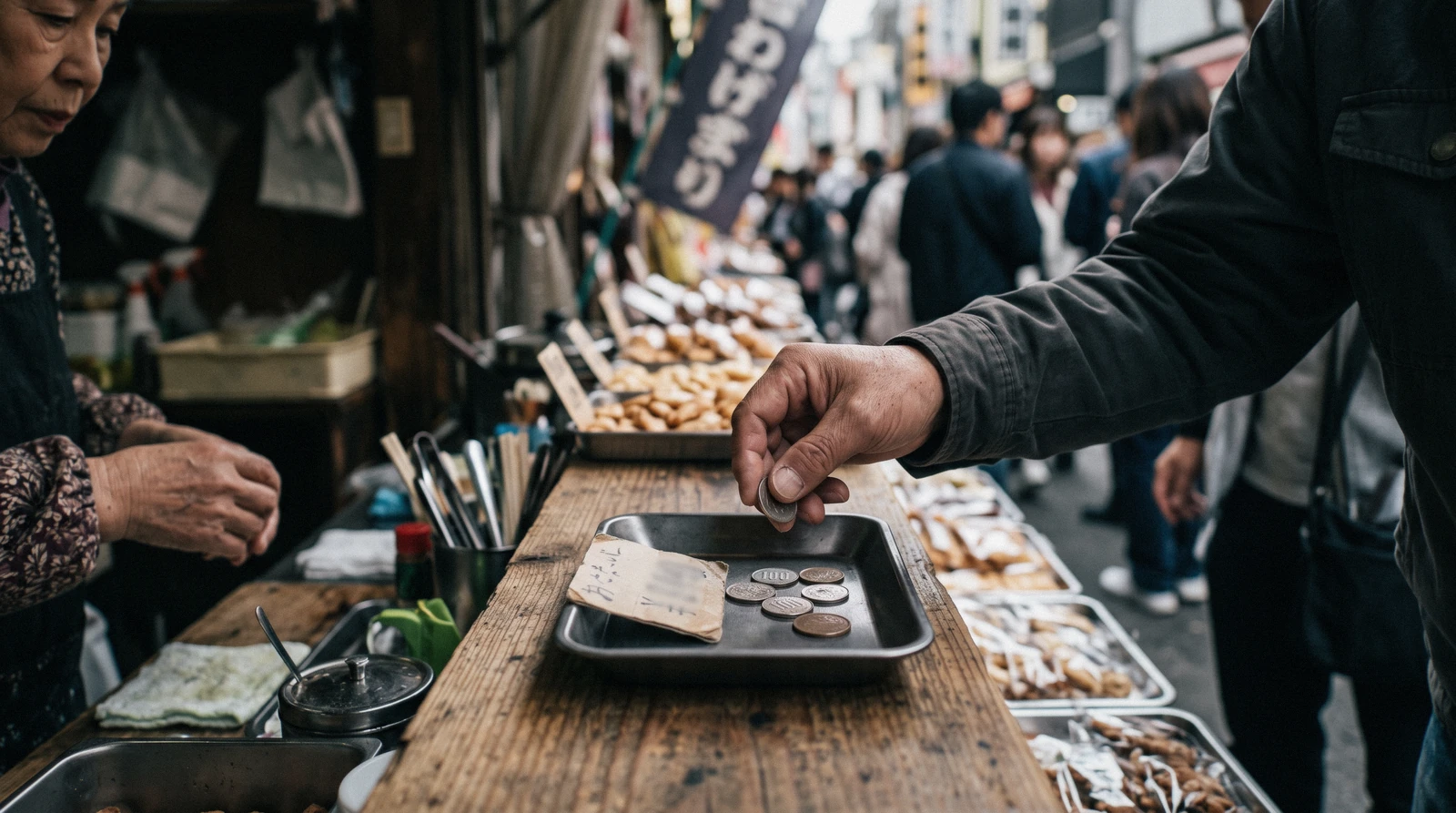
What Osaka Costs a Day
What Osaka costs is easier to answer honestly here than in most cities, because almost everything a visitor pays for is published: the Metro prints its fares by zone, every observation deck prints its admission, and the prefecture prints the lodging tax band by band. Exactly one line of a day's spending is not published anywhere official — what a meal costs — and this page says so rather than inventing a figure. Below: an ordinary day priced three ways, the gate prices behind those totals, the accommodation tax that changed on 1 September 2025 and that most guides still print wrongly, what leaving the city costs, and the ¥1,000 fine nobody warns you about. Every yen figure is an operator's, the prefecture's or the city's own; the live currency panel below converts at the European Central Bank reference rate, and prose glosses are approximations at ¥1,000 ≈ $6.27. Transport in detail is on the getting-around page, arrival costs on the airport page, and for the city itself, start with top places to visit in Osaka.
Quick answer A day priced line by line, and the one figure nobody publishes
An ordinary sightseeing day in Osaka comes to about $47.00 (¥7,500) a head before accommodation: $5.14 (¥820) for the Metro day card, $20.10 (¥3,200) for two paid entries such as Osaka Castle at $7.52 (¥1,200) and the Umeda Sky Building at $12.54 (¥2,000), and the rest on food. A careful day is under $18.81 (¥3,000) because so many of the best things here — the neon, the markets, the arcades and the shrine grounds — carry no admission at all. The gate prices come from the venues' own pages; the food line is the one number on this page that no official source publishes.
Key takeaways
- The transport half of a day is small and fixed: $1.19 (¥190) to $2.45 (¥390) a ride, or $5.14 (¥820) for the whole day on a weekday — how the zones work
- The expensive things are three: Universal Studios Japan, which starts at $52.70 (¥8,400) for the ticket alone, the aquarium at $17.56 (¥2,800) to $21.90 (¥3,500) depending on the date, and a hotel in high season
- Your bed is taxed: nothing under $31.40 (¥5,000) a person a night, then $1.25 (¥200), $2.51 (¥400) or $3.14 (¥500) — the bands and the date they changed
- Smoking on the street is a $6.27 (¥1,000) fine anywhere in the city, heated tobacco included, and it has been since 27 January 2025
- If your day is a list of paid entries rather than a walk, price the Osaka Amazing Pass against the gate prices in the table below — and a cheap guided walk instead if it is the other way round
What Your Yen Is Worth Right Now
The three amounts a visitor in Osaka actually handles, at the European Central Bank reference rate — refreshed as this page loads, so the figures below are today's and not the day we wrote them.
¥1,000
the note you break at a market stall
- USD$6.27
- EUR€5.41
- GBP£4.65
¥7,500
an ordinary day of sights and meals
- USD$47.03
- EUR€40.58
- GBP£34.88
¥15,000
the same day, for two
- USD$94.05
- EUR€81.15
- GBP£69.75
Prose elsewhere on this site converts at roughly ¥1,000 ≈ $6.27 and marks the result as an approximation — the yen figure is always the official one. Source: European Central Bank reference rates via api.frankfurter.dev.
The same day at three levels
One day of sightseeing, priced from the published figures on this site: the Metro's own fare table, the venues' own admission pages and GetYourGuide's listed tour prices, all read on in Q3 2026.
| Line | Careful | Ordinary | Comfortable |
|---|---|---|---|
| Transport | ¥430 — two Metro rides, zones 1 and 2 | ¥820 — the Enjoy Eco Card, weekday | ¥820 — the same card, plus a taxi late |
| Paid entries | ¥500 — Shitennoji's central precinct, and free grounds elsewhere | ¥3,200 — Osaka Castle ¥1,200 and Umeda Sky ¥2,000 | ¥5,100 — the aquarium at a ¥2,900 date plus Abeno Harukas at ¥2,200 walk-up |
| Food (our estimate, not a published price) | About ¥1,800 across the day | About ¥3,500 across the day | About ¥7,000 across the day |
| Day total, before a bed | About $16.93 (¥2,700) | About $47.00 (¥7,500) | About $81.50 (¥13,000) |
| Lodging tax on top | None — rooms under ¥5,000 a person are exempt | ¥200 a person a night | ¥400 or ¥500 a person a night |
Accommodation is excluded because it swings more by season than by anything a page can predict, and the food lines are marked as estimates because no official Osaka source publishes a meal price. Two further honest notes. The careful column is not a hardship column: Dotonbori, Kuromon Market, Shinsaibashi, Amerikamura, Tenjinbashisuji and the grounds at Sumiyoshi Taisha — which publishes no admission fee at all — cost nothing to walk through, and they are most of the reason people love this city. And the comfortable column is where the arithmetic breaks: stack three paid observation decks in a day and you are paying for views of the same skyline three times.
What the sights actually charge
Every figure below is the venue's own published adult admission. Where a venue prices by date, the range is the range it publishes.
Osaka's gate prices are modest by the standards of a major city, and they cluster: most of the towers and museums sit between ¥500 and ¥2,200, and the two genuine outliers are the aquarium and the theme park. That is the shape of the budget — a day of ordinary sights is cheap, and a day built around either of those two is not.
Four of these carry rules that cost you more than the price if you get them wrong. Tsutenkaku now requires a timed reservation for every ticket, pass holders included, who must book a slot at the counter on arrival. Kaiyukan has no single price: it publishes bands about two months ahead, and September and October 2026 run ¥2,800, ¥2,900, ¥3,200 and ¥3,500 by date. Abeno Harukas revised its fee on 23 July 2026, and the ¥1,980 web-advance rate has to be bought by the day before. And Osaka Castle takes no reservations at all — a web ticket exists, but there is no timed slot to book.
| Sight | Adult admission | Note |
|---|---|---|
| Osaka Castle main keep | $7.52 (¥1,200) | Free for junior-high age and under; 09:00–18:00, last admission 17:30 |
| Nishinomaru Garden | $1.88 (¥300) | Raised from ¥200 on 1 April 2026; ¥350 for the blossom evenings |
| Umeda Sky Building | $12.54 (¥2,000) | The only open-air deck; ¥500 for ages 4 to elementary school |
| Abeno Harukas 300 | ¥2,200 walk-up · ¥1,980 web advance | Fee revised 23 July 2026; walk-up sold only at the 16F counter |
| Tsutenkaku | $9.41 (¥1,500) | General and outdoor decks sold only as a set; timed reservation required |
| Osaka Aquarium Kaiyukan | ¥2,800 – ¥3,500 by date | Published about two months ahead; children roughly half |
| Universal Studios Japan | From ¥8,400 | Dated pricing; Express Passes are ¥11,800–¥21,800 on top of the park ticket |
| teamLab Botanical Garden | ¥1,800 – ¥2,400 by date | Evening opening only; date-and-time ticket, no re-entry |
| Shitennoji central precinct | $3.14 (¥500) | Garden ¥300 and Treasure Hall ¥500 are separate; grounds free |
| Sumiyoshi Taisha | No fee published | The shrine publishes no admission charge at all — not the same as advertising free entry |
| Spa World | ¥2,000 weekday · ¥2,700 weekend | Without the pool, ¥1,500 any day; a night surcharge applies after midnight |
| Osaka Museum of History | $3.76 (¥600) | Closed Tuesdays; free for junior-high age and under |
How to plan around the gate prices
The pattern to plan around: one paid entry a day plus a walking district is the shape that keeps a trip cheap without feeling thin. Two decks and an aquarium in one day is ¥7,000 of admissions before you have eaten, and the Osaka Amazing Pass exists precisely for people who intend to do that — it bundles transport with 41 entries, and we do that arithmetic on its own page rather than twice here.
Three days, totalled
A day figure is easy to nod at and hard to plan with. This is what the same numbers look like across a normal Osaka trip.
Most people give Osaka two or three days, often with a day trip inside them, and the totals below assume exactly that: one city day of walking districts, one city day with two paid entries, and one day out to Nara or Kyoto. Transport is the Enjoy Eco Card on the two city days and a return rail fare on the third; entries are the venues' own prices; food is our estimate at the ordinary level; the lodging tax is the ¥200 band, which covers most mid-range Osaka rooms at one guest per ¥5,000-to-¥15,000 of rate.
What this table is for is the shock-absorber question — how wrong can it go? The honest answer is: by about the price of one theme-park day. Add Universal Studios Japan and its ticket alone lifts a three-day total by more than a third; leave it out and Osaka is one of the cheaper big cities in this part of the world to spend three days in.
| Day | Transport | Entries | Food (estimate) | Day total |
|---|---|---|---|---|
| Day 1 — districts on foot | ¥820 day card | ¥0 — Dotonbori, Kuromon, Amerikamura | ¥3,500 | ¥4,320 |
| Day 2 — castle and a deck | ¥820 day card | ¥3,200 — Osaka Castle and Umeda Sky | ¥3,500 | ¥7,520 |
| Day 3 — a day out | ¥1,360 — Nara return on Kintetsu | ¥0–¥500 depending on what you enter | ¥3,500 | ¥4,860–¥5,360 |
| Three-day total, one person | ¥3,000 | ¥3,200–¥3,700 | ¥10,500 | About $106.60 (¥17,000) |
| Lodging tax, three nights | — | — | — | ¥600 a person in the ¥200 band |
Two ways that total moves, both worth knowing before you book anything. Adding Universal Studios Japan as a fourth day puts at least ¥8,400 on it for the entry alone, and an Express Pass — which is a separate product, not an upgrade — starts at ¥11,800 on top of that. Adding Himeji instead costs ¥2,920 in rail fares and ¥2,500 at the castle gate, which is a day out with a real ticket at the end of it rather than a walk.
Against that, the cheapest genuinely good day here costs a return rail fare: ¥560 to Minoh Falls and back, and a 2.7-kilometre walk to a waterfall that charges nothing at all.
Food: the one line nobody publishes
Osaka is the city of kuidaore — eating yourself broke — and not one official body prints what that costs.
We chased a meal price through every source this site trusts, and came back with nothing citable. The tourism bureau describes takoyaki and okonomiyaki as "cheap and delicious street food" and gives no figures. The MICHELIN Guide prints a price band symbol for each of the 67 Bib Gourmand addresses in and around Osaka, and no yen range, no opening hours and no closed day — and when we went back to re-read those listings the guide answered 403 to our requests entirely. Kuromon Ichiba's own association site is behind a bot wall, so even the market's hours are unavailable, let alone its prices; the bureau can only tell us that hours "vary by location".
So the food lines in the table above are ours, described as estimates, and here is the reasoning behind them rather than a false precision: Osaka's famous dishes are counter food eaten standing up, and the sit-down end of the Bib Gourmand selection is the cheapest of MICHELIN's bands. Budget the way locals talk about it — a light lunch, a serious dinner, and something bought from a stall in between — and adjust after your first evening, when you will know more than this page can tell you.
One consequence worth printing: because there is no takoyaki and no okonomiyaki venue anywhere in Osaka's Bib Gourmand selection, no page on this site attaches either dish to a named shop. The dish and the street, yes; a recommendation dressed up as a verified fact, no.
- A guided tasting is the one food price that is published: a Dotonbori and Kuromon walking tour with street food is listed at $17.48
- Convenience stores are genuinely good in Japan and take IC cards — the same ICOCA that opens the ticket gates
- Cash still matters at small counters and older shops; a ¥1,000 note is the working unit of a market morning
- Tipping does not exist here, and no service charge appears on an ordinary bill
The lodging tax, and why most sites print it wrong
A prefectural tax, charged per person per night, collected by the property — and rebanded on 1 September 2025.
Osaka Prefecture — not the city — levies an accommodation tax on hotels, ryokan, simple lodgings, special-zone minpaku and registered private lodging across the whole prefecture. It is charged per person per night, on the room rate per person, and the property collects it. The bands changed on 1 September 2025, and the change went in both directions: the exemption threshold fell from ¥7,000 to ¥5,000, so more cheap rooms are taxed, while every band above it roughly doubled.
The reason to check this against whatever else you have read is that the old ¥100 / ¥200 / ¥300 bands are still printed all over the web. On a four-night stay for two in a ¥16,000-a-head room, the difference between the old table and the real one is ¥2,400 — not ruinous, but not the rounding error people assume when a bill is larger than the booking page said.
| Room rate, per person per night | Tax per person per night | On four nights for two |
|---|---|---|
| Under ¥5,000 | None | Nothing |
| ¥5,000 to under ¥15,000 | $1.25 (¥200) | ¥1,600 |
| ¥15,000 to under ¥20,000 | $2.51 (¥400) | ¥3,200 |
| ¥20,000 and over | $3.14 (¥500) | ¥4,000 |
Two exemptions are published: school-trip pupils and their escorts, continuing past the Expo exemption window from 1 November 2025 onwards, and foreign ambassadors. Everyone else pays, including guests in registered private lodgings, and the charge usually appears at check-in rather than in the online booking total — which is why it surprises people. Budget it as a small fixed line per person per night, not as a percentage.
The cheap end of the paid list
Five of the least expensive booked things on this site, for the days when you want something ticketed without spending like a theme-park day. Prices are GetYourGuide's own USD listings; the operator charges in your currency at checkout.
 from $7.49
Cheapest way in
from $7.49
Cheapest way in
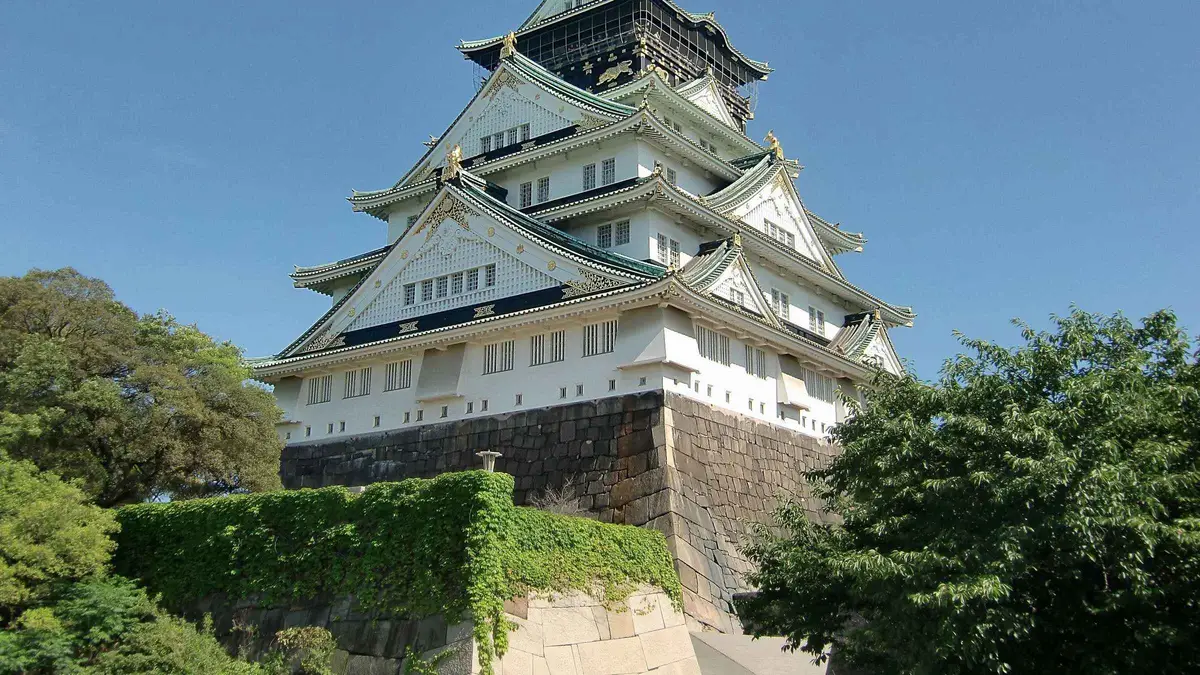
Osaka Castle: Museum and Tower Entry Ticket
The keep's own admission plus the Toyotomi Ishigaki Museum on one QR code, for roughly what the keep alone costs at the gate (¥1,200). The castle takes no reservations, so this saves the booth queue rather than securing a time slot.
Check Availability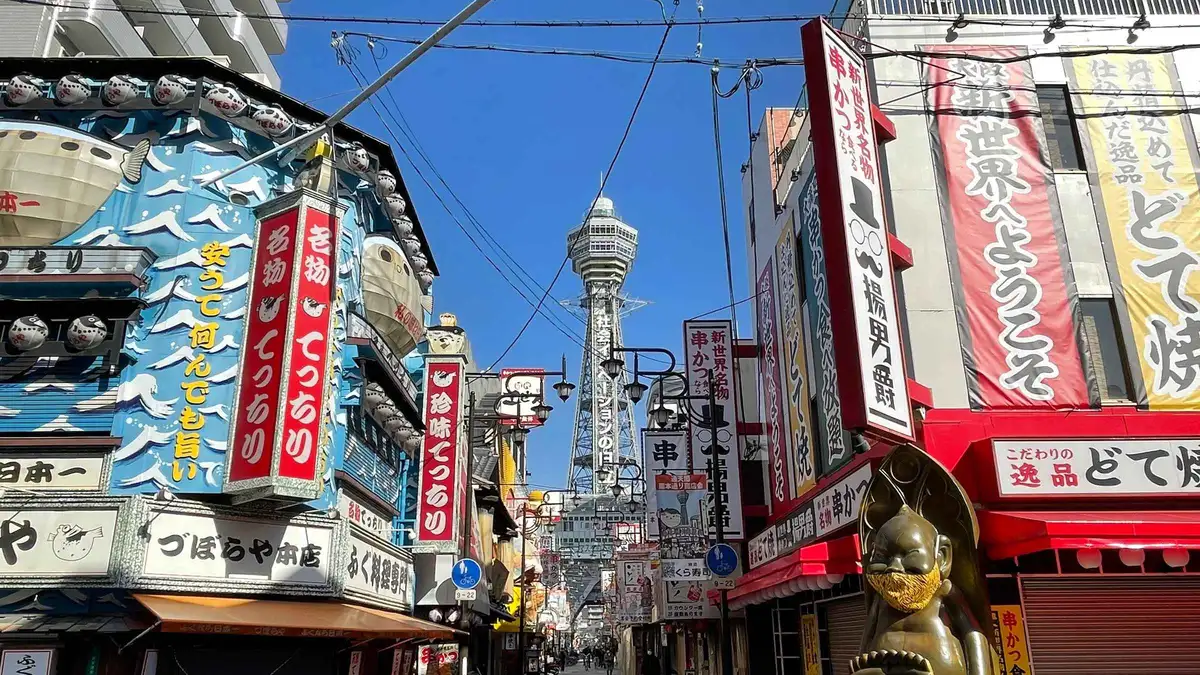 from $6.87
Official ticket
from $6.87
Official ticket
Osaka: Tsutenkaku Tower Experience Ticket
Options run from the 87.5-metre general deck up to the all-in ticket with the outdoor deck, the Tower Slider and Dive & Walk. The tower now requires a timed reservation for every ticket, pass holders included, so booking a slot is the point.
Check Availability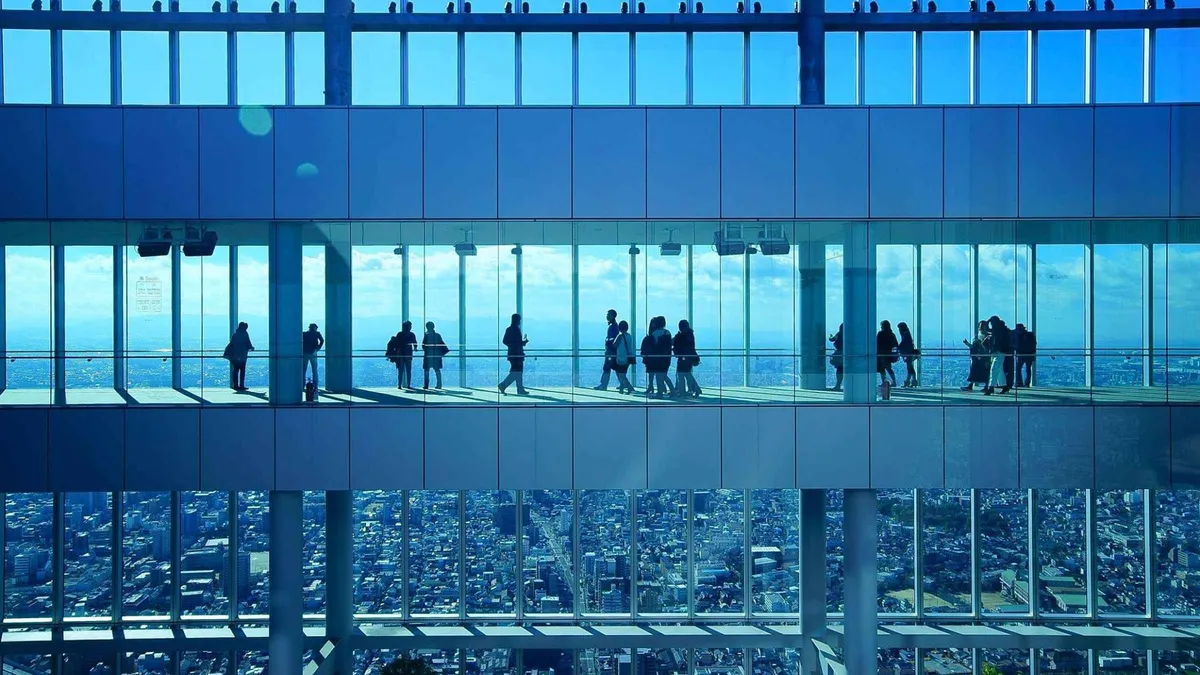 from $9.89
Cheapest way in
from $9.89
Cheapest way in
Osaka: Panoramic Observatory Abeno Harukas 300 E-Ticket
Admission to the 300-metre deck on Japan's tallest building, at roughly ¥1,580 against the venue's ¥1,980 web-advance rate and ¥2,200 walk-up. There is no timed slot, and the 16F counter can cap walk-up sales on busy days.
Check Availability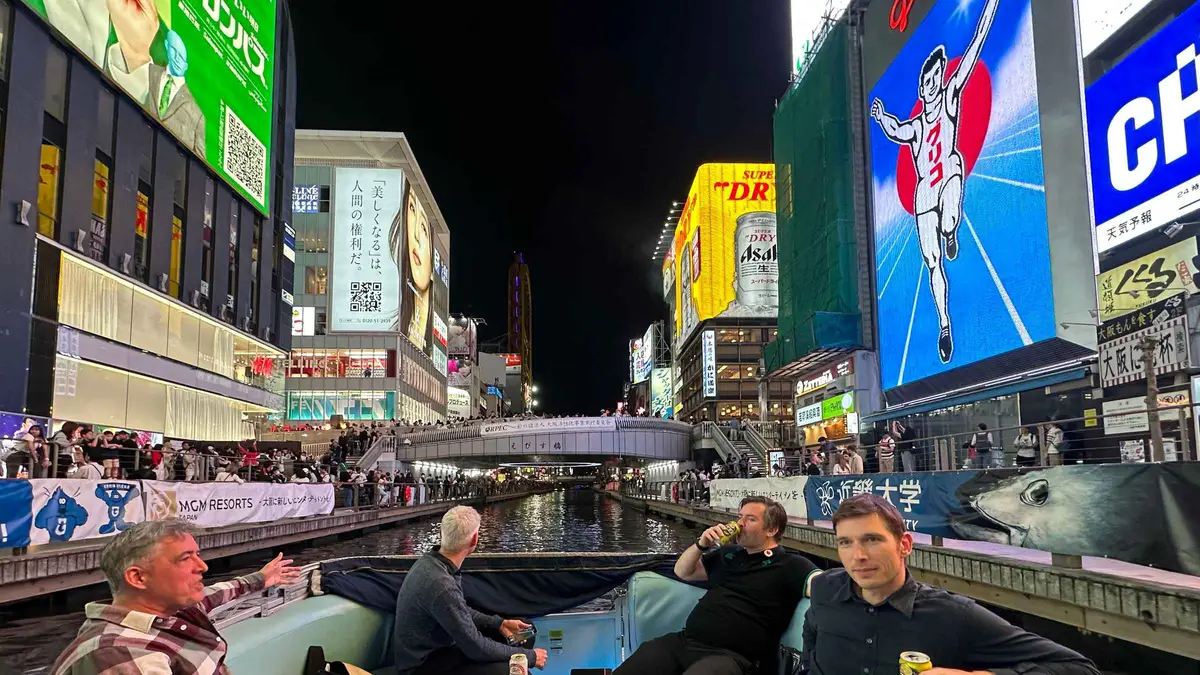 from $12.49
Osaka: Dotonbori River Cruise with Glico Sign & Neon Views
Twenty minutes on the water past the Glico sign, boarding at Minatomachi Pier rather than the Tombori River Walk, and you may bring your own drinks. The rival Tombori River Cruise is free with the Osaka Amazing Pass; this boat is not.
Check Availability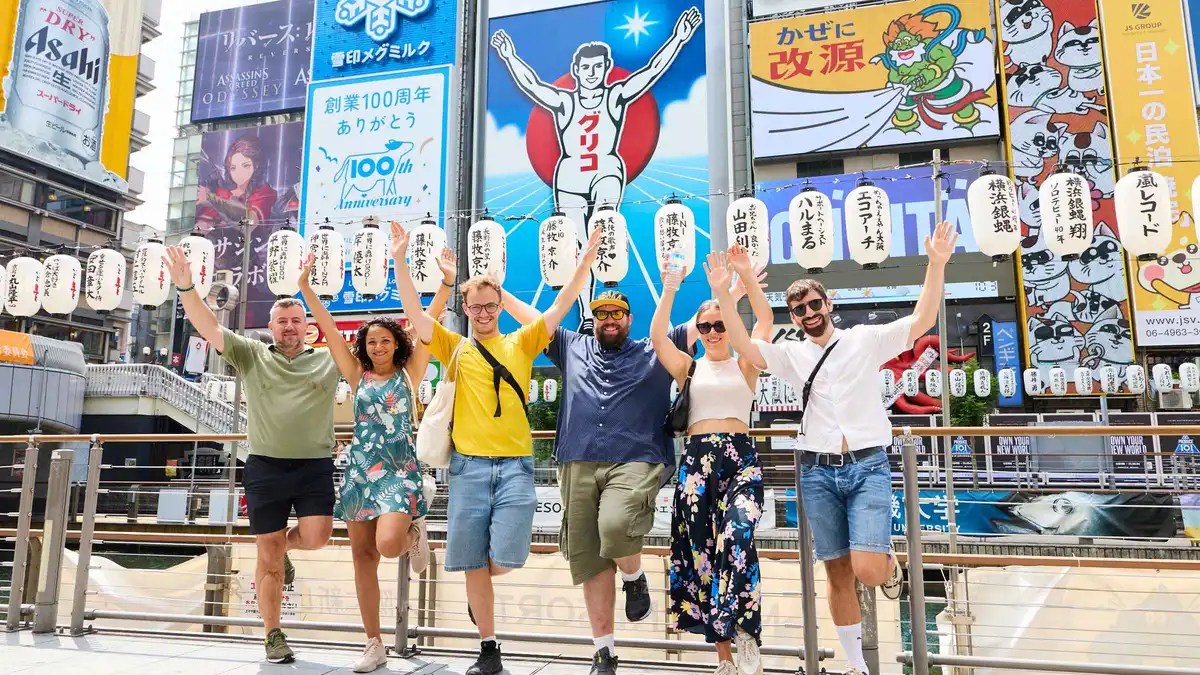 from $17.48
Osaka Walking Tour: Dotonbori, Kuromon Market & Street Food
Two and a half hours from Shinsaibashi through Hozen-ji, Kuromon Market and Den Den Town with a licensed guide and some food included. Cheap for a guided walk, but only 23 people have rated it so far.
Check AvailabilityPrices, ratings and details are the platform's own. Dollar figures are the listed prices. The platform bills in your account's currency.
Arriving, moving and leaving: the transport lines of the budget
Three costs that bracket a trip, all of them published, none of them large.
Arrival. The cheapest published way in from Kansai Airport is Nankai's Airport Express at the ordinary fare with no surcharge, about 44 minutes to Namba; the discounted JR HARUKA ticket is ¥1,300 to Tennoji and ¥1,800 to Osaka or Shin-Osaka. From Itami, the monorail is ¥200 to Hotarugaike or ¥340 to Senri-Chuo. All of it, including what nobody publishes, is on the airport page.
Inside the city. Metro singles are ¥190 to ¥390 by zone, and the Enjoy Eco Card buys a calendar day of Metro and city buses for ¥820 on a weekday or ¥620 at the weekend. An ICOCA costs ¥2,000 including a ¥500 refundable deposit and has to be bought with cash.
Day trips. The fares out of Osaka are the cheapest part of a Kansai trip, and one of them is now dramatically the most expensive: Himeji Castle raised its adult admission from ¥1,000 to ¥2,500 on 1 March 2026, though under-18s go free.
| Cost | Figure | What it buys |
|---|---|---|
| ICOCA card | ¥2,000 including a ¥500 deposit | Every train and bus in the region, cash purchase only |
| Metro day card | ¥820 weekday · ¥620 weekend | One calendar day of Metro, New Tram and city buses |
| Kyoto and back | ¥820 return on Hankyu | 43 minutes each way from Umeda |
| Nara and back | ¥1,360 return on Kintetsu | 38 minutes each way from Osaka-Namba |
| Kobe and back | ¥660 return on Hankyu or Hanshin | 27 to 31 minutes each way |
| Himeji and back | ¥2,920 return on the JR Special Rapid | 62 minutes each way, plus ¥2,500 to enter the castle |
| Minoh Falls and back | ¥560 return on Hankyu | A 2.7 km walk to the waterfall with no admission fee |
| Left luggage | ¥300–¥600 per 3 hours in a Metro smart locker | Free under an hour; staffed counters run ¥800–¥1,000 a piece |
One quiet saving worth taking: under an hour in an Osaka Metro smart locker is free, and a small locker is ¥300 for three hours or ¥900 for twenty-four. If you are between a hotel checkout and an evening flight, that is the cheapest way to spend a last day unencumbered — and the staffed counters, at ¥800 to ¥1,000 a piece, will also deliver a bag to one of 153 city hotels if it is dropped by 14:00.
Why the cheap version of Osaka is not the thin version
The reason the careful column above holds up: the things this city is actually famous for do not have gates.
In a lot of cities the budget itinerary is a consolation prize — the free churches, the view from the hill, the market you walk through because the museum costs money. Osaka is not really built that way. Its signature experiences are streets: the neon on the canal at Dotonbori, the aisles of Kuromon Market, the 2.6 kilometres and roughly 800 shops of Tenjinbashisuji, the second-hand racks of Amerikamura, the lantern-lit lane at Hozenji Yokocho and the grounds of Sumiyoshi Taisha, which publishes no admission fee at all.
None of that costs anything beyond the fare to reach it, and between them they are most of what people photograph and nearly all of what they remember. The paid layer — the decks, the aquarium, the castle keep — is genuinely worth buying into, but it is a layer on top rather than the substance.
The practical consequence for a budget is that your spending is elastic in the right direction. A rainy day, a tired afternoon or a tight week can all be absorbed by walking a district instead of entering something, without the trip getting worse. That is not true of a city where the sights are the itinerary.
- Where the money is genuinely well spent, in our order: one high deck at dusk, the river cruise for the neon from the water, and one guided walk with someone who can explain what you are eating
- Where it is easily wasted: a second observation deck in the same 24 hours, and a peak-priced aquarium date when the same ticket is ¥700 less midweek
- Where it is invisible until the bill: the lodging tax per person per night, and paying a ¥300 on-board surcharge for a limited-express ticket you could have bought at the machine
The ¥1,000 nobody warns you about, and three other traps
Small money, easily avoided, and the first one is a genuine city-wide fine.
- Smoking on the street is a ¥1,000 fine — anywhere in Osaka. The city extended its ban from six designated districts to every road, square, park and public place it manages on 27 January 2025, and heated tobacco is covered as well as lit cigarettes. It is a non-criminal 過料 penalty, but it is real, and the designated smoking areas are marked.
- Two combined tickets are dead and still recommended. Osaka Castle's set with the Museum of History ended on 27 December 2024 and its Aqua-bus set on 24 March 2025 — buying either is no longer possible, whatever a blog says.
- Closed days do not agree with each other. Mondays close Tennoji Zoo, the Science Museum and the National Museum of Art; Tuesdays close the Osaka Museum of History and the Cup Noodles Museum; teamLab closes on irregular Mondays. A wasted trip across the city is the cheapest thing on this page to avoid and the most common thing to get wrong.
- The station wifi is gone. Osaka Free Wi-Fi was withdrawn from every station on 31 March 2023, so budget for mobile data rather than assuming a free connection at the gate — the detail, and the official page that still says otherwise.
Where to go next
The three pages that turn these numbers into a plan.
Getting around Osaka
Metro zones and the day card, the IC card rules, and the regional pass that lost its buses in April 2026.
TransportOsaka attraction tickets
Every ticket compared, including which ones genuinely need buying before you fly.
The gatesOsaka Amazing Pass
Transport plus 41 entries, two official prices that disagree, and the break-even worked three ways.
The passWhat Osaka costs: the questions
Is Osaka expensive?
Not by the standards of a big city, and much of what people come for is free to walk through. A day of ordinary sightseeing runs about $47.00 a head (¥7,500) before a bed: ¥820 of transport, two paid entries, and food. What is expensive is optional — the theme park, the aquarium on a peak-priced date, and a hotel room in blossom season.
How much money do I need a day in Osaka?
Budget about $18.81 a day if you are walking the districts and paying at one gate, about $47.00 for an ordinary sightseeing day, and about $81.50 if you are stacking paid attractions and eating properly (¥3,000 · ¥7,500 · ¥13,000). Accommodation and its tax sit on top of all three — the table above breaks each column into lines.
How far does about $100 go in Osaka?
Roughly ¥16,000 at the reference rate on this page, which is two ordinary sightseeing days for one person including transport, two paid entries a day and meals — or one ordinary day for two with change left over. It is not a day at Universal Studios Japan for two, where the tickets alone start at ¥8,400 each before anything else.
Do hotels in Osaka charge a tourist tax?
Yes — a prefectural accommodation tax, per person per night, collected by the property, usually at check-in rather than in the online total. Nothing is charged on rooms under ¥5,000 a person; then it is ¥200, ¥400 or ¥500 by band. The bands changed on 1 September 2025, and most third-party pages still print the old ¥100 / ¥200 / ¥300.
What does a day of sightseeing cost at the gates?
Most Osaka sights charge between ¥500 and ¥2,200: the castle keep ¥1,200, the Umeda Sky Building ¥2,000, Tsutenkaku ¥1,500, Shitennoji's central precinct ¥500. The two outliers are the aquarium, at ¥2,800 to ¥3,500 depending on the date, and Universal Studios Japan, from ¥8,400. The full list is here.
Do I need cash, or is Osaka a card city?
Cards work almost everywhere a visitor goes, but keep cash for three things: small counters and market stalls, the IC card purchase itself — which is cash-only — and older ticket windows. A ¥1,000 note is the working unit of a market morning, and the convenience-store ATMs take foreign cards.
Is there anything in Osaka that will fine me?
One thing, and it catches visitors constantly: smoking on the street. Since 27 January 2025 the ban covers every road, square, park and public place the city manages — heated tobacco included — and the penalty is a ¥1,000 non-criminal fine. Use the marked smoking areas; there are plenty around the big stations.
What is the cheapest day out from the city?
Minoh Falls, at ¥560 return on Hankyu from Umeda plus a 2.7 km walk up a wooded path with no admission fee at either end. Kobe is next at ¥660 return, then Kyoto at ¥820 return on Hankyu. Himeji is the outlier now that its castle charges ¥2,500 — an entry that was ¥1,000 until 1 March 2026.
How much is a single metro ticket in Osaka?
$1.19 to $2.45 (¥190 to ¥390) depending on how many zones you cross, so two ordinary rides come to about ¥430. From three rides upward the day card wins: the Enjoy Eco Card is $5.14 (¥820) on a weekday and $3.89 (¥620) at a weekend, and the child card is ¥310 either way. An ICOCA costs $12.54 (¥2,000) including a ¥500 refundable deposit, so ¥1,500 of that is travel money — the fares, cards and which to buy.
How much is entry to a museum in Osaka?
Less than you would pay in most European cities. The Osaka Museum of History charges $3.76 (¥600) for its permanent exhibition and $2.51 (¥400) for students, with an audio guide at $2.51 (¥400) in four languages; Shitennoji's central precinct is $3.14 (¥500) and its Treasure Hall the same. Special exhibitions are priced separately, one by one — the museums hub lists which are free and which close on Mondays or Tuesdays.
How much does the canal boat cost?
The official Tombori River Cruise takes $12.54 (¥2,000) from adults, $6.27 (¥1,000) from students and $3.14 (¥500) from primary-school children, and it is free to Osaka Amazing Pass holders — one of the few places the pass pays for itself in a single ride. The platform listing for the same twenty minutes is $12.49, which is the same money without the pass discount — what the canal costs to see from the water.
On film: what people actually spend here
Three videos whose ids we verified against YouTube's own record and thumbnail, so none of these is a dead player. They load only when you press play.
Osaka Budget Trip Itinerary (Free & Cheap Things To Do in Osaka, Japan)
The careful column of the table above, filmed as an actual day.
Video: Trip MoitoOsaka 2026 Travel Guide: Best Places & Things to Do • Itinerary & Expenses
A trip with the expenses stated out loud, which is rarer than it should be.
Video: Angelica & Aileen Wanders9 OSAKA Budget-Friendly Restaurants & Food Spots
The food line this page refuses to invent a figure for, shown rather than priced.
Video: THE POOR TRAVELERVideos load from YouTube only when you press play.
Prices, hours and terms are set by the venue or operator and confirmed at checkout.
We may earn a commission if you book through one of our links, at no extra cost to you. Full affiliate disclosure