 Osaka City Guide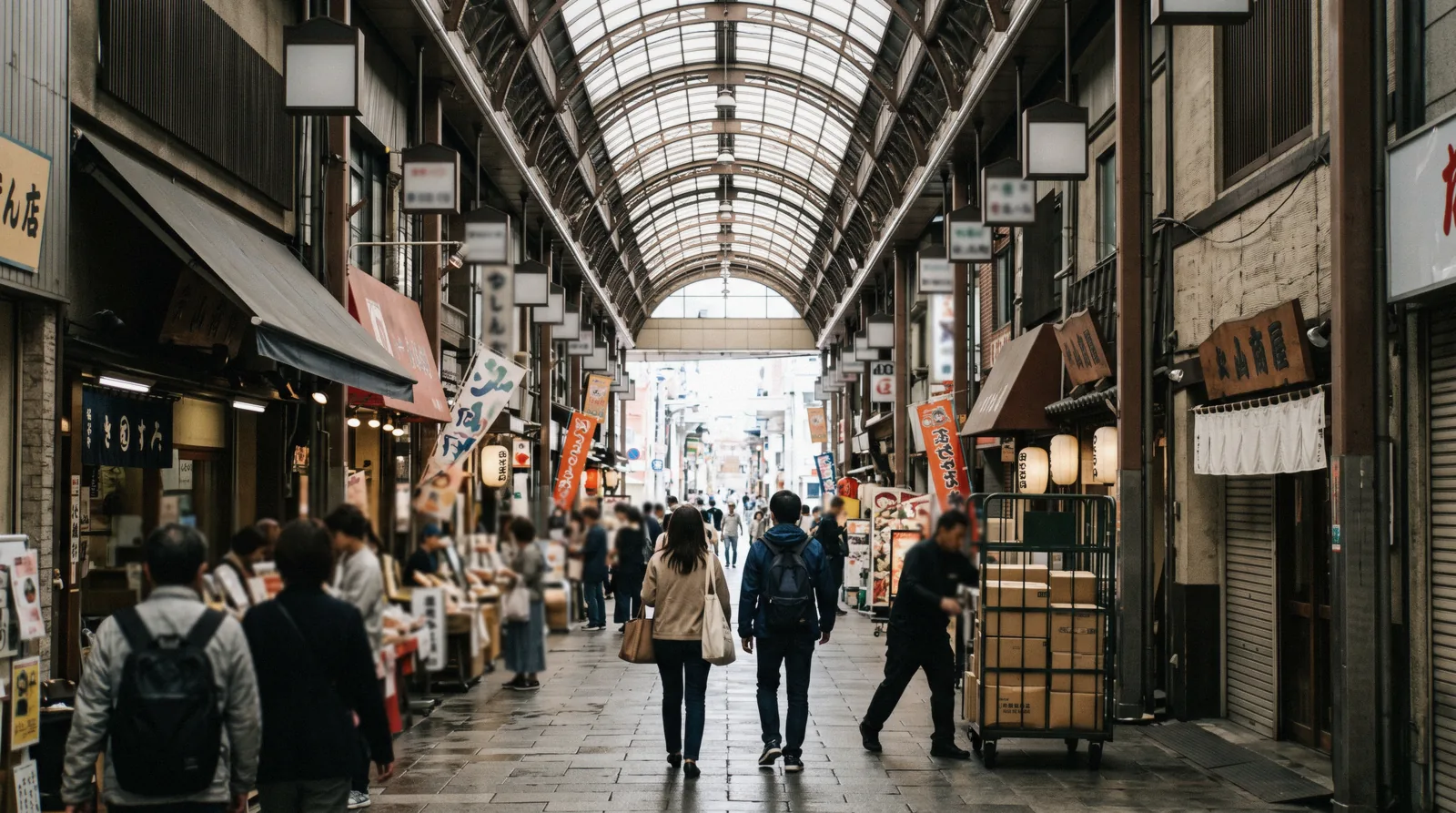
Shinsaibashi-suji
Shinsaibashi is the covered shopping arcade that runs north to south through the middle of Minami, and the single most-walked stretch of retail in Osaka. The city's tourism bureau gives it about 580 metres, a history of about 380 years and a footfall of roughly 60,000 people on a weekday and 120,000 at the weekend. The shopkeepers' own association — the body that actually runs the street — publishes none of those numbers, nor a shop count, nor a founding year, nor any opening hours at all. This page prints each figure with the source it came from, sets out what is actually on the 580 metres, and says which hour to walk it. The rest of the city is on the Osaka city guide homepage. Yen first, with dollar approximations at ¥1,000 = about $6.27 (European Central Bank reference rate via frankfurter.dev).
Quick answer 580 metres, 380 years, 120,000 people — and who says so
Shinsaibashi-suji is about 580 metres of roofed arcade running from south of Nagahori-dori to Soemoncho-dori, with about 380 years of history behind it and, on the tourism bureau's published counts, roughly 60,000 visitors on a weekday and 120,000 at the weekend. It is free, it has no gate, and there is no arcade-wide opening time — the bureau's own wording is that business hours vary by individual store. Read on the Osaka Convention and Tourism Bureau's spot page.
Key takeaways
- Every number above comes from the tourism bureau, not from the street: the association's own site publishes no length, no shop count, no founding year and no hours — a point worth carrying into every other arcade you read about
- The trades the bureau lists are kimono tailors, western clothing and footwear, restaurants, jewellers and boutiques — the mix that makes it a shopping street rather than a food street
- For eating, the guided food walk at $51.13 covers twelve dishes and two drinks in two and a half hours, and the sushi class at $43.70 sits in these blocks; the rest of the city's eating is on the food page
- One roof, one straight line: the arcade is the dry route between the canal strip at its south end and the Nagahori shops at its north
Key facts
Opening hours
| The arcade itself, all year | Open at all hours–No closing time — it is a public street with a roof |
|---|---|
| The shops | Vary by store–Most department-store and chain units close in the evening |
Closed None published — neither the association nor the tourism bureau states a closed day for the street or a common one for its shops
Admission
- Adult
- Free to walk
- Reduced
- Not applicable
- Free
- The whole arcade; you pay only for what you buy
Planning it
- Time needed
- Not stated by anybody; our routing: 25 to 35 minutes to walk end to end without stopping, an afternoon if you actually shop
- Book ahead
- Optional — walk-up usually fine
- Address
- 1-2 Shinsaibashisuji, Chuo-ku, Osaka — one minute from Shinsaibashi Station (Osaka Metro Midosuji and Nagahori Tsurumi-ryokuchi lines)
Nothing on this street is ticketed, so the comparison is between walking it yourself and paying somebody to route you through the eating around it. Street details are the tourism bureau's, read on in Q3 2026; tour prices are GetYourGuide's listings on the same date, in the platform's US dollars.
The arcade is free and open at any hour, so the only question is whether you pay somebody to route you through the eating around it — $35.71 for a general walk, $51.13 for twelve dishes.
| Option | Price | What it covers | Cancel | Book |
|---|---|---|---|---|
| Walk it yourselfAnyone shopping; 580 metres of roofed arcade with no gate and no ticket | Free; you pay only for what you buy | About 580 metres of roofed arcade, open at any hour, no gate and no ticket | Not applicable | Official site |
| Guided food walk, 12 dishes and 2 drinks, 2.5 hoursVisitors who want the sake bars and the Michelin-listed stall found for them | From $51.13 | Sake bars locals use plus a stall from the Michelin guide; meets by the Don Quijote on Midosuji | Free up to 24 hours before | Check Availability |
| Sushi-making class, 100 minutesPeople who would rather cook than be walked around; the meal is included | From $43.70 | Two kinds of sushi, ingredients, English instruction and the meal, in these blocks | Free up to 24 hours before | Check Availability |
| City walking tour, 3 to 7 hoursA first day, when this quarter should be seen alongside the markets | From $35.71 | A private or shared walk that takes in this quarter and the markets, with a snack included | Free up to 24 hours before | Check Availability |
No tour sells the arcade itself, because there is nothing to sell: it is a public street you can walk at three in the morning if you want to. What the cards buy is the eating and the ordering around it, which is where a visitor actually loses time.
Food walks and classes in these blocks
None of these is an arcade tour — no operator sells one. They are the food walks and classes whose routes and meeting points sit in this quarter, which is the honest reason they are on this page. Prices are the platform's listings in US dollars.
 from $51.13
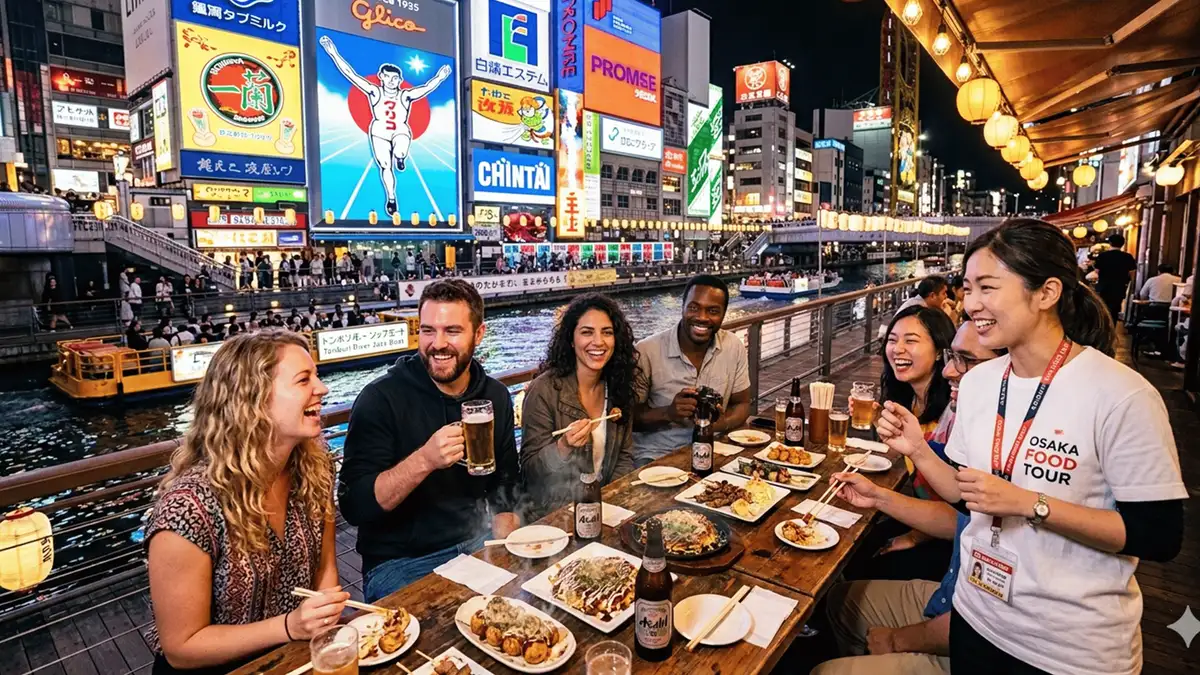
Osaka: Guided Food Tour with 12 Dishes and 2 drinks
Twelve dishes and two drinks in two and a half hours, taking in sake bars locals use and a street stall listed in the Michelin guide. Well rated, and among the cheaper options per dish in this group.
Check Availability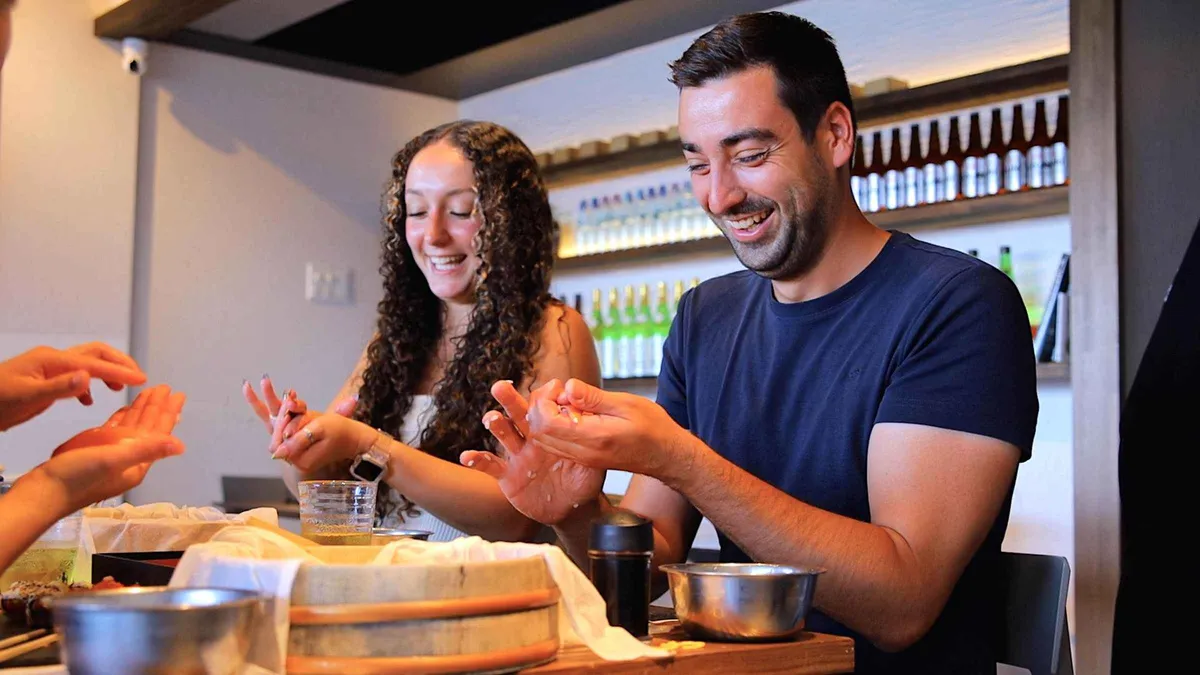 from $43.70
Osaka: Roll and Authentic Sushi Making Class in Dotonbori
A hundred minutes making rolled and hand-formed sushi in central Dotonbori, then eating it — ingredients, English instruction and the meal included. The most reviewed cooking class in this list and the cheapest of them.
Check Availability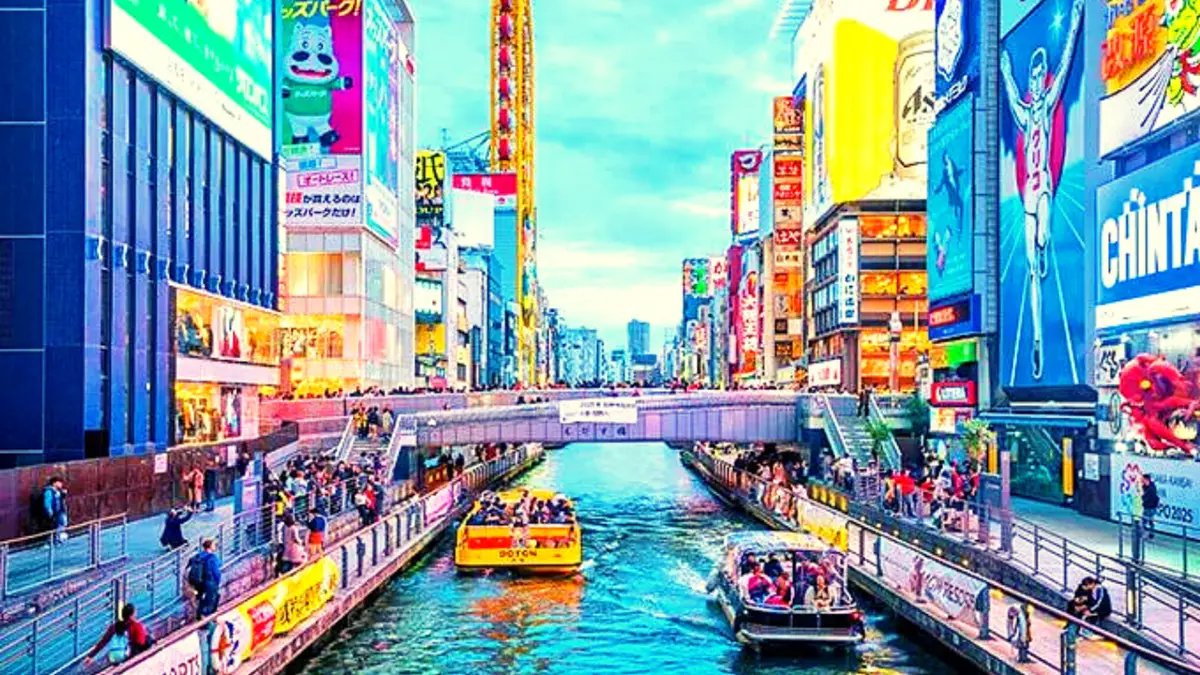 from $35.71
Osaka: Private or Group Hotspots & Hidden Gems Walking Tour
A three-hour walk that stretches to seven if you want it to, private or shared, with a takoyaki and a retro vending-machine drink included. The longer options use trains, which you pay for — usually under ¥1,000 a head.
Check Availability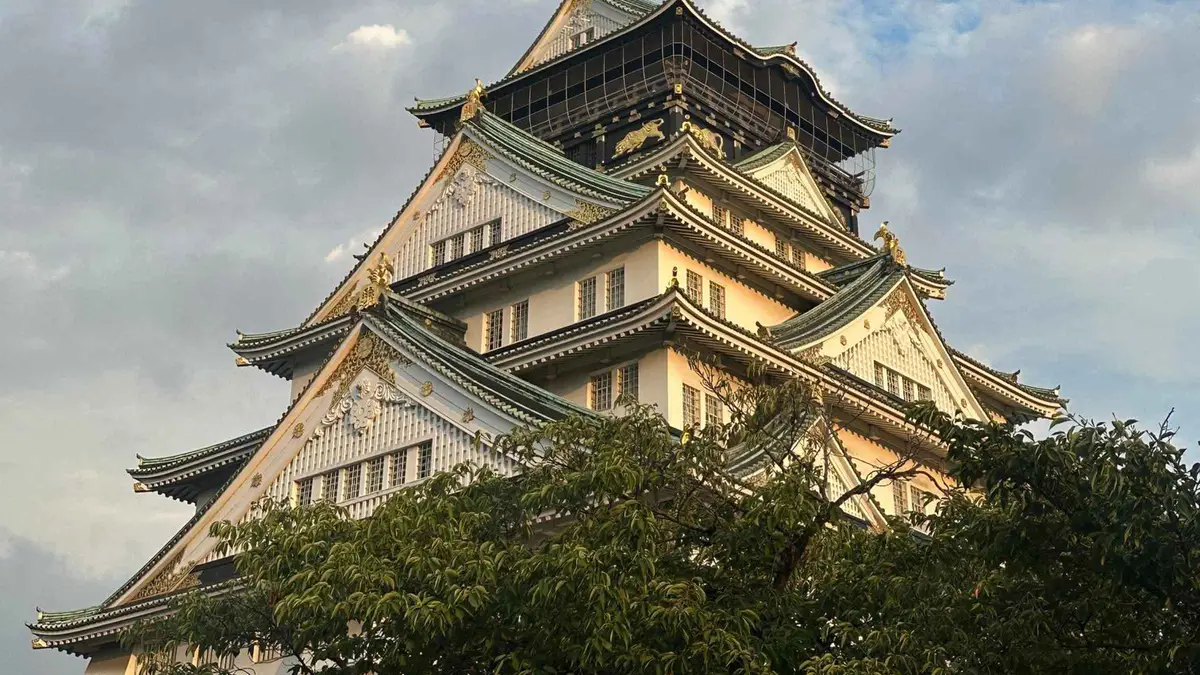 from $49.74
Osaka: Essential City Loop Tour with Local Guide
Five hours in a group of eight covering the castle, the Showa-era backstreets and the neon strip in one loop, with food bought stop by stop instead of a sit-down lunch. Only four people have rated it so far.
Check AvailabilityPrices, ratings and details are the platform's own. Dollar figures are the listed prices. The platform bills in your account's currency.
Two sources, and they do not overlap
The street has an official body and a tourism bureau, and only one of them publishes anything you can use.
The Shinsaibashi-suji Shopping Street Promotion Association is a real organisation with an office on the second floor of the Daimaru Shinsaibashi Wako building at 1-6-6 Shinsaibashisuji, and a telephone number the bureau prints, 06-6211-1114. Its website states no length for the arcade, no member-shop count, no founding year and no uniform opening hours. That is not an oversight — a shotengai association exists to run a street's shared costs and events, not to describe it to visitors.
Everything commonly quoted about this arcade therefore comes from the Osaka Convention and Tourism Bureau: about 580 metres, from south of Nagahori-dori to Soemoncho-dori; a history of about 380 years, already an established shopping area in the Edo period; approximately 60,000 visitors on weekdays and 120,000 at weekends. Those four figures are the bureau's, and this page attributes them every time it uses them.
It is worth knowing how thin that layer is, because it repeats. The same pattern — a tourism bureau doing the describing while the street's own body says nothing — holds for the market arcade in Nippombashi and, in a stranger form, for the long street north of the river, where the claim everyone repeats has no public certifier at all.
What is actually along the 580 metres
The bureau's own list of trades, and what that means when you are standing in it.
The bureau names kimono tailors, western clothing and footwear shops, restaurants, jewellers and boutiques. In practice the arcade reads in three layers stacked on the same street. At ground level under the roof it is chain retail and drugstores at a density that surprises people — cosmetics, sportswear, fast fashion, and the queue-forming dessert shops. Above and behind it, on the cross streets, are the department stores; the association's own office is inside one of them, which tells you how the street and the stores relate.
The third layer is the older trade the bureau bothers to name first: kimono and footwear houses that have been on this street for generations and look nothing like the shops either side of them. They are the reason the 380-year figure is not decoration.
What the arcade is not is a food street. There are restaurants along it and dessert queues in it, but the eating that Osaka is known for happens on the cross streets and one block south — which is why every food walk in the cards above meets nearby rather than on the arcade. The MICHELIN Guide Kyoto Osaka 2026 lists no Bib Gourmand address on the arcade itself; the ones it gives in the same ward are Tonkatsu Minato at 2-9-26 Shimanochi and Kushikatsu Gojoya at 2-1-11 Uchihiranomachi. Michelin publishes no opening hours and no closed day for either, so check the venue's own site before you walk to one. Since the eating worth planning around sits on the cross streets and a block south rather than on the arcade itself, the sensible next step is to look at things to do in Osaka and at Osaka tours that meet nearby.
What each of Osaka's covered streets publishes about itself
The same four questions asked of each arcade, with the body that answers them. Everything here is from the Osaka Convention and Tourism Bureau's spot pages and from each association's own site.
| Street | Length published | Shops published | Who publishes it |
|---|---|---|---|
| This arcade | About 580 m | Not stated by anybody | Tourism bureau; the association publishes nothing |
| The long street north of the river | About 2.6 km | About 800 | Tourism bureau, plus a private records register |
| The market arcade in Nippombashi | About 580 m | About 150 — the bureau's second page says almost 170 | Tourism bureau; the market's own site is unreachable |
| The alley in the south | 130 m | About 50 | Tourism bureau |
| The vintage quarter west of here | Not stated | Not stated | Nobody — its association publishes no boundary at all |
The pattern is the point. Four of Osaka's five best-known shopping districts are described to visitors by one organisation that does not own any of them, and the fifth is described by nobody. Where two official pages disagree — as the bureau's own two pages do on the Nippombashi shop count — this guide prints the lower figure and says which page it came from.
The footfall figures, and what they feel like
60,000 and 120,000 are the only crowd numbers anybody publishes for an Osaka street, so they are worth doing the arithmetic on.
Spread the bureau's weekday count over its published 580 metres and you get roughly 103 people per metre of street across the day; at the weekend it is about 207. That is our arithmetic on the bureau's two numbers, not a published density — but it explains the thing visitors notice, which is that the arcade does not get gradually busier, it doubles.
What that means in practice: on a weekday morning the arcade is a covered through-route and you can walk it end to end in half an hour. On a Saturday afternoon the same walk takes closer to fifty minutes and stopping to look in a window means stepping out of a moving column. Neither is unpleasant — the roof is high and the street is wide by Japanese standards — but they are different errands.
The practical consequences are small and worth knowing. Prams and suitcases are hard work at weekend density, so the luggage lockers are the better plan before you shop. Tax-free counters inside the bigger stores queue at the same hours the street peaks. And if you want photographs of the arcade rather than of the back of somebody's head, it has to be before about 11:00.
- Weekday before 11:00 — a through-route; the shops are opening around you
- Weekday afternoon — the shopping street working, and the easiest time to buy anything
- Weekend afternoon — the published 120,000; expect to move at the crowd's pace
- Evening — chains close, the restaurants and the cross streets take over
Opening hours: why nobody can give you one
This is the most-searched question about the arcade and it has no answer, for a structural reason.
The tourism bureau's line is exact and it is the whole story: business hours vary by individual store. The association publishes no hours either. So an arcade-wide opening time does not exist, and any guide that gives you one — 10:00 to 21:00 is the usual invention — has made it up from a couple of chain storefronts.
What is true is that the street itself never closes. It is a public road with a roof over it, and you can walk the full 580 metres at any hour of the night; the shutters simply come down over the shopfronts. The same applies to closed days: neither body publishes one for the street, and the chains and department stores each set their own, mostly around New Year.
If you need certainty for a specific shop, the only reliable source is that shop's own site or its Google listing. This guide states hours for a venue only where the venue publishes them, which is why you will not find a single arcade-wide time anywhere on this page.
Eating, smoking and the rules that actually exist
One of these is enforced with a fine; the other is not published anywhere at all.
Osaka City banned street smoking across the whole city from Monday 27 January 2025, extending what had been six designated districts to roads, squares, parks and other public places the city manages. Heated tobacco is covered as well as lit cigarettes, and the penalty is a $6.27 (¥1,000) non-criminal fine. A covered arcade is exactly the kind of public place the ordinance names, so this is the one rule on the street with money attached.
The rule people expect — a ban on eating while walking, the tabemaruki rule — is not published by this arcade, or by any other Osaka district we checked. Kyoto's markets post one and Osaka's do not. That is a genuine difference between the two cities, and it is why this page does not tell you it is forbidden.
What is still true is that the older shops would rather you ate in front of them than in the middle of a moving crowd, and the dessert queues that form here are the main reason the column stops. Eat where you bought it, use the shop's bin, and you have solved the entire etiquette question without anybody needing to publish a rule.
- Street smoking: ¥1,000 fine, city-wide, since 27 January 2025 — heated tobacco included
- Eating while walking: no published rule here, unlike in Kyoto's markets
- Cash still moves faster than cards in the older kimono and footwear shops
- Tax-free counters sit inside the department stores, not on the arcade itself
Getting there, and which end to start from
One station serves it directly, and the direction you walk decides what you end up next to.
The bureau gives the address as 1-2 Shinsaibashisuji, Chuo-ku, one minute from Shinsaibashi Station on the Osaka Metro Midosuji and Nagahori Tsurumi-ryokuchi lines. That puts you at the north end, by Nagahori-dori. Walk south and the arcade delivers you at Soemoncho-dori, a block from the canal — which is the direction to take if the plan is shopping first, dinner after.
Come the other way, from Namba, and you walk north through the same 580 metres to the department stores and the Nagahori shopping under the road. Both ends have a subway entrance, so the arcade is never more than a few minutes from a train.
Osaka Metro fares run by zone: $1.19 up to 3 km, then $1.50, $1.82, $2.13 and $2.45 (¥190 · ¥240 · ¥290 · ¥340 · ¥390). Almost every trip from central Osaka to here is the ¥190 or ¥240 band. If the day includes three or more rides, the Enjoy Eco Card at ¥820 on a weekday or ¥620 at a weekend or public holiday covers all Metro and Osaka City Bus lines for one calendar day — the weekend price follows the calendar rather than the timetable, so Obon and New Year still sell the weekday card. The getting-around page has the passes in full.
| From | Line | Fare | Walk at the end |
|---|---|---|---|
| Namba | Midosuji, one stop | $1.19 (¥190) | The arcade starts at the station exit |
| Umeda | Midosuji, three stops | $1.50 (¥240) | One minute to the north end |
| Osaka Castle area | Nagahori Tsurumi-ryokuchi | $1.50 (¥240) | Direct to the north end |
| Anywhere, three or more rides | Enjoy Eco Card | ¥820 weekday / ¥620 weekend | Covers Metro and city buses all day |
Shinsaibashi map: the arcade line and its two ends
The arcade runs north to south under a continuous roof; the pins mark its two ends, the station and the quarters either side. Arcade coordinates from OpenStreetMap and Wikidata.
Pins are OpenStreetMap and Wikidata coordinates, not our own survey; the arcade itself is mapped as three separate ways in OpenStreetMap, one per chome.
Next stop from the arcade
Four things sit within ten minutes of the roof. Walk times are our estimates from the mapped distances.
The vintage quarter
Cross Midosuji and the register changes completely: warehouses converted in the 1970s to sell American West Coast vintage, and a district whose own association publishes no boundary, no shop count and no founding year. The quarter's page is built around that absence.
About 4 minutes westThe canal strip: Dotonbori
The arcade's south end is a block from the water and the signs. Shinsaibashi and Dotonbori are not the same place and are often written about as if they were: one is a covered shopping street, the other is a canal-side eating and signage strip that starts where the roof stops. This is the standard pairing — shopping under the roof, dinner and the neon after — and the food walk in the cards above meets between the two.
About 5 minutes southThe market arcade
The same 580 metres of roof, a completely different trade: about 150 stalls of fish, fruit and knives. Its hours are not published either — the market's own association site could not be read at all.
About 12 minutes south-east, or one stop on the Sennichimae lineThe lion-head shrine
A quiet counterweight to a shopping afternoon, and free — although the shrine publishes neither an admission fee nor opening hours on its own site, which the shrine page explains rather than papers over.
About 15 minutes south-westShinsaibashi questions
What is Shinsaibashi famous for?
Being the busiest covered shopping street in Osaka: about 580 metres of roofed arcade with roughly 60,000 people a day through it on a weekday and 120,000 at the weekend, per the tourism bureau. The trades it names are kimono tailors, western clothing and footwear, restaurants, jewellers and boutiques — a shopping street rather than a food street.
How long is the Shinsaibashi-suji arcade?
About 580 metres, from south of Nagahori-dori to Soemoncho-dori. That figure is the Osaka Convention and Tourism Bureau's; the shopkeepers' association that runs the street publishes no length at all. Several popular walking videos round it to 600 metres, which is the same walk described by somebody else's rounding.
What are Shinsaibashi's opening hours?
There are none. The street is a public road with a roof and never closes; the bureau's own wording for the shops is that business hours vary by individual store, and the association publishes nothing. Any source giving you a single arcade-wide time has invented it from a few chain storefronts.
Is Shinsaibashi worth visiting?
Yes if you are shopping or crossing Minami on a wet day — it is the dry, straight line through the middle of it. No if you came to eat, because the eating is on the cross streets and one block south; the guided food walk at $51.13 exists precisely because the good counters are not on the arcade.
How busy does Shinsaibashi-suji get?
The published counts are about 60,000 on a weekday and about 120,000 at the weekend. Spread over the bureau's 580 metres that is roughly 103 and 207 people per metre of street across the day — our arithmetic, not a published density. In practice the crowd doubles rather than builds, so a weekday morning and a Saturday afternoon are two different errands.
Can you eat while walking in Shinsaibashi?
No rule against it is published — not by this arcade and not by any other Osaka district we checked, which is a real difference from Kyoto. What is enforced is the smoking ban: $6.27 (¥1,000) anywhere in the city since 27 January 2025, heated tobacco included.
How do you get to Shinsaibashi?
Shinsaibashi Station on the Osaka Metro Midosuji and Nagahori Tsurumi-ryokuchi lines is one minute from the north end; from Namba you can simply walk in from the south. Fares are ¥190 for the first zone and ¥240 for the second, so almost anything central costs $1.19–$1.50 (¥190–¥240) each way.
Where the arcade fits in an Osaka day
It is a connector as much as a destination, and that is its best use.
The shape that works is one straight line through Minami: the department stores and the arcade in the afternoon, the vintage streets west of it when you have had enough of chain retail, then out at the south end for dinner by the canal. That is about two hours of walking with as much shopping in the middle as you want, and it costs nothing to move between any of it.
On a wet day the same line is the reason to be here at all — Osaka's rain sits at 193 mm in June, 197 mm in July and 169 mm in September on the ERA5 1995 to 2024 normals, and 580 metres of roof is a genuine plan rather than a consolation. The two-day itinerary routes the second afternoon through here; the rainy-day page uses it as the spine of a whole afternoon.
Shinsaibashi on film: the arcade end to end
Three walk-throughs, each id checked against YouTube's own record and its thumbnail. One walks it in the quiet morning, one at full weekend density, and one shows what the shopping actually looks like.
Beat the Crowds! OSAKA Shinsaibashi-Suji Shopping Street Morning Walk 2025 | Japan | 4K HDR
The arcade before about 11:00, which is the version most visitors never see.
Video: Sights and Strides PH🇯🇵 Osaka’s 600m-Long Shopping Street | Shinsaibashi Shopping Arcade [4K]
A full end-to-end walk — and the title is where the 600-metre rounding comes from.
Video: Walk the Walk【4K】𝐖𝐀𝐋𝐊 🇯🇵 Shinsaibashi-Suji Shopping Street in Osaka, Japan
The same street at shopping-hour density, storefront by storefront.
Video: Immerse In WalkingVideos load from YouTube only when you press play.
Prices, hours and terms are set by the venue or operator and confirmed at checkout.
We may earn a commission if you book through one of our links, at no extra cost to you. Full affiliate disclosure