 Osaka City Guide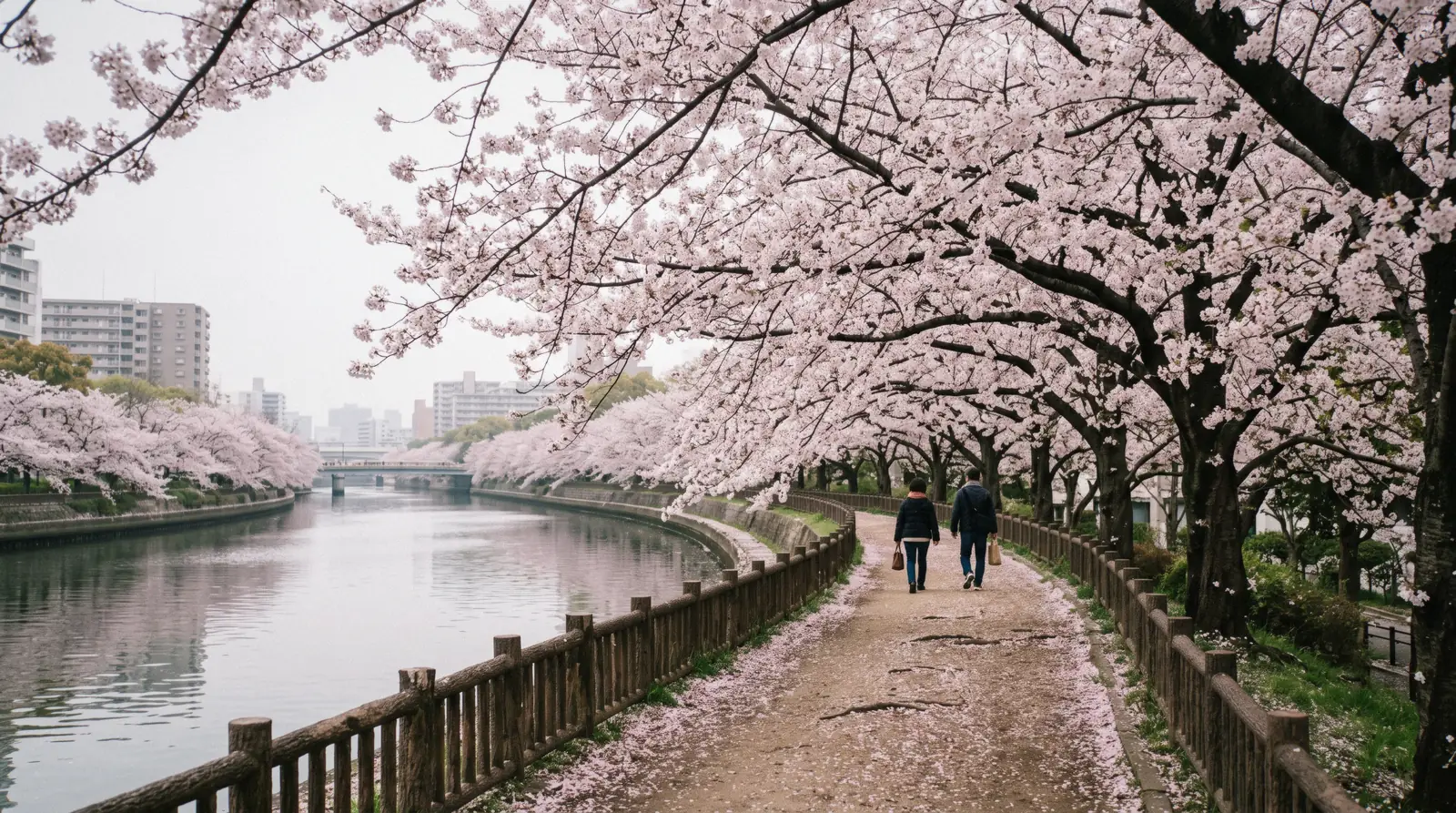
The Best Time to Visit Osaka
The best time to visit Osaka has three different answers depending on whether you are optimising for weather, for spectacle or for price, and this page keeps them apart. The temperature and rainfall below are computed from a thirty-year climate series for the city centre rather than copied from a brochure; the blossom and rainy-season dates are the Japan Meteorological Agency's own normals for Osaka, not a guess; and the price layer — which day of the week your subway pass costs less, which dates the aquarium charges more, when the lodging tax bands bite — is taken from the operators' own tariffs. Yen comes first throughout with a dollar gloss at ¥1,000 ≈ $6.27 (European Central Bank reference rate via frankfurter.dev). The rest of the practical layer sits on the Osaka plan hub, and for the city itself start with top places to visit in Osaka.
Quick answer Best weather, best spectacle, cheapest month — in four lines
On the numbers, late October and early November are the best time to visit Osaka: average highs of 22.2 °C and 16.4 °C, the driest stretch of the warm half-year and no rainy season. April is the prettiest and the busiest — the weather agency's normal for Osaka has the cherries flowering on 27 March and at full bloom on 4 April. August is the month to avoid if you can: a 31.8 °C average high, 12.4 rainy days and the highest typhoon-approach normal of the year alongside September. Temperature and rainfall computed here from the Open-Meteo ERA5 reanalysis for the city centre, 1995–2024.
Key takeaways
- The rainy season is a real date, not a mood: the Kinki normal is around 6 June to 19 July, and in 2026 it ran 2 June to 9 July with 116% of normal rainfall
- Cheapest month to be here is February, and the cheapest day of any week is a weekend — the Enjoy Eco Card subway pass costs $3.89 (¥620) on a Saturday against $5.14 (¥820) on a Tuesday
- Book indoors for July and August: the aquarium, teamLab's night garden and an evening river cruise are the shapes of day that survive the heat
- The fixed dates that move hotel prices — Tenjin Matsuri on 24–25 July, the two Kishiwada weekends, the fireworks on 17 October 2026 — are all on the Osaka events calendar
Osaka Month by Month
Average daily high in Celsius with the Fahrenheit reading underneath, computed here from the Open-Meteo ERA5 reanalysis for 34.69 N, 135.50 E across 1 January 1995 to 31 December 2024. The bands under the chart are our reading of what those numbers mean on foot, in a city whose sights are mostly reached by a walk from a subway exit.
August is the hottest month at 31.8 °C but July is the wetter one, with 197 mm across 15.0 rainy days against August's 126 mm over 12.4. November is the driest month of the pleasant half of the year at 86 mm, which is the single strongest argument for going then.
Every Month, and What It Actually Gets You
Temperature and rainfall are our own computation from the ERA5 reanalysis for the Osaka city centre over 1995–2024, run in Q3 2026; a rainy day is any day with at least 1 mm. The crowd column is our reading of the calendar rather than a measurement — the city publishes no monthly visitor count, and we say so rather than inventing one.
| Month | Avg high | Rain / rainy days | Crowds | What the month is for |
|---|---|---|---|---|
| January | 8.4 °C (47°F) | 57 mm / 6.3 | Lowest | The cheapest rooms of the year; clear cold light on the castle moat and no queue anywhere |
| February | 9.5 °C (49°F) | 66 mm / 7.3 | Low | Cheapest month overall; the castle plum grove is in bloom and free to walk |
| March | 13.2 °C (56°F) | 112 mm / 10.8 | Rising | Flowering normal is 27 March, so the last week turns; Nishinomaru Garden reopens its evening season |
| April | 18.4 °C (65°F) | 126 mm / 10.4 | Peak | Full-bloom normal is 4 April — the prettiest week of the Osaka year and the most expensive |
| May | 23.1 °C (74°F) | 160 mm / 11.1 | Moderate | Warm, green and dry-ish before the rains; the best month for a day trip |
| June | 26.4 °C (80°F) | 193 mm / 13.4 | Low | Rainy season from about the 6th; indoor Osaka is at its best and rooms are cheap |
| July | 29.9 °C (86°F) | 197 mm / 15.0 | High in town | Wettest month, and Tenjin Matsuri on the 24th and 25th fills central hotels |
| August | 31.8 °C (89°F) | 126 mm / 12.4 | Peak | Hottest month, Obon travel, and the highest typhoon-approach normal alongside September |
| September | 28.1 °C (83°F) | 169 mm / 12.3 | Moderate | Still 28.1 °C; the Kishiwada danjiri weekend on the 19th and 20th is the fixed point |
| October | 22.2 °C (72°F) | 156 mm / 9.6 | Rising | The best all-round month; the Naniwa Yodogawa fireworks fall on the 17th in 2026 |
| November | 16.4 °C (62°F) | 86 mm / 7.4 | Moderate | Driest of the mild months at 86 mm; autumn colour at Minoh rather than in the city |
| December | 10.8 °C (51°F) | 60 mm / 6.7 | Falling | Illuminations along Midosuji; the castle keep shuts 28 December to 1 January |
Read June and July as volume rather than duration. The rain arrives in heavy bursts and clears, and Osaka's covered arcades — Shinsaibashi-suji, Tenjinbashisuji and the length of Kuromon Ichiba — mean a wet day here costs you far less than a wet day in a temple city.
Cherry Blossom, on the Weather Agency's Own Numbers
The dates everybody plans around, taken from the observation record rather than from a forecast blog.
The Japan Meteorological Agency keeps a standard tree at its Osaka observation site and publishes two dates for it every year: flowering (開花), when the first blossoms open, and full bloom (満開), when about eighty per cent are out. The normals, averaged over 1991–2020, are 27 March for flowering and 4 April for full bloom. The species observed is Somei-yoshino, which is also the tree planted in the great majority of Osaka's parks, so the observation travels well across the city.
What the record shows just as clearly is how far the date moves. Across the last six seasons flowering has fallen between 19 March and 30 March, and full bloom between 27 March and 6 April — an eleven-day spread from the earliest to the latest. Nobody can honestly promise you blossom on a date booked months out. The planning answer is to travel in the last week of March or the first week of April, and to accept whichever stage you arrive at: the week before full bloom, with the buds pink and the paths still walkable, is not a consolation prize.
These figures were read from the agency's own sakura tables (data.jma.go.jp, series sakura003 and sakura004, station 07).
Where the Blossom Is, and What It Costs
Osaka's set piece is the castle park, and specifically Nishinomaru Garden inside it: 6.4 hectares, about half of it open lawn, and about 300 cherry trees, mostly Somei-yoshino, with the keep standing over them. Its admission went from ¥200 to $1.88 (¥300) on 1 April 2026, and the evening cherry-viewing season keeps a $2.19 (¥350) rate that the revision left alone. Junior-high age and under are free, as are Osaka-city residents aged 65 and over on proof, and holders of a disability certificate — the wider disability picture is on the accessibility page.
The operator's own facility page gives the garden as 09:00–17:00 from March to October, closing 16:30 from November to February, with last entry thirty minutes before, closed on Mondays and from 28 December to 4 January. It then adds the line that matters and refuses to complete it: 「観桜期は、開園時間が異なります」 — the hours change during the cherry-viewing period, and it does not publish what they change to. They are announced each spring. So if you are planning an evening under the trees, the fee is knowable in advance and the closing time is not; check the park operator's site in the week you travel.
Outside the paid garden, the blossom is free. The rest of the castle park, the Okawa river banks upstream of Sakuranomiya and the approach to Shitennoji all carry cherry trees and none of them charges to walk under one.
The Plum Grove, Which Almost Nobody Plans For
Four to six weeks before the cherries, the same park has a plum grove east of the inner moat: about 1.7 hectares, roughly 1,245 trees and 105 varieties, opened in March 1974 after alumni of Osaka Prefectural Kitano High School donated 880 trees of 22 varieties to the city for their school's centenary. It sits in the free part of the park and no admission is stated.
The operator publishes no plum season. It runs a per-variety bloom tracker instead, and the live table was still showing the 13 March 2026 state of that season. That is the honest position: nobody publishes a plum date range for Osaka, and February visitors should check the tracker rather than a listicle. It is also the strongest reason to consider February, which is otherwise the cheapest and quietest month of the Osaka year.
The Rainy Season and the Typhoon Months
Two things every Osaka month-by-month article gestures at, both of which have published numbers.
Tsuyu, the rainy season, is declared regionally by the weather agency and Osaka sits in the Kinki region. The normal for Kinki, averaged over 1991–2020, is a start around 6 June and an end around 19 July. In 2026 the confirmed table gives a start around 2 June and an end around 9 July, with rainfall over the period at 116% of normal — a slightly early, slightly wet season. For contrast, 2025 ended around 27 June, the earliest end on record since the series began in 1951.
One caution on those figures, because it is the sort of thing that gets copied wrongly: the agency publishes provisional (速報値) dates during the season and confirms them afterwards, and for 2026 the two differ by two days at each end — the provisional pair was 4 June and 8 July. The dates above are the confirmed table.
What that means in practice is less dramatic than it sounds. June averages 193 mm across 13.4 rainy days and July 197 mm across 15.0, but roughly half the days in each month still record under a millimetre. The rain comes in bursts. Rooms are cheap, the arcades are dry, and the aquarium, the museums and the covered markets are all indoor days that do not feel like a compromise.
Typhoons: Say Japan, Not Osaka
The agency publishes typhoon normals for 1991–2020 nationwide, and it does not publish a per-prefecture figure — so any article giving you an Osaka typhoon count has made it up. The national normals are worth reading anyway, because the pattern is unambiguous.
| Month | Formations | Approaches to Japan | Landfalls |
|---|---|---|---|
| May | 1.0 | 0.7 | 0.0 |
| June | 1.7 | 0.8 | 0.2 |
| July | 3.7 | 2.1 | 0.6 |
| August | 5.7 | 3.3 | 0.9 |
| September | 5.0 | 3.3 | 1.0 |
| October | 3.4 | 1.7 | 0.3 |
| November | 2.2 | 0.5 | — |
| Whole year | 25.1 | 11.7 | 3.0 |
August and September are the two months that carry the risk: 3.3 approaches each in an average year, and September holds the highest landfall normal of the year at 1.0. A typhoon rarely ruins a whole trip — it typically costs a day, with trains suspended in advance on a published schedule rather than without warning — but it is a real argument for travel insurance in those two months and for keeping a flexible day in a September itinerary.
The practical protection is a plan B that does not involve being outdoors: the aquarium at Tempozan, the museums, Spa World and the arcades all work in weather that closes an observation deck. Osaka's three tower decks — Umeda Sky, Abeno Harukas and Tsutenkaku — are the sights a storm actually takes from you, and only the first of the three is open-air.
Heat, Honestly
August's 31.8 °C average high understates the experience, because it is a daily maximum rather than a feel: the humidity is high, the nights stay warm and much of the city's walking is on concrete between subway exits. Osaka is not a temple city where the shade does the work for you.
The way locals handle it is to move the day to its ends. Sights open early — Sumiyoshi Taisha opens its gates at 06:00 from April to September — and the city's best hours in summer are before nine and after six. Tsutenkaku admits until 21:15, Umeda Sky until 22:00, Abeno Harukas until 21:30, and teamLab's botanical garden does not open until the evening at all. Between noon and four, go underground: the Umeda and Namba subterranean malls run for kilometres and are air-conditioned end to end.
The Price Calendar: What Your Dates Do to the Bill
Osaka prices several of its headline attractions by the date, and two of its passes by the day of the week. This is the part of “when to go” that nobody writes down.
Start with the two attractions that have no single price. Osaka Aquarium Kaiyukan publishes four bands and assigns each date to one about two months ahead: ¥2,800 / ¥2,900 / ¥3,200 / ¥3,500 for an adult, which is $17.56 to $21.95 at our stated rate. The band follows demand, so a mid-week day in February and a Saturday in a school holiday are a $4.39 (¥700) difference for the same tanks. Universal Studios Japan goes further and prices every single day, publishing every figure as “from”: a 1-Day Studio Pass is from $52.70 (¥8,400), a child pass from $34.50 (¥5,500), and USJ states plainly on its own Express page that prices move with stock and that only its ticket store shows the live figure.
Then the passes. The Enjoy Eco Card, the one-day subway and city-bus pass, costs $5.14 (¥820) on a weekday and $3.89 (¥620) on a Saturday, Sunday or public holiday, with the child card $1.94 (¥310) on any day. It follows the calendar rather than the timetable, so Obon and the New Year run a holiday timetable and still sell the weekday card. The Osaka Amazing Pass at $23.80 (¥3,800) for one day and $33.90 (¥5,400) for two has no weekday split, but it does have a season: the edition on sale runs from 25 March 2026 to 31 March 2027 only.
The Lodging Tax Nobody Has Updated
Osaka Prefecture rebanded its accommodation tax on 1 September 2025, and most travel sites are still printing the old ¥100 / ¥200 / ¥300 bands. The current bands are:
- Under $31.40 (¥5,000) per person per night: no tax at all. The old threshold caught cheaper rooms; this one does not.
- ¥5,000 to under ¥15,000: $1.25 (¥200) per person per night.
- ¥15,000 to under ¥20,000: $2.51 (¥400) per person per night.
- ¥20,000 and over: $3.14 (¥500) per person per night.
- School-trip pupils and their escorts are exempt from 1 November 2025 onwards, as are foreign ambassadors.
Room rates themselves are the biggest seasonal number and the one we will not put a figure on: no authority publishes an Osaka average nightly rate by month, and any table that does is a scrape of one booking site. What we will say from the calendar is where the pressure points sit — blossom week at the very end of March and start of April, the Obon fortnight in mid-August, the two Kishiwada danjiri weekends in September and October, and the night of the Naniwa Yodogawa fireworks on 17 October 2026. Those are the dates to book months rather than weeks ahead.
The area-by-area version of that decision is on where to stay in Osaka.
What to Book in Each Season
Indoor and evening experiences carry a wet or a very hot month; the walking tours are what you want in the four good-weather months. Prices are GetYourGuide's own listings in US dollars, and they move with the platform — the figure at checkout is the one that counts.
 from $12.49
Osaka: Dotonbori River Cruise with Glico Sign & Neon Views
Twenty minutes on the water past the Glico sign, boarding at Minatomachi Pier rather than the Tombori River Walk, and you may bring your own drinks. The rival Tombori River Cruise is free with the Osaka Amazing Pass; this boat is not.
Check Availability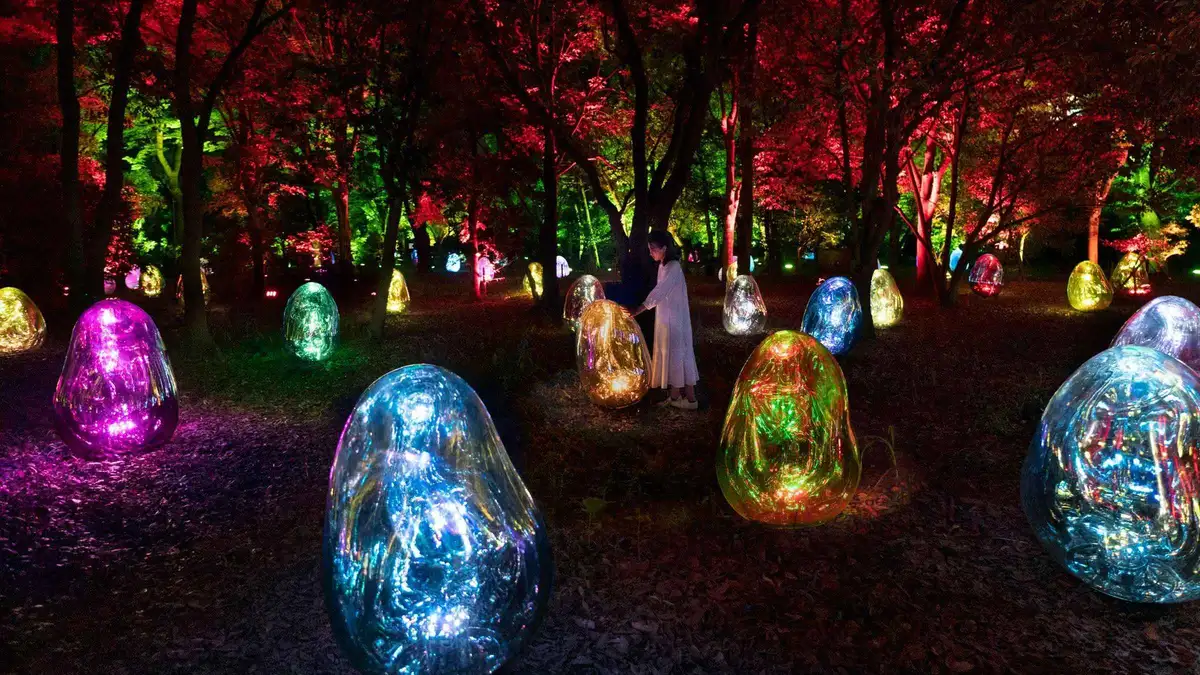 from $11.86
Osaka: teamLab Botanical Garden Entry Ticket
A date-and-time ticket for the night-only art walk through Nagai Botanical Garden. The venue prices by date, ¥1,800–¥2,400, so this sits mid-range; closing times shift by season and re-entry is not allowed.
Check Availability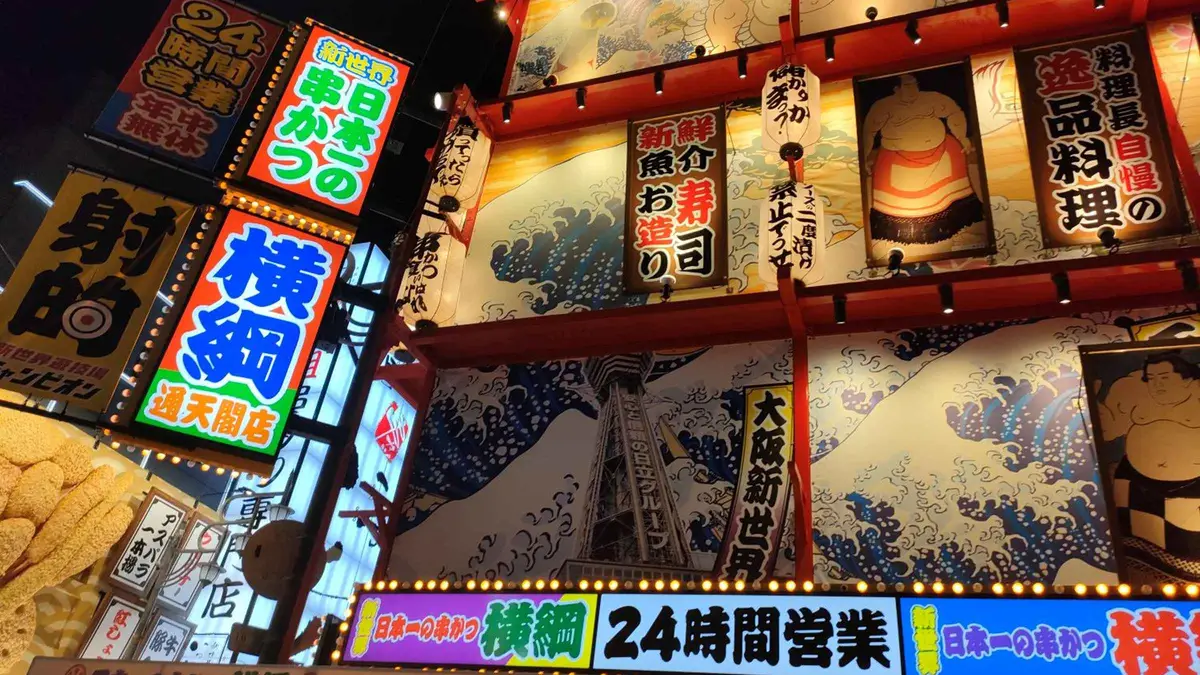 from $69.79
Hungry Osaka Street Food Tour Shinsekai: 15 Tastings 3 Drinks
Fifteen tastings and three drinks across an izakaya, a stall, a standing bar and two restaurants in Shinsekai, over three hours. The best rated of the big evening food walks; getting there and home afterwards is your own affair.
Check Availability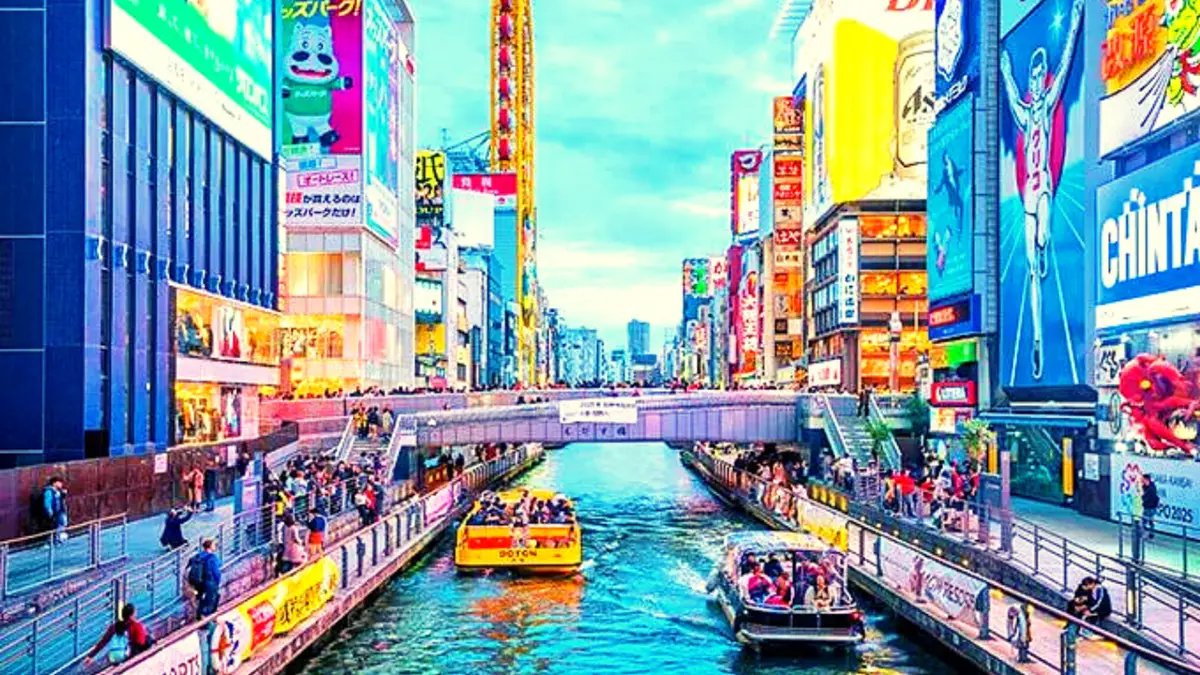 from $35.71
Osaka: Private or Group Hotspots & Hidden Gems Walking Tour
A three-hour walk that stretches to seven if you want it to, private or shared, with a takoyaki and a retro vending-machine drink included. The longer options use trains, which you pay for — usually under ¥1,000 a head.
Check Availability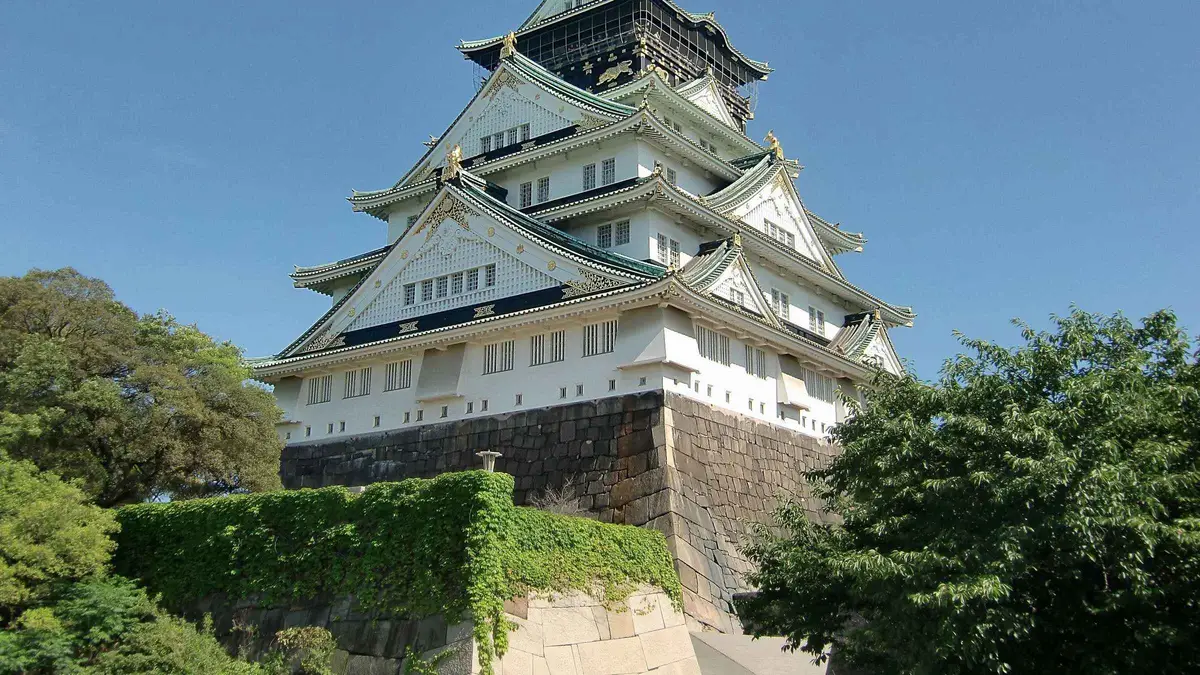 from $7.49
Cheapest way in
from $7.49
Cheapest way in
Osaka Castle: Museum and Tower Entry Ticket
The keep's own admission plus the Toyotomi Ishigaki Museum on one QR code, for roughly what the keep alone costs at the gate (¥1,200). The castle takes no reservations, so this saves the booth queue rather than securing a time slot.
Check Availability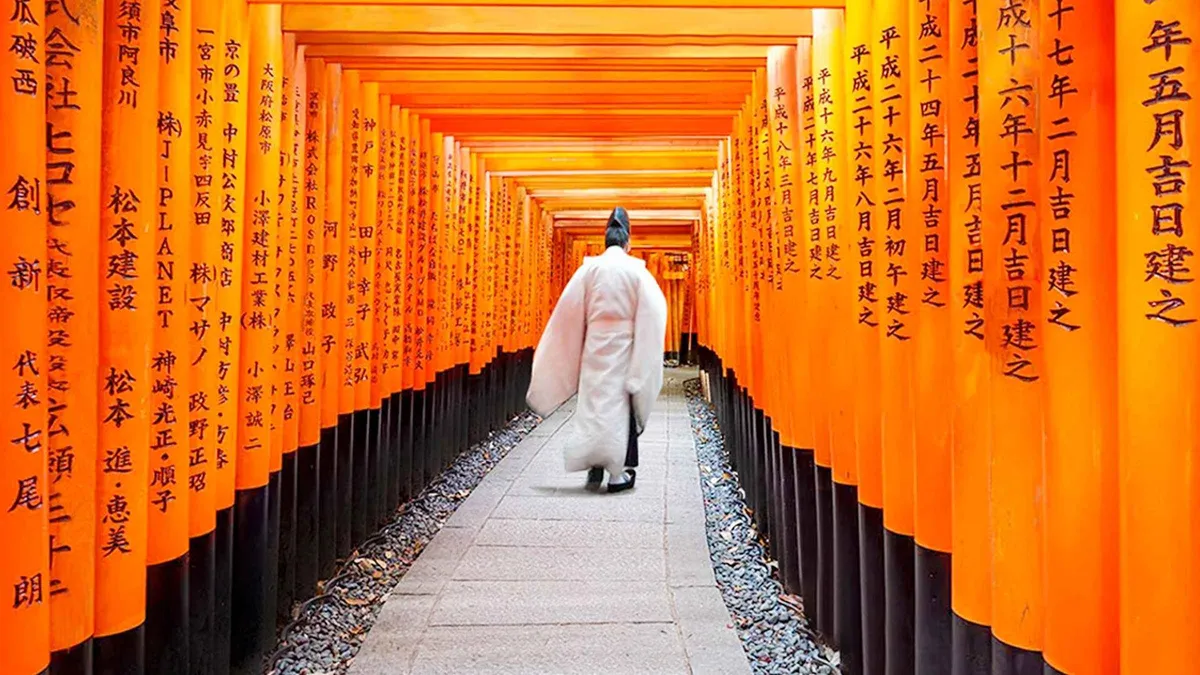 from $50.72
Most booked
from $50.72
Most booked
Kyoto/Osaka: Nara, Fushimi Inari Taisha, Arashiyama Bus Tour
A nine- to ten-hour coach loop to Nara's deer, the Fushimi Inari torii and the Arashiyama bamboo, with an English- and Chinese-speaking guide. No admissions and no lunch are included, and deer crackers are cash on the day.
Check AvailabilityPrices, ratings and details are the platform's own. Dollar figures are the listed prices. The platform bills in your account's currency.
So Which Month?
Four answers, depending on what you are actually optimising for.
- Best overall: late October into the first half of November. 22.2 °C then 16.4 °C, the driest stretch of the warm half-year at 156 mm then 86 mm, the rainy season long gone and the typhoon normal falling away. Osaka has no autumn-colour crush of its own — that happens at Minoh and in Kyoto — so you get the good weather without the crowd tax.
- Best spectacle: the last days of March into the first week of April. Flowering normal 27 March, full bloom normal 4 April, a castle park built for it and the whole city outdoors. Also the most expensive week and the one where an eleven-day historical spread means your dates are a bet.
- Best value: February. 9.5 °C is cold rather than harsh, it is the second-driest month at 66 mm, the plum grove is doing something, and rooms and flights are at their yearly floor. June runs it close: cheap, wet in bursts, and Osaka's indoor half is genuinely good.
- Avoid if you can: August. 31.8 °C, high humidity, Obon travel, and 3.3 typhoon approaches to Japan in an average August. If August is fixed, build the trip around evenings and indoor hours and it works — but it is the month where the walking between sights becomes the problem.
What Changes by Season, and What Never Does
A short list of things that behave the same in every month, because half of “best time” advice is really about opening hours. The castle keep runs 09:00–18:00 with last admission at 17:30 all year and closes only from 28 December to 1 January; it takes no reservations at any time of year, so there is no season in which booking ahead helps. Tsutenkaku requires a timed reservation for every ticket in every month, pass holders included. Mondays close Tennoji Zoo, the Science Museum and the National Museum of Art in every season; Tuesdays close the Museum of History and the Cup Noodles Museum; teamLab closes on irregular Mondays it publishes a few at a time. The rainy-day page is the list of what stays open when the weather turns, and free things to do is the version of that for a tight budget.
What genuinely changes: Kaiyukan's opening hour moves between 08:00 and 10:30 and its closing between 20:00 and 21:00 by date; teamLab's start time slides earlier through the autumn as sunset does, from 19:00 in early September to 18:00 by late October; and Sumiyoshi Taisha opens its gates at 06:00 from April to September and 06:30 from October to March.
Where to Go Next
Three pages that follow directly from the dates you have just picked.
The Osaka events calendar
Tenjin Matsuri on 24–25 July, both Kishiwada danjiri weekends and the fireworks that moved to 17 October 2026 — the fixed points that fill hotels.
The datesWhat Osaka costs
The dated attraction prices, the lodging tax bands from 1 September 2025 and what a day here actually runs to.
The budgetGetting around Osaka
Metro fare bands, the weekday and weekend Enjoy Eco Card, ICOCA and which pass earns its price on which kind of day.
The transportBest Time to Visit Osaka: The Questions
What is the best month to visit Osaka?
October, on the numbers: a 22.2 °C average high, 156 mm of rain across 9.6 rainy days, no rainy season and a falling typhoon normal. November is the driest of the mild months at 86 mm and is a very close second. April is prettier and busier. Figures computed here from the ERA5 reanalysis for the city centre, 1995–2024.
Which month should I avoid in Osaka?
August. It averages a 31.8 °C daily high with high humidity, it falls in the Obon travel fortnight, and Japan's typhoon normal for August is 3.3 approaches and 0.9 landfalls — the joint highest of the year with September. If your dates are fixed, build around evenings: an evening river cruise and teamLab's night garden are the shape of a workable August day.
When is cherry blossom season in Osaka?
The weather agency's normals for its Osaka observation tree are 27 March for flowering and 4 April for full bloom, averaged over 1991–2020. Over the last six seasons the dates have spread across eleven days, so treat the first week of April as a likelihood rather than a promise. Nishinomaru Garden in the castle park is the paid set piece at ¥300, ¥350 for the evening season.
Is the rainy season a bad time to visit Osaka?
It is the most underrated stretch of the Osaka year. The Kinki rainy season normally runs 6 June to 19 July; June averages 193 mm but roughly half its days record under a millimetre, rooms are cheap, and Osaka's covered arcades and indoor attractions make a wet day cost far less here than in a temple city. Our June pick is an indoor food tour.
What is the cheapest time to visit Osaka?
February, on every axis: the lowest room rates of the year, the second-driest month at 66 mm, and a plum grove in the castle park with no admission stated. June is the runner-up. Two prices also drop with the calendar rather than the season — the Enjoy Eco Card is ¥620 at weekends against ¥820 on weekdays, and the aquarium's cheapest ¥2,800 band lands on quiet mid-week dates.
How hot does Osaka get in summer?
August averages a 31.8 °C daily high and July 29.9 °C, both with heavy humidity and warm nights. July is the wetter of the two at 197 mm across 15.0 rainy days. The sights themselves are unaffected — it is the walking between subway exits that punishes you, which is why the summer plan is early mornings, underground malls at midday and the observation decks after dark.
Does Osaka get typhoons?
Japan does, and August and September are the months: national normals of 3.3 approaches each, with September holding the highest landfall figure of the year at 1.0. The weather agency publishes no per-prefecture typhoon normal, so nobody can honestly give you an Osaka-only number. A typhoon usually costs a day rather than a trip, with rail suspensions announced in advance.
The Osaka Year on Film
Three videos whose ids we verified against YouTube's own record, so none of these is a dead player. They load only when you press play.
Best Time to Visit Japan: When Should You Go?
The season-by-season case, at the national level the Osaka numbers sit inside.
Video: Yellow ProductionsPerfect Guide to Japan in June & July - No One Tells You About
What the rainy season is actually like to travel in, which is the month most people write off.
Video: Ono in Japan4 DAY OSAKA ITINERARY 🇯🇵 the best things to do in Osaka 🐙 Japan Travel Guide
Osaka at street level, so you can see what the weather column above means on foot.
Video: Sunny in JapanVideos load from YouTube only when you press play.
Prices, hours and terms are set by the venue or operator and confirmed at checkout.
We may earn a commission if you book through one of our links, at no extra cost to you. Full affiliate disclosure