 Osaka City Guide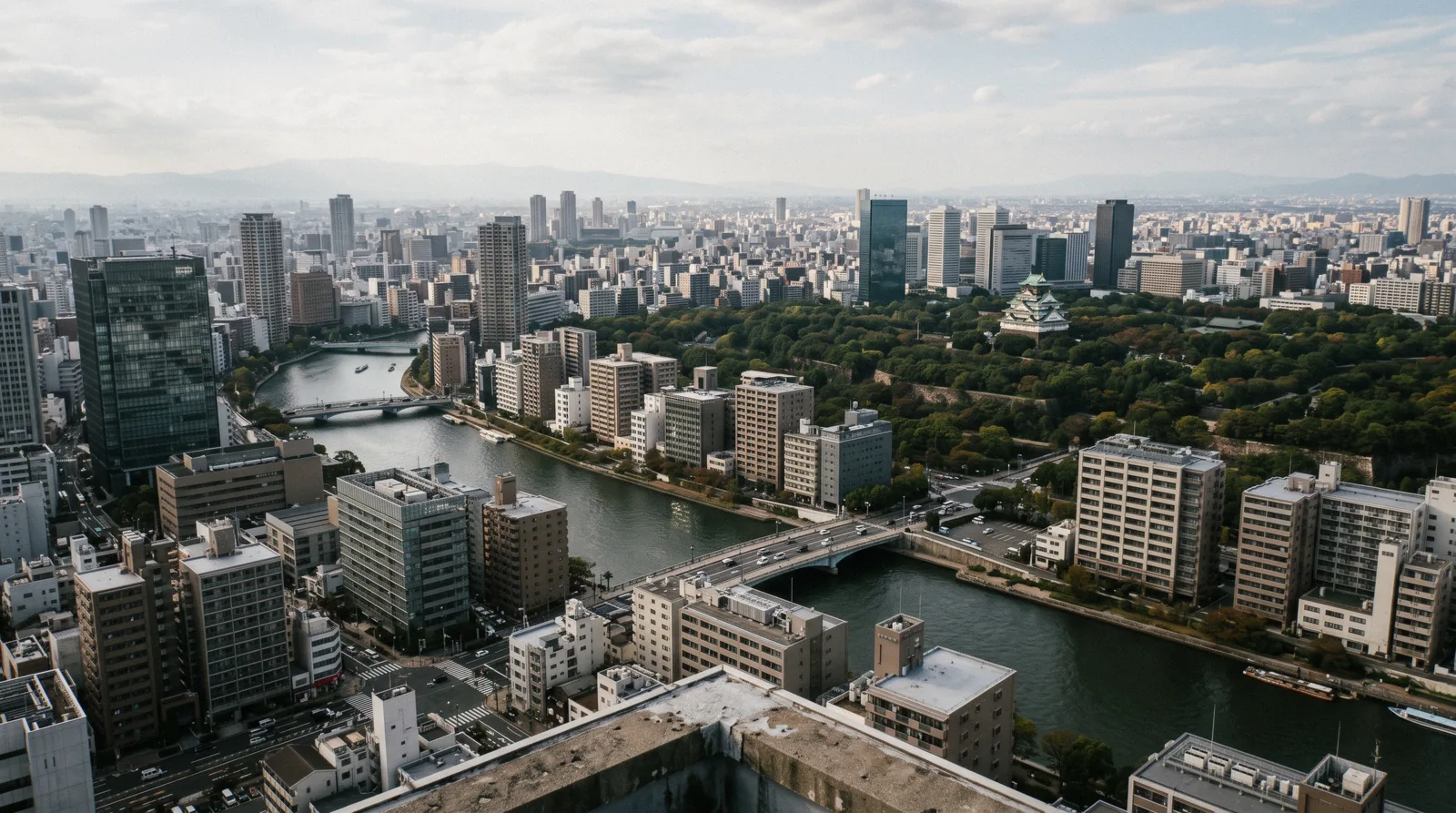
Things to Do in Osaka
The list of things to do in Osaka divides cleanly in two, and almost no guide says so: a handful of paid sights that want between a few hundred and several thousand yen each, and a much longer free layer of canals, arcades, shrine grounds and food streets that costs nothing and fills an evening. This page prices the first, maps both, and gives each entry its opening hour, its closed day and its district. Figures are the venues' own, with dollar glosses at ¥1,000 ≈ $6.27 — the European Central Bank reference rate. For seeing the city as a whole with a guide, see Osaka sightseeing tours.
Quick answer What to see, what it costs, in what order — in four lines
Osaka's short list is about twenty-two places, and nine of them are free. The castle keep is $7.52 (¥1,200), the aquarium $17.56 (¥2,800)–$21.90 (¥3,500) depending on the date, the Umeda observatory $12.54 (¥2,000), Tsutenkaku $9.41 (¥1,500), Shitennoji's central precinct $3.14 (¥500) and a Universal Studios Japan day starts at $52.70 (¥8,400). Dotonbori, the arcades, Shinsekai and the two great shrines cost nothing. All from the venues' own sites, at $6.27 (¥1,000) ≈ $6.27.
Key takeaways
- Plan by cluster, not by ranking: the castle side, Minami around Dotonbori and the Tennoji and Shinsekai corner are three separate half days
- Two sights swallow a day each and should be decided first — Universal Studios Japan and, to a lesser extent, the aquarium, neither of which the city's sightseeing pass covers
- If you would rather not work out the connections, a half-day walking loop with a local guide covers the Minami cluster and the castle in one run
- Two days is the honest minimum; the two-day route and the three-day route put the clusters in walking order
The Osaka list, grouped by area and numbered to the map
Sort by time needed with the chips, or filter to the district you are staying in; the cost-sorted view is the table below. Every price is the venue's own adult figure, in yen with dollar glosses at ¥1,000 ≈ $6.27, and the times are our own routing, because only one venue in this city publishes one.
Chuo — the castle and the Naniwa Palace side
-
Osaka Castle
Castle keep ¥1,20090 minbook-ahead tier 1 of 3
The concrete 1931 keep on Hideyoshi's stone base, eight floors of museum with a view deck on top, open 09:00–18:00 with last admission at 17:30. The fee changed to $7.52 (¥1,200) on 1 April 2025 and the castle states plainly that it takes no admission reservations.
Tip: The internal lift runs up only, as far as floor 5; floors 5 to 8 are stairs unless you cannot walk them.
-
Osaka Museum of History
Museum ¥60060–90 minbook-ahead tier 1 of 3
Ten floors looking straight across at the castle, built over the excavated Naniwa Palace site, $3.76 (¥600) for the permanent exhibition and 09:30–17:00 with last entry at 16:30. Its free tour of the palace foundations leaves at 14:00 and 15:00 and takes twenty people.
Tip: It closes on Tuesdays — the opposite day to the zoo and the science museum, which close on Mondays.
Minami — Namba, Dotonbori and the arcades
-
Dotonbori
Canal and signs Free60–90 minbook-ahead tier 1 of 3
The canal Doton Yasui had dug in 1612, now a wall of three-dimensional signs and the city's most photographed bridge. Nothing here charges admission and nothing keeps fixed hours — the tourism bureau's own line for the street is “varies by store”.
Tip: No official source publishes anything about the Glico sign: not its height, not its lighting hours.
-
Hozenji Yokocho
Lane Free20–30 minbook-ahead tier 1 of 3
Two stone-paved lanes behind the noise of Dotonbori, built around the moss-covered Mizukake Fudo that visitors throw water over. It is not mentioned on the tourism bureau's Dotonbori page at all, and no association publishes hours for the lane.
Tip: The bars here are small and many seat six — walk it early in the evening, eat elsewhere.
-
Kuromon Ichiba
Market Free to walk45–60 minbook-ahead tier 1 of 3
About 580 metres of covered market with roughly 150 shops, selling fish since the 1820s. The market publishes no opening time and no closed day of its own — the bureau's line is “varies by location”, and the association's site is behind a bot wall.
Tip: Any guide printing blanket market hours for Kuromon has guessed them; go mid-morning.
-
Shinsaibashi-suji
Arcade Free45–60 minbook-ahead tier 1 of 3
A roofed arcade of about 580 metres and some 380 years of trading, from Nagahori-dori down to Soemoncho. The bureau counts roughly 60,000 people through it on a weekday and 120,000 at the weekend.
Tip: The association itself publishes no length, no shop count and no hours — those figures are the tourism bureau's.
-
Amerikamura
District Free45 minbook-ahead tier 1 of 3
The blocks west of Shinsaibashi where converted warehouses began selling American vintage clothing and second-hand records in the 1970s. The traders' association describes itself as a voluntary body and publishes neither a founding year nor a boundary.
Tip: Nothing here opens early; the district is a mid-afternoon-to-late-evening proposition.
-
Namba Yasaka Shrine
Shrine No fee published20 minbook-ahead tier 1 of 3
The twelve-metre lion's head stage that every Osaka photo set contains, ten minutes' walk from Namba station. The shrine's own site covers its deities, its weddings and its tug-of-war rite but publishes no hours, no closing time and no admission statement at all.
Tip: Treat “free and open in daylight” as unsourced — the shrine's phone, 06-6641-1149, is the only way to confirm a time.
Kita — Umeda and the north
-
Umeda Sky Building
Observatory ¥2,00060–90 minbook-ahead tier 1 of 3
Two towers joined at the 39th floor by an open-air roof deck, $12.54 (¥2,000), open 09:30–22:30 with last admission at 22:00. It is the only observation deck in the city where you stand outside rather than behind glass.
Tip: The observatory has its own entrance and the tower lifts do not reach it — the venue itself warns about this wrong turn.
-
Tenjinbashisuji
Arcade Free60–90 minbook-ahead tier 1 of 3
About 2.6 kilometres and roughly 800 shops running north from Osaka Tenmangu, which grew as the shrine's gate town in the Edo period. It is called Japan's longest shopping street everywhere, including by the tourism bureau.
Tip: No public authority certifies that claim; the only body that does is a private records association, and it gives no date.
The bay — Tempozan and the studios
-
Osaka Aquarium Kaiyukan
Aquarium ¥2,800–¥3,5002–3 hoursbook-ahead tier 3 of 3
The whale-shark tank that runs through the middle of the building, entered at the top and walked down. There is no single admission price: the aquarium prices by date in four bands, ¥2,800, ¥2,900, ¥3,200 or ¥3,500, and publishes the calendar about two months ahead.
Tip: The dated e-ticket is the aquarium's own recommended route; a counter ticket may not admit you at the hour you wanted.
-
Universal Studios Japan
Theme park From ¥8,400Full daybook-ahead tier 3 of 3
Super Nintendo World, the Harry Potter area and the rest of a full-size park, with a 1-Day Studio Pass starting at $52.70 (¥8,400) that moves with the date and with stock. Express Passes are ¥11,800 to ¥21,800 and do not admit you to the park on their own.
Tip: The park is not on the city sightseeing pass, and neither is the aquarium; budget both separately.
Tennoji and Shinsekai — the south-east
-
Shinsekai
District Free60–90 minbook-ahead tier 1 of 3
The quarter laid out around the 1903 National Industrial Exposition, now kushikatsu, pufferfish lanterns and Billiken. Janjan Yokocho packs about fifty places into 130 metres of lane.
Tip: The kushikatsu rule that matters is the sauce pot: one dip only, no double-dipping.
-
Tsutenkaku
Tower ¥1,50045–60 minbook-ahead tier 3 of 3
The tower over Shinsekai, sold as a single $9.41 (¥1,500) ticket covering both the general and the open-air special observatory, open 09:00–21:45. A timed-entry reservation is now required for every ticket.
Tip: Pass holders are not exempt — they still have to book a time at the counter on the day.
-
Spa World
Bathhouse ¥1,5002–4 hoursbook-ahead tier 1 of 3
A bathhouse of European and Asian themed floors beside Shinsekai: $9.41 (¥1,500) without the pool, ¥2,000 on a weekday or ¥2,700 at weekends with it. The onsen floors run from 10:00 round to 08:45 the next morning.
Tip: Entering or staying between midnight and 05:00 adds ¥1,300 plus a ¥150 bathing tax.
-
Tennoji Zoo
Zoo ¥8002 hoursbook-ahead tier 1 of 3
Eleven hectares of zoo between Shinsekai and Tennoji Park, $5.02 (¥800), open 09:30–17:00 with last admission at 16:00. The summer 18:00 closing on May and September weekends ended from September 2026.
Tip: Show a same-day Tsutenkaku ticket and the adult fee drops to ¥720.
-
Abeno Harukas 300
Observatory ¥2,20060 minbook-ahead tier 1 of 3
The observatory on floors 58 to 60 of Japan's tallest building, open 09:00–22:00 with last admission at 21:30. The fee was revised on 23 July 2026 to ¥2,200 at the counter, or $12.41 (¥1,980) bought online by the day before.
Tip: Walk-up tickets are sold only at the 16F counter and can be suspended or numbered on a busy day.
-
Shitennoji
Temple ¥50060–90 minbook-ahead tier 1 of 3
The temple founded in 593, whose grounds are free and whose gates stand open around the clock; the central precinct is $3.14 (¥500), the garden ¥300 and the treasure hall ¥500. Paid areas run 08:30–16:00, longer on the 21st of each month.
Tip: The 21st is also the temple market day — come then deliberately, or avoid it deliberately.
South — Sumiyoshi and Nagai
-
Sumiyoshi Taisha
Shrine No fee published60 minbook-ahead tier 1 of 3
The head shrine of some 2,300 Sumiyoshi shrines, with four halls in a style that predates Chinese influence and the steep vermilion Sorihashi bridge. Gates open at 06:00 from April to September and 06:30 the rest of the year; the outer gates close at 16:00.
Tip: The shrine publishes prayer fees but no admission charge, so this is “no fee published” rather than “free”.
-
teamLab Botanical Garden
Art installation ¥1,800–¥2,40090 minbook-ahead tier 3 of 3
The digital-art walk through Nagai Botanical Garden, which only exists after dark: opening moves between 18:00 and 19:00 with the season and last admission is 20:30. Pricing is dated, ¥1,800 to ¥2,400, with children at ¥600.
Tip: Re-entry is not allowed, and the closures fall on irregular Mondays rather than every Monday.
Out of town — under an hour from the centre
-
Cup Noodles Museum Osaka Ikeda
Museum Free90 minbook-ahead tier 2 of 3
The museum on the site where instant noodles were invented: free to enter, 09:30–16:30 with last admission at 15:30, closed on Tuesdays. Making your own cup costs ¥500 and the chicken-ramen workshop ¥1,200.
Tip: The cup workshop runs on same-day numbered tickets in limited numbers — it is the one thing here you can miss by arriving late.
-
Kyoto, Nara, Kobe and Himeji
Day trip From ¥410 one wayHalf to full daybook-ahead tier 2 of 3
Four cities inside an hour of Osaka on a normal commuter fare: Kyoto from ¥410 by Hankyu, Kobe from ¥330, Nara from ¥680 by Kintetsu and Himeji from ¥1,460 on the Special Rapid. None of them needs a reservation or a rail pass.
Tip: Himeji Castle went from ¥1,000 to ¥2,500 on 1 March 2026 — it is the one day trip whose budget changed this year.
Numbers match the list — tap a pin for the guide.
Seven of the twenty-two carry a pin, because seven are all that publish a coordinate on their own site. The rest embed a map by address or place name, and we do not invent a latitude and longitude to fill a gap — the district on each card, and the map page, place them instead.
The same list, sorted by what it costs
Adult admission read from each venue's own site in Q3 2026, in yen with a dollar gloss at ¥1,000 ≈ $6.27 (the European Central Bank reference rate of that day). “Opens” is the first admission of a normal day, not a festival or a New Year opening.
| Sight | Adult | Time | Opens | District |
|---|---|---|---|---|
| Dotonbori | Free | 1–1.5 h | No gate | Minami |
| Hozenji Yokocho | Free | 20–30 min | No gate | Minami |
| Kuromon Ichiba | Free to walk | 45–60 min | Varies by stall | Minami |
| Shinsaibashi-suji | Free | 45–60 min | Varies by shop | Minami |
| Amerikamura | Free | 45 min | Varies by shop | Minami |
| Tenjinbashisuji | Free | 1–1.5 h | Varies by shop | Kita |
| Shinsekai | Free | 1–1.5 h | No gate | Tennoji |
| Namba Yasaka Shrine | No fee published | 20 min | Not published | Minami |
| Sumiyoshi Taisha | No fee published | 60 min | 06:00 April–September | South |
| Cup Noodles Museum | Free | 90 min | 09:30, closed Tuesdays | Out of town |
| Shitennoji central precinct | $3.14 (¥500) | 1–1.5 h | 08:30 | Tennoji |
| Osaka Museum of History | $3.76 (¥600) | 1–1.5 h | 09:30, closed Tuesdays | Castle |
| Tennoji Zoo | $5.02 (¥800) | 2 h | 09:30, closed Mondays | Tennoji |
| Osaka Castle keep | $7.52 (¥1,200) | 90 min | 09:00 | Castle |
| Spa World without the pool | $9.41 (¥1,500) | 2–4 h | 10:00 | Tennoji |
| Tsutenkaku | $9.41 (¥1,500) | 45–60 min | 09:00, timed ticket | Tennoji |
| teamLab Botanical Garden | $11.29 (¥1,800)–$15.05 (¥2,400) | 90 min | 18:00–19:00 by season | South |
| Umeda Sky Building | $12.54 (¥2,000) | 1–1.5 h | 09:30 | Kita |
| Abeno Harukas 300 | $13.79 (¥2,200) | 60 min | 09:00 | Tennoji |
| Osaka Aquarium Kaiyukan | $17.56 (¥2,800)–$21.90 (¥3,500) | 2–3 h | 08:00–10:30 by date | Bay |
| Universal Studios Japan | From $52.70 (¥8,400) | Full day | Published by calendar | Bay |
Ten of the twenty-one rows cost nothing and eight of the eleven paid ones come in under $12.54 (¥2,000). One line — a Universal Studios Japan day — costs more than the other ten paid sights together, and what a day here costs works that through.
The guided versions of this list
None of the sights above sells a tour of its own, so the guided options are walks that string several together and save you the connections. Prices are the platform's listings in US dollars, confirmed in your own currency at checkout.
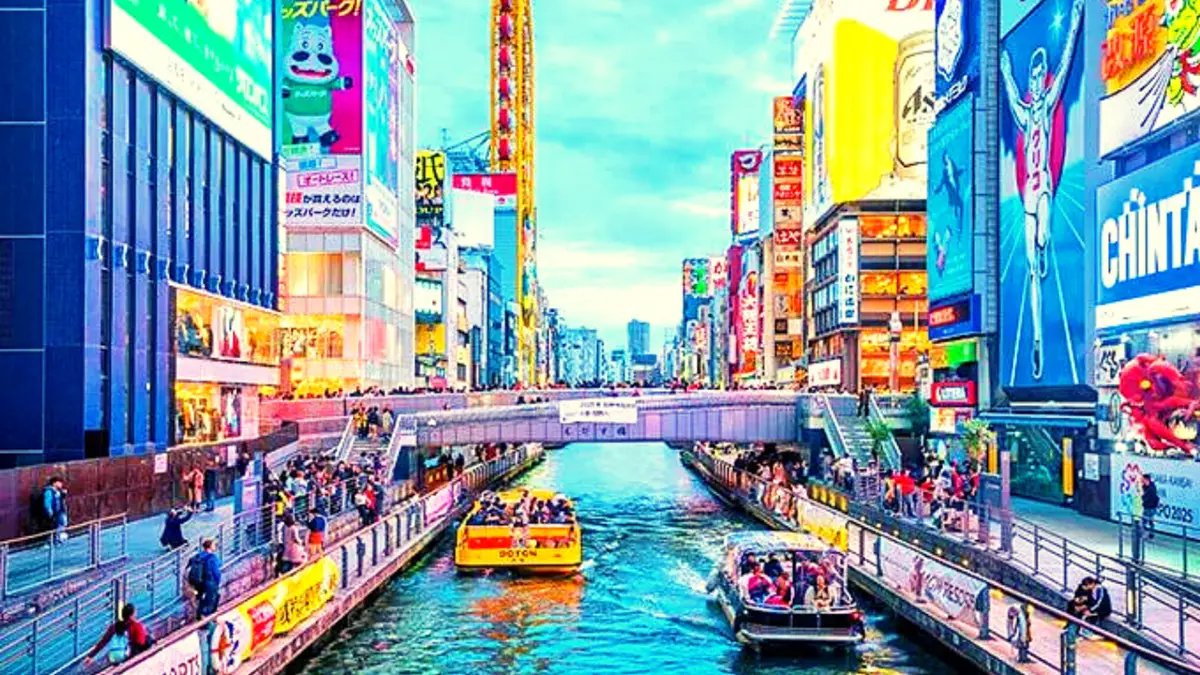 from $35.71
Osaka: Private or Group Hotspots & Hidden Gems Walking Tour
A three-hour walk that stretches to seven if you want it to, private or shared, with a takoyaki and a retro vending-machine drink included. The longer options use trains, which you pay for — usually under ¥1,000 a head.
Check Availability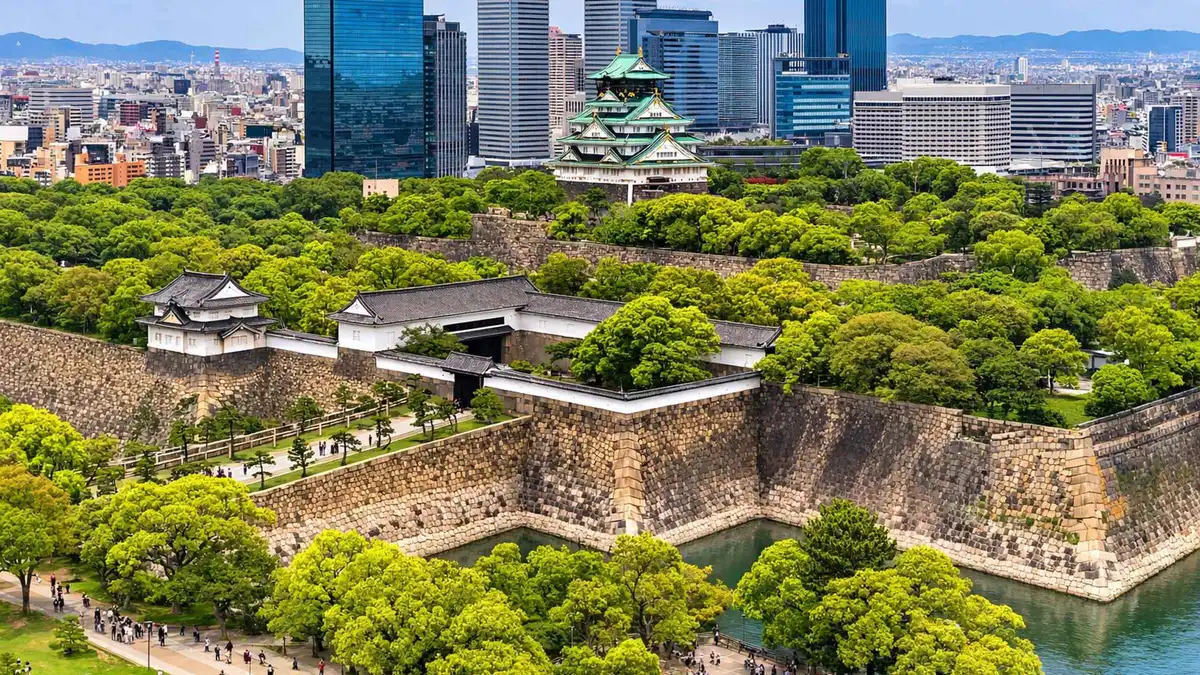 from $54.56
Osaka: Guided Walking Tour with a Native Expert – Top Sights
Four hours linking Osaka Castle, Tsutenkaku and Namba by metro, with the ¥1,200 keep admission included and the ¥430 of train fares not. A Japan Rail Pass buys you nothing here — the route runs on Osaka Metro.
Check Availability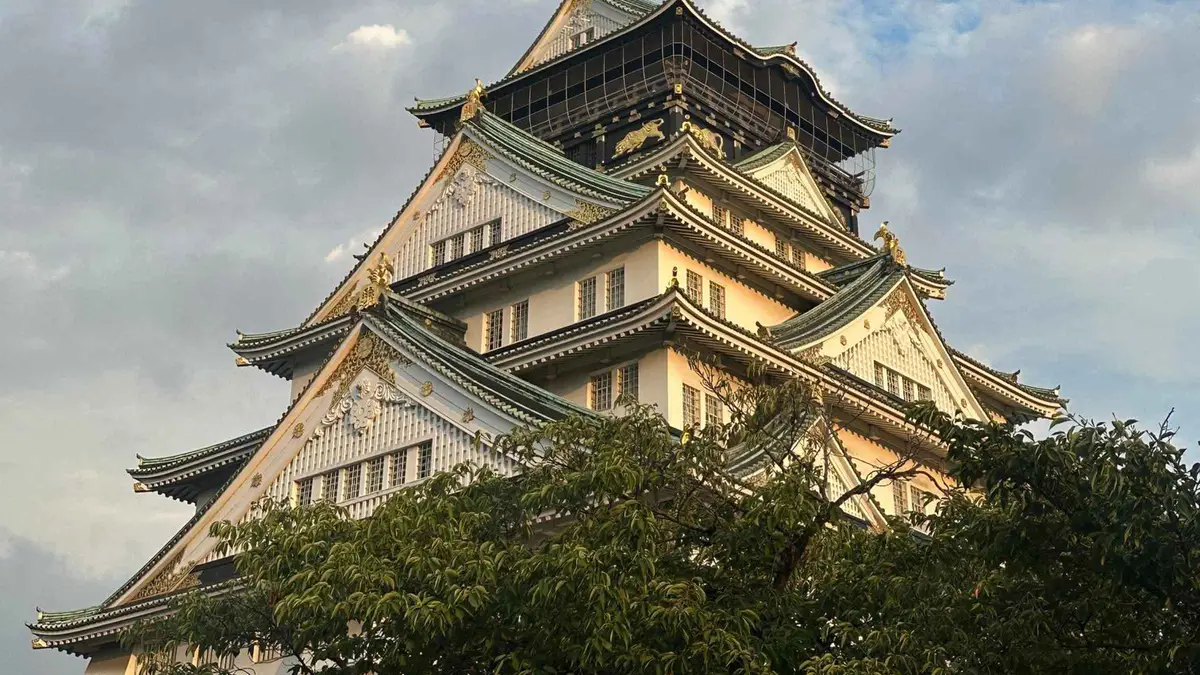 from $49.74
Osaka: Essential City Loop Tour with Local Guide
Five hours in a group of eight covering the castle, the Showa-era backstreets and the neon strip in one loop, with food bought stop by stop instead of a sit-down lunch. Only four people have rated it so far.
Check AvailabilityPrices, ratings and details are the platform's own. Dollar figures are the listed prices. The platform bills in your account's currency.
How to build the days, if you have two or three
Osaka is not a list to work through. It is four clusters and two full-day commitments, and the only real mistake is crossing the city twice in one day.
Minami is the evening cluster: Dotonbori, Hozenji Yokocho, the arcades, Amerikamura, Kuromon in the morning if you want the market awake. Everything in it is free and nothing in it opens early, so it works as the back half of any day.
The castle side is a morning: the keep at the 09:00 opening, the Museum of History across the road for the view back at it and the excavated palace foundations underneath. Two sights, three hours.
Tennoji and Shinsekai is the densest half day in the city — Shitennoji, the zoo, Shinsekai, Tsutenkaku on its booked time and Abeno Harukas at the end for the sunset. Five entries inside twenty minutes' walk of each other, and the cheapest cluster per hour.
The bay is not a cluster at all. Universal Studios Japan is a full day and the aquarium most of a half day, they sit on opposite sides of the harbour, and neither is on the city sightseeing pass. Decide about them before you plan anything else.
- One day: the castle in the morning, Minami from mid-afternoon — the one-day route
- Two days: add Tennoji, Shinsekai and one observation deck — the two-day route
- Three days: add the bay or a day trip, not both — the three-day route
- Getting between the clusters: the Metro's zone fares and the day cards are on the transport page
Where a pass changes the answer, and where it does not
Two city passes cover most of the paid entries above, and their arithmetic only works on a day when you are moving fast.
The city sells two products that bundle these sights and one card that bundles none of them. The comparison worth making is not which pass is best, but whether the day you have planned actually reaches the break-even point.
| Product | Price | What it covers | Break-even |
|---|---|---|---|
| Osaka Amazing Pass, 1 day | $21.90 (¥3,500) | Metro, city buses and the private lines inside the city, plus one free entry at each of 41 attractions | Two observation decks and three metro rides, roughly |
| Osaka Amazing Pass, 2 day | $31.40 (¥5,000) | The same, over two consecutive days | Four paid entries across two days |
| Osaka e-Pass, 1 day | $12.54 (¥2,000) | Entries only at more than 25 facilities — no transport at all | Two paid entries, if both are on the list |
| Enjoy Eco Card | ¥820 weekday, ¥620 weekend | All Metro and city bus lines for one calendar day; no entries | Four rides on a weekday, three at the weekend |
Three things decide it, and none of them is the headline number. Neither the aquarium nor Universal Studios Japan is on the free list, so a pass cannot help with the two most expensive days in this guide. A pass day runs 03:00 to 02:59, not twenty-four hours from activation. And the pass is not valid to or from Kansai Airport, which is where people most often assume it works.
One warning comes straight from the sources: the tourism bureau's own comparison table still prints the Amazing Pass at ¥2,800 and ¥3,600, while the pass's own site prints ¥3,500 and ¥5,000 for the standard pass (the Osaka Itami Airport version is ¥3,800 and ¥5,400) for the sales period running from 25 March 2026 to 31 March 2027. Take the pass's own page — the full arithmetic is there, and the tickets hub prices every entry beside it.
The free half of the list, and what it is actually for
Nine of the twenty-three entries above cost nothing, and they are not the consolation prize — in Osaka they are the point.
Kyoto sells you buildings; Osaka mostly sells you streets. The canal at Dotonbori, the lane at Hozenji Yokocho, 580 metres of arcade at Shinsaibashi and 2.6 kilometres of it at Tenjinbashisuji, the market at Kuromon, the vintage blocks of Amerikamura, the grounds at Shitennoji and the whole precinct at Sumiyoshi Taisha — none has a ticket window, and together they are most of what people remember.
That changes the shape of the day rather than the budget: free sights have no closing time to plan around and no slot to miss, so they absorb the hours the paid ones leave over — the arcade at nine in the morning, the canal at eight at night. They are also never quiet in the way a paid gate can be, because nothing meters the flow.
One cost applies to all of it: Osaka City has fined street smoking across every road, square and park it manages since 27 January 2025, heated tobacco included, and the penalty is $6.27 (¥1,000).
The three entries here that are unique to this city rather than to Japan are all paid ones, incidentally: an overnight bathhouse whose floors run round to a quarter to nine the next morning, a digital-art walk inside a botanical garden, and the museum in Ikeda where you build your own instant noodle cup.
Rain, closed days and the sights that disagree with each other
Osaka's closed days do not line up, and the two that catch people out fall on different days of the week.
Mondays close Tennoji Zoo, the Osaka Science Museum and the National Museum of Art. Tuesdays close the Osaka Museum of History and the Cup Noodles Museum in Ikeda. teamLab closes on irregular Mondays rather than every Monday — 24 August, 14 September, 28 September and 26 October in 2026 — so it has to be checked against its own calendar.
The castle closes only from 28 December to 1 January, and the aquarium's only published 2027 closure is 13 and 14 January. Tsutenkaku publishes no closed day at all and announces unscheduled closures on its official X account, which is worth knowing before building an evening around the tower.
- Wet afternoon indoors: the aquarium, the Museum of History, Spa World and the covered arcades at Shinsaibashi and Tenjinbashisuji
- Wet evening: teamLab runs after dark and outdoors, so it is the one to move rather than the one to save
- Monday visitor: the castle, the temples, the arcades and both observation decks are all open
- Tuesday visitor: the zoo is open, the Museum of History is not — swap the castle afternoon for Tennoji
What we left off this list, and why
A guide is only as honest as the things it refuses to state, so here is what could not be sourced.
The Glico sign. No official source publishes its height, which generation is currently up, or its lighting hours; every figure in circulation traces back to a blog, so the Dotonbori page describes the sign and prints no numbers.
Kuromon Ichiba's hours. The market association's own site sat behind a bot wall, so its opening times, closed days and rules about eating in the aisles are not available. The bureau's “varies by location” is the only sourced line there is.
A named takoyaki or okonomiyaki shop. Osaka's MICHELIN Bib Gourmand selection for 2026 runs to 67 restaurants and contains neither, and a venue is named on this site only when a citable list backs it — so the food page stays silent on the two dishes the city is famous for.
Two combined tickets guides still recommend. The castle's set with the Museum of History ended on 27 December 2024 and its Aqua-bus set on 24 March 2025. The castle ticket page says what replaced them, which is nothing.
Where to go next
The four pages that turn this list into a trip.
Osaka attraction tickets
Every official price beside what the resellers list, which sights sell a time slot, and the passes compared.
The money pageDay trips from Osaka
Kyoto, Nara, Kobe, Himeji, Minoh and Koyasan with the real fares and times, and the one whose price changed this year.
20 minutes to 2 hours outGetting around Osaka
Metro zone fares, the day card that is cheaper at weekends, and the pass that quietly stopped covering buses.
The practical pageWhere to stay in Osaka
Which cluster you want to sleep beside, and the prefecture lodging tax whose bands changed on 1 September 2025.
The base decisionThings to do in Osaka: the questions
What should I not miss in Osaka?
On what people actually search for: Dotonbori after dark, the castle keep, the Tennoji and Shinsekai corner with Tsutenkaku and Shitennoji, one observation deck, and either the aquarium or Universal Studios Japan if you have a whole day. The full list above prices and maps all twenty-two.
What are the top 5 things to do in Osaka?
If it has to be five: Dotonbori and the Minami arcades, Osaka Castle, Shinsekai with the tower, the Umeda Sky Building roof deck and the aquarium. Three of the five are free or nearly so, which is why the cost table is more useful here than any ranking.
Is three days too long for the city?
No, if you use the third day for something the first two cannot hold — a theme-park day, or a trip out to Kyoto, Nara, Kobe or Himeji on a commuter fare. Two days covers the clusters on this page; the three-day route shows what the extra day is for.
What is free on this list?
Nine entries: Dotonbori, Hozenji Yokocho, Kuromon Ichiba, Shinsaibashi-suji, Amerikamura, Tenjinbashisuji, Shinsekai, the Shitennoji grounds and the Cup Noodles Museum. Two more publish no admission fee at all rather than declaring themselves free — Sumiyoshi Taisha and Namba Yasaka Shrine — and this page says so rather than guessing.
What is there to do after dark?
More than in most Japanese cities. The Umeda Sky Building takes its last visitors at 22:00 and Abeno Harukas at 21:30, Tsutenkaku runs to 21:45 on a booked slot, teamLab only exists after sunset, Spa World bathes through the night, and the canal and the arcades never close.
Do any of these need booking before I arrive?
Three do. Tsutenkaku requires a timed reservation for every ticket, pass holders included; teamLab sells a dated and timed ticket; and the aquarium recommends its own dated e-ticket, because a counter ticket may not admit you at your chosen hour. Everything else is a window on the day — the tickets page has the detail.
Is the sightseeing pass worth buying for this list?
Only on a fast day. It covers the castle, both observation decks, the tower, the zoo, Shitennoji and the Museum of History, but not the aquarium and not the theme park, and a pass day runs 03:00 to 02:59 rather than twenty-four hours. The arithmetic sits here; the pass table above has the break-even points.
On film: what the short list actually looks like
Three videos we checked ourselves — each id verified against YouTube's own oEmbed record and its thumbnail. They load only when you press play.
Top 15 things to do in Osaka Japan | Osaka Travel Guide
A run through the same clusters this page groups, at walking pace.
Video: Allan SuOSAKA, JAPAN (2026) | 10 Awesome Things To Do In & Around Osaka (+ Travel Tips)
The recent one, including the day trips out of the city.
Video: World Wild HeartsTOP 10 Things to do in OSAKA (2025) | First Time Itinerary
A first-timer's order of play, which is close to the two-day route here.
Video: Hangry By NatureVideos load from YouTube only when you press play.
Prices, hours and terms are set by the venue or operator and confirmed at checkout.
We may earn a commission if you book through one of our links, at no extra cost to you. Full affiliate disclosure