 Osaka City Guide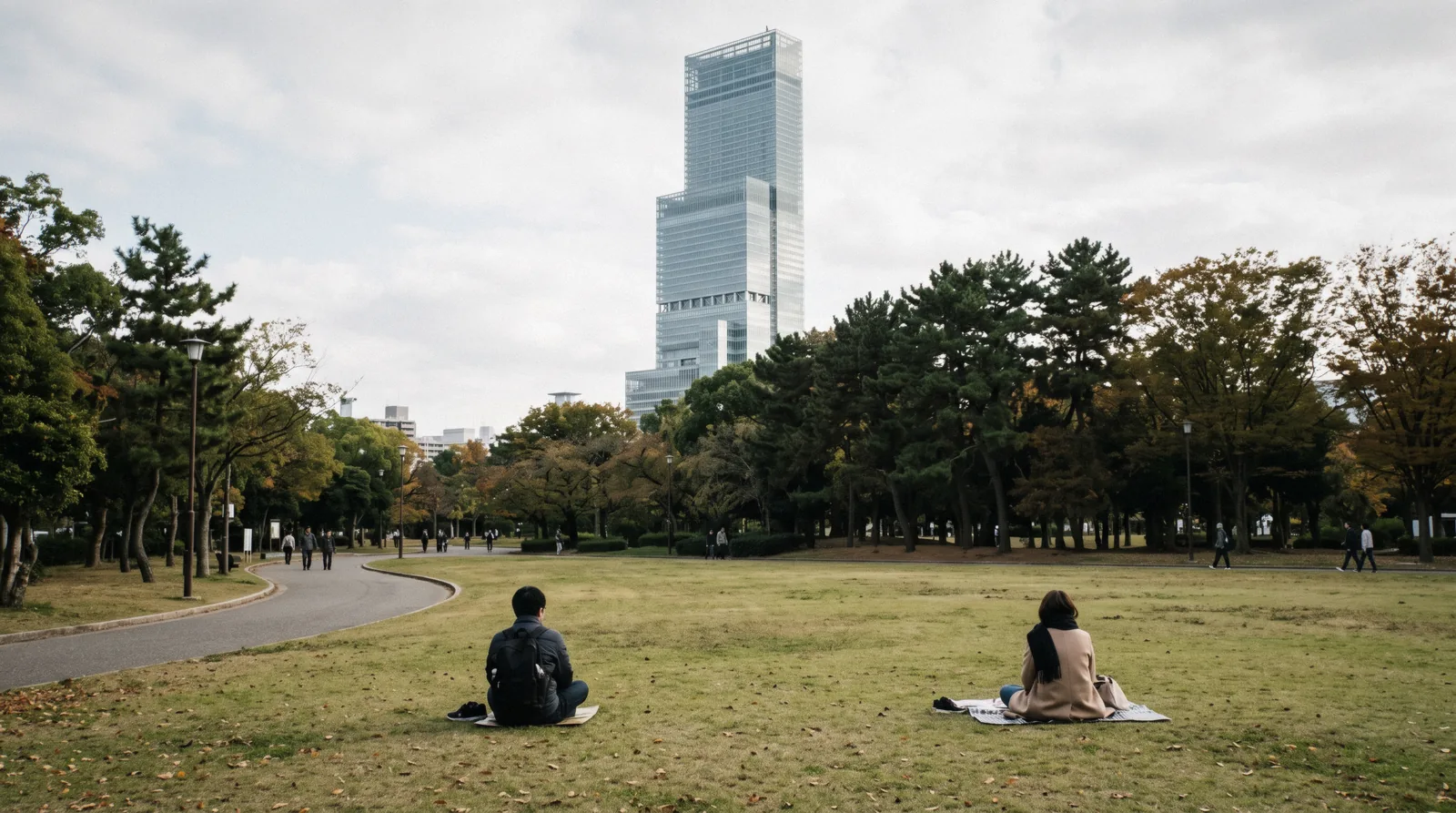
Tennoji
Tennoji, Osaka's southern gateway, is the district most visitors pass through twice and never look at. It is an interchange of five railways with a park, a zoo, the country's oldest state-founded temple and Japan's tallest building stacked around it, the retro drinking quarter one stop away, and the cheapest rooms in the city a short walk west. It is also the cheapest place in Osaka to arrive from Kansai Airport by train. This page is the district and how to use it: what is inside the ring, what each part charges, and who should sleep here. The temple, the zoo and the tower each own their own page, and the city's highlights are covered in our guide to things to do in Osaka.
Quick answer What the district is, what it costs and why arrive here — in four lines
Tennoji is the southern hinge of central Osaka: a five-railway interchange in Tennoji ward with a park, a zoo, a temple complex and the city's tallest tower around it. Being in the district is free; the paid things inside it start at ¥500. Dollar figures below are converted at ¥1,000 ≈ $6.27, the European Central Bank reference rate.
Key takeaways
- This is the cheapest JR arrival from Kansai Airport. The discounted HARUKA for passport holders costs $8.15 (¥1,300) to here, against $11.29 (¥1,800) to the northern terminals — the lowest of all its discounted fares
- The lawn between the station and the zoo gate is open 07:00 to 22:00 and free, with cafes, a convenience store and a paid children's play area on it
- The two paid stops most people combine are the zoo at $5.02 (¥800) and the temple's central precinct at $3.14 (¥500) — both on the Osaka Amazing Pass free list
- Two of this catalogue's best-rated food walks start one stop away in the retro quarter: fifteen tastings and three drinks with the guide doing the ordering
What the district charges, building by building
Six things worth your time within a fifteen-minute radius of the interchange, with each venue's own published adult rate and hours read on in Q3 2026. The pass column matters more here than anywhere else in Osaka: four of these six are free entries on the city pass and two are not.
| Where | Adult | Hours | Closed | On the Amazing Pass? |
|---|---|---|---|---|
| The park lawn between the station and the zoo | Free | 07:00–22:00 | No closed day published | Not a ticketed site |
| Tennoji Zoo | $5.02 (¥800) (¥1,000 with the optional donation) | 09:30–17:00, last admission 16:00 | Every Monday, and 29 December – 1 January | Yes, free once |
| Shitennoji — central precinct | $3.14 (¥500) | 08:30–16:00; 08:00–16:30 on the 21st of each month | Not stated by the temple | Yes, free once |
| Abeno Harukas 300 observatory | $13.79 (¥2,200) walk-up, $12.41 (¥1,980) booked online in advance | 09:00–22:00, last admission 21:30 | None published | No — it is not on the free list at all |
| Tsutenkaku, one stop west | $9.41 (¥1,500) general and outdoor deck as a set | 09:00–21:45, last admission 21:15 | Not published — announced on its X account only | Yes, and pass holders must still book a time |
| Spa World, one stop west | $12.54 (¥2,000) weekday, $16.93 (¥2,700) weekend and holidays | Onsen floors 10:00 to 08:45 the next day | Not stated | Not on the free list |
The arithmetic that follows from this table: a day doing the zoo, the temple and the tower one stop west costs ¥2,800 at the gates, and the ¥3,500 one-day city pass also covers your trains — so the pass wins on any day that includes all three. It does not cover the tall building's observatory, which is the single most common assumption people make about it.
Walks and tickets that use this district
Nothing in this catalogue is sold as a Tennoji tour, but four of these six genuinely operate inside or beside the district: the two highest-rated food walks in Osaka work the retro quarter one stop west, meeting at Ebisucho station; the tower e-ticket is for the building above the station here; and the city walks link the castle, the tower and the south. Prices are GetYourGuide's US-dollar listings.
 from $69.79
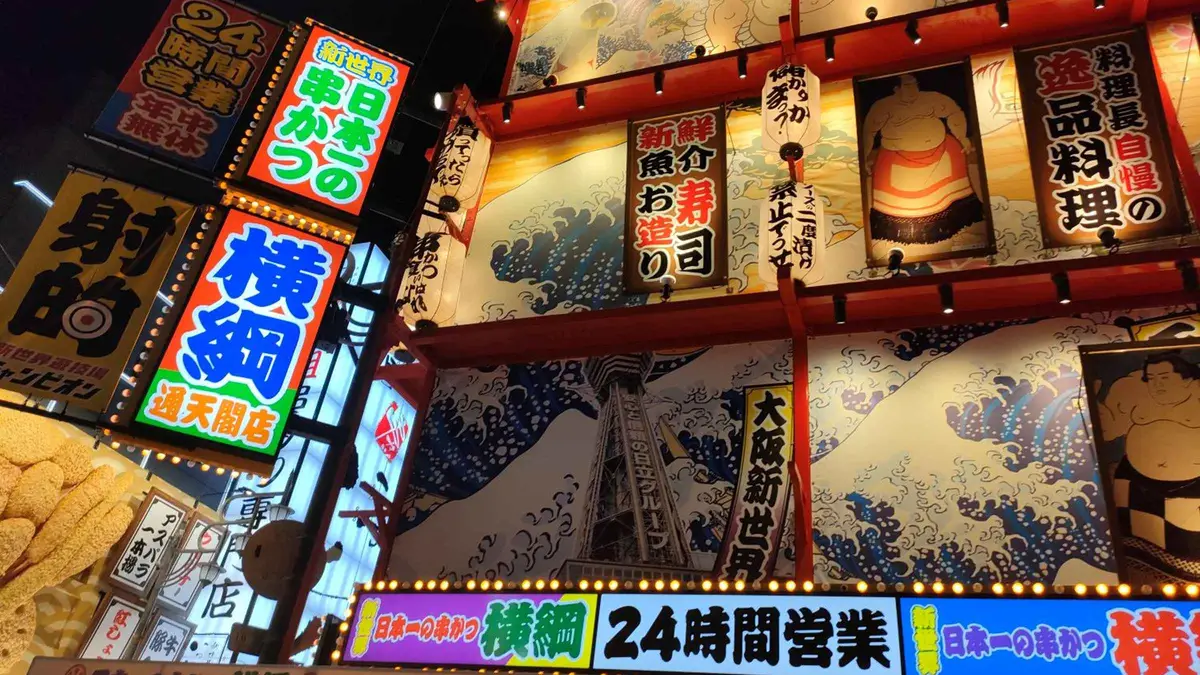
Hungry Osaka Street Food Tour Shinsekai: 15 Tastings 3 Drinks
Fifteen tastings and three drinks across an izakaya, a stall, a standing bar and two restaurants in Shinsekai, over three hours. The best rated of the big evening food walks; getting there and home afterwards is your own affair.
Check Availability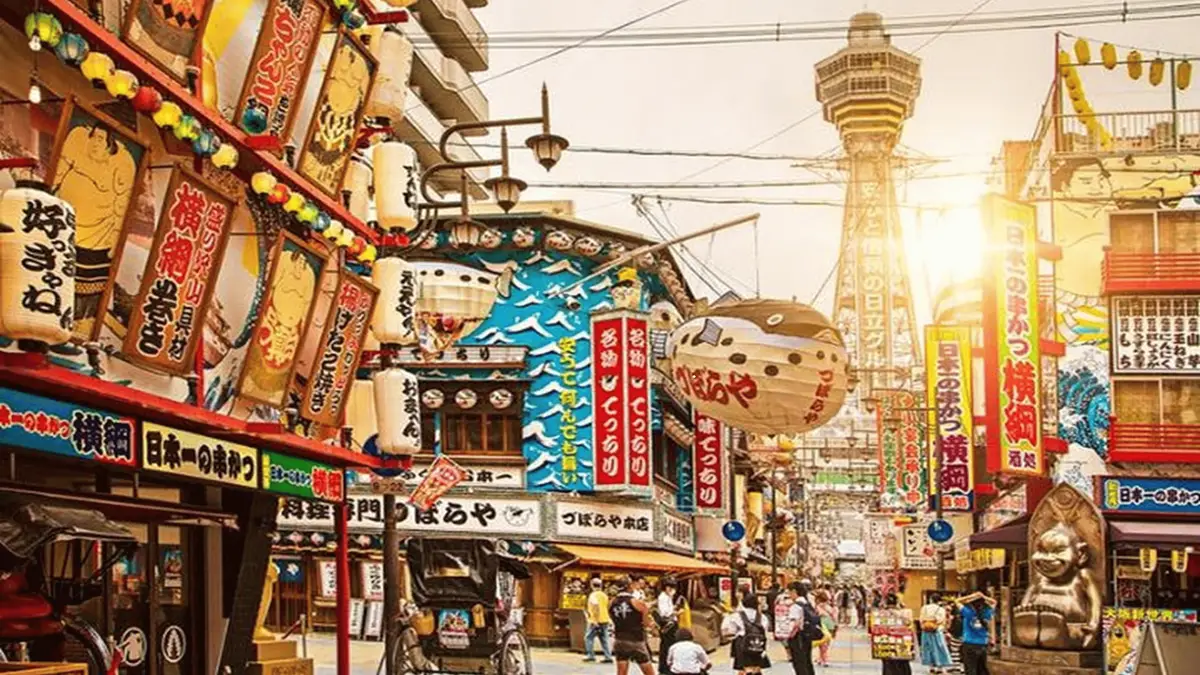 from $60.86
Most booked
from $60.86
Most booked
Osaka: Food Tour with 15 Dishes & 3 Drinks with a Local Expert
The same shape as the Hungry Osaka walk — five Shinsekai venues, fifteen dishes, three drinks — for about nine dollars less, with far more reviews behind the rating and hotel pickup included.
Check Availability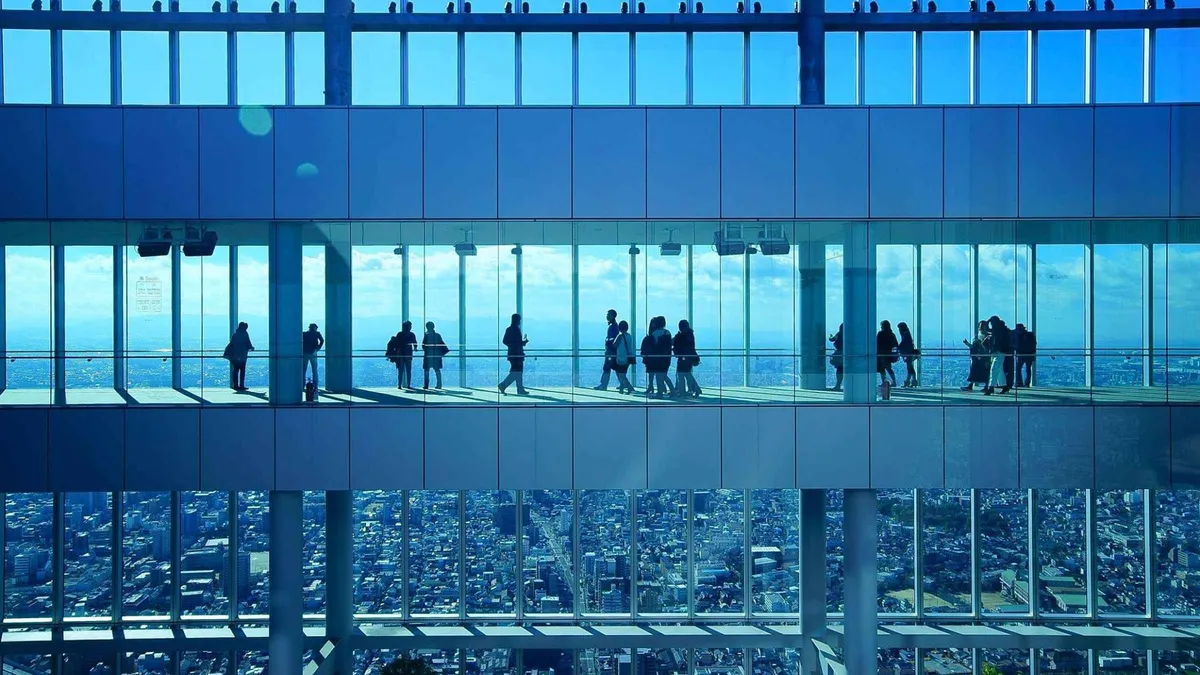 from $9.89
Cheapest way in
from $9.89
Cheapest way in
Osaka: Panoramic Observatory Abeno Harukas 300 E-Ticket
Admission to the 300-metre deck on Japan's tallest building, at roughly ¥1,580 against the venue's ¥1,980 web-advance rate and ¥2,200 walk-up. There is no timed slot, and the 16F counter can cap walk-up sales on busy days.
Check Availability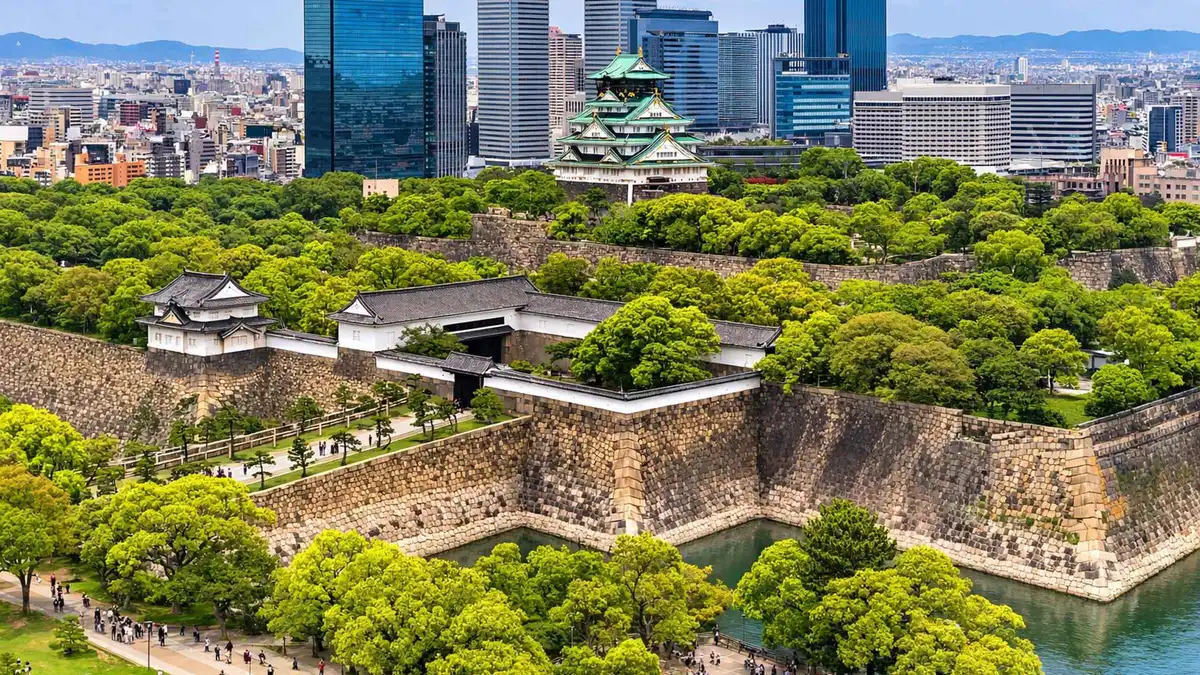 from $54.56
Osaka: Guided Walking Tour with a Native Expert – Top Sights
Four hours linking Osaka Castle, Tsutenkaku and Namba by metro, with the ¥1,200 keep admission included and the ¥430 of train fares not. A Japan Rail Pass buys you nothing here — the route runs on Osaka Metro.
Check Availability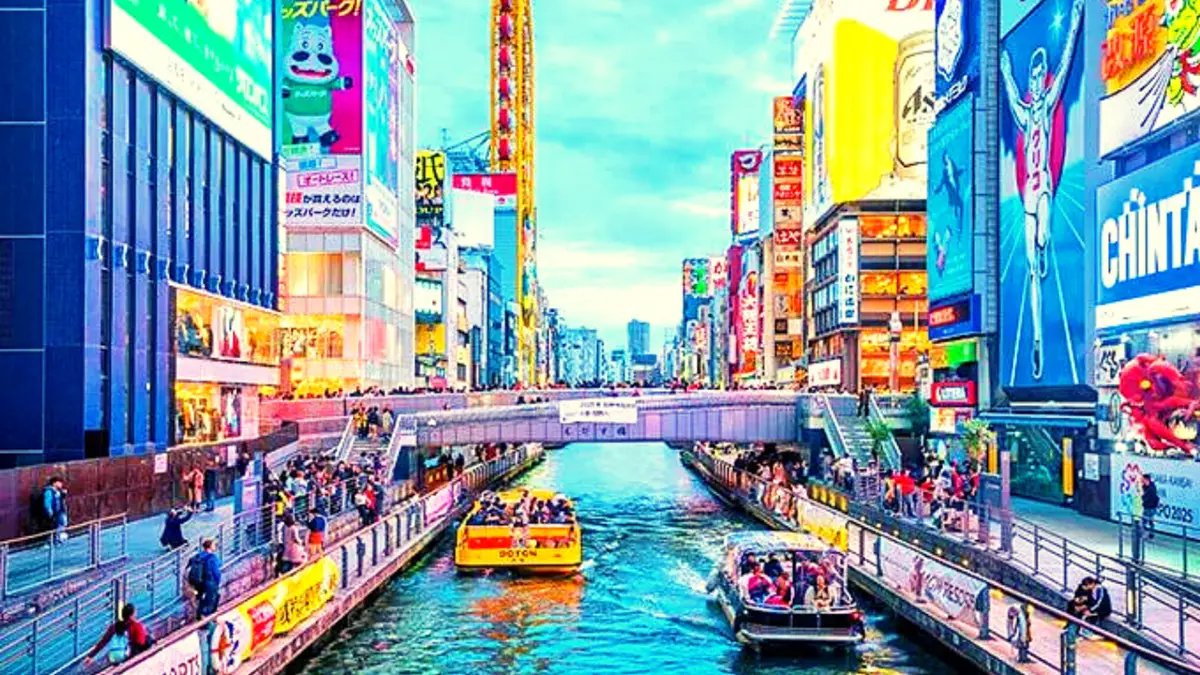 from $35.71
Osaka: Private or Group Hotspots & Hidden Gems Walking Tour
A three-hour walk that stretches to seven if you want it to, private or shared, with a takoyaki and a retro vending-machine drink included. The longer options use trains, which you pay for — usually under ¥1,000 a head.
Check Availability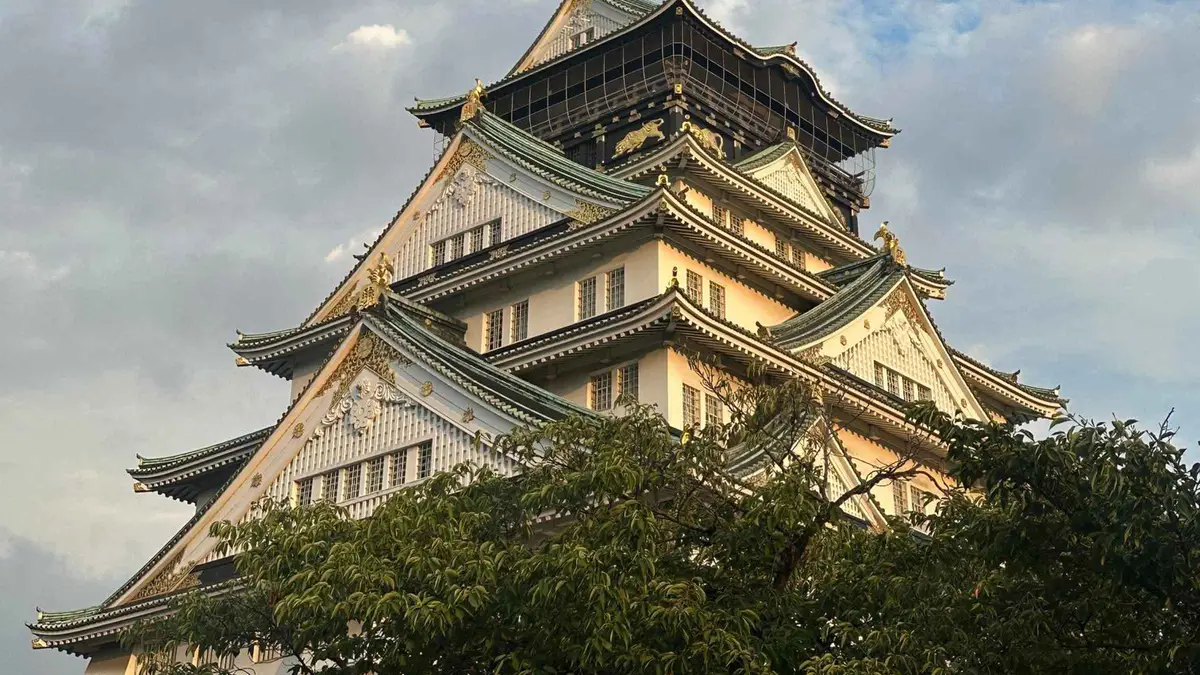 from $49.74
Osaka: Essential City Loop Tour with Local Guide
Five hours in a group of eight covering the castle, the Showa-era backstreets and the neon strip in one loop, with food bought stop by stop instead of a sit-down lunch. Only four people have rated it so far.
Check AvailabilityPrices, ratings and details are the platform's own. Dollar figures are the listed prices. The platform bills in your account's currency.
Five railways, two ward names and one crossing
Tennoji is an interchange first and a district second, and the layout only makes sense once you know which side of the tracks you are on.
JR Tennoji is the big station: the Osaka Loop line, the Hanwa line down to Wakayama and the airport, and the stop where the HARUKA limited express from Kansai Airport calls before it runs north. Osaka Metro brings the Midosuji and Tanimachi lines in underneath it. Kintetsu's Osaka-Abenobashi faces it across the road, at the foot of the tall building, and the Hankai tramway — Osaka's surviving street tram — starts from a stop on the same crossing and runs south towards Sumiyoshi Taisha.
The two-name problem is smaller than the one in the north but it catches people all the same: the JR and Metro stations are Tennoji, in Tennoji ward, while the Kintetsu terminus and the tower share the name of the neighbouring Abeno ward on the other side of the road. Same crossing, two addresses. A hotel described by either name is within five minutes of both stations.
Osaka City publishes a Transport Barrier-Free Map, in a June 2026 edition, and this interchange is one of the nine districts it maps in detail, with sub-maps for step-free routes, underground passages and accessible toilets. Every one of Osaka Metro's 134 stations has a lift and a completed step-free route from street to platform, and staff are asked for help at the gate on the day rather than booked in advance.
The airport fare that makes this district worth considering
JR's discounted HARUKA one-way ticket for passport holders costs ¥1,300 to Tennoji and ¥1,800 to Osaka or Shin-Osaka — this is the cheapest destination on that fare table, and the train gets here first. Against that, the Nankai Airport Express reaches the southern hub in about 44 minutes at the base fare with no surcharge at all. So: if you are travelling on JR, Tennoji is your cheapest and quickest door into the city; if you are not, it is not. The full arrival comparison prices every route.
The lawn, the zoo and what the park actually is
The green space between the station and the zoo gate is the district's living room, and it is not what the name suggests to a first-time visitor.
The entrance area, Tenshiba, is a 7,000-square-metre lawn with cafes, restaurants, a flower shop, a convenience store, a futsal pitch, a pet service and a paid children's play area around its edges. It is free and open 07:00 to 22:00, with individual shop hours varying, and it sits within a few minutes' walk of the JR, Metro, Kintetsu and Hankai stations — those figures come from the park operator's own site. It is not a botanical garden or a historic park; it is a well-run public lawn with a good view of the tall building, and on a Saturday it is full of families.
| Ticket | Price | Who |
|---|---|---|
| Zoo, adult | $5.02 (¥800) | ¥1,000 with the optional donation |
| Zoo, elementary and junior-high | Free in Osaka City, ¥200 from outside it | By where the child lives or is schooled |
| Zoo, with a same-day tower ticket | ¥720 adult, ¥180 child | Valid to the end of the following month |
| Zoo, Osaka-city residents 65 and over | Free | On proof of residence |
| Zoo, annual pass | ¥3,200 | Pays for itself in four visits |
The zoo, and the discount most visitors miss
Tennoji Zoo opens off the same green space, and it is one of Japan's oldest. Admission is ¥800, or ¥1,000 if you add the optional donation the zoo asks for at the gate. It runs 09:30 to 17:00 with last admission at 16:00 and closes every Monday — the next day when the Monday is a holiday — plus 29 December to 1 January. Two things worth knowing before you go: the summer 18:00 closing on May and September weekends ended from September 2026, so every operating day is now the same short one; and some animals go off view after 15:00, which makes a late-afternoon visit a poor one.
The zoo also runs a cross-discount with the tower one stop west: show a same-day Tsutenkaku ticket, paper or online, and admission drops to ¥720 adult and ¥180 child, valid to the end of the month after your visit. The zoo has no car park, lends wheelchairs at both the Shinsekai and the park gates without reservation, and asks that assistance-dog handlers phone 06-6771-8401 ahead, because some animals react and parts of the route are closed when they do.
The temple, and the day of the month to come
The oldest thing in the district is a ten-minute walk north of the station, and it is free unless you want to go inside the halls.
Shitennoji is a working temple complex whose grounds are free and whose gates are open 24 hours — that is the temple's own statement, not an inference. What is ticketed is the inner Central Precinct at $3.14 (¥500), the garden at ¥300 and the Treasure Hall at ¥500, each sold separately at its own counter, with high-school, elementary and kindergarten rates below those and free entry for a disability-certificate holder and their companion.
The hours are the part guides get wrong. The precinct runs 08:30 to 16:00 normally, 08:00 to 16:30 on the 21st of each month and during observances, and 08:00 to 17:00 on 21 October. The 21st is also the day the temple's market fills the grounds, which makes it either the best or the worst day to come depending on what you are here for. The temple publishes no closed day.
How it fits the district: temple first thing, at 08:30, then ten minutes south to the lawn and the zoo, then the tower or the retro quarter in the evening. That is the whole district in one day, and the only ticket in it that needs any planning is the tower's.
The tall building, and the retro quarter next door
Two very different Osakas face each other across one subway stop, and both are worth the evening.
Abeno Harukas 300, the observatory at the top of Japan's tallest building, stands directly above the Kintetsu terminus. It revised its fees on 23 July 2026: ¥2,200 at the counter, ¥1,980 booked online by the day before, and ¥2,200 online on the day itself — so the only saving is for buying ahead. It runs 09:00 to 22:00 with last admission at 21:30, there is no timed slot, and walk-up tickets are sold only at the 16F counter, first-come, with the venue warning that sales can be suspended or numbered on busy days. It is not on the Osaka Amazing Pass free list at all, which is the single most expensive assumption a pass holder can make in this district. The tower's own page covers the deck, the glass-floored EDGE experience at ¥3,000 and the ¥1,500 heliport tour.
One stop west on the Sakaisuji line, Shinsekai is the other Osaka: a district laid out around the 1903 national industrial exposition, with Janjan Yokocho — about fifty establishments over 130 metres — running kushikatsu and doteyaki counters where the rule is that you do not dip a skewer in the communal sauce twice. Tsutenkaku is its tower, at ¥1,500 for the general and outdoor decks sold only as a set, open 09:00 to 21:45 with last admission at 21:15 — and it now requires a timed reservation for every ticket, pass holders included, who have to book their slot at the counter on arrival. Spa World is at the same crossroads: ¥2,000 on weekdays and ¥2,700 at weekends with the pool, ¥1,500 without it, and the onsen floors run from 10:00 straight through to 08:45 the next morning.
The two highest-rated food walks in this catalogue both work that quarter — fifteen tastings and three drinks across five venues is the higher-rated of the pair, and the same shape for about nine dollars less has far more reviews behind its score and includes hotel pickup.
Where the cheap beds are, and how to think about them
Osaka's cheapest rooms are a ten-minute walk west of this interchange, and the internet is unhelpful about them in both directions.
The rooms in question are around Shin-Imamiya, one stop west on the Loop line and the JR interchange for the Nankai airport line, in a quarter of former day-labourers' lodgings converted into budget hotels and hostels. They are the cheapest beds in any Japanese city of this size, and they are why "where not to stay in Osaka" is one of the most-searched phrases about the city.
Here is what can actually be sourced. No authority — not the prefectural police, not the city, not the tourism bureau — publishes a district-level safety ranking for Osaka. Anyone who ranks neighbourhoods for you is giving you an impression, and so is anyone who tells you the impression is wrong. What is published is the emergency infrastructure: 110 for police, 119 for fire and ambulance, #9110 for police non-emergency advice, and the Japan Visitor Hotline on 050-3816-2787, in English, Chinese and Korean, 24 hours a day.
The second sourced fact is a financial one, and it is the useful one. Osaka Prefecture's lodging tax, rebanded on 1 September 2025, charges nothing at all on a room under ¥5,000 per person per night, then ¥200, ¥400 and ¥500 as the rate crosses ¥5,000, ¥15,000 and ¥20,000. The budget rooms around this interchange are the main category of accommodation in the city that the tax never touches at all — and most sites still print the superseded ¥100 / ¥200 / ¥300 bands.
Our reading, stated as a reading: this is a fine place to sleep if you want a ¥3,000 room, a two-minute walk to the airport line and no illusions about the street outside; it is not the district to book if you want your first evening in Japan to look like the photographs. The alternative at the same distance from the airport train is the district around the interchange itself, and the where-to-stay page sets all five areas side by side.
How to spend a day here
The district works as a full day or as a half-day bolted onto an arrival, and the two shapes are different.
The full day. Temple at 08:30, when the precinct opens and nobody is in it. Walk ten minutes south to the lawn for coffee, then the zoo at about 10:30 — before the 15:00 hour when animals start going off view. Lunch on the lawn. The Hankai tram south to the shrine in the afternoon if you want a second temple, or the retro quarter from about 17:00, kushikatsu at a counter, and the tower deck last, since it takes admissions to 21:30. On a day like that the ¥3,500 city pass covers your trains, the zoo, the temple and the retro quarter's tower — but not the tall building's observatory.
The arrival half-day. If you have come in on the HARUKA at ¥1,300 and cannot check in until 15:00, this district absorbs the wait better than any other: leave the bag in a station locker, do the temple and the lawn, and be at your hotel when the room opens. Every Osaka Metro station holds lockers, and the smart-locker tariff the operator publishes runs ¥300 for three hours in a small unit and ¥900 for 24 hours, with under an hour free.
What not to do is treat this as a shopping district. The department stores at the crossing are competent and identical to every other Japanese terminal's; the arcades worth walking are in the north and the south, and there is nothing here to buy that you cannot buy better elsewhere.
- Mondays: the zoo is closed, the temple is not, and the retro quarter one stop west runs enka programming at its tower — this is one of the better Monday districts in Osaka
- On the 21st of any month: the temple opens at 08:00 and its market fills the grounds; on 21 October it stays open to 17:00
- If you hold the city pass: the zoo, the temple and the tower one stop west are free entries, the tall building's observatory is not, and the pass's "day" runs 03:00 to 02:59
- After 21:00: the tall building takes its last admission at 21:30 and the retro quarter's tower at 21:15, which makes the two of them a choice rather than a double bill
Tennoji map: the interchange and everything around it
Stations in blue, the paid and free stops in copper. Pin positions are ours, placed from the venues' published addresses.
Everything on this map is within about fifteen minutes' walk of the main interchange, and the two western pins are one subway stop away.
Next stop from Tennoji
Walking times are our estimates from the published addresses; ride times follow the operators' line maps.
Shinsekai
The 1903 exposition district: kushikatsu counters, the tower with its compulsory timed ticket, and the bathhouse that never really closes.
One stop west, or 15 minutes on footSumiyoshi Taisha
The shrine at the end of the tram line, with its steep drum bridge. No admission fee is published; the outer gates close at 16:00.
About 20 minutes on the Hankai tram from the crossingteamLab Botanical Garden
An after-dark installation in the Nagai botanical garden, priced by date at ¥1,800 to ¥2,400 with a hard last admission — the natural evening after a day here.
Three stops south on the Midosuji lineSleeping around the southern interchange
No nightly rate is printed here: we did not price these pockets on a fixed date, and an invented band is worse than none. What follows is what each buys you, plus the prefecture's lodging tax — rebanded on 1 September 2025, charged per person per night, and genuinely relevant in this district because the cheapest rooms fall below its floor.
Tennoji and Abeno
- Where it sits
- On the interchange, five minutes from the park lawn
- Suits
- JR arrivals from Kansai Airport, day trips to Nara and Wakayama, families
Business hotels above the station and around the crossing, cheaper than the two central districts and better connected southwards. The park lawn opens at 07:00, which is a real advantage with children.
See stays in TennojiShin-Imamiya and Ebisucho
- Where it sits
- One stop or a 10-minute walk west of the interchange
- Suits
- The lowest room rates in urban Japan, and a two-minute change onto the airport line
Converted lodging houses and hostels. No authority publishes a district safety ranking, so treat both the warnings and the reassurances as opinion — and note that a room under ¥5,000 a head carries no lodging tax at all.
See stays in Shin-ImamiyaUehonmachi
- Where it sits
- Two stops north on the Tanimachi line, 20 minutes on foot
- Suits
- Quieter nights, the Kintetsu line to Nara, mid-range hotels
The residential ridge between this district and the castle, with the temple complex halfway between the two. Less to look at, more to sleep through.
See stays in UehonmachiThe prefecture's lodging tax is nothing under ¥5,000 per person per night, then ¥200, ¥400 or ¥500 as the rate crosses ¥5,000, ¥15,000 and ¥20,000 — in force since 1 September 2025. We may earn a commission if you book through these links, at no extra cost to you.
Tennoji questions
Is Tennoji worth visiting?
For a day, yes: the country's oldest state-founded temple complex, a zoo, a free lawn open from 07:00, Japan's tallest building and the retro drinking quarter one stop west. It is not a shopping district and it is not pretty, but it is the densest single day in Osaka outside the castle. The table above prices all six stops.
Is the park at Tennoji free to enter?
The lawn between the station and the zoo gate is free and open 07:00 to 22:00, with cafes and a convenience store on it and a paid children's play area at one edge. The zoo inside the same green space charges ¥800, or ¥1,000 with the donation it asks for at the gate.
How do you get from Kansai Airport to Tennoji?
JR's discounted HARUKA for passport holders, at $8.15 (¥1,300) one way — the cheapest destination on that fare table, and the train reaches here before it reaches the northern terminals. If you are not travelling on JR, the Nankai Airport Express to the southern hub is about 44 minutes at base fare with no surcharge.
Is Tennoji a good place to stay in Osaka?
It is the value option: cheaper than the two central districts, five railways under one roof, and the cheapest JR fare in from the airport. The trade is atmosphere — you will travel eight minutes north for dinner most nights. The area comparison sets it against the other four.
What is there to do in Tennoji at night?
The observatory above the Kintetsu terminus takes its last admission at 21:30, the tower one stop west at 21:15, and the kushikatsu counters in the retro quarter run late. Two highly-rated evening food walks work that quarter, including fifteen tastings across five venues with the ordering done for you.
Does the one-day city pass cover this district?
It covers your trains, the zoo, the temple's central precinct and the tower one stop west — and it does not cover the observatory on Japan's tallest building, which is not on its free list at all. The pass page works through where it pays and where it does not.
Is the area west of Tennoji safe?
No authority in Osaka publishes a district-level safety ranking, so every ranking you read is somebody's impression, including the reassuring ones. What is published is the emergency infrastructure: 110 for police, 119 for fire and ambulance, #9110 for police advice and the 24-hour Japan Visitor Hotline on 050-3816-2787 in English, Chinese and Korean.
Tennoji on film: the crossing, the backstreets and the walk west
Three walk-throughs we checked ourselves — each id verified against YouTube's own record and its thumbnail, so none of these is a dead player. They load only when you press play.
JAPAN Osaka Tennoji Walk | City Walk 4K HDR
The interchange, the crossing and the streets around it at ordinary pace.
Video: 4K JAPAN WALKTennoji, Osaka: A Peaceful Escape from the Crowds | Walking Tour | 4K HDR
The residential side of the district, which is most of it and none of the photographs.
Video: THE JAPAN WALKShinsekai to Tennoji: Exploring Osaka's Retro Streets and Local Vibes | Walking Tour | 4K HDR
The fifteen-minute walk west into the retro quarter, filmed in one take.
Video: THE JAPAN WALKVideos load from YouTube only when you press play.
Prices, hours and terms are set by the venue or operator and confirmed at checkout.
We may earn a commission if you book through one of our links, at no extra cost to you. Full affiliate disclosure