 Osaka City Guide
Takoyaki vs Okonomiyaki: Which One Is Which in Osaka
Takoyaki vs okonomiyaki is the first argument most visitors have in Osaka, and it is usually settled badly, because the two dishes get compared as rivals when they are cousins. Both are konamon — flour food — and the Osaka Convention & Tourism Bureau puts both on the same foundation: a batter built on dashi rather than water, in a city that has called itself the Kitchen of the Nation since the seventeenth century (see things to do in Osaka). What separates them is format. One is a ball you eat standing up with a toothpick, hot enough to hurt. The other is a pancake you sit down for, order to your own specification and eat off a hotplate. This page sets out what each one is, how it is cooked, the variants that only exist here, the history the bureau itself is careful about — and the reason this guide will not send you to a named shop for either. Yen figures carry a dollar gloss at ¥1,000 ≈ $6.27 (ECB via frankfurter.dev); everything attributed to the bureau or to MICHELIN is quoted from their published pages.
Quick answer The difference in one paragraph, plus why no shop is named here
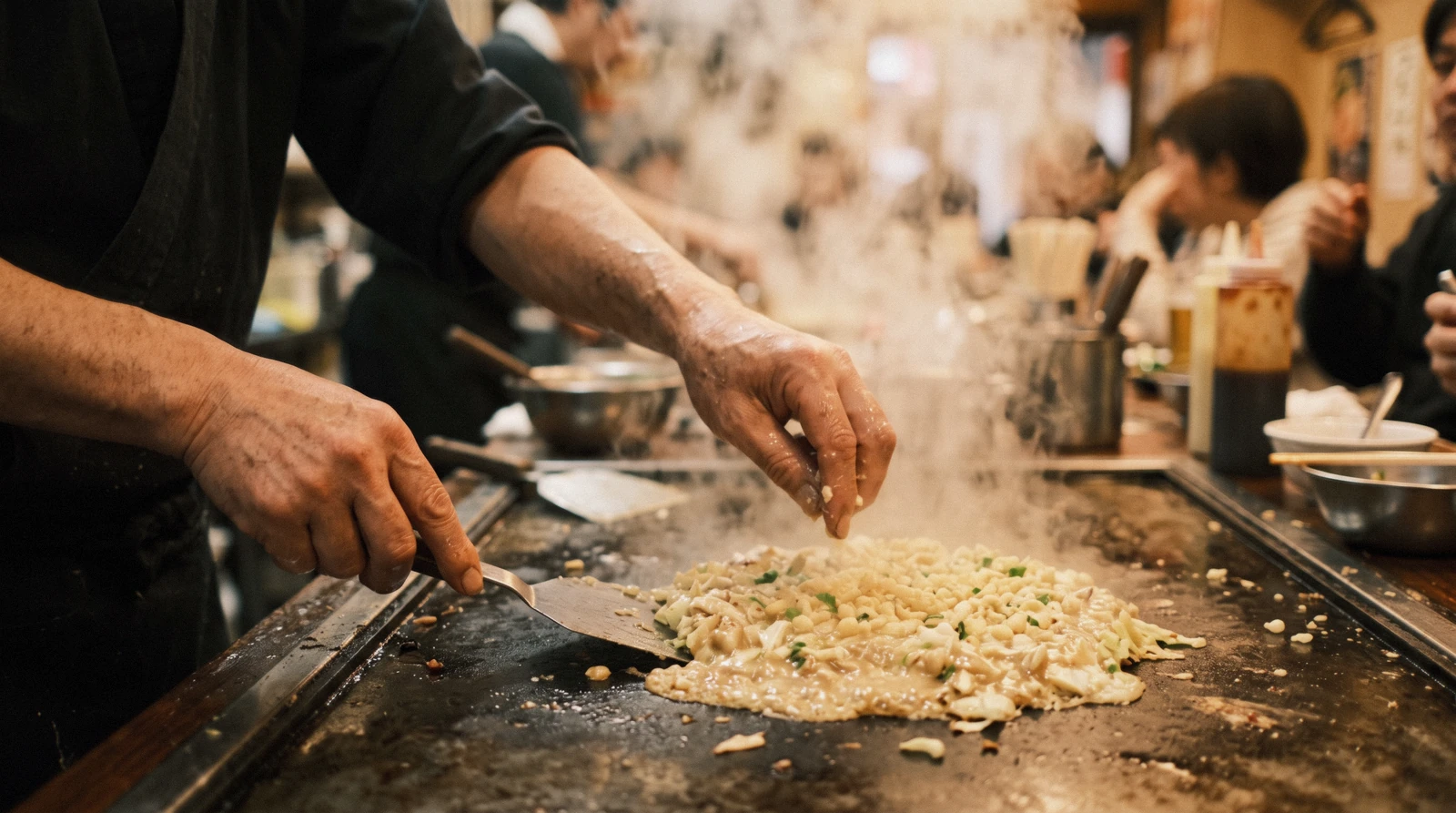
Takoyaki is a ball of dashi batter with a piece of octopus in the middle, turned in a dimpled iron pan with a metal pick and served six or eight to a tray with sauce, mayonnaise, dried seaweed and bonito flakes on top. Okonomiyaki is a savoury pancake of dashi batter, cabbage and whatever else you choose, mixed together before it hits the griddle rather than layered, and eaten sitting down. Takoyaki is the one you eat walking; okonomiyaki is a meal. The dishes are related by sauce, not by method — the bureau says takoyaki's topping was influenced by okonomiyaki after the war.
Key takeaways
- The Osaka style of okonomiyaki is the mixed style: batter and filling stirred together, then grilled. Hiroshima layers instead — a different dish, not a regional accent
- Two variants are local property: modanyaki, which adds noodles and an egg layer, and negiyaki, which swaps the cabbage for a mountain of green onion
- Takoyaki's history is short. The bureau says shops "only began to pop up in the city in the 1950s", and calls the every-kitchen-has-a-pan claim an urban legend
- No shop is named for either dish on this site, and the reason is a sourcing rule rather than an opinion — see why below
- Where to look rather than who to trust: Kuromon Ichiba at midday, Dotonbori after dark, Shinsekai for the skewers
What Each Dish Actually Is
Takoyaki: a ball, a pick and a lot of dashi
The batter is thin — closer to a pourable custard than to a pancake mix. The tourism bureau describes dough "made with dashi stock from kelp and dried sardines", which is the point: the inside is not supposed to set. A finished ball should be "crispy on the outside and soft and gooey on the inside", and if the middle holds its shape when you bite it, the cook rushed it.
Into each dimple of the iron pan goes batter, a piece of octopus, usually pickled ginger and spring onion. The cook then works the pan with a metal awl, turning each ball a quarter at a time so raw batter runs down and seals the seam. That turning is the skill, and it is why takoyaki is a spectator dish: the pan sits at the front of the shop at eye level, forty balls turned at once with two picks.
On top go sauce, egg-yolk mayonnaise, aonori seaweed and bonito flakes that move in the heat. Six or eight to a paper tray, at a temperature that is genuinely dangerous — bite, then wait.
Okonomiyaki: a pancake you specify
The name compounds okonomi, what you like, and yaki, grilled — so the dish is defined by the ordering rather than the recipe. Dashi batter and shredded cabbage are the base; after that the menu is a list of things to put in it, usually pork belly, squid, prawn, cheese, kimchi or mochi.
The Osaka method is to mix. Batter, cabbage and fillings go into a bowl, get stirred, and hit the griddle as one mass, flipped once and then left alone. The bureau calls this the mixed style and notes it takes "considerable technique": a badly mixed okonomiyaki is dense in the middle and burnt at the edge, and the flip is where amateurs lose it. Hiroshima's version is built in layers with noodles pressed underneath — a different construction that shares a sauce.
It is eaten with a small metal spatula off the hotplate built into the table, and that hotplate is why okonomiyaki is not street food in any real sense: it is a sit-down dish that takes twenty minutes.
The Two Dishes Side by Side
Everything in this table comes from the Osaka Convention & Tourism Bureau's own gourmet and konamon pages, read in Q3 2026. Where a column says "not published", that is not an oversight on our part — no official body in Osaka publishes it, which is a fact worth knowing before you read a price somewhere else.
| Takoyaki | Okonomiyaki | |
|---|---|---|
| Form | Balls, six or eight to a tray | One pancake, roughly plate-sized |
| Batter | Thin, dashi-based, deliberately unset inside | Thicker, dashi-based, bound with cabbage |
| Method | Turned in a dimpled iron pan with a metal pick | Mixed in a bowl, griddled flat, flipped once |
| Where you eat it | Standing at the counter, on a toothpick | Sitting down, off a hotplate, with a spatula |
| Local variants | None the bureau names — the toppings vary, not the dish | Modanyaki (noodles and egg) and negiyaki (green onion instead of cabbage) |
| Age of the dish | Shops "only began to pop up in the city in the 1950s" | Older — the bureau gives no founding date at all |
| Published street price | Not published by any official source | Not published by any official source |
The last row is the one most guides fill in anyway. The tourism bureau prints no price for either dish, MICHELIN prints price bands only for restaurants in its own selection, and no trade body publishes a survey. Any figure quoted for a tray of takoyaki is somebody's receipt, not a tariff.
Modanyaki and Negiyaki: The Two That Belong to Osaka
If okonomiyaki is a dish you specify, these two are the specifications that became menu items. Both sit on the bureau's konamon guide, co-signed by the Japan Konamon Association, so they are documented rather than folklore.
Modanyaki is the one people order by accident and then order again: an okonomiyaki with fried noodles pressed into it and a thin omelette-like sheet of egg over the top, plus additions the bureau lists as going beyond cabbage. It is heavier than it looks and the single order most likely to defeat one person.
Negiyaki is the opposite move. The bureau describes suji negiyaki, in which green onion is piled so high that "the batter becomes barely visible", giving a result that is crisper and, in its words, "lighter than okonomiyaki". None of these is a house recipe you need a specific address for: the variants are genre, not brand, and a competent shop anywhere in Minami will cook all three.
The History, as the Bureau Itself Tells It
This is the section where most food writing about Osaka quietly invents things. The city's own tourism bureau is unusually careful here, and the careful version is more interesting than the confident one.
Start with the age of the thing. Takoyaki, the bureau says, has a "surprisingly short" history: shops "only began to pop up in the city in the 1950s". That is within living memory — a dish the world treats as an ancient emblem of Osaka is younger than the Osaka Metro.
The ancestry it gives is two earlier snacks, choboyaki and radioyaki, popular from the Taisho into the Showa era. Choboyaki was a children's sweet-shop item: flour dissolved in water, cooked in semicircular moulds the bureau says resembled a modern takoyaki pan, with pickled ginger, konjac, spring onion and soy sauce. Takoyaki is what happened when someone swapped the water for dashi and put octopus in the middle. The sauce-and-mayonnaise finish came later, "influenced by okonomiyaki after the war".
Then the part that gets left out. On who invented it, the bureau writes that "there are various theories" and stops. No inventor, no founding shop, no year. It also declines to say how many takoyaki shops the city has — the number every listicle prints with total confidence. And on the claim that every Osaka household owns a takoyaki pan, it says: urban legend. The body most incentivised to repeat that line is the one telling you not to. A dish with this many unanswered questions rewards eating your way through the theories, and the osaka guided tours in tours in Osaka are a good next step for anyone who wants to compare takoyaki and okonomiyaki at the source.
Why This Guide Names No Shop for Either Dish
Every other page on this site names venues when it can. This one cannot, and the reason is worth setting out in full, because it tells you something real about how the two most famous dishes in Osaka are actually covered online.
Our rule for naming a restaurant is simple: there has to be a citable list behind it — MICHELIN, a comparable national selection, or the venue's own published information. Not that it was busy, and not that it appeared in six blog posts that all cite each other.
For Osaka that list is the MICHELIN Guide Kyoto Osaka 2026, whose Bib Gourmand selection for Osaka and its surroundings runs to 67 restaurants — 67 addresses we could name freely, across kushiage, tonkatsu, udon, soba, ramen, izakaya and sushi, nine of them new in the 2026 edition.
There is no takoyaki venue among them. There is no okonomiyaki venue either. Not one, in 67 addresses, in the city both dishes are synonymous with. The nearest street-food genres the guide recognises here are kushiage and tonkatsu. So the honest position is that the two dishes Osaka is most famous for have no venue in the selection we treat as authoritative for this city, and we will not manufacture an authority to fill the gap.
- A queue of local office workers at 12:30 on a weekday is information. A queue outside a shop with a foreign influencer's photograph in the window is a different kind of information
- Watch the pan before you join anything: balls turned constantly and individually mean the cook knows the dish; balls sitting in the wells going brown were made for the queue
- A shop selling one thing is usually better at it than a shop with a laminated menu in five languages, and a scraped, continuously worked griddle is a shop that cooks all day
What MICHELIN does and does not print
Worth knowing if you go looking at the guide yourself: for its Bib Gourmand entries in Osaka it prints name, address, cuisine and a price band, and no opening hours and no closed day for any of them. That is why every venue card on this site reads "not stated" in those fields unless the restaurant's own site could be read separately — and why turning up at a MICHELIN address on a Sunday evening is a gamble the guide has not helped you with.
What It Costs, and What Can Honestly Be Priced
A tray of takoyaki from a street counter is one of the cheapest hot meals in Japan, and we are not going to print a figure for it, because no official source publishes one and every number in circulation is an anecdote wearing a uniform. What holds is the shape of the spend: takoyaki costs less than a subway ride across town, and a sit-down okonomiyaki with a drink is a full meal at a fraction of Western city-centre prices. The Osaka costs page works the daily budget from figures that are published.
One cost that is published and catches people on exactly these streets: Osaka City has fined street smoking city-wide since 27 January 2025, heated tobacco included, at $6.27 (¥1,000). Eating in the street is a different matter — no Osaka district publishes a walking-and-eating ban at all.
Where to Go Looking
Three places, described by what they are good for and when, with no shop named in any of them. Each has its own page here with the access details and the caveats.
Kuromon Ichiba, at midday
Kuromon Ichiba is a covered market street and a lunch place rather than an evening one — by late afternoon much of it is packing up. It is where the raw-material argument gets settled: octopus and scallops handled a metre from where something is being grilled.
One warning, and it is an absence rather than a hazard: the market's own association publishes nothing we can read. Its hours, closed days and rules on eating in the aisles sit behind a bot wall that refused us, and stalls set their own hours anyway. Treat it as a midday destination.
Dotonbori, after dark
Dotonbori is the one everyone photographs and is genuinely better at night, because the whole street is lit signage and the canal doubles it. It is also the most touristed food street in western Japan, and the density of shops competing for one evening's foot traffic shows in the cooking at some of them.
Walk its length first without buying anything, then commit. The bureau's konamon framing puts the concentration of these dishes in Minami, and Dotonbori is its spine — but the side streets running north off it, and Hozenji Yokocho one lane south, are where the shops are smaller and the queues shorter.
Shinsekai, for the other flour dish
If you have eaten both dishes and want the third thing Osaka does with a fryer, Shinsekai is the answer: kushikatsu, skewered and crumbed and fried, concentrated around Tsutenkaku. Janjan Yokocho, the pedestrian lane there, holds around 50 establishments over about 130 metres.
The rule to know before you sit down is the no-double-dipping rule, and it is hygiene rather than etiquette: the sauce sits in a shared container and a skewer goes in once. For more sauce you use the shredded cabbage on the counter as a ladle. Break it and you will be told.
Which One to Order, and When
If you have twenty minutes between two other things
takoyaki. It is the only one of the two that is genuinely fast, and it is designed to be eaten on your feet.
If you want this to be dinner
okonomiyaki, and order the modanyaki if you are hungry rather than curious.
If you have already had okonomiyaki once this trip
negiyaki. Same shop, same griddle, a completely different plate — crisper, lighter, mostly green onion.
If you are travelling with someone who does not eat seafood
okonomiyaki, which can be ordered with pork and nothing else. Takoyaki has octopus in it by definition and fish flakes on top.
If you want someone to choose the shops for you
a tasting crawl or a guided street-food tour does the job the absence of a citable list leaves open.
Guided Tastings, Where Somebody Else Picks the Shops
The paid alternative to a shop recommendation we will not make. Each card opens the operator's own live calendar; prices are the platform's listed figures.
 from $49.94
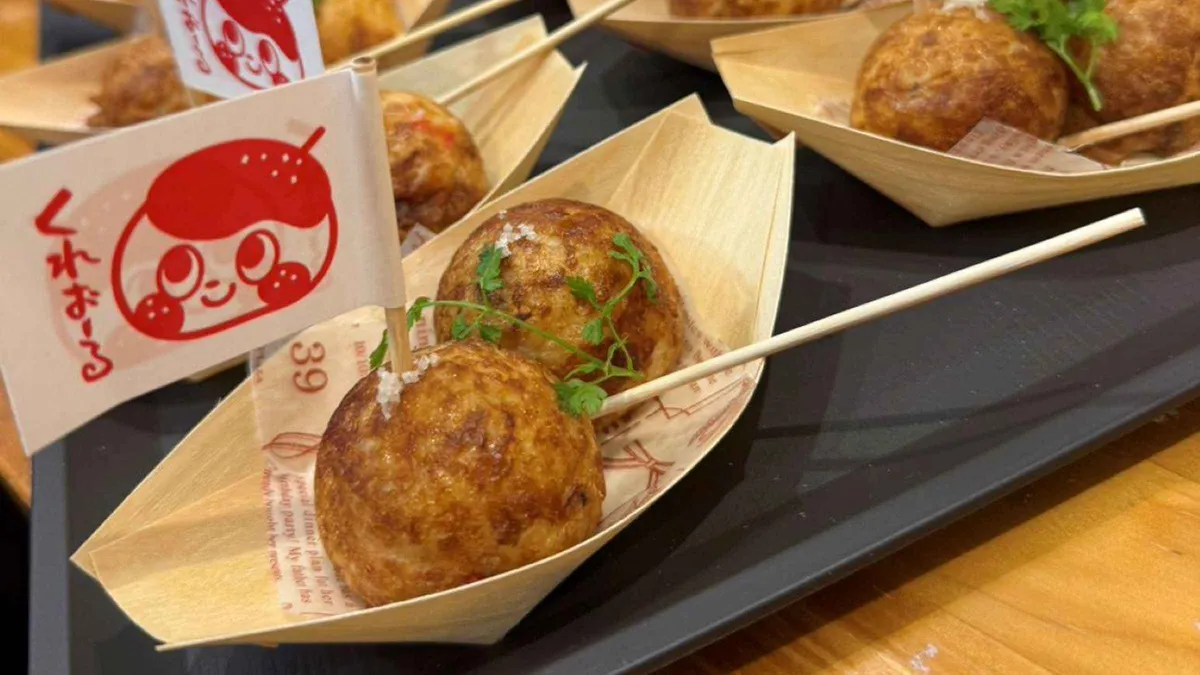
Osaka Dotonbori: 6-shop Takoyaki Tasting Tour
Two hours comparing takoyaki across five Dotonbori shops — about ten pieces in all — with a tasting booklet and a local guide, capped at ten people. Narrow by design: one dish judged batter by batter, not a general food tour.
Check Availability from $53.37
Osaka: Dotonbori Street Food Tour with Tastings
Two hours of street food along Dotonbori with a temple stop and the Glico sign, guide included. The listing never says how many tastings you get, which the 12- and 15-dish tours in this group do.
Check Availability from $74.91
Osaka, Dotonbori: Backstreet Food Tour with Local Guide
Three hours off the main strip in a group of no more than eight: yakitori, ochazuke, oden and a fourth stop the guide picks. Drinks are not included, which is the difference from the cheaper 15-dish evening tours.
Check Availability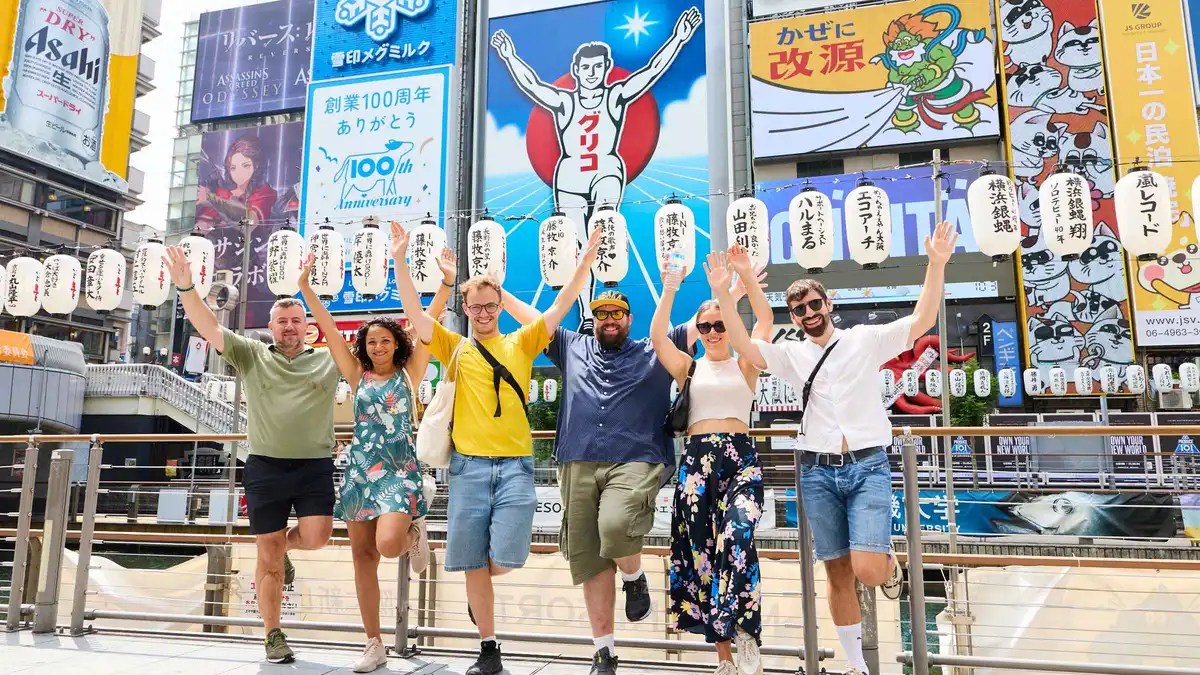 from $17.48
Osaka Walking Tour: Dotonbori, Kuromon Market & Street Food
Two and a half hours from Shinsaibashi through Hozen-ji, Kuromon Market and Den Den Town with a licensed guide and some food included. Cheap for a guided walk, but only 23 people have rated it so far.
Check Availability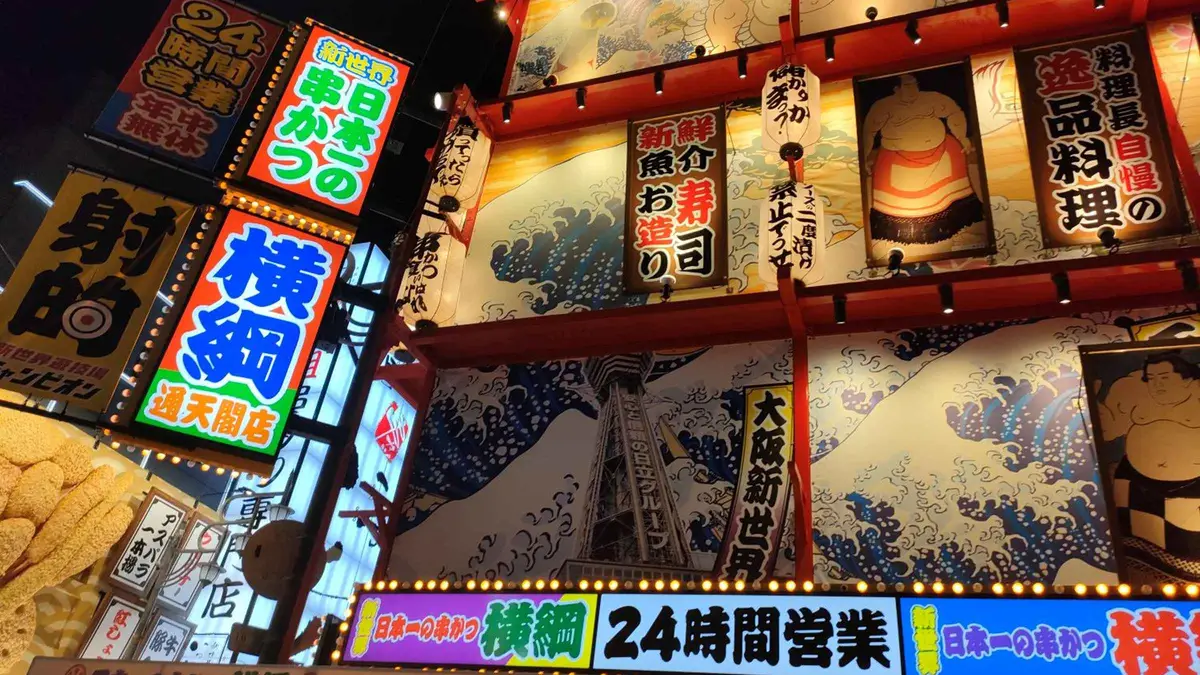 from $69.79
Hungry Osaka Street Food Tour Shinsekai: 15 Tastings 3 Drinks
Fifteen tastings and three drinks across an izakaya, a stall, a standing bar and two restaurants in Shinsekai, over three hours. The best rated of the big evening food walks; getting there and home afterwards is your own affair.
Check AvailabilityPrices, ratings and details are the platform's own. Dollar figures are the listed prices. The platform bills in your account's currency.
Questions About the Two Dishes
What is the difference between takoyaki and okonomiyaki?
Format and method. Takoyaki is a ball of thin dashi batter with octopus inside, turned with a metal pick in a dimpled iron pan and eaten from a tray with toothpicks. Okonomiyaki is a savoury pancake of dashi batter and cabbage, mixed in a bowl before it hits a flat griddle, flipped once, and eaten sitting down with a spatula. They share the sauce, mayonnaise, aonori and bonito on top — and the bureau says takoyaki's topping came from okonomiyaki after the war, not the other way round.
Why does this site not name a takoyaki or okonomiyaki shop?
Because we only name a venue that a citable list stands behind, and for Osaka that list is the MICHELIN Guide Kyoto Osaka 2026 Bib Gourmand selection — 67 addresses for Osaka and its surroundings, containing no takoyaki venue and no okonomiyaki venue at all. The food page names the venues that do have a list behind them, in the genres the guide covers.
How old is takoyaki?
Younger than most people assume. The bureau calls its history "surprisingly short" and says shops "only began to pop up in the city in the 1950s", evolving from two earlier snacks, choboyaki and radioyaki, by swapping water for dashi and adding octopus. On who invented it, it says only that "there are various theories" — no inventor, no founding shop, no year.
Does every household in Osaka own a takoyaki pan?
No. The city's own tourism bureau calls that an urban legend on the same page where it explains the dish's history. It is repeated constantly online as evidence of how deeply the food runs in local life.
Is okonomiyaki in Osaka the same as in Hiroshima?
No, and the difference is structural. Osaka mixes: batter, cabbage and fillings are stirred together and grilled as one mass, a technique the bureau notes takes real practice. Hiroshima layers, with noodles pressed underneath. Two variants belong to Osaka specifically — modanyaki, which adds noodles and an egg sheet, and negiyaki, which replaces the cabbage with green onion.
Can I eat while walking in Osaka?
No district here publishes a rule against it — not Dotonbori, not Shinsaibashi, not Shinsekai, and the one market association whose site would carry such a rule could not be read. What the city does enforce is a street-smoking ban across the whole city since 27 January 2025, heated tobacco included, with a $6.27 (¥1,000) fine.
The Two Dishes on Camera
Three views of the same argument, each id checked against YouTube's own record. They load only when you press play.
Which Osaka Street Food Reigns Supreme: Takoyaki vs. Okonomiyaki!
Both dishes cooked on camera — useful for seeing how differently the two pans are worked.
Video: VoyageZoneOsaka's Soul Food: Discover the Delicious World of Okonomiyaki & Takoyaki
The pair taken together as Osaka's own cooking, rather than as a contest.
Video: Asian Culinary Journeys 1005 Must Try Japanese Foods in Osaka 🇯🇵
Where the two sit among the other things worth eating here, filmed in the city.
Video: Abroad in JapanVideos load from YouTube only when you press play.