 Osaka City Guide

Coworking Osaka: A Digital Nomad Guide to Visas, Desks and Data
This coworking Osaka guide is for remote workers planning weeks rather than days: whether Japan's digital nomad status fits you, which coworking desks sell day passes in Umeda, Honmachi and Namba, how to stay online when the stations have no free Wi-Fi, and which monthly costs you can price before you land. For the rest of the trip, start with things to do in Osaka and the hotel areas compared.
Quick answer Visa, coworking prices and Wi-Fi for remote workers
Coworking in Osaka starts at $15.68 (¥2,500) for a day pass at The DECK in Honmachi, and FUTRWORKS in Umeda sells passes from $17.24 (¥2,750). Japan's digital nomad status allows six months for remote workers earning at least ¥10,000,000 a year, and there is no free Wi-Fi at stations, so plan on your own mobile data.
Key takeaways
- The six-month nomad status cannot be renewed back to back: the visa rules set out who qualifies.
- Pick Umeda for JR day trips or Namba for the airport line: where to base yourself compares the areas.
- Buy an ICOCA on day one, $12.54 (¥2,000) with the deposit: getting around Osaka covers fares.
- For a weekend off, the Kyoto and Nara bus day runs $50.72.
A First Evening Out After Work
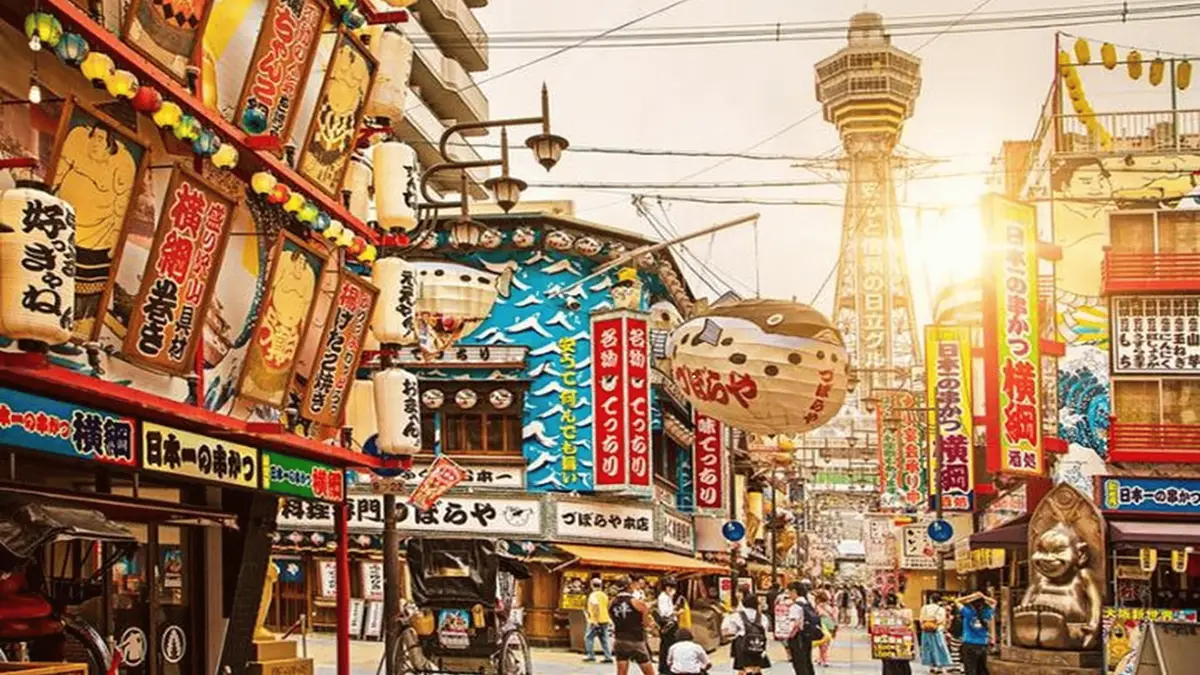
Fifteen dishes and three drinks in Shinsekai with a local expert is the quickest way to learn what to order on your own for the months ahead.
 from $60.86
Most booked
Osaka: Food Tour with 15 Dishes & 3 Drinks with a Local Expert
The same shape as the Hungry Osaka walk, five Shinsekai venues, fifteen dishes and three drinks, for about nine dollars less and with far more reviews behind the rating.
Check AvailabilityDoes Japan Allow Digital Nomads?
Yes, Japan has a six-month digital nomad status for remote workers earning at least $62,700.00 (¥10,000,000) a year. It is a Designated Activities status run by the Immigration Services Agency, and it comes with firm limits on who qualifies and what happens afterwards.
The rules below come from the agency's own page for the Designated Activities (Digital Nomad) status.
| Requirement | Rule |
|---|---|
| Nationality | A country or region under Japan's visa exemption that also has a tax convention with Japan |
| Income | $62,700.00 (¥10,000,000) a year at application |
| Insurance | Private medical travel insurance covering death, injury and illness, with medical cover of $62,700.00 (¥10,000,000) or more |
| Stay | Six months |
| Extension | None |
| Residence card | Not issued |
| Reapplying | Wait six months after the stay ends before applying again for the same status |
Six Months In, Six Months Out
Plan a year around the six-month cap. When the stay ends you must leave, and you cannot apply for the same status again until another six months have passed, so a back-to-back year in Japan is not possible on this status. JNTO calls the visa six-month and non-renewable.
A spouse or child can come along on a separate status if they hold a visa-exempt nationality and carry the same insurance, for the same six months. The document list sits on the Ministry of Foreign Affairs site and the eligible-country list is an Immigration Services Agency PDF. Check the agency's page for what work the status permits before you apply.
Source: Immigration Services Agency of Japan, JNTO.
Where Should Digital Nomads Stay in Osaka?
Umeda or Honmachi for coworking and day trips, Namba for food and the airport train. Osaka splits into Kita, the Umeda side, and Minami, the Namba side, and the city's coworking map follows that split.
Kita covers Umeda, Osaka Station and Nakazakicho, and it is the JR hub for Kyoto and Kobe day trips. Minami covers Namba, Shinsaibashi, Dotonbori and Amerikamura, and Namba puts the airport one train away on the Nankai line. Pick Umeda if your weeks centre on trains north and the offices around Hankyu Osaka-umeda.
Pick Namba if evenings in the food streets matter more and you want WeWork directly connected to the station. The DECK sits between the two worlds at Sakaisuji-Honmachi, on the edge of Honmachi close to both halves of the city. Read the neighbourhood detail in where to stay in Osaka.
The Accommodation Tax on a Long Stay
Osaka Prefecture charges an accommodation tax per person per night on top of your room rate. Nights under $31.35 (¥5,000) carry nothing, then the bands run $1.25 (¥200), $2.51 (¥400) and $3.14 (¥500) for stays of $31.35 (¥5,000) and over. It applies to hotels, guest houses and registered private lodging alike.
The property collects it, often in cash, so keep small notes on hand at check-in. Fold it into your budget on the Osaka costs page.
Source: Osaka Convention & Tourism Bureau, Osaka Prefecture.
Coworking Spaces in Osaka
Day passes run from $15.68 (¥2,500) at The DECK to $17.24 (¥2,750) at FUTRWORKS, and monthly plans from $116.00 (¥18,500). Three operators cover the main bases, two in Kita and one in Minami, and each publishes its own prices.
The table compares the three spaces a remote worker is most likely to join: location, day pass, monthly plan and opening hours for drop-in users. The prices come from each operator's own site, tax included at The DECK.
| Space | Where | Day Pass | Monthly | Hours |
|---|---|---|---|---|
| The DECK | Honmachi Southern Building 1F, directly connected to Exit 14 of Sakaisuji-Honmachi Station | $15.68 (¥2,500) full day, or $8.15 (¥1,300) for up to 2 hours | $116.00 (¥18,500) plus a joining fee | Drop-in weekdays 9:00-18:00, Sat and holidays 10:00-18:00, closed Sunday |
| FUTRWORKS | Hankyu Grand Building 26F, 3 minutes from Hankyu Osaka-umeda Station | From $17.24 (¥2,750) | From $220.70 (¥35,200) | 24/7 |
| WeWork Namba SkyO | Directly connected to Namba Station | No price shown | All Access Plus membership | Weekdays 8:30-18:00 |
Weekly and 24-Hour Plans
The DECK sells a weekly pass at $53.30 (¥8,500) with no joining fee, and weekly and monthly members work 7:00 to 22:00. If you need midnight access, the 24/7 plan is $147.34 (¥23,500) a month. Both the monthly and the 24/7 plans carry a one-off joining fee of $34.49 (¥5,500), which the weekly plan skips.
FUTRWORKS builds its short-term passes for digital nomads, remote workers and travellers visiting Japan, with 24/7 access on the monthly pass.
Osaka Cafes to Work From
SHARE LOUNGE inside Umeda Tsutaya Books on the 9F of LUCUA 1100 is the biggest work cafe in Umeda, with 176 seats including private booths. It opens 8:30 to 21:00 and you book through the SHARE LOUNGE app. No price is posted, so check the app before you go.
For evenings out, the food streets and smaller cafes in where to eat in Osaka make good second screens-off stops.
Source: The DECK, FUTRWORKS, WeWork Japan, Culture Convenience Club.
Wi-Fi, SIM Cards and Power in Osaka
Plan on your own mobile data, because Osaka Free Wi-Fi left every station on 31 March 2023. The network still lives at non-station venues, and Nankai trains carry it too, but no workstation in town should depend on it.
Three SSIDs survive at non-station venues. Osaka_Free_Wi-Fi_OpenRoaming has no session limit and reconnects automatically, while Osaka_Free_Wi-Fi and Osaka_Free_Wi-Fi_New reset every hour. Mobile data reaches every subway station and the tunnels between them, so the commute stays connected on any plan.
On the airport and Koya lines, Nankai's limited expresses carry Osaka_Free_Wi-Fi, with Southern trains offering it at reserved seats only. JNTO advises buying a travel SIM card, and renting a pocket Wi-Fi for rural areas outside the city. For power, Japan uses Type A two-flat-pin plugs at 100 V, and Osaka sits on the 60 Hz side.
Check your laptop and charger against the Japan plug type guide before you fly.
Source: Nankai Electric Railway, JNTO.
Getting Around Osaka on a Long Stay
Buy an ICOCA on day one and tap it on every train and bus. One card covers all the operators you will use, and it saves you buying a ticket at every gate.
An ICOCA costs $12.54 (¥2,000) including a $3.14 (¥500) refundable deposit, sold for cash only, and it works on JR West, Osaka Metro, Hankyu, Hanshin, Keihan, Kintetsu, Nankai and the buses. If you have no yen yet, the ICOCA in Apple Wallet loads with an overseas-issued card. For a sightseeing weekend, the Osaka Amazing Pass is $21.95 (¥3,500) for one day.
Your coworking commute maps neatly onto the rail map: The DECK sits at Sakaisuji-Honmachi on the Osaka Metro, FUTRWORKS is 3 minutes from Hankyu Osaka-umeda, and WeWork Namba SkyO connects directly to Namba Station. The full network, fares and airport arrival routes are in getting around Osaka, and the airport leg is covered in Kansai Airport to Osaka.
Source: JR West.
Can You Live on $2,000 a Month in Osaka?
The fixed lines are known, rent is not: work out your month from the coworking plan, transport and the lodging tax, then add the rent you are quoted. Rent is not published by any official body, so treat the table as the frame around whatever apartment you find.
The table sets out the fixed monthly costs a remote worker can price before arriving. Every figure comes from the operator's or agency's own page.
| Cost | Figure | Note |
|---|---|---|
| Coworking monthly | $116.00 (¥18,500) plus a $34.49 (¥5,500) joining fee | The DECK, hours 7:00-22:00 |
| Coworking 24/7 | $147.34 (¥23,500) a month | The DECK, same joining fee |
| FUTRWORKS monthly | From $220.70 (¥35,200) | 24/7 access, Hankyu Osaka-umeda |
| ICOCA | $12.54 (¥2,000) including deposit | Cash only, or Apple Wallet with an overseas card |
| Accommodation tax | $1.25 (¥200) to $3.14 (¥500) per person per night | Nothing under $31.35 (¥5,000) a night |
| Visa income threshold | $62,700.00 (¥10,000,000) a year | At application |
Weekends out of the office are priced too. The Kyoto and Nara day bus tour runs $50.72 for nine to ten hours of temples, deer and bamboo, and a Shinsekai food evening costs $60.86 for fifteen dishes and three drinks. Add both to the fixed lines above on the Osaka costs page, then browse things to do in Osaka for the rest.
Source: The DECK, FUTRWORKS, JR West, Immigration Services Agency of Japan.
Weekend Tours for Remote Workers in Osaka
Three bookings that fit a weekend between working weeks: a Kyoto and Nara day by bus, a food evening and a cheap small-group crawl in Namba. Every guided food walk in Osaka is compared on its own page.
 from $50.72
Most booked
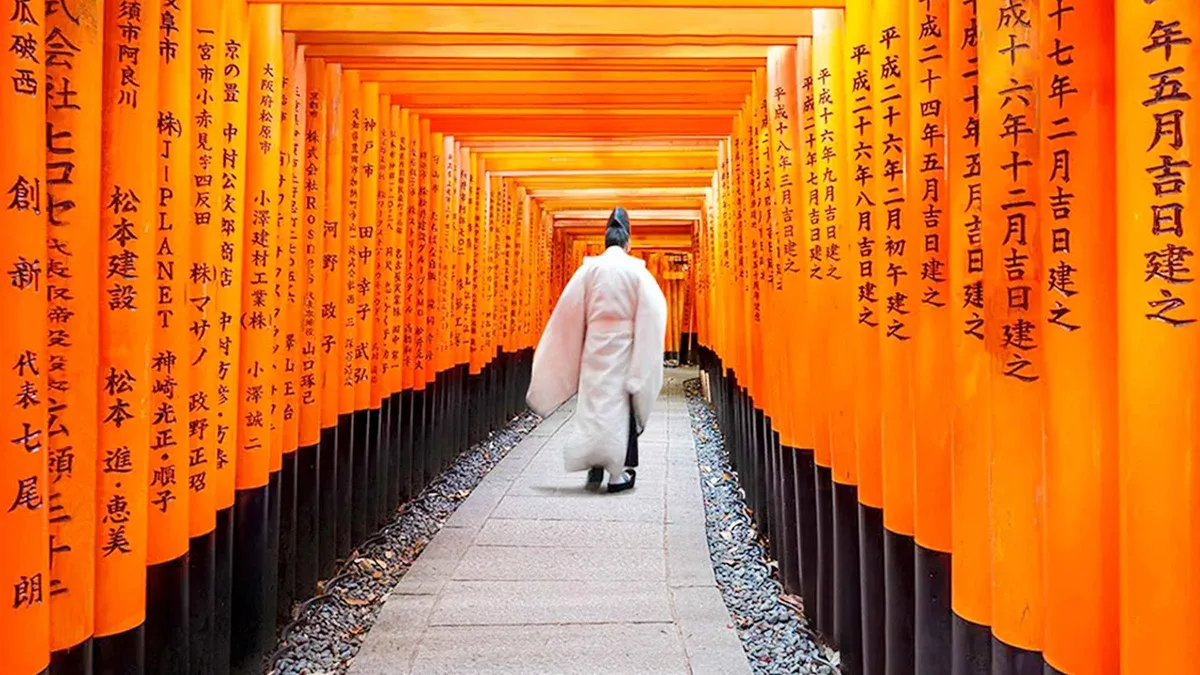
Kyoto/Osaka: Nara, Fushimi Inari Taisha, Arashiyama Bus Tour
A nine- to ten-hour coach loop to Nara's deer, the Fushimi Inari torii and the Arashiyama bamboo, with an English- and Chinese-speaking guide. No admissions and no lunch are included, and deer crackers are cash on the day.
Check Availability from $36.84
Osaka Namba Food Tour: Small-Group with Flexible Ordering
Choose your own dishes at three or four backstreet izakayas and stalls in Namba, paying local prices at each stop.
Check AvailabilityPrices, ratings and details are the platform's own. Dollar figures are the listed prices. The platform bills in your account's currency.
Osaka Digital Nomad FAQ
Does Japan allow digital nomads?
Yes. Japan runs a Designated Activities status for digital nomads, open to nationals of visa-exempt countries that have a tax convention with Japan. You need an annual income of at least $62,700.00 (¥10,000,000) at application and private medical travel insurance with medical cover of $62,700.00 (¥10,000,000) or more covering death, injury and illness. The status runs for six months and no residence card is issued. The full rule set is in the visa section above.
How long can a digital nomad stay in Japan?
Six months per stay, with no extension. When the six months end you must leave, and you cannot apply for the same status again until six more months have passed. A spouse or child may accompany you on a separate status with the same insurance and a visa-exempt nationality, also for six months. JNTO describes the visa as six-month and non-renewable, and the details are set out in the visa section above.
Where is the best coworking space in Osaka?
For price and location together, The DECK is hard to beat. It sits directly connected to Exit 14 of Sakaisuji-Honmachi Station, charges $15.68 (¥2,500) for a full drop-in day, and its monthly plan starts at $116.00 (¥18,500). FUTRWORKS near Hankyu Osaka-umeda offers 24/7 access from $17.24 (¥2,750) a day. Hours, weekly plans and prices are compared in the coworking section above.
Is Umeda or Namba better for digital nomads?
Umeda, on the Kita side, is the JR hub for Kyoto and Kobe day trips and puts FUTRWORKS and SHARE LOUNGE on your doorstep. Namba, on the Minami side, is the food and nightlife half of the city and the airport is one train away on the Nankai line. If you split the difference, The DECK sits at Sakaisuji-Honmachi between the two. The breakdown is in the where-to-live section, with more in where to stay in Osaka.
Is there free Wi-Fi in Osaka?
Yes, but not at stations. Osaka Free Wi-Fi was withdrawn from every station on 31 March 2023, so treat the free networks as a bonus rather than a plan. The surviving SSIDs at non-station venues include OpenRoaming with no session limit, plus two legacy networks that reset every hour. Mobile data covers every subway station and tunnel. JNTO advises buying a travel SIM, and a pocket Wi-Fi for rural areas, as covered in the Wi-Fi section above.
Can I live on $2,000 a month in Osaka?
The fixed lines are workable: a monthly coworking plan at The DECK runs $116.00 (¥18,500), an ICOCA is $12.54 (¥2,000), and the accommodation tax adds $1.25 (¥200) to $3.14 (¥500) per person per night. No published rent figure exists, so the honest sum is those fixed costs plus whatever rent you are quoted. Work through the full table and the weekend extras in the costs section above.
Prices, hours and terms are set by the venue or operator and confirmed at checkout.
We may earn a commission if you book through one of our links, at no extra cost to you. Full affiliate disclosure