 Osaka City Guide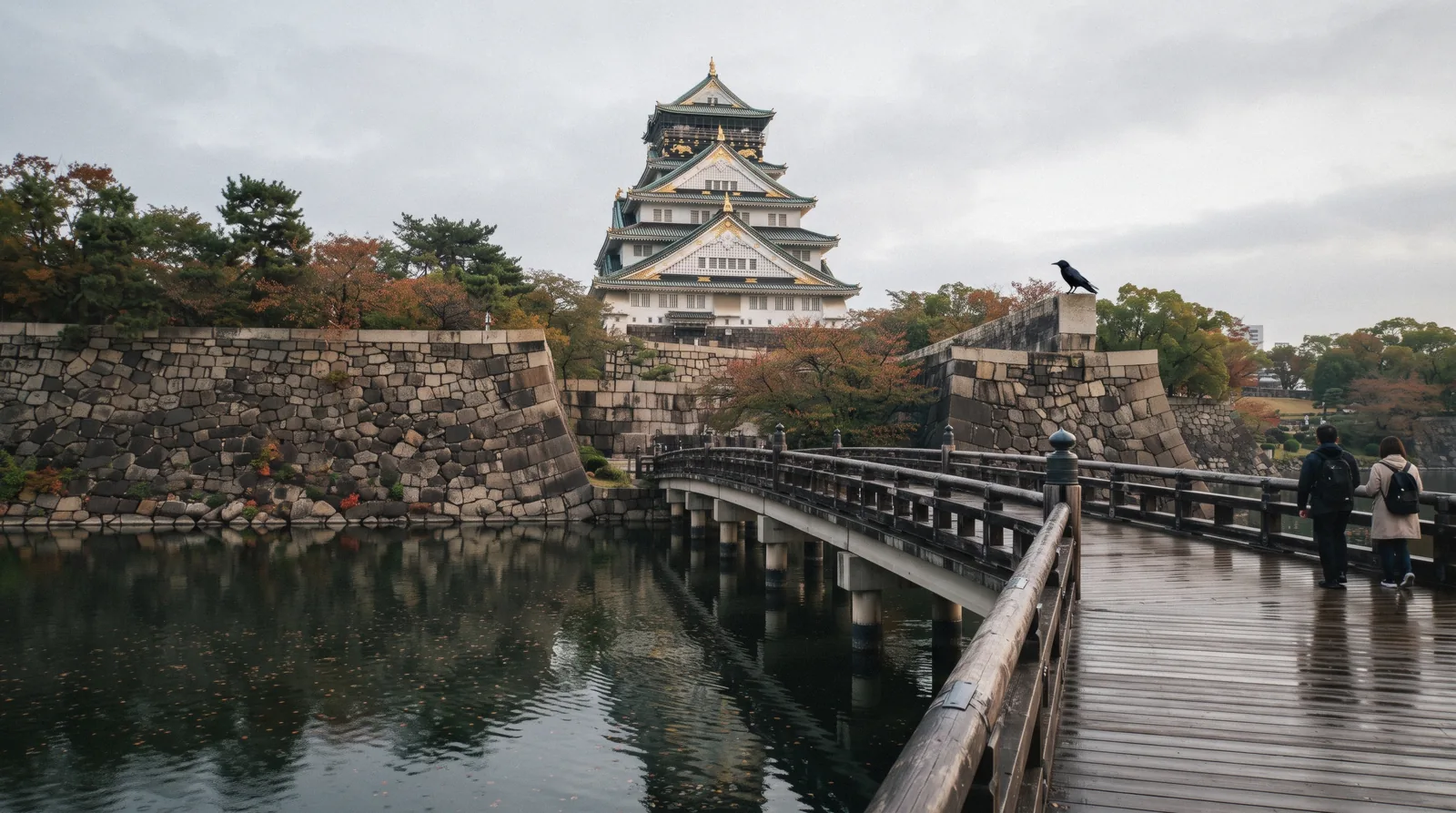
Osaka Castle
Osaka Castle is a 1931 concrete keep on a seventeenth-century stone base, and both halves of that sentence matter. The tower you photograph was rebuilt by public subscription and works as a museum of Toyotomi Hideyoshi and the sieges that ended his family; the walls, moats and turrets under it are the Tokugawa rebuild of the 1620s, and they are free to walk through at any hour the park gates allow. This page covers what the $7.52 (¥1,200) keep ticket opens, when to come and when the queue forms, the garden that changed its price in April 2026, and how to reach the right gate. The ticket options in detail are on the castle ticket page, and the rest of the city in our guide to things to do in Osaka.
Quick answer Price, hours, what the ticket opens and how long it takes — in four lines
Osaka Castle's keep opens daily 09:00–18:00 with last admission at 17:30, closes only from 28 December to 1 January, and charges $7.52 (¥1,200) for adults, $3.76 (¥600) for high-school and university students with ID, and nothing for junior-high age and under. There is no reservation system and no timed entry — the castle says so on its own user-guide page. The park, the moats and the great stone walls cost nothing at all. Figures are from osakacastle.net, converted at ¥1,000 ≈ $6.27 (European Central Bank reference rate).
Key takeaways
- The same $7.52 (¥1,200) ticket now also opens the Toyotomi Ishigaki Museum, where you descend to the buried 1580s stone wall found in a 1984 dig — the castle's biggest change in years and not a separate charge; what each ticket covers
- If you only want the photograph, you do not need a ticket: the moats, the Otemon gate and the Octopus Stone are all outside the paid zone, and free things to do in Osaka leans on exactly that
- The museum captions run heavily in Japanese, which is why a guided hour inside the keep with admission included is the option we would pick for a first visit; the plain e-ticket is the option for everyone else
- Allow 15 to 20 minutes on foot from any station to the keep — the park is large, and the getting-around page has the metro fares that get you to its edge
Key facts
Opening hours
| Daily | 09:00–18:00 |
|---|---|
| Last admission | 09:00–17:30 |
| Audio guide desk (free loan) | 09:00–17:00 |
Closed 28 December to 1 January. No weekly closing day is published for the keep; the Nishinomaru Garden inside the park closes on Mondays and from 28 December to 4 January
Admission
- Adult
- $7.52 (¥1,200); $6.77 (¥1,080) each for groups of 15 or more
- Reduced
- $3.76 (¥600) university and high-school students on production of a student card or ISIC; $3.39 (¥540) in a group of 15+
- Free
- Junior-high age and under with proof of age, Osaka-city residents aged 65+ with proof, and holders of a disability certificate plus one carer (the Mirairo ID app is accepted)
Planning it
- Time needed
- Not stated by the castle; our routing: 1 hour inside the keep, 2 to 3 hours with the walls, the garden and the walk in
- Book ahead
- Optional — walk-up usually fine
- Address
- 1-1 Osakajo, Chuo-ku, Osaka 540-0002 — the keep stands in the middle of the park, roughly 15 to 20 minutes on foot from every station that serves it
Every way into the keep, with the official price beside the platform ones. Castle figures come from osakacastle.net's own user-guide page and the Nishinomaru Garden figure from the park operator's facility page, both read on in Q3 2026; yen is converted at ¥1,000 ≈ $6.27 and platform prices are the USD amounts those listings showed on the same day.
One question decides the row: are you paying for the entry, or for somebody to read the castle to you? Entry is $7.52 (¥1,200) at the gate and nothing below sells it cheaper — every other row is a guide, an audio track or a garden.
| Option | Price | What it opens | Cancel | Book |
|---|---|---|---|---|
| Keep admission at the gateThe default: no reservation exists, so the gate is never the slower door | $7.52 (¥1,200); students $3.76 (¥600) | Eight floors of the keep, the museum displays and the Toyotomi Ishigaki Museum | Not applicable — sold on the day | Official site |
| Official web ticketOnly if you want the QR code in your phone before you fly | $7.52 (¥1,200) — the same money | The same admission, bought before you arrive | Per the ticket platform's own terms | Official site |
| Nishinomaru Garden (separate)The blossom lawn, and a separate ticket — skip it outside March and April | $1.88 (¥300) since 1 April 2026 | The 6.4-hectare lawn garden with about 300 cherry trees, west of the keep | Not applicable | Official site |
| Museum and tower e-ticketA booking in hand at gate money; remember it does not refund | Listed at $7.49 | The same keep admission on a QR code, with the Ishigaki museum named in the listing | Non-refundable | Check Availability |
| Guided walk with keep admission, 1–1.5 hWorth about ten dollars over the ticket if the Japanese captions would defeat you | From $17.79 | Admission plus an English guide through the museum floors | Free up to 24 hours before | Check Availability |
| Self-guided English audio route, 14 stopsThe cheapest guiding here, and the one that stays outside the paid zone | From $3.12 | A 120–150 minute route from Osaka Castle Park station to Hokoku Shrine | Free up to 24 hours before | Check Availability |
Nothing on this page is a genuine queue-jump, because the castle sells no reserved slot to jump into: a QR code moves you past the cash desk, not past the security and lift line inside. Two combined tickets that guidebooks still recommend are dead — the Osaka Museum of History set ended on 27 December 2024 and the Osaka Aqua-bus set on 24 March 2025, both stated on the castle's own fee page.
Osaka Castle entry and guiding options compared
Five cards, from a bare admission code to a two-hour ghost-story walk on the grounds. Prices are the platform's USD listings; the operator charges in your own currency at checkout, and each card links to the calendar that shows what is still open.
 from $7.49
Cheapest way in
from $7.49
Cheapest way in
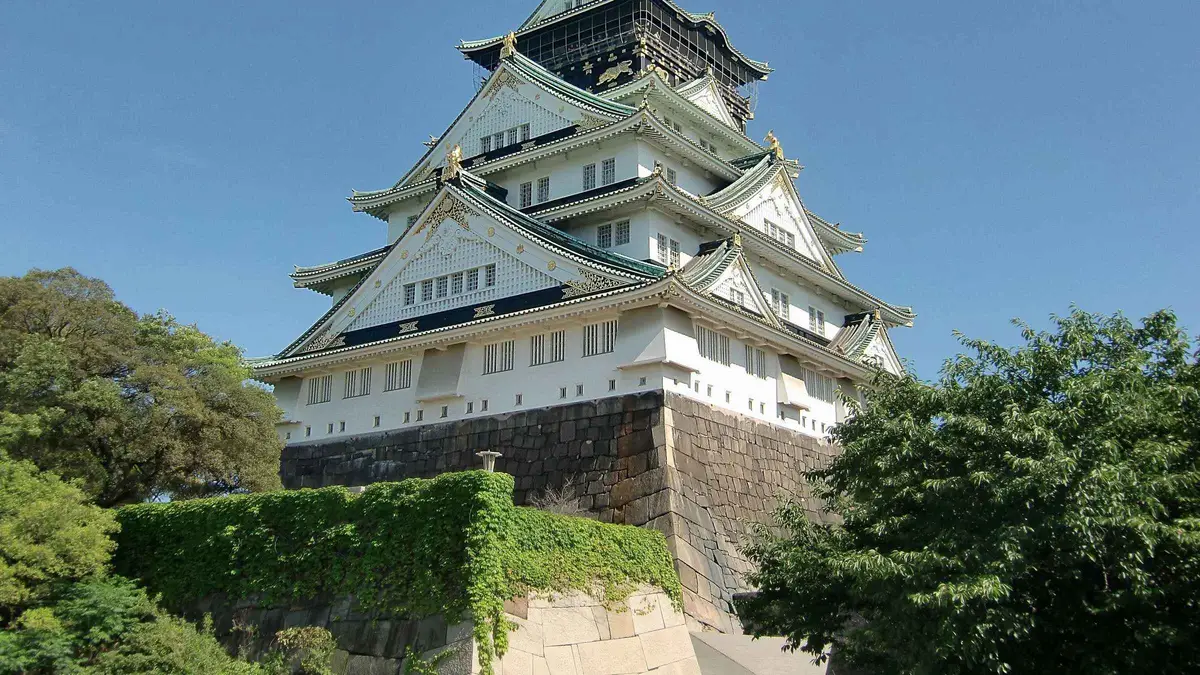
Osaka Castle: Museum and Tower Entry Ticket
The keep's own admission plus the Toyotomi Ishigaki Museum on one QR code, for roughly what the keep alone costs at the gate (¥1,200). The castle takes no reservations, so this saves the booth queue rather than securing a time slot.
Check Availability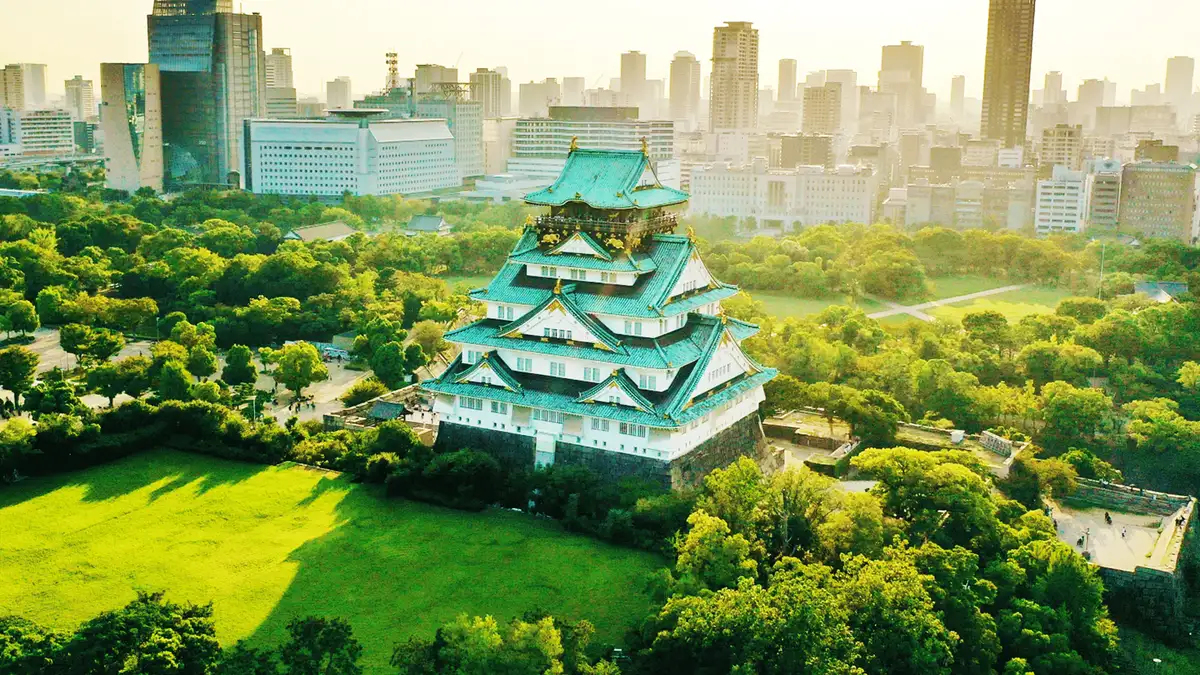 from $17.79
Osaka: Castle Tower Admission / Guided Walking Tour
An hour to 90 minutes through the keep's floors with the ¥1,200 admission included, so the guiding costs about ten dollars on top. Best rated of the castle group, and the museum's Japanese-heavy display captions are the reason a guide earns its fee.
Check Availability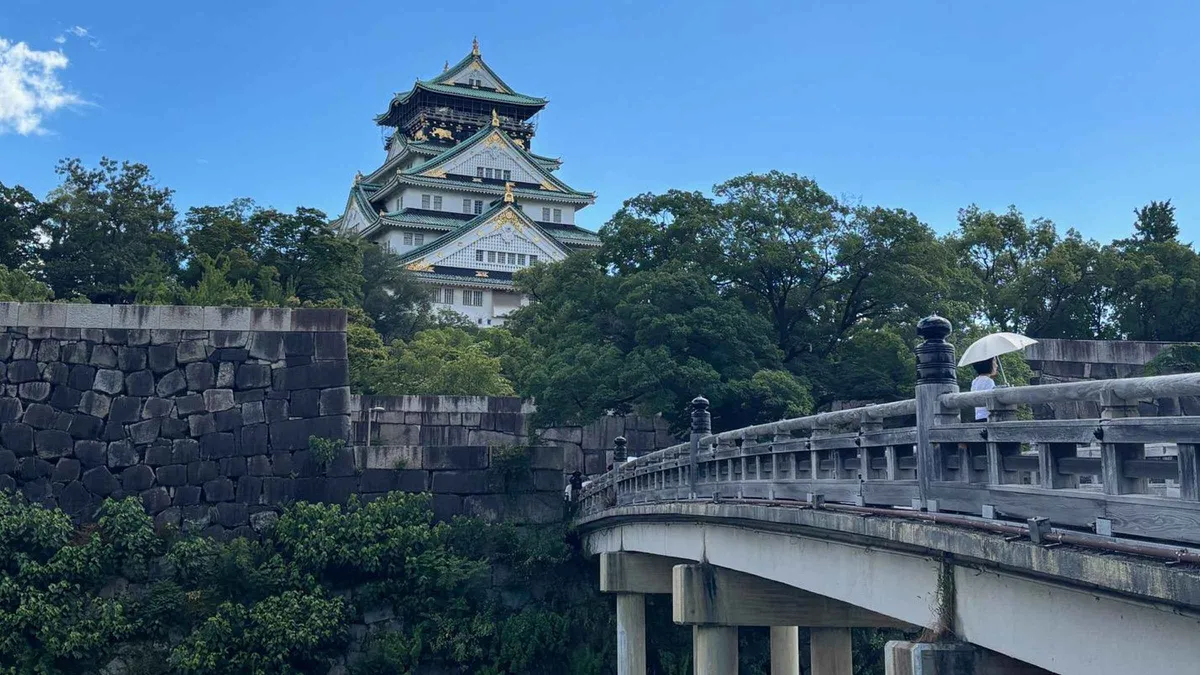 from $3.12
Osaka Castle: Self-Guided English Audio Walking Tour
A 14-stop English audio route from Osaka Castle Park Station to Hokoku Shrine, 120–150 minutes at your own pace, one access code shared by up to three people. It covers the grounds; keep admission is paid separately at the gate.
Check Availability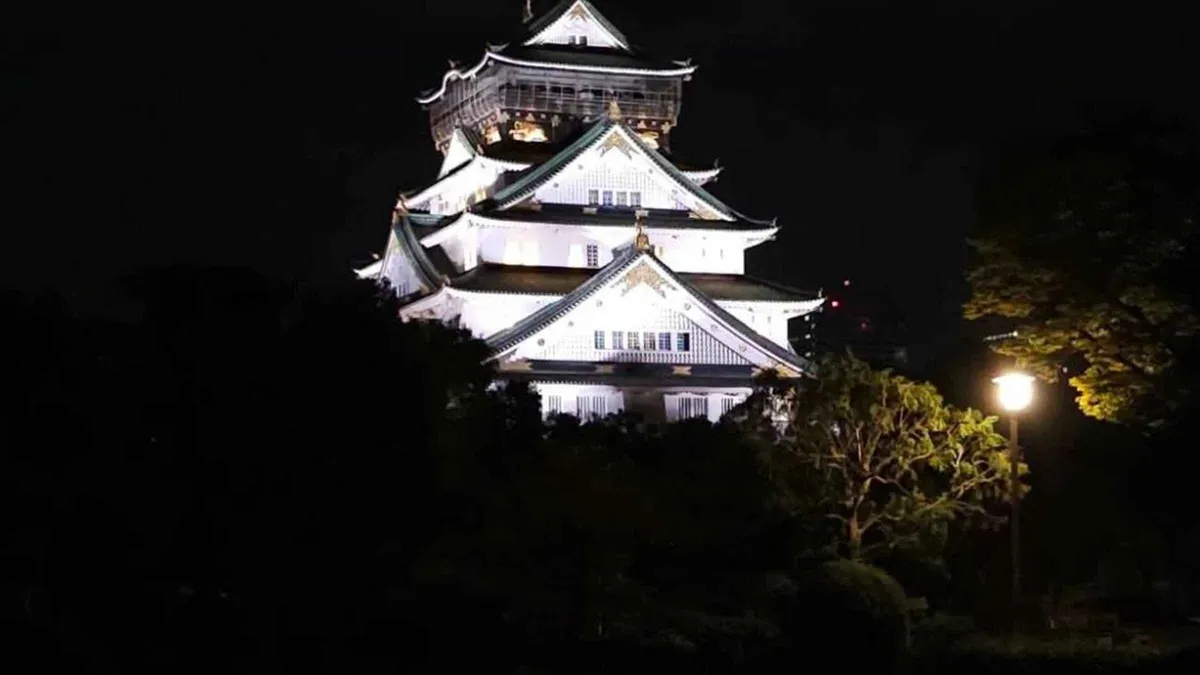 from $34.33
Osaka: Osaka Castle Haunted History Tour (Night & Day)
Two hours of siege history and ghost stories on the castle grounds, running by day or after dark from Jo-Terrace. It is a storytelling walk rather than a haunted house, and the keep interior is not part of the route.
Check Availability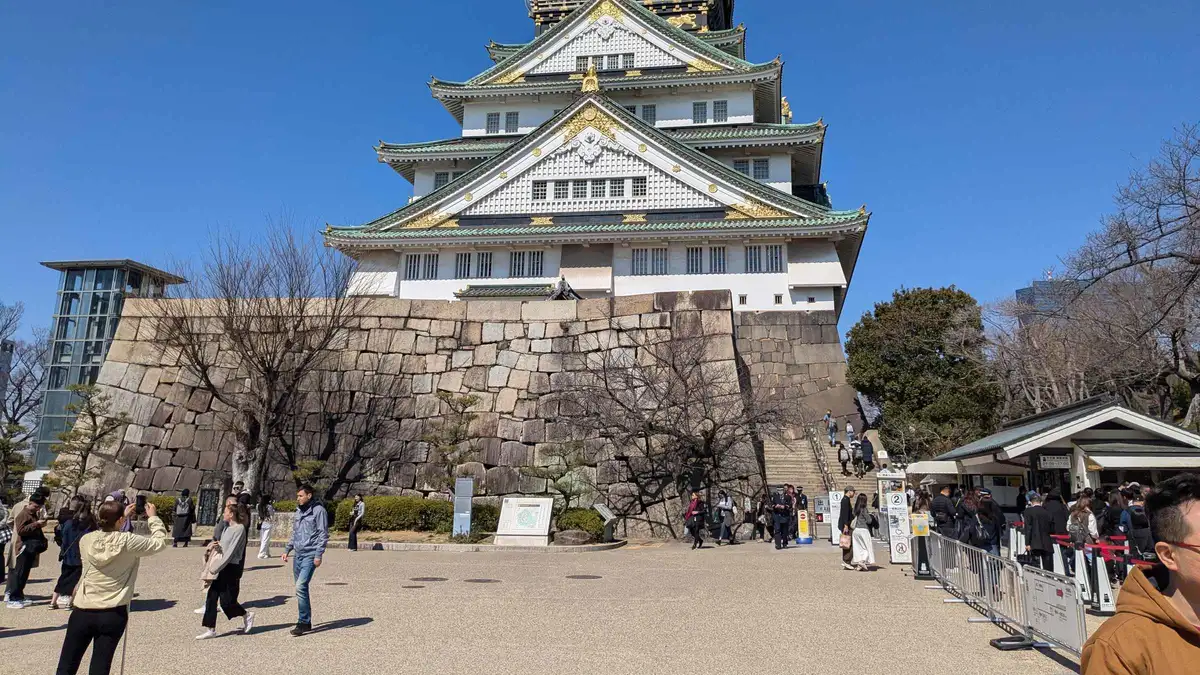 from $56.18
Osaka: Osaka Castle Guided Tour with Local Guide
Two to three hours on the grounds with a Kansai guide, covering the stone walls, the sieges and the moat defences. Admission to the keep is not included — add ¥1,200 on the day if you want to go inside.
Check AvailabilityPrices, ratings and details are the platform's own. Dollar figures are the listed prices. The platform bills in your account's currency.
What the ticket actually opens, floor by floor
The keep is a museum in a reconstruction, and knowing that before you climb it settles most of the arguments people have about whether it is worth the money.
The tower is the third on the site. Toyotomi Hideyoshi's keep burned in 1615, the Tokugawa keep of 1626 burned after a lightning strike in 1665, and the one standing now is a ferro-concrete rebuild of 1931, paid for by public subscription from the citizens of Osaka. It was registered as a national tangible cultural property in 1997 and designated by the city in 2025, and it has now stood longer than either of the originals.
Inside, it works as a museum of the Toyotomi era and the two sieges of Osaka, with rotating displays of scrolls, armour and screen paintings drawn from the castle's own collection. The top floor is an open-air viewing gallery over the Osaka Business Park towers to the east and the Uemachi plateau to the south. Photography is prohibited in the marked display rooms, and eating, sitting on the floor and phone-walking are all banned — this is a registered museum with a museum's rules, not a viewing platform.
| Floor | What is there | Note |
|---|---|---|
| 8F | Open observation gallery and a museum shop | The lift does not come up here — floors 5 to 8 are stairs for anyone who can walk them |
| 7F–5F | Toyotomi Hideyoshi's life and the Summer Siege screens | The lift runs up only, direct to floor 5, and is staff-operated |
| 6F | Closed gallery, no exhibits | Stated by the castle — do not plan on stopping |
| 2F | Helmet and surcoat try-on, $3.14 (¥500) a turn | Five reproduction helmets, including Sanada Yukimura's antlers |
| 1F | Information desk, free audio guide, museum shop | Audio guide in Japanese, English, Korean and Chinese, lent 09:00–17:00 and returned by 17:30 |
The Toyotomi Ishigaki Museum — the reason to go back
In 1984 an excavation at the Tsume-no-maru, the innermost enclosure of Hideyoshi's castle, hit the original stone wall about six metres below the modern ground level: the Tokugawa shogunate had not rebuilt on the Toyotomi castle so much as buried it and started again on top. In 2025 the city opened a hall over the trench, and visitors now go underground to stand in front of the wall itself with the fill layers visible above it.
The part that matters for planning: the castle's own page states that entry needs the keep's admission ticket — it is not a second fee, and it is not sold separately. If you visited Osaka Castle before 2025 and thought the keep was a lift ride to a view, this is the thing that has changed.
What you can see without paying anything
The whole outer castle is free. The Otemon gate with its three sections of Important Cultural Property mud-and-plaster wall, the Sengan and Tamon turrets, the dry south-western moat, the Octopus Stone in the wall by the Sakuramon gate — Osaka's largest single castle stone, and not a cultural property at all — and the long view of the keep across the inner moat from the Gokuraku-bashi bridge all sit outside the ticket gate. So does Hokoku Shrine, dedicated to Hideyoshi, which is where the self-guided audio route ends.
That is the honest answer to the question the SERP asks most often about this place: if you want the picture and the walls, come and pay nothing. The ¥1,200 buys the museum and the buried wall, not the castle.
How much time to give Osaka Castle
The castle publishes no suggested duration — almost nothing in this city does — so these are our three routings against its own calendar: keep open 09:00–18:00, last admission 17:30, and a park you cannot cross in under a quarter of an hour.
The variable is not the keep, which is eight floors and about an hour whatever you do. It is the walk: the nearest station exit is 15 to 20 minutes from the tower door, and the walls are the part of this site that is genuinely old. Any routing that skips them has skipped the 1620s and paid $7.52 (¥1,200) to see a 1931 building.
| Routing | Inside the keep | Door to door from central Osaka | What it skips |
|---|---|---|---|
| The keep only | 1 h | About 2 h with the walk in and out | The walls on foot, Nishinomaru Garden, the plum grove and the Ishigaki hall's queue at busy hours |
| The keep, the walls and the Otemon gate | 1 h, plus 1–2 h outside | 3–4 h | Nothing this page argues for; this is our own routing |
| With a guided walk | 1–1.5 h on the short tour, 2–3 h on the long one | 3–5 h, meeting point to finish | Your own pace, and the 09:00 hour unless the departure is an early one |
Whichever you take, the hour that matters is 09:00. Coaches and school parties cluster from about 10:30 to 15:00, and the castle warns that on busy days it may close the ticket queue before the stated 17:30 last admission — so the end of the day is the one part of the calendar you cannot rely on.
The history the museum is telling
Four hundred years compressed into the dates that explain what you are standing on — and why almost nothing above the stone is old.
Hideyoshi began building in 1583 on the site of the Ishiyama Hongan-ji, the fortified temple Oda Nobunaga had spent eleven years reducing. The plan copied Nobunaga's Azuchi Castle and set out to beat it: a five-storey tower with three more storeys underground and gold leaf on the exterior. The inner donjon was finished in 1585 and the works ran to 1597; Hideyoshi died the following year and the castle passed to his son Hideyori.
What followed is the reason Osaka has a castle and no Toyotomi dynasty. Tokugawa Ieyasu besieged it in the winter of 1614, failed to take the outer walls against odds of roughly two to one, and negotiated a peace whose price was the filling of the outer moat. When Hideyori began digging it out again the next spring, Ieyasu came back. In June 1615 the castle fell, Hideyori and his mother Yodo-dono took their own lives, and the buildings burned.
The 1620s walls, and everything that burned after them
The Tokugawa dismantled what was left in 1620 and rebuilt on a new alignment, assigning sections of wall to individual samurai clans — which is why the granite blocks, interlocked without mortar, still carry different family crests. Those walls are the 1620s. Everything after that is loss: the gunpowder magazine exploded in a lightning strike in 1660, lightning burned the keep in 1665, the buildings burned again in the Meiji Restoration fighting of 1868, and the site became the Osaka Army Arsenal, which by 1945 employed 60,000 people.
American bombing on 14 August 1945 destroyed 90 per cent of the arsenal and killed 382 of them.
| Year | What happened | What survives of it |
|---|---|---|
| 1583–1597 | Hideyoshi builds, on the ruins of the Ishiyama Hongan-ji | The Tsume-no-maru wall, six metres down, in the Ishigaki museum |
| 1614–1615 | The Winter and Summer Sieges; the Toyotomi line ends | The Summer Siege screen, in the keep's own collection |
| 1620s | The Tokugawa rebuild on new foundations | The walls, moats, Otemon gate and turrets you walk through free |
| 1665 | Lightning burns the second keep | Nothing — the site stood without a tower for 266 years |
| 1931 | The present keep, funded by citizens' donations | The building you buy a ticket for |
| 1945 | Arsenal bombing, 14 August | Blast scars on the stone near the Aoyamon gate |
It is worth holding both facts at once. Purists dismiss the keep as concrete, and they are right that it is a 1931 building with lifts in it. But the 1931 rebuild is itself now a cultural property, the collection inside is real, and the wall in the basement of the new hall is the actual masonry of 1583.
The castle you cannot fault is the one outside the ticket gate.
Osaka Castle in nine dates
Four hundred and forty years in the order they happened, from the ground Hideyoshi cleared to the two price changes that apply to a visit this year. Everything above the stone is younger than it looks.
-
1583–1597
Hideyoshi builds
Toyotomi Hideyoshi starts work on the ruins of the Ishiyama Hongan-ji, the fortified temple Nobunaga had spent eleven years reducing. The inner donjon is finished in 1585; the works run on to 1597.
-
1614–1615
The Winter and Summer Sieges
Tokugawa Ieyasu fails to take the outer walls, then negotiates a peace whose price is the filling of the outer moat. He returns in the spring; in June 1615 the castle falls and the Toyotomi line ends.
-
1620s
The Tokugawa rebuild, on a new alignment
Sections of wall are assigned to individual samurai clans, which is why the mortarless granite still carries different family crests. These walls, moats and the Otemon gate are the oldest things on the site and cost nothing to walk.
-
1665
Lightning burns the second keep
The gunpowder magazine had already exploded in a strike in 1660. After 1665 the site stands without a tower for 266 years.
-
1931
The present keep, paid for by public subscription
A ferro-concrete rebuild funded by the citizens of Osaka. It has now stood longer than either of the two keeps it replaces.
-
1945
The arsenal is bombed
The grounds had become the Osaka Army Arsenal, employing 60,000 people by 1945. American bombing on 14 August destroyed 90 per cent of it and killed 382 of them; blast scars remain on the stone near the Aoyamon gate.
-
1984
The buried Toyotomi wall is found
An excavation reaches the 1580s Tsume-no-maru rampart six metres below the present ground level — the masonry that now stands inside the Toyotomi Ishigaki Museum, covered by the same keep ticket.
-
1997, then 2025
The reconstruction becomes the heritage
The 1931 keep is registered as a national tangible cultural property in 1997 and designated by the city in 2025. The building purists dismiss as concrete is itself now protected.
-
1 April 2025, then 1 April 2026
The two price changes still missing from most guides
Keep admission and hours changed on the first date — the ¥600 still quoted around the web is the current student rate, not a former adult one. Nishinomaru Garden went from ¥200 to ¥300 on the second.
Sources: osakacastle.net's own user-guide and history pages for the ticket, the hours and the 1931, 1997 and 2025 designations; the castle's ticket page for the Toyotomi Ishigaki Museum and the 1984 excavation; osakacastlepark.jp's facility page for the Nishinomaru Garden price change.
Hours, closed days and the hour to arrive
The castle publishes an unusually simple calendar and one warning that most guides leave out.
The keep opens 09:00–18:00 every day, with last admission at 17:30, and closes only from 28 December to 1 January. Both the fee and the hours changed on 1 April 2025; the castle publishes the notice but not the old figure, so any page quoting an adult price it read before that date is out of date whatever the number, and several of the results ranking for this castle are. The ¥600 you will see quoted around the web is the current student rate, not a former adult one.
The warning is in the castle's own words: on busy days it may close the ticket-purchase queue before 17:30, taking the last admission into account. Arriving at 17:20 is therefore not a plan. There is no reservation system to fall back on, and the castle repeats this explicitly on the group-booking part of the same page: it does not accept admission bookings, and phoning ahead is a courtesy, not a slot.
Our own routing for the visit: an hour inside if you read the captions, two to three hours if you add the walls, the garden and the walk in from the station. The castle publishes no suggested duration — nobody in this city does except the Science Museum, and it only prints the length of a planetarium show.
When the queue is worst
The crowd pattern here is set by tour coaches and school groups, which arrive mid-morning and cluster from about 10:30 to 15:00, and by the cherry blossom, which turns the whole park into a picnic for two weeks. The Japan Meteorological Agency's normals for Osaka put flowering at 27 March and full bloom at 4 April; in 2026 it flowered on 26 March and peaked on 3 April. In that window the walk from the station is slower than the queue.
The two thin hours are the first and the last. At 09:00 the lift line does not exist; after 16:00 the coaches have gone and the light on the gold leaf is better. A wet weekday in June is emptier still — Osaka's rainy season normally runs 6 June to 19 July, and the keep is entirely indoors.
The park, the garden and the plum grove
The paid keep sits inside about a square kilometre of public park, and two parts of it run on their own calendars and prices.
Nishinomaru Garden, west of the keep, is the enclosed lawn garden: 6.4 hectares, about half of it grass, with roughly 300 cherry trees, mostly Somei-yoshino. It charges $1.88 (¥300) for adults — up from ¥200 on 1 April 2026 — and admits junior-high age and under, Osaka-city residents aged 65 and over on proof, and disability-certificate holders free. It opens 09:00–17:00 from March to October and 09:00–16:30 from November to February, with last entry half an hour before, and it closes on Mondays (the following day when the Monday is a public holiday) and from 28 December to 4 January. The operator adds one honest caveat we will repeat rather than guess around: during the cherry-viewing period the opening hours change and it does not publish what they become until the season is announced. The night-blossom rate stayed at ¥350.
The plum grove, east of the inner moat, costs nothing. It covers about 1.7 hectares with roughly 1,245 trees of 105 varieties, planted from 1974 after alumni of Osaka Prefectural Kitano High School gave the city 880 trees for their school's centenary. There is no published plum season — the park operator runs a per-variety bloom tracker instead, which is a more useful thing to check than any date range a guide could print. Once the plum grove's tracker shows the varieties you most want to catch, guided Osaka tours can fold the castle grounds into a wider day's route through the city.
| Part of the park | Price | Hours | Closed |
|---|---|---|---|
| Walls, moats, Otemon gate, Hokoku Shrine | Free | Not published as a fixed range | Not published |
| Keep and Toyotomi Ishigaki Museum | $7.52 (¥1,200) | 09:00–18:00, last entry 17:30 | 28 December – 1 January |
| Nishinomaru Garden | $1.88 (¥300); ¥350 blossom evenings | 09:00–17:00 March–October, 09:00–16:30 November–February | Mondays; 28 December – 4 January |
| Plum grove | Free | In the open part of the park | Not published |
Getting to Osaka Castle, and which exit to use
Nine stations serve this park on five operators, and the difference between the best and the worst of them is about fifteen minutes of walking. Station and exit numbers below are from the castle's own access page; metro fares are Osaka Metro's own zone table.
There is no station at the gate. Whichever line you take, budget 15 to 20 minutes on foot across the park — the GetYourGuide listing for the official e-ticket says about 20 minutes from the nearest stations, and that is honest. Tanimachi 4-chome puts you closest to the Otemon gate and the Osaka Museum of History; Osakajokoen on the JR Loop Line puts you at Jo-Terrace, the modern arcade of cafés where the ghost-story walk begins.
| Line | Station and exit | Fare from central Osaka | Walks best to |
|---|---|---|---|
| Osaka Metro Tanimachi | Tanimachi 4-chome, exit 1-B; Tenmabashi, exit 3 | $1.19–$1.82 (¥190–¥290) by zone | The Otemon gate and the west side |
| Osaka Metro Chuo | Tanimachi 4-chome, exit 9; Morinomiya, exits 1 and 3-B | $1.19–$1.82 (¥190–¥290) | The south and east approaches |
| Osaka Metro Nagahori Tsurumi-ryokuchi | Morinomiya exit 3-B; Osaka Business Park exit 1 | $1.19–$1.82 (¥190–¥290) | The north-east, past the Aoyamon gate |
| JR Osaka Loop Line | Osakajokoen or Morinomiya | JR fares, not on the metro table | Jo-Terrace and the park's east entrance |
| Keihan / Osaka City Bus 62 / water bus | Tenmabashi; Osakajo-Otemae stop; Osakajo pier | Bus and boat fares set by their operators | The north-west, from Nakanoshima and Umeda |
If the castle is one of two or three paid stops in a day, do the arithmetic on the passes rather than on single fares. An Enjoy Eco Card costs $5.14 (¥820) on weekdays and $3.89 (¥620) at weekends for all metro and city bus lines — cheaper than three single rides, and cheapest on a Sunday. The Osaka Amazing Pass at $21.90 (¥3,500) includes the castle keep, the Nishinomaru Garden and the turret openings on its list of 41 free entries, along with the transport; it is not valid to Kansai Airport, and neither the aquarium nor Universal Studios is on its list. The getting-around page sets both against the zone fares.
Driving is possible and rarely sensible: the park's own car parks charge ¥400 an hour on weekdays and ¥500 at weekends between 08:00 and 22:00, with 171 spaces at Osakajokoen-mae and 143 at Morinomiya.
Osaka Castle map: the keep, the gates and the stations
The keep in the middle, the two gates most visitors use, the garden with its own ticket, and the stations that ring the park at 15 to 20 minutes' walk.
Pin positions are plotted from the castle's own access page and the park layout; the keep's coordinate is the one the castle publishes.
Five things most visitors do not know about Osaka Castle
Facts that change how the site reads, each with where it comes from.
- The ticket now opens a wall six metres underground. The Toyotomi Ishigaki Museum shows the 1580s Tsume-no-maru rampart found in a 1984 excavation, and it costs nothing extra — the biggest change to this ticket in years. (osakacastle.net ticket and user-guide pages) - Floor 6 has nothing in it. The castle lists it as a closed gallery, so the climb from 5 to 8 passes one empty level; the lift only runs up, direct to floor 5, and is staff-operated. (osakacastle.net user guide) - There are no lockers inside, only a bag check. Items are taken at the ticket counter at ¥100 apiece, which is worth knowing before you arrive with a suitcase from the station.
(osakacastle.net user guide) - Two combined tickets guidebooks still recommend are dead. The Osaka Museum of History set ended on 27 December 2024 and the Aqua-bus set on 24 March 2025, both stated on the castle's own fee page. (osakacastle.net fee page) - The plum grove was a school's centenary present. Its roughly 1,245 trees in 105 varieties grew from 880 given to the city in 1974 by alumni of Osaka Prefectural Kitano High School, and the park runs a per-variety bloom tracker rather than publishing a season. (osakacastlepark.jp plum grove page)
Eating at the castle
Nothing may be eaten inside the keep, which is a registered museum with a museum's rules. Everything else happens outside the ticket gate.
The food is at Jo-Terrace, the modern arcade beside the park's eastern entrance at Osakajokoen station on the JR Loop Line — the same place the ghost-story walk begins. It is cafés and casual restaurants rather than anything the castle itself operates, and neither the castle nor the park publishes prices for any of it, so we will not print a figure we cannot source. What the castle does publish is the rule: eating, drinking, sitting on the floor and walking while looking at a phone are all prohibited in the keep, and there are no lockers inside — bags go to the ticket-counter check at ¥100 an item.
The practical answer for a morning visit is to eat before or after rather than inside the park. Kuromon Ichiba is twenty minutes away on the Tanimachi line and at its best before noon, and the eating page explains why no honest guide to this city will name you a takoyaki shop.
Dos and don'ts at Osaka Castle
The short version of everything above, for the morning you go.
Do
- Arrive at 09:00: the coaches and school parties cluster from about 10:30 to 15:00, and the keep is an hour's work
- Walk out through the Otemon gate rather than back the way you came — the 1620s walls are the oldest thing here and they are free
- Go down to the Toyotomi Ishigaki Museum; the buried 1580s wall is covered by the same $7.52 (¥1,200) ticket and most visitors miss it
- Take a student card if you have one — $3.76 (¥600) for high-school and university students, and junior-high age and under go free
- Check the Osaka Amazing Pass arithmetic first: the keep, the garden and the Yagura turret are all on its free list
- Leave the suitcase at the station — there are no lockers inside, only a ¥100 bag check at the ticket counter
Don't
- Don't arrive at 17:20 expecting the stated 17:30 last admission; on busy days the castle closes the ticket queue earlier and says so
- Don't try to book a slot — the castle takes no reservations of any kind, and no e-ticket on sale anywhere jumps the security and lift line inside
- Don't buy a combined castle ticket on the strength of an old guide: the Museum of History set and the Aqua-bus set were both withdrawn
- Don't plan the castle and Universal Studios Japan in one day — opposite ends of the city, and both want a morning
- Don't count on Nishinomaru Garden in blossom season; the operator changes its hours then and does not publish what they become until the season is announced
- Don't photograph in the marked display rooms, or eat anywhere inside the keep — both are prohibited
Next stop from Osaka Castle
Walking times are our estimates from the map distances, not official figures.
Osaka Museum of History
$3.76 (¥600) for the permanent exhibition, 09:30–17:00 with last entry 16:30, closed on Tuesdays. Its tenth-floor window looks straight down on the Naniwa Palace site, and its free 14:00 and 15:00 site tours take twenty people on a first-come basis. The combined ticket with the castle was withdrawn on 27 December 2024.
About 12 minutes on foot, at Tanimachi 4-chomeNakanoshima
The museum island between the two arms of the Dojima and Tosabori rivers — the National Museum of Art and the Nakanoshima Museum, both closed on Mondays. It is the obvious afternoon when the castle has taken your morning.
Two stops on the Keihan line from TenmabashiTenjinbashisuji
The covered shopping street that runs north from Tenjinbashisuji 6-chome, and the least touristy lunch within reach of the castle. Nobody certifies the claim that it is the longest in Japan, and we say so on its own page.
About 25 minutes on foot, or one stop from TenmabashiOsaka Castle questions
How much does it cost to go inside Osaka Castle?
$7.52 (¥1,200) for adults, $3.76 (¥600) for university and high-school students who show a student card or ISIC, and free for junior-high age and under, for Osaka-city residents aged 65 and over on proof, and for disability-certificate holders with one carer. Groups of 15 or more pay ¥1,080 each. The fee rose from ¥600 on 1 April 2025, which is why older guides disagree. Every route in, compared.
Is it worth going inside Osaka Castle?
It depends on what you want from it. The keep is a 1931 concrete rebuild with lifts, so if you came for an original castle interior, the honest answer is no — go to Himeji instead. What the ticket buys is a good museum of Hideyoshi and the sieges, a view from the eighth floor, and since 2025 the Toyotomi Ishigaki Museum, where you go underground to the 1580s wall. A guided hour inside is what turns the museum floors from captions into a story.
What are Osaka Castle's opening hours?
09:00 to 18:00 every day, with last admission at 17:30, closed only from 28 December to 1 January. The castle warns that on busy days it may close the ticket queue earlier than 17:30 to protect that last admission, so a late arrival is a risk with no reservation to fall back on. The audio-guide desk stops lending at 17:00.
Do you need to book Osaka Castle in advance?
No — and you cannot. The castle states on its own user-guide page that it does not accept admission reservations, for individuals or for groups. The web ticket sold through its official platform is the same ¥1,200 and simply moves the payment online. What the e-ticket does and does not save.
How long do you need at Osaka Castle?
Nobody official publishes a figure. Our routing is an hour inside the keep if you read the displays, and two to three hours in total once you add the walls, the walk from the station and the Nishinomaru Garden. The 14-stop self-guided audio route is built for 120 to 150 minutes and covers the grounds rather than the interior.
Can you visit Osaka Castle Park for free?
Yes. The moats, the Tokugawa stone walls, the Otemon gate, the turrets, the Octopus Stone, the plum grove and Hokoku Shrine are all outside the paid zone, and they are the oldest things on the site. Only the keep with its Ishigaki museum ($7.52 / ¥1,200) and the Nishinomaru Garden ($1.88 / ¥300) charge. Osaka's free attractions starts here for that reason.
When do the cherry blossoms bloom at Osaka Castle?
The Japan Meteorological Agency's Osaka normals are 27 March for flowering and 4 April for full bloom; 2026 ran a day or two early, at 26 March and 3 April. About 300 of the trees are inside the Nishinomaru Garden, which charges ¥300 and changes its opening hours for the blossom season without publishing in advance what they become. What each month in Osaka looks like.
Where Osaka Castle fits in an Osaka day
East of the centre, indoors, and cheap — which makes it a morning anchor rather than a whole day.
The castle is the one major Osaka sight where the free part is better than the paid part, and that shapes the day around it. Arrive at 09:00, do the keep and the Ishigaki hall in an hour while the coaches are still on the motorway, then walk the walls out through the Otemon gate rather than back the way you came. That puts you at Tanimachi 4-chome by late morning with the Osaka Museum of History across the road — unless it is Tuesday, when it is shut.
Afternoon options split by appetite. West through Tenmabashi reaches Nakanoshima and the museums; south on the Tanimachi line reaches Shitennoji and, further on, Shinsekai for kushikatsu at dinner time. The one pairing we would avoid is castle plus Universal Studios Japan in a single day: they are at opposite ends of the city and both want a morning. The two-day itinerary puts the castle first on day one for exactly that reason.
Osaka Castle on film: the museum floors, the grounds and the verdict
Three walk-throughs we checked ourselves — each id verified against YouTube's own record and its thumbnail, so none of these is a dead player. They show what the interior looks like before you pay for it.
Osaka Castle Inside | Exploring Historic Fortress | A Complete 4K Walking Tour & Museum Guide
The full route through the keep, floor by floor, at walking pace.
Video: LovezlIs Osaka Castle Worth It?
The argument this page also makes, filmed on the grounds.
Video: Cassandra LordInside Osaka Castle in Japan! Historic Landmark, Parks, Museums & More! (4K Full Tour)
Keep, park and moats together, which is how the visit actually runs.
Video: Our FeelGood AdventuresVideos load from YouTube only when you press play.
Prices, hours and terms are set by the venue or operator and confirmed at checkout.
We may earn a commission if you book through one of our links, at no extra cost to you. Full affiliate disclosure