 Osaka City Guide
Osaka or Kyoto: Which One Do You Sleep In
Osaka or Kyoto is the question people ask when they have already decided to see both, because the two are 29 minutes and $3.64 (¥580) apart on an ordinary JR train that runs several times an hour. Whichever you pick, the other is a morning away. So the real question is narrower and more useful: which one do you sleep in, and which one do you visit? The answer turns on hours rather than sights. Kyoto's best hour is early, before the buses fill; Osaka's is late, when three observation decks are still selling tickets and the canal is at its loudest. This page settles it across seven dimensions. Osaka figures come from this site's own pages; the Kyoto figures below come from Kyoto's own official sources — Kyoto City's tax department, the city transport bureau's fare guide and the temples' own pages. This site covers Kyoto as a day trip from Osaka and nothing more, which is exactly what our Kyoto page is. Yen converts at ¥1,000 ≈ $6.27, the European Central Bank reference rate. The Osaka half of every figure below comes from our guide to things to do in Osaka, where each one carries the date it was read.
Quick answer The 29-minute fact, the two bed taxes, and which city wants which hours
Sleep in Osaka and visit Kyoto if your trip is short, your budget is ordinary, or your evenings matter to you. Sleep in Kyoto and visit Osaka if temples and gardens are the reason you came to Japan and you are willing to be out of the door by eight. On four nights or fewer, do not split them at all — one base and a 29-minute train beats two hotel check-ins. On six nights or more, split three and three and take the early mornings in Kyoto properly.
Key takeaways
- The whole argument rests on one fare: $3.64 (¥580) and 29 minutes on JR, or $2.57 (¥410) on the Hankyu line — the Kyoto day trip in full
- The bed taxes differ sharply. Kyoto taxes every room from the first yen and charges $6.27 (¥1,000) a person a night from $125.40 (¥20,000); Osaka charges nothing under $31.40 (¥5,000) and stops at $3.14 (¥500) — the bands compared
- Kyoto's doors are cheap and small — Kinkaku-ji is $3.14 (¥500) — while Osaka's are fewer, later and dearer; the whole Osaka list sits on the costs page
- Moving around: Kyoto is a $1.44 (¥230) flat-fare bus city, Osaka a five-step subway grid from $1.19 (¥190) to $2.45 (¥390) with a $3.89 (¥620) weekend day card — how Osaka works
- If you sleep in Osaka, where in Osaka decides your Kyoto mornings: the JR platforms are under the Kita side of the city
Start With the Train, Because It Removes Most of the Question
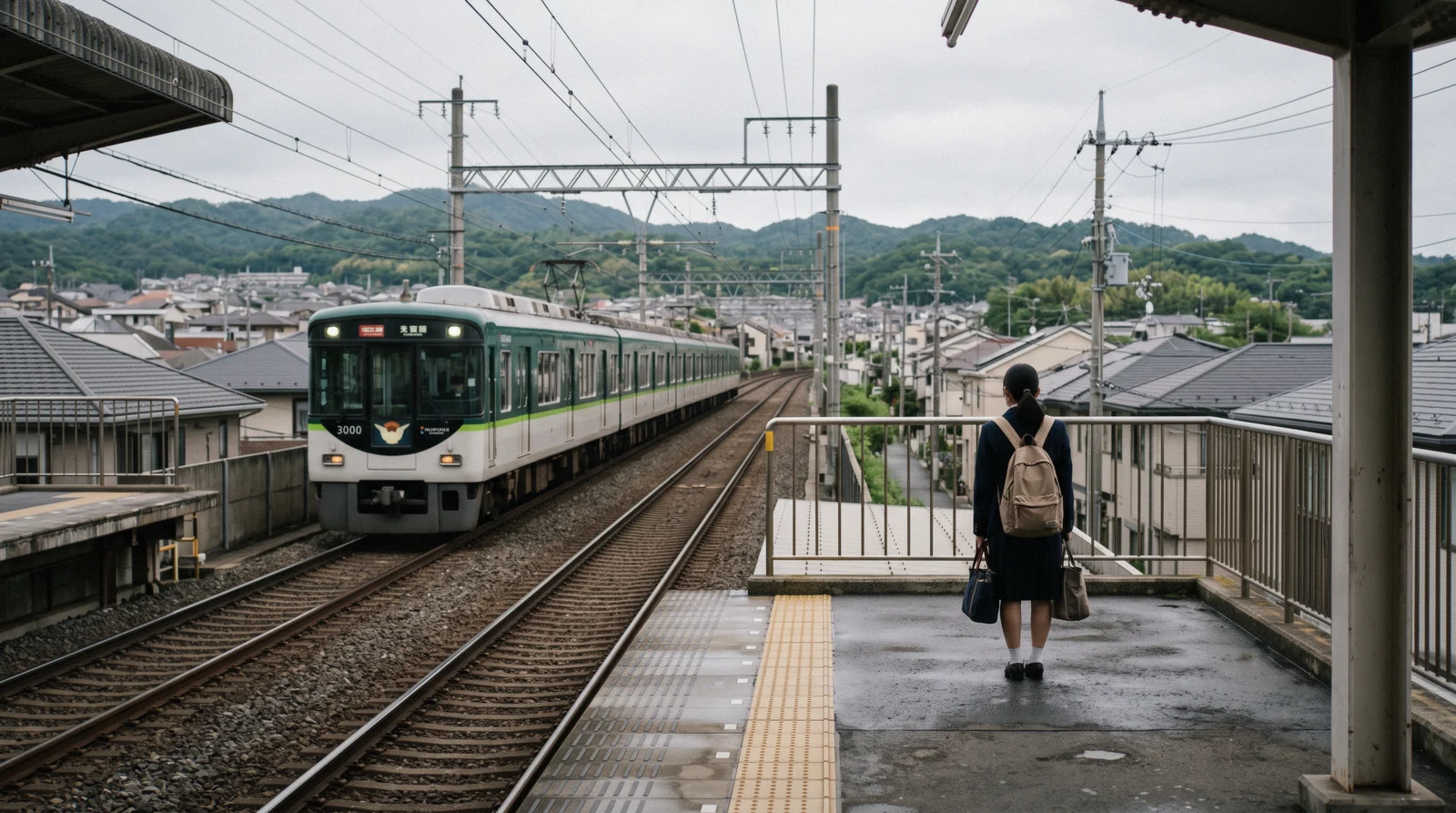
Osaka and Kyoto are joined by one of the busiest commuter corridors in Japan. A JR Special Rapid covers Osaka to Kyoto in about 29 minutes for $3.64 (¥580), several times an hour, and the Hankyu line does the same trip into central Kyoto for ¥410 from Umeda. There is no reservation, no seat fee and nothing to plan: you walk down to the platform and go.
That single fact reframes everything below. This is not a comparison between two destinations you must choose between, the way Tokyo and Osaka is. It is a comparison between two bedrooms in the same region, one of which you will visit from the other regardless. A day trip is not a compromise here — it is what most residents of either city do routinely.
What the fare does not do is make hotel-switching free. Two check-ins, two check-outs and one luggage transfer cost the best part of a half day, and on a short trip that half day is worth more than the twenty minutes you save on each morning commute.
Verdict: on trips of four nights or fewer, one base wins outright, and the fare is why.
Mornings Against Evenings: the Real Difference
Kyoto is a morning city and its opening times say so. Kinkaku-ji opens at 09:00 and closes at 17:00, every day of the year, on the temple's own published schedule. That is the shape of a Kyoto day: the sights open early-ish, they shut in the late afternoon, and the hour that rewards you is the first one, before the tour buses reach the gate.
Osaka's day runs the opposite way. The Umeda Sky Building's open-air deck sells tickets until 22:00 and closes at 22:30; Abeno Harukas 300 runs to 22:00 with last admission at 21:30; Tsutenkaku closes at 21:45. Dotonbori and Shinsekai are at their best after dark, and dinner is a walk rather than a train.
That is the trade in one line: sleeping in Kyoto buys you the mornings and costs you the evenings, and sleeping in Osaka does the reverse. A day-tripper from Osaka arrives in Kyoto at around ten and leaves at six, which means missing the best hour of a Kyoto day and keeping the best hour of an Osaka one. A day-tripper from Kyoto to Osaka gets the whole evening and a late train home.
Verdict: Kyoto if you are an early riser, Osaka if you are not. This is a bigger difference between the two cities than any list of sights.
What the Doors Cost in Each
Kyoto's admissions are small and numerous. Kinkaku-ji charges $3.14 (¥500) for a visitor of high-school age and over and ¥300 for elementary and junior-high pupils, with no group discount at any size — from the temple's own visitor page. That is roughly the Kyoto pattern: a few hundred yen at a time, several times a day, with the great outdoor sights costing nothing at all.
Osaka's paid list is shorter, later in the day and more expensive per door: the castle keep is $7.52 (¥1,200), the Umeda Sky Building ¥2,000, Tsutenkaku ¥1,500 with a timed reservation now required for every ticket, and the aquarium has no single price at all — a date-banded ¥2,800, ¥2,900, ¥3,200 or ¥3,500. The costs page totals an ordinary Osaka sightseeing day at about ¥7,500 a head before the room.
One Osaka-side trap worth knowing before you compare passes: the Osaka Amazing Pass, ¥3,500 for one day and ¥5,000 for two, covers 41 free entries and the city's own transport, but it is not valid to Kansai Airport, and neither the aquarium nor the theme park is on its list.
Verdict: Kyoto, on price per door. Osaka, if what you want is fewer, bigger attractions with an evening attached.
The Two Bed Taxes, Side by Side
Both cities levy a per-person, per-night tax on the room rate before meals and consumption tax. Kyoto's revised bands took effect on 1 March 2026 and were read from Kyoto City's own tax pages; Osaka Prefecture's bands have applied since 1 September 2025. Both were read on in Q3 2026.
| Room rate, per person per night | Kyoto from 1 March 2026 | Osaka |
|---|---|---|
| Under ¥5,000 | ¥200 | No tax |
| ¥5,000 to under ¥6,000 | ¥200 | ¥200 |
| ¥6,000 to under ¥15,000 | ¥400 | ¥200 |
| ¥15,000 to under ¥20,000 | ¥400 | ¥400 |
| ¥20,000 to under ¥50,000 | ¥1,000 | ¥500 |
| ¥50,000 and over | ¥4,000, rising to ¥10,000 above ¥100,000 | ¥500 |
Kyoto's old top band was ¥1,000; from 1 March 2026 the same room pays ¥4,000, and the city's announcement of the change on 3 October 2025 states plainly that the extra revenue goes to tourism promotion and to the further reconciliation of tourism with residents' daily lives. Osaka's schedule stops at ¥500 no matter how expensive the room. Neither city government publishes room rates, so this page prints none: the tax is the only bed figure here that comes from a public authority.
Getting Around Inside Each City
Kyoto is a bus city with a flat fare. Kyoto City Bus charges ¥230 for an adult and ¥120 for a child in the flat-fare zone that covers most of what a visitor wants, with the sightseeing express service at ¥500, the ¥100 circular bus at ¥100 and night services at ¥460 — all from the transport bureau's own fare guide. Simple to price, and slow when the roads fill.
Osaka is a subway city with a five-step grid: ¥190, ¥240, ¥290, ¥340 or ¥390 by zone, with the Enjoy Eco Card at ¥820 on a weekday and ¥620 at a weekend or holiday. The getting-around page sets out which of those actually pays for itself. Underground beats road traffic on reliability, and it is the reason an Osaka day can hold more separate places than a Kyoto one.
The practical consequence is a routing rule rather than a price rule: in Kyoto, plan a day as two or three clusters connected by one long bus ride; in Osaka, plan it as a line of stops along the Midosuji subway and stop counting the fares.
Verdict: Kyoto for simplicity of fare, Osaka for speed and predictability.
Crowds, and the Policy Signal Behind Them
Crowding is the one dimension where every guide has an opinion and almost nobody has a source, so here is a sourced proxy instead. When Kyoto City announced the confirmation of its tax rise on 3 October 2025, it described the increase as a contribution according to ability to pay and earmarked the additional revenue for tourism promotion and for the further reconciliation of tourism with residents' daily lives, with total receipts projected at about ¥12.6 billion. A city does not restructure its bed tax and spend the proceeds on reconciling visitors with residents unless the pressure is real.
Osaka publishes nothing comparable, which is itself informative: the pressure there is concentrated in a few streets on a few evenings rather than spread across a historic centre. Both cities are busiest in the same weeks, and the seasonal advice is identical — the Kinki rainy season normally runs from 6 June to 19 July, and the sakura normals for Osaka are 27 March for flowering and 4 April for full bloom.
Verdict: Osaka, narrowly, on crowd tolerance — not because it has fewer visitors, but because they are less evenly spread through the day and the year, and its evenings are big enough to absorb them.
Where Kyoto Wins, and It Is Not Close
An Osaka guide that scored every round for Osaka would be worthless, so here is the concession without hedging.
On temples, gardens, wooden streets and the atmosphere people picture when they imagine Japan, Kyoto wins outright and Osaka does not come near. Osaka has fine individual sights — a rebuilt castle keep, a temple founded in the sixth century, a shrine with a bridge people photograph — but it is a commercial city that was flattened and rebuilt, and it does not pretend otherwise. If your trip is about traditional architecture and the hours you spend in it, sleep in Kyoto and accept the earlier evenings.
Kyoto also wins on the specific pleasure of walking somewhere at seven in the morning. That hour cannot be day-tripped into from Osaka without a very early start, and it is the single best hour either city offers.
What Osaka answers with is food, later hours, cheaper doors, a bed tax that stops at ¥500, and the fact that it is the better hub for everything else in Kansai — Nara, Kobe, Himeji and Koyasan all leave from Osaka's stations as easily as Kyoto does.
Doing Both: the Split That Works
For four nights or fewer, take one base and use the train. Osaka is the better single base for most people because the day trips fan out from it and the evenings are longer: the two-day Osaka plan plus one Kyoto day is a genuinely good four-night trip.
For six nights or more, split three and three. Do Kyoto first if you are arriving jet-lagged, because waking at five is a gift for the only week it ever happens, and Kyoto is the city that pays you for it. Move to Osaka for the second half, when you want dinners rather than gates.
One detail that decides more Kyoto mornings than any other: if you sleep in Osaka, sleep in the Kita half of it. The JR platforms for Kyoto are downstairs from Osaka Station, and the difference between a hotel there and one in Minami is fifteen minutes on every single day trip — the where-to-stay guide sets out both halves.
And whichever way you split it, eat in Osaka. The eating guide explains why this site will not name a shop for takoyaki or okonomiyaki — no Osaka venue for either dish appears in the MICHELIN 2026 Bib Gourmand selection — and why the street matters more than the stall.
The Scorecard, Dimension by Dimension
Seven dimensions summarised from the sections above. Kyoto figures come from Kyoto City's tax pages, the city transport bureau's fare guide and the temple's own visitor page; Osaka figures come from this site's own sourced pages.
| Dimension | Osaka | Kyoto | Verdict |
|---|---|---|---|
| Reaching the other one | 29 min, ¥580 JR or ¥410 Hankyu | The same train, the other way | Draw — and it settles most of this page |
| Best hour of the day | Late: three decks open past 21:30 | Early: gates before the buses | Whichever hour you actually use |
| Price per door | ¥1,200 to ¥3,500 at the big sights | ¥500 at Kinkaku-ji, many free | Kyoto |
| Bed tax | Nothing under ¥5,000, ceiling ¥500 | ¥200 from the first yen, ¥1,000 from ¥20,000 | Osaka |
| Local transport | Subway ¥190–¥390, day card ¥620 weekends | Flat-fare buses at ¥230 | Osaka on speed, Kyoto on simplicity |
| Traditional atmosphere | A rebuilt commercial city | Temples, gardens, wooden streets | Kyoto, and it is not close |
| Base for the rest of Kansai | Nara, Kobe, Himeji, Koyasan from one station | Fewer directions, longer hops | Osaka |
Three to Osaka, two to Kyoto, one draw and one that depends on when you get out of bed — which is the truthful shape of the comparison. Nobody should choose between these two cities on a scorecard when they are 29 minutes apart; choose the bed, and visit the other.
Sleep in Osaka or Sleep in Kyoto, by the Trip You Are Taking
If you have four nights or fewer in Kansai
Osaka, one base, and a day in Kyoto on the ¥580 train. Two check-ins on a short trip costs more than the commute ever will.
If temples and gardens are why you came to Japan
Kyoto, and get up early — the first hour is the one you are paying for. This site's honest concession is in the section above.
If your evenings matter as much as your days
Osaka. Three observation decks are still selling tickets after 21:30 and dinner is a walk, not a train.
If you are travelling on a tight budget
Osaka on the bed tax and the day trips, Kyoto on admissions. The costs page prices the Osaka half line by line.
If you want Nara, Kobe or Himeji as well
Osaka, clearly — they all leave from its stations, and Kyoto adds a leg to each of them.
If you have six nights or more
Split three and three, Kyoto first while jet lag still wakes you at five. Two Osaka days is the right size for the second half.
If You Are Sleeping in Osaka
Two guided ways to spend the Kyoto day without building it yourself, and one orientation walk for the Osaka end. Each card opens the operator's own page and live calendar; dollar figures are the platform's listings.
 from $50.72
Most booked
from $50.72
Most booked
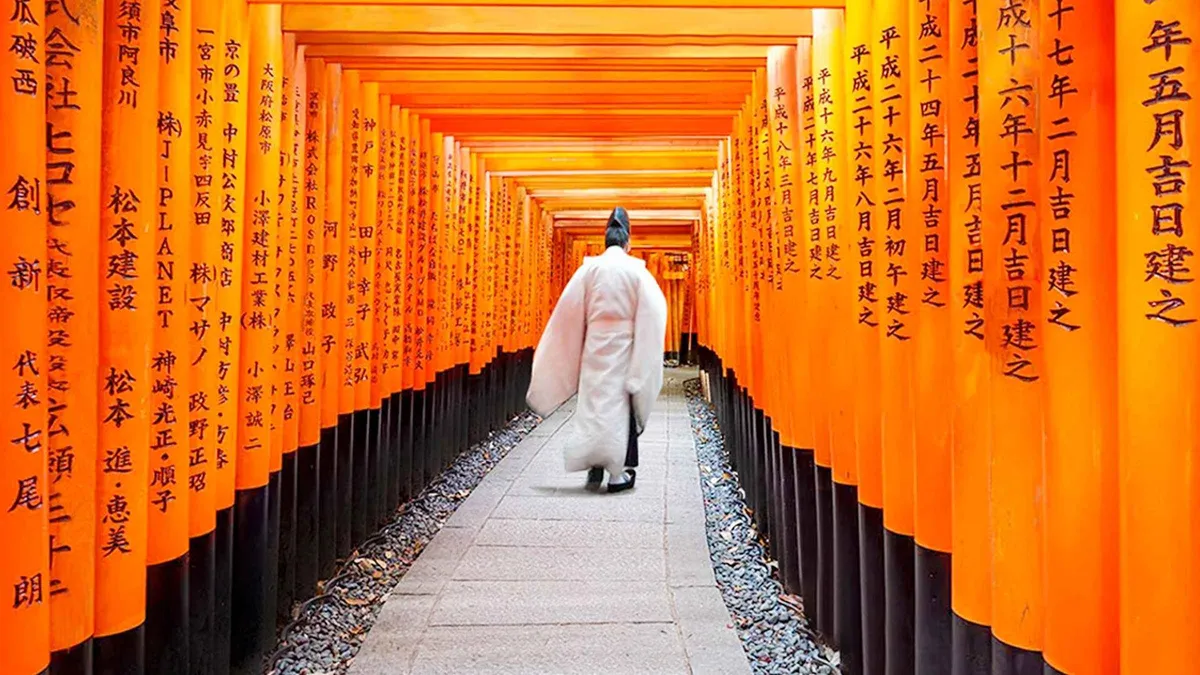
Kyoto/Osaka: Nara, Fushimi Inari Taisha, Arashiyama Bus Tour
A nine- to ten-hour coach loop to Nara's deer, the Fushimi Inari torii and the Arashiyama bamboo, with an English- and Chinese-speaking guide. No admissions and no lunch are included, and deer crackers are cash on the day.
Check Availability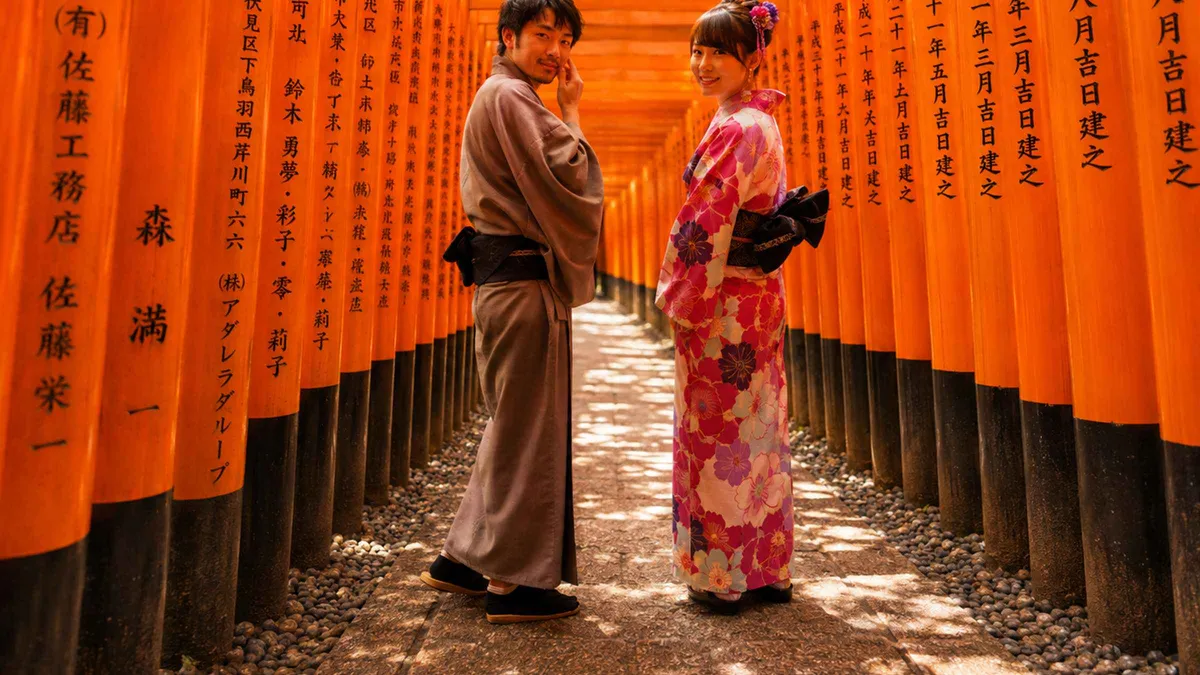 from $27.91
Osaka/Kyoto: Arashiyama, Nara Park & Fushimi Inari Bus Tour
The cheapest way to string those same three stops together, with lunch as a paid option. The trade is a larger group, a lower rating and long stretches on the bus across a day that runs ten hours.
Check Availability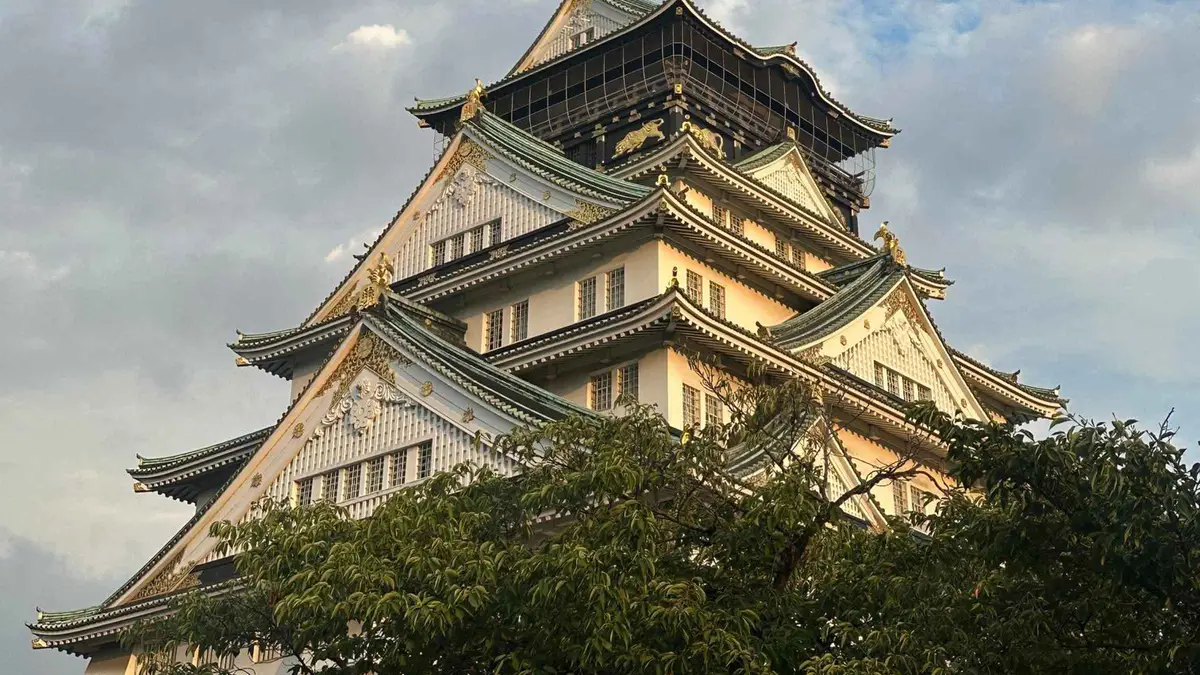 from $49.74
Osaka: Essential City Loop Tour with Local Guide
Five hours in a group of eight covering the castle, the Showa-era backstreets and the neon strip in one loop, with food bought stop by stop instead of a sit-down lunch. Only four people have rated it so far.
Check AvailabilityPrices, ratings and details are the platform's own. Dollar figures are the listed prices. The platform bills in your account's currency.
Osaka or Kyoto: the Questions That Decide It
Is it better to stay in Osaka and day-trip to Kyoto, or the reverse?
For most trips, stay in Osaka: the train is 29 minutes and ¥580, the evenings are longer, the bed tax is capped at ¥500 a person a night, and every other Kansai day trip leaves from the same stations. Stay in Kyoto instead if the early morning at a temple is the part of the trip you are most looking forward to — that hour is the one thing a day-tripper cannot easily buy. Our Kyoto day-trip page sets out the trains and the timings either way.
How many days does each city need?
Osaka takes two days for the city itself — the two-day plan is built for that — with further days better spent on day trips. Kyoto absorbs as many days as you give it, but two full days cover the headline temples comfortably at a normal pace. A six-night Kansai trip split three and three is the shape most people are happiest with.
Which is cheaper, Osaka or Kyoto?
It depends which line of the budget you mean, and only one of them is published by a government. On the bed tax Osaka is cheaper: nothing under ¥5,000 a person a night and a ceiling of ¥500, against Kyoto's ¥200 from the first yen and ¥1,000 from ¥20,000 since 1 March 2026. On admissions Kyoto is cheaper — ¥500 at Kinkaku-ji against ¥1,200 to ¥3,500 at Osaka's big sights. Room rates themselves are published by neither city, so this page prints none.
Can you see Kyoto properly in one day from Osaka?
You can see two or three of the headline sights properly, which is what one day is worth in any historic city. What a day trip cannot give you is the early morning, because the first train that gets you to a Kyoto gate before the crowds leaves Osaka uncomfortably early. If the quiet hour matters, sleep there for at least one night.
Does the Osaka Amazing Pass work in Kyoto?
No. It covers 41 free entries and transport within Osaka, it is not valid to Kansai Airport, and neither the aquarium nor the theme park is on its list — so it is an Osaka-days product, not a Kansai one. Price it against the days you will actually spend in the city; the costs page does that arithmetic.
Where should I sleep in Osaka if I am day-tripping to Kyoto?
The Kita side, around Osaka and Umeda stations, where the JR platforms for Kyoto, Kobe and Himeji are downstairs. Minami is better for eating and for late evenings but adds about fifteen minutes to every day trip. The where-to-stay guide compares the two halves and the three cheaper edges.
The Two Cities, and the Train Between Them
Three videos on where to sleep and how the two cities split a trip — each id checked against YouTube's own record. They load only when you press play.
Kyoto vs Osaka: Which City Deserves More Days in Your Japan Itinerary (by a Local)
A Kyoto local's answer on how the nights should be divided between the two.
Video: Ookini KYOTO - mochi & mahOsaka vs. Kyoto: Best Stay for Your Budget & Convenience | Ultimate Travel Guide
The same decision argued on budget and convenience, which is how most people settle it.
Video: Happy Boots: step into the world4 BEST AREAS to Stay in OSAKA & KYOTO • Umeda, Namba, Shin-Osaka, Japan • The Poor Traveler English
The four areas worth booking across both cities, once the split is decided.
Video: THE POOR TRAVELER ®Videos load from YouTube only when you press play.