 Osaka City Guide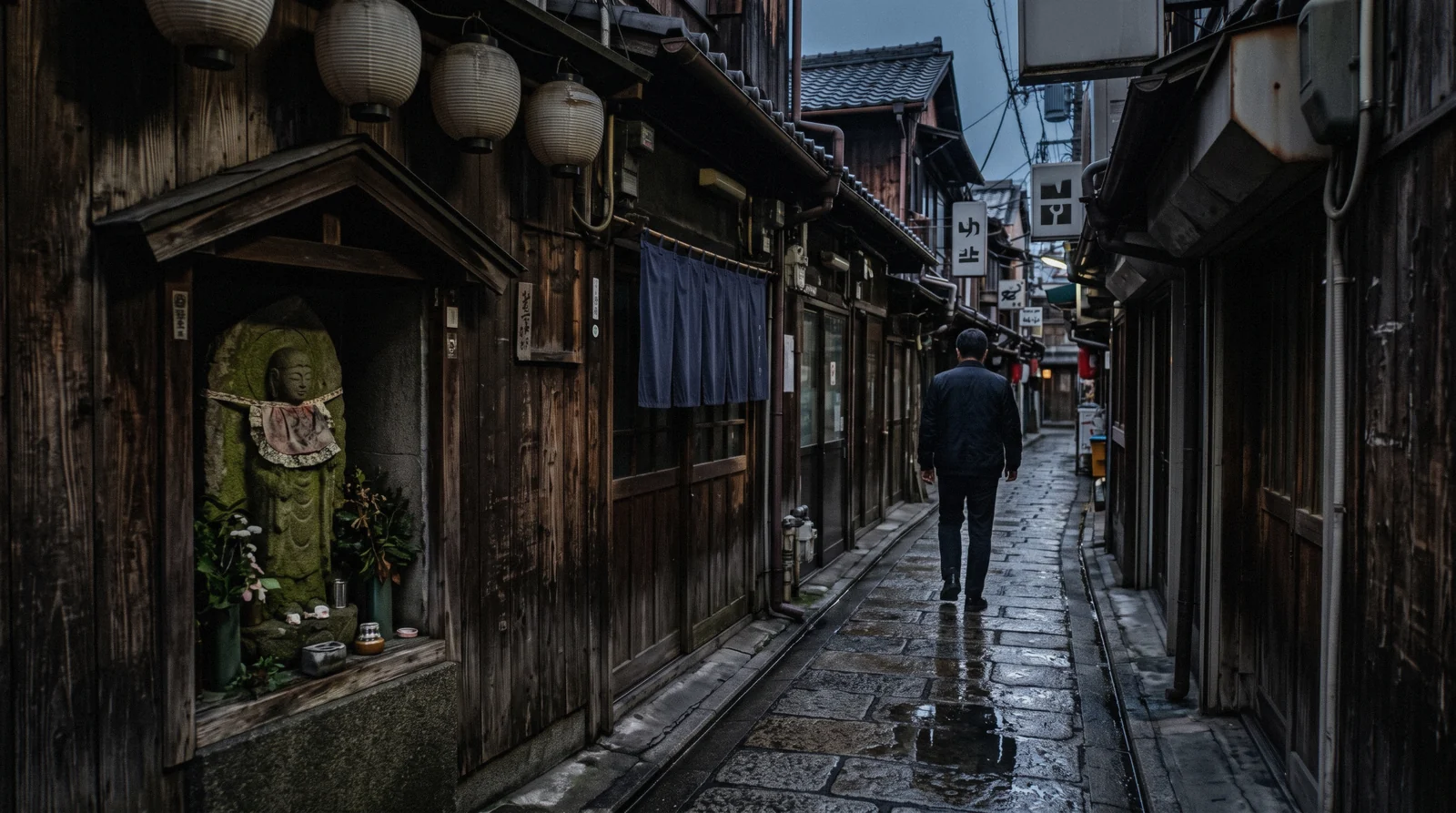
Hozenji Yokocho
Hozenji Yokocho is two parallel lanes of flagstone, eighty metres long and three metres wide, running behind the restaurants one block south of the Dotonbori canal. At the eastern end stands a small Jodo-sect temple whose Fudo Myoo statue is completely buried in moss, because visitors have been throwing water over it for generations. The alley is free, it is open, and almost nothing about it is published by anybody: no association, no hours, no shop list, and no mention on the tourism bureau's own Dotonbori page. This page prints what is verifiable and names who does not publish the rest. For the rest of the city, see things to do in Osaka. Dollar figures are conversions at 1,000 yen to about $6.27 (European Central Bank reference rate); tour prices are GetYourGuide's own listings in dollars.
Quick answer Free, three minutes from the neon, and what the moss actually is
Hozenji Yokocho is free and takes about fifteen minutes. It is two stone lanes, eighty metres end to end and three metres wide, lined with kappo restaurants, bars, okonomiyaki and kushikatsu counters, with the Hozen-ji temple and its moss-covered Mizukake Fudo statue at the eastern end. The gates at both ends carry the alley's name — the western one lettered by the actor Kanbi Fujiyama, the eastern by the comedian Katsura Harudanji the Third. From the tourism bureau's own page.
Key takeaways
- The moss is not decoration and not age: the statue is under it because visitors ladle water over it as a prayer, and have done since after the Second World War. Pour it, do not touch it
- It is three minutes from Ebisubashi and about forty decibels quieter, which is the whole reason to come — the Dotonbori page covers the noisy half
- Nothing here is bookable. The paid way in is a guided walk that routes through it — the two-and-a-half-hour Dotonbori and Kuromon walk at $17.48 is the cheapest, and starts at Shinsaibashi
- Come at dusk, when the lanterns come on and the alley is at its best; the street-smoking ban applies here as everywhere in Osaka, at a 1,000-yen fine (about $6.27)
Key facts
Opening hours
| The alley itself — a public lane with no gate and no published closing time | Open |
|---|---|
| Restaurants and bars — the tourism bureau publishes only "Varies by store" | Not stated–Not stated |
| The temple precinct and the Mizukake Fudo | Not stated–Not stated |
Closed "Varies by store", per the tourism bureau; no closed day is published for the alley or the temple
Admission
- Adult
- Free
- Reduced
- Not applicable — nothing here is ticketed
- Free
- The alley, the temple precinct and the Mizukake Fudo; you pay only for what you eat and drink
Planning it
- Time needed
- Not stated by anyone; our routing: 15 to 20 minutes to walk both lanes and pour the water, longer if you eat
- Book ahead
- Optional — walk-up usually fine
- Address
- Near Namba 1-chome, Chuo-ku, Osaka 542-0076
There is no ticket for Hozenji Yokocho and there is no operator to buy anything from — the choice is simply whether somebody walks you through it and explains what you are looking at. Alley details are the tourism bureau's own, read on in Q3 2026; tour prices are GetYourGuide's listings on the same date.
The alley is free and there is no counter to buy anything from, so the question is only whether somebody walks you through it. That starts at $17.48 for two and a half hours and runs to $53.37 if the eating is the point.
| Option | Price | What it is | Cancel | Book |
|---|---|---|---|---|
| Walk it yourselfAnyone at all — eighty metres of flagstone with no gate, fee or ticket office | Free | Eighty metres of flagstone, two lanes, the temple and the Mizukake Fudo; no gate, no fee, no ticket office | Not applicable | Official site |
| Dotonbori, Hozen-ji and Kuromon walking tour, 2.5 hoursThe cheapest guided option, and the one that also covers Kuromon and Den Den Town | Listed at $17.48 | A licensed guide from Shinsaibashi through the alley, Kuromon Market and Den Den Town, with some food included | Free up to 24 hours before | Check Availability |
| Hotspots and hidden gems walking tour, 3 to 7 hoursTravellers who want the route and the length decided around them | Listed at $35.71 | Private or shared, rated 4.9 from 1,654 reviews; the length is chosen at booking | Free up to 24 hours before | Check Availability |
| Dotonbori street-food tour with tastings, 2 hoursPeople who came to eat rather than to be shown the lanes | Listed at $53.37 | The food-first option through the same few blocks, rated 4.6 from 138 reviews | Free up to 24 hours before | Check Availability |
None of these is a Hozenji Yokocho tour — no such product exists, because the alley is eighty metres long and takes a quarter of an hour. What they are is Minami walks that pass through it. If you only want the alley, walk it: the only thing a guide adds here is the water ritual and the Meoto Zenzai story, and both are on this page.
Guided Walks That Pass Through the Alley
Every card links to the operator's own page, where the calendar shows what is still open for your dates. Prices are the platform's listings in US dollars.
 from $17.48
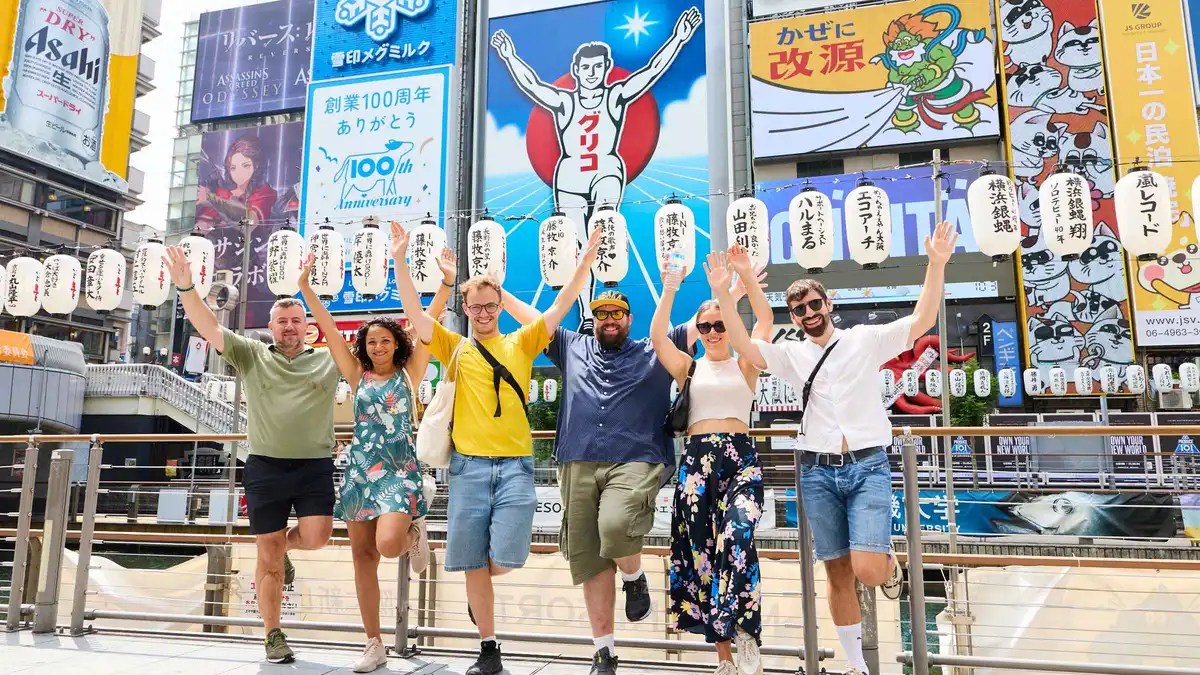
Osaka Walking Tour: Dotonbori, Kuromon Market & Street Food
Two and a half hours from Shinsaibashi through Hozen-ji, Kuromon Market and Den Den Town with a licensed guide and some food included. Cheap for a guided walk, but only 23 people have rated it so far.
Check Availability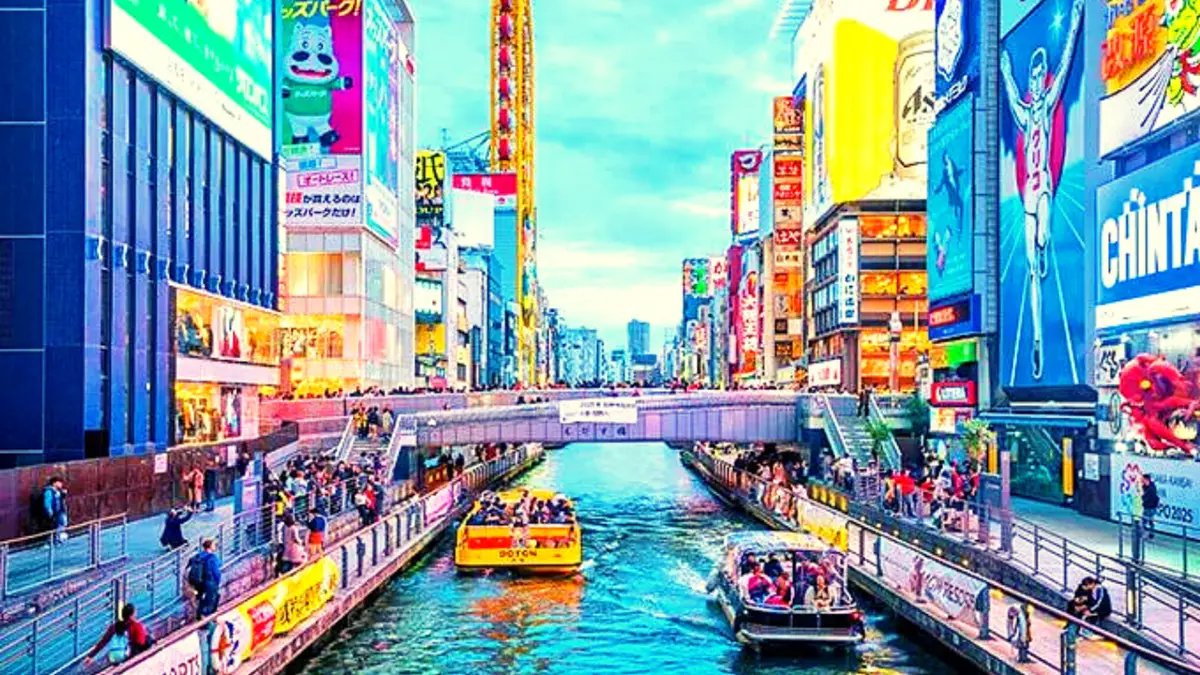 from $35.71
Osaka: Private or Group Hotspots & Hidden Gems Walking Tour
A three-hour walk that stretches to seven if you want it to, private or shared, with a takoyaki and a retro vending-machine drink included. The longer options use trains, which you pay for — usually under ¥1,000 a head.
Check Availability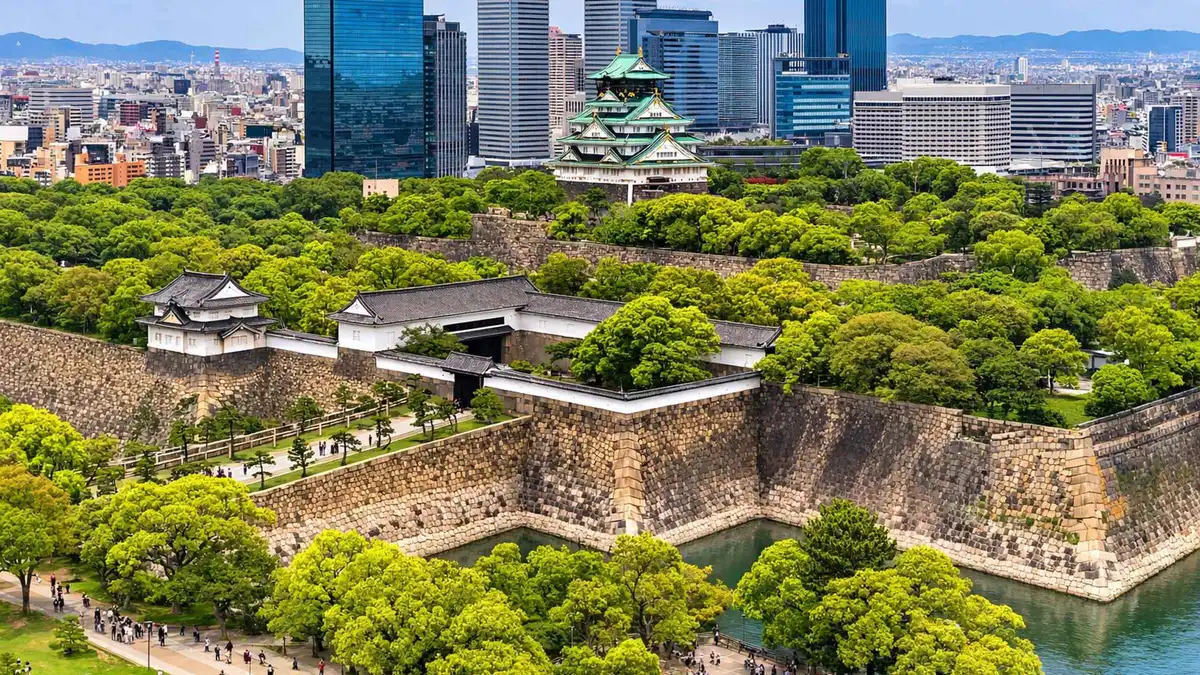 from $54.56
Osaka: Guided Walking Tour with a Native Expert – Top Sights
Four hours linking Osaka Castle, Tsutenkaku and Namba by metro, with the ¥1,200 keep admission included and the ¥430 of train fares not. A Japan Rail Pass buys you nothing here — the route runs on Osaka Metro.
Check Availability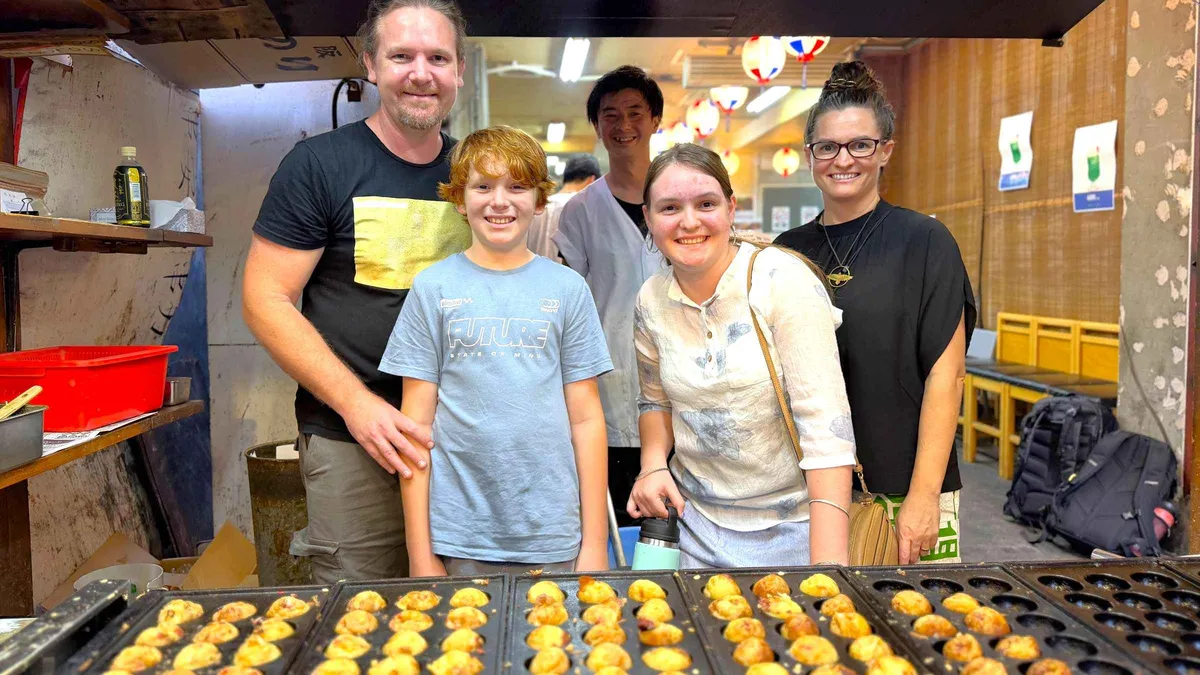 from $53.37
Osaka: Dotonbori Street Food Tour with Tastings
Two hours of street food along Dotonbori with a temple stop and the Glico sign, guide included. The listing never says how many tastings you get, which the 12- and 15-dish tours in this group do.
Check Availability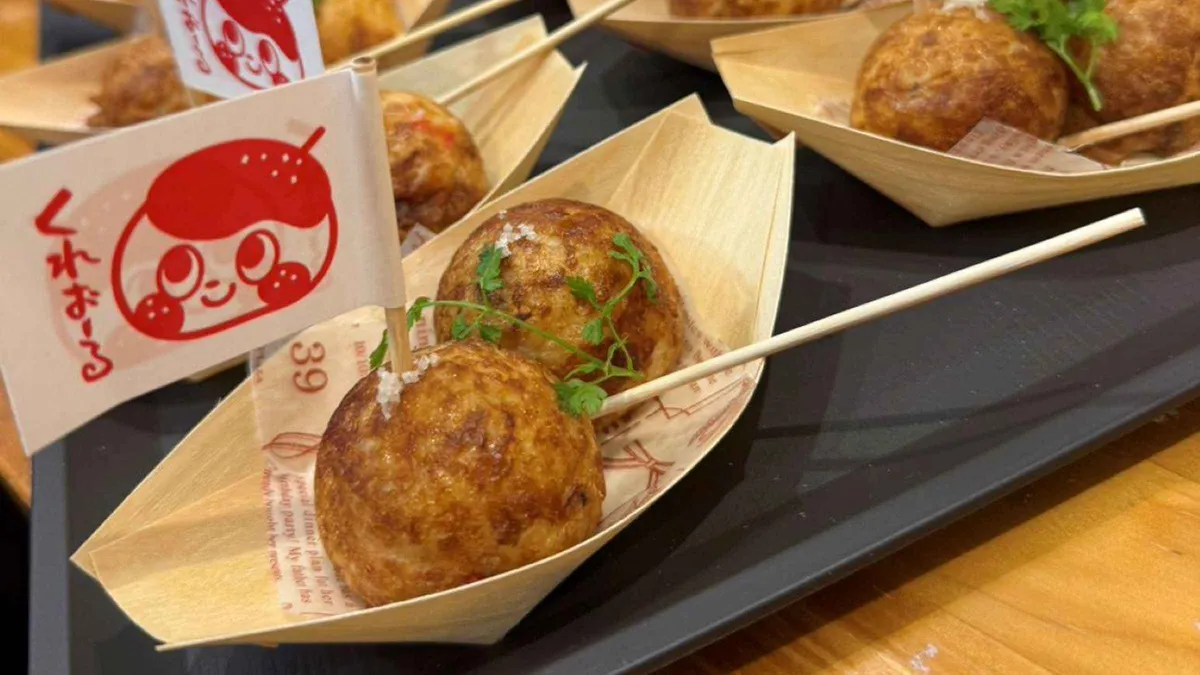 from $49.94
Osaka Dotonbori: 6-shop Takoyaki Tasting Tour
Two hours comparing takoyaki across five Dotonbori shops — about ten pieces in all — with a tasting booklet and a local guide, capped at ten people. Narrow by design: one dish judged batter by batter, not a general food tour.
Check AvailabilityPrices, ratings and details are the platform's own. Dollar figures are the listed prices. The platform bills in your account's currency.
What Is Published About Hozenji Yokocho, and What Is Not
This is the shortest honest description of the sourcing problem: one tourism-bureau page exists, and after that the trail stops.
The alley has no promotion association with a website, no published shop directory and no opening hours. We looked for a shotengai body and found none; the businesses in the alley publish their own pages and nothing collective. The temple does have its own site, houzenji.jp, and it refused our request twice that day — a 403 to both an automated fetch and a plain browser request from here — so its precinct hours, its rites and its own account of itself are not available to us, and we are not going to print them from memory.
The tourism bureau publishes one page for the alley, and that page is the source for most of the physical facts on this one. It also runs a separate page for Dotonbori, three minutes away, which does not mention Hozenji Yokocho at all. That is worth knowing before you read anywhere else: an alley this famous has almost no official paper trail, and the descriptions in circulation are mostly copied from each other.
| Question | Answer | Who publishes it |
|---|---|---|
| How long and how wide | Two lanes running east to west, 80 metres long, 3 metres wide | Osaka Convention and Tourism Bureau |
| Address | Near Namba 1-chome, Chuo-ku, Osaka 542-0076 | Tourism bureau |
| Opening hours | "Varies by store" — no alley-wide hours exist | Tourism bureau |
| Closed days | "Varies by store" | Tourism bureau |
| Admission | Nothing stated, because nothing is charged | Tourism bureau |
| Temple precinct hours and rites | Not available to us — houzenji.jp returned 403 | Nobody we could read |
| Number of restaurants, a shop list, a phone number for the alley | Not stated | Nobody |
One more absence worth recording, because it affects how search engines see the place: Wikidata has no item for Hozenji Yokocho. The alley is filed as an alias on the temple's item, Q11555078, along with Mizukake Fudo and the old name Sennichi-ji. That is what this page marks itself up as, and it is the correct entity rather than a convenient one.
The Temple Came First, and the Alley Grew Out of It
The lanes exist because worshippers needed feeding. That sequence explains the shape of the place.
Hozen-ji is a temple of the Jodo, or Pure Land, school, and the Wikipedia article on it — cited, and the fullest English account available — dates its founding to 1637. The ground you walk on was originally inside the temple precinct. Stalls set up to serve the people coming to pray, the stalls hardened into businesses, and the businesses became the two lanes that now carry the temple's name. The tourism bureau tells the same story in one sentence: the area was originally within the premises of Tenryuzan Hozen-ji, and the stalls that serviced the worshippers eventually established the alley.
The temple drew performers as well as worshippers — actors and artists, with performances held in tents on the ground — which is how a Buddhist precinct ended up as the quiet annexe of Osaka's entertainment district. That lineage is still legible at the two gates: the western sign was lettered by Kanbi Fujiyama, a theatre actor, and the eastern by Katsura Harudanji the Third, a comedian.
Almost none of it is original fabric. The temple and the alley were destroyed by fire in the air raids of the Pacific War, and rebuilt. The bureau adds that the alley survived two more fires at the former Naka-za theatre nearby, and does not date them. What came through the 1945 bombing was one statue. A lane this layered rewards a guide, and tours in Osaka that cover the Minami district can place Hozenji Yokocho's temple, theatre and fires into their full local context.
The Mizukake Fudo: Why the Statue Is Green
The single thing people come to see, and the one part of the visit with an etiquette attached.
The figure in the small hall at the eastern end is Fudo Myoo, the immovable wisdom king — a wrathful protective figure, normally carved in dark stone with a sword and a rope. This one is invisible under a coat of moss thick enough to hide the face, and the moss is entirely the work of visitors. As the tourism bureau puts it, the Fudoson statue became covered in moss due to the many people who poured water over it as a form of prayer. Wikipedia's account adds the part that gives the practice its weight: the statue survived the bombings of 1945, when the temple around it did not.
The practice itself is simple, and it is the reason there is always a queue of two or three people. You take one of the ladles at the basin, you throw the water over the statue rather than trickling it, and you put your hands together. Money goes in the box, not on the statue. The place also carries a reputation in Japan for helping women who are about to give birth, which is why you will see visitors who are plainly not tourists.
- Use the ladle, throw the water over the figure, return the ladle to the basin face down
- Do not touch the moss — it is decades of accumulated growth and it is the reason the statue looks the way it does
- Photographs of the statue are normal; photographs of somebody else praying are not
- The hall is small and the queue self-organises in one line; the whole thing takes under a minute
What we cannot tell you is when the precinct is open, whether there is a closing hour for the lane the hall sits on, or what the temple charges for a goshuin stamp, because the temple's own website would not serve us a page. We have seen those details quoted confidently on aggregator sites; they are not sourced, so they are not here.
How the Alley Compares With Its Neighbours
Four Minami walking streets that sit within a kilometre of each other and are constantly recommended in the same breath, with the only figures any public body actually publishes for each. All four sets of dimensions come from the Osaka Convention and Tourism Bureau's own spot pages.
| Street | Published size | What it is | Published hours |
|---|---|---|---|
| Hozenji Yokocho | 80 m long, 3 m wide, two lanes | Flagstones, lanterns, kappo restaurants and bars, the temple at the east end | "Varies by store" |
| Dotonbori | No length published | The canal, the signs and the restaurant frontage; loud, lit and free | "Varies by store" |
| Shinsaibashi-suji | About 580 m, roofed | Covered shopping arcade, about 380 years old, 60,000 people on a weekday | "Business hours vary by individual store" |
| Janjan Yokocho, Shinsekai | About 130 m, roughly 50 establishments | The kushikatsu and doteyaki alley under Tsutenkaku, forty minutes south | Not stated |
The pattern is the point: not one of these streets has a published opening time, because none of them is an attraction with an operator. They are public streets with businesses on them, and the businesses set their own hours.
Eating in the Alley, and Why No Shop Is Named Here
The lanes are lined with restaurants and this page names none of them. That is a rule rather than an oversight.
This site names a food business only when a citable list stands behind it — the MICHELIN Guide, a body like Slow Food, or the venue's own published information. The list that covers this kind of eating in Osaka is the MICHELIN Guide Kyoto Osaka 2026 Bib Gourmand selection, 67 addresses across the city and its surroundings, and MICHELIN prints name, address, cuisine and a price band for each. It prints no opening hours and no closed day for any of them, and it does not print anything about the shops in this alley.
What the tourism bureau does say about the alley's trade is the genre list: long-standing kappo restaurants and bars, okonomiyaki, and skewered cutlet — kushikatsu — shops. Kappo is the important word. It means a counter where a chef cooks in front of you to a set sequence, it is usually the most expensive thing in a lane like this, and the ones here are old enough that a walk-in on a Friday night is optimistic. The okonomiyaki and kushikatsu counters are the ones you can generally sit down at.
No price band is published for any of it, so we are not going to invent one. What we can tell you is that this is a sit-down alley rather than a street-food one: there is no takeaway window, the lanes are three metres wide, and there is nowhere to stand and eat.
- Kappo counters — set sequence, chef in front of you, reserve rather than walk in
- Okonomiyaki and kushikatsu — the approachable end, and the ones with English menus
- Bars — several are five seats wide; if a door is closed it is not necessarily shut
- Nothing to eat while walking, and nowhere to do it; Kuromon Market is the page for that
One rule does apply in the alley and it is enforced: Osaka City extended its street-smoking ban to the entire city on 27 January 2025, covering roads, squares, parks and other public places, heated tobacco included, at a 1,000-yen fine (about $6.27). The lanes are three metres wide with a temple in them, and there is no smoking area. The Osaka food page covers the named venues that a list does stand behind.
Finding the Alley, and When to Come
It is genuinely easy to walk past — the entrances are two gaps in a wall of restaurant frontage, and neither is signposted from the canal.
From the tourism bureau's own directions, it is a five-minute walk from Namba station, which is served by the Osaka Metro Midosuji and Sennichimae lines and by Kintetsu and Nankai. In practice most people arrive from the canal instead: stand on Ebisubashi facing the Glico sign, walk south into the covered Ebisubashi-suji arcade for about a hundred metres, and take the first proper left. The gate is a wooden arch with the alley's name on it, and behind it the noise level drops immediately.
Metro single fares run in five zone bands from 190 yen to 390 yen (about $1.19 to $2.45). If your day involves four or more rides the Enjoy Eco Card at 820 yen on weekdays or 620 yen at weekends and public holidays (about $5.14 or $3.89) has already paid for itself; getting around Osaka sets that out. Nothing in the alley is on the Osaka Amazing Pass free list, because nothing in it is ticketed.
- Before 10:00 — empty, shutters down, the flagstones and the moss to yourself, and the best light for photographs of the lane
- Dusk — lanterns on, restaurants opening, the twenty minutes the alley is famous for
- 19:00 to 21:00 — busiest, two or three deep at the statue, and the restaurants are seating
- Late — quiet again, though what is open is the bars rather than the kitchens
Access is honest about one thing: the lanes are flagstone with a step at each gate, three metres wide, and there is no step-free alternative route through them. Anyone using a wheelchair can reach the western gate along the level arcade but will find the surface difficult; the Osaka accessibility page covers the wider picture, and the guided walks listed above state on their own listings that they are not suitable for wheelchair users.
Hozenji Yokocho Map: The Two Gates and What Is Around Them
The alley sits between the Dotonbori canal and Sennichimae-dori, one block south of the neon. Everything on this map is within ten minutes on foot.
Pin positions are from OpenStreetMap and Wikidata. The temple pin is the Wikidata coordinate for Hozen-ji; the alley runs west from it for eighty metres.
Next Stop From Hozenji Yokocho
The alley takes a quarter of an hour, so it is always part of something else. Walk times are our estimates from the mapped distances.
Dotonbori
The canal, the signs and the boats. The two make an obvious pair — the loud version and the quiet version of the same three blocks — and the twenty-minute river cruise is the only ticketed thing in either.
3 minutes northKuromon Market
The 580-metre food arcade by Nippombashi station, at its best in the morning, which is exactly when this alley has nothing open.
9 minutes eastShinsaibashi
About 580 metres of roofed arcade running north from Ebisubashi, and the covered route to walk when it rains.
10 minutes northHozenji Yokocho Questions
Is Hozenji Yokocho worth visiting?
Yes, and it costs nothing and takes fifteen minutes. What it offers is contrast: eighty metres of lantern-lit flagstone three minutes from the loudest street in Osaka, with a moss-covered statue that people are actively praying to rather than photographing. Come at dusk. If your time in Minami is short, walk it on the way to or from Dotonbori rather than as a separate trip.
How far is the alley from the canal, and where is the entrance?
It is one block south of the canal — close enough that most guides fold it into the Dotonbori area, though the tourism bureau files it as its own spot with its own address near Namba 1-chome, and its Dotonbori page does not mention the alley at all. Practically: from Ebisubashi, walk south into the covered arcade about a hundred metres and take the first proper left. The gate is a wooden arch with the alley's name on it and it is easy to walk past.
What makes Hozenji Yokocho unique?
Three things that are all verifiable: the dimensions, two lanes of 80 metres by 3 metres of flagstone in a district of eight-lane frontage; the origin, a temple precinct whose worshippers' food stalls hardened into a street; and the Mizukake Fudo, a statue invisible under moss grown from decades of poured water. The gates at either end were lettered by an actor and a comedian, which tells you which trade the alley served.
What is the significance of Hozen-ji temple in Osaka?
It is a Jodo-sect temple founded in 1637, and it is the reason the alley exists — the lanes were inside its precinct before they were a street. Its Fudo Myoo statue survived the 1945 air raids that destroyed the buildings around it, which is part of why the water ritual carries the weight it does. The temple also has a reputation in Japan for helping women who are about to give birth.
How do you pour water on the Mizukake Fudo?
Take a ladle from the basin in front of the hall, throw the water over the statue rather than dribbling it, put the ladle back face down and put your hands together. Offerings go in the box. Do not touch the moss: it is the accumulated result of everybody else doing this, and it is the reason the figure looks the way it does.
What are Hozenji Yokocho's opening hours?
There are none. The alley is a public lane with no gate, and the tourism bureau answers the hours and closed-days questions for its businesses with the same two words each time, "Varies by store". The temple's own website would not load for us, so its precinct hours are not something we can state — any site quoting exact times for the hall is quoting an unsourced figure.
Is there an entrance fee for Hozenji Yokocho?
No. No fee is published for the alley or the temple and none is charged; there is no gate and no ticket office. You pay only for what you eat and drink, and there is no takeaway — this is a sit-down alley. The paid options in the area are the guided walks that route through it, starting at $17.48.
Where the Alley Fits in an Osaka Evening
Fifteen minutes, free, and directly between two things you were already going to do.
The efficient version of a Minami evening walks east to west and gets progressively louder. Come out of Nippombashi station at Kuromon Market in the late afternoon while stalls are still trading, walk nine minutes west into the alley as the lanterns come on, pour the water, and then step three minutes north into Dotonbori for the signs and dinner. That is about three hours end to end, it involves one Metro fare, and the only thing you can book in advance is the boat.
If you are working to a fixed plan, the one-day itinerary uses exactly that sequence for its evening; things to do in Osaka has the rest of the city, sorted by what it costs and how long it takes.
Hozenji Yokocho on Film: Eighty Metres, End to End
Three walk-throughs we checked ourselves — each video id verified against YouTube's own record and its thumbnail, so none of these is a dead player. They are the fastest way to see how narrow three metres actually is.
Hozenji Yokocho Osaka Gourmet Alley - walking tour
The full length of both lanes at walking pace, past the restaurant frontages.
Video: POCKET GUIDE JAPANHozenji Yokocho, the traditional street next to Dotonbori, Namba, Osaka
Shows the approach from the arcade and where the gates actually are.
Video: Rion IshidaOsaka Walking Tour: Famous Hozenji Yokocho Alley
A recent pass including the Mizukake Fudo hall and the queue at the basin.
Video: Village Idiot AdventuresVideos load from YouTube only when you press play.
Prices, hours and terms are set by the venue or operator and confirmed at checkout.
We may earn a commission if you book through one of our links, at no extra cost to you. Full affiliate disclosure