 Osaka City Guide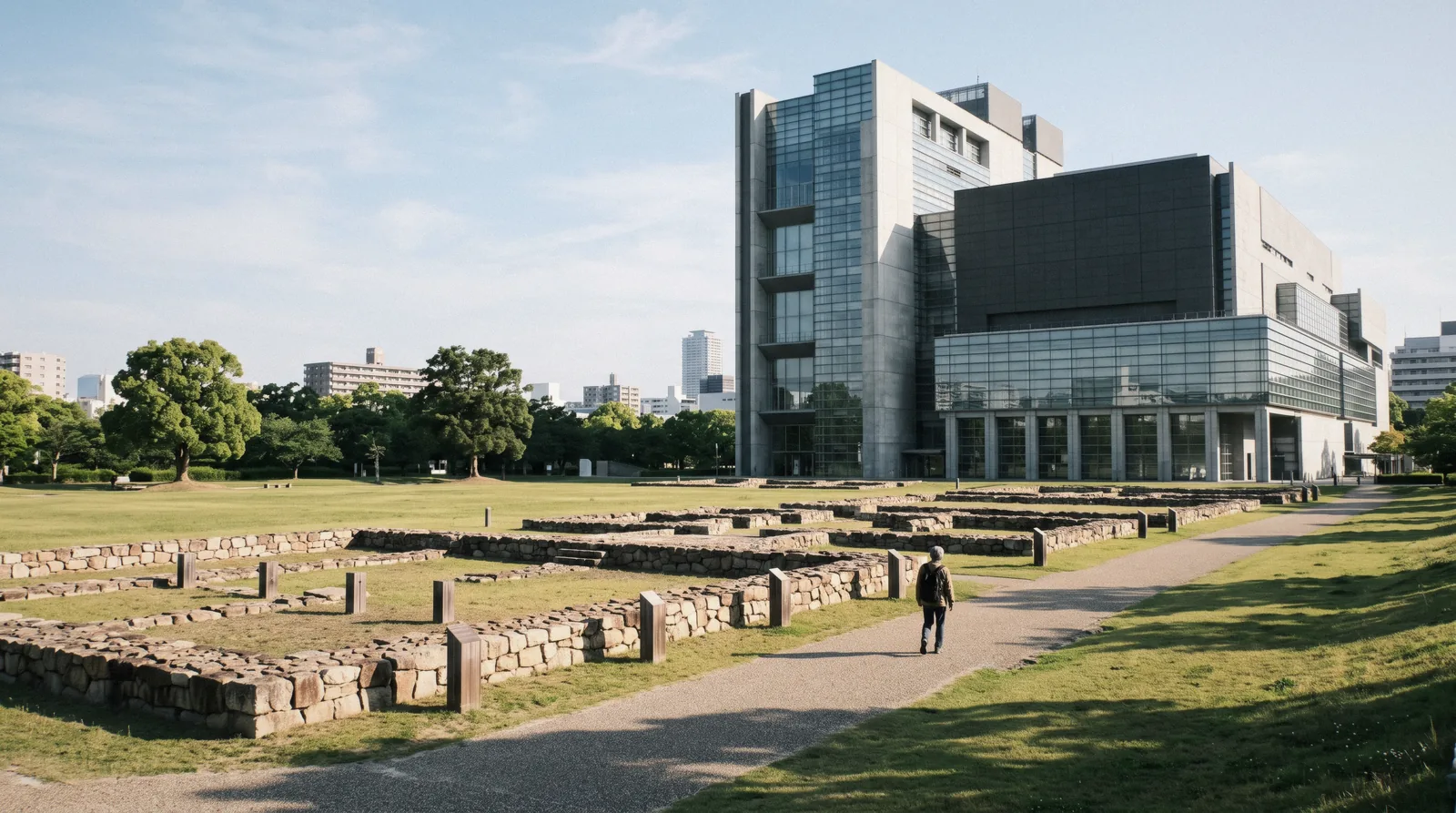
Osaka Museum of History: Four Floors Above a Buried Palace
The Osaka Museum of History is a ¥600 museum built on top of an archaeological site, and the two halves of that sentence are the reason to come. You take a lift to the tenth floor, 57 metres up, and step straight into a full-size reconstruction of the great hall of the eighth-century Naniwa Palace — vermilion pillars, tiled floor, ranked officials — with windows that look down on the actual excavated foundations of that palace in the grass outside. Then you walk down through the city's history, floor by floor, to a life-size street corner of 1920s Shinsaibashi. Twice each afternoon, a guide takes twenty people, free and first-come, into the preserved palace remains under the building itself. It shuts on Tuesdays, not Mondays — which makes it one of the most useful pages in this guide to things to do in Osaka. Dollar figures are approximations at ¥1,000 ≈ $6.27 (European Central Bank reference rate via frankfurter.dev).
Quick answer The price, the Tuesday closure, the free underground tour and what the view shows
The Osaka Museum of History charges $3.76 for its permanent exhibition (¥600) and opens 09:30 to 17:00, with the last admission thirty minutes before closing at 16:30. It closes every Tuesday and from 28 December to 4 January. The fee page on the museum's own site is dated 5 June 2025, and its access page is dated 16 August 2025.
Key takeaways
- It closes on Tuesdays, not Mondays — the opposite of Tennoji Zoo, the science museum and the national art museum, which makes it the standard answer to an Osaka Monday
- The free Naniwa Palace site tour goes underground at 14:00 and 15:00, takes twenty people first-come and costs nothing on top of admission. It is the one thing here that runs out
- It is on the Osaka Amazing Pass free-entry list. The old combined ticket with Osaka Castle is not — that was withdrawn on 27 December 2024, and plenty of guides still recommend it
- Two exits of Tanimachi Yonchome station put you at the door, and the castle is a ten-minute walk from the same building — the guided walk that links them includes the keep's own $7.52 (¥1,200) admission
Key facts
Opening hours
| Every operating day | 09:30–17:00 |
|---|---|
| Last admission — 30 minutes before closing | —–16:30 |
| Naniwa Palace site tour, two departures | 14:00–15:00 |
Closed Every Tuesday — the following day when the Tuesday is a public holiday — and 28 December to 4 January. Note that this is the opposite of most Osaka museums, which close on Mondays
Admission
- Adult
- $3.76 permanent exhibition (¥600); $3.39 (¥540) in a group of 20 or more. Special exhibitions are charged separately and priced per exhibition
- Reduced
- $2.51 (¥400) high school and university students on production of ID; $2.26 (¥360) in a group. Audio guide $2.51 (¥400) a unit in four languages
- Free
- Junior high school age and under; Osaka City residents aged 65 and over with proof; disability-certificate holders including one carer, with the Mirairo ID app accepted in place of the booklet
Planning it
- Time needed
- Not stated by the museum; our routing: 90 minutes for the four floors, two hours if you take the 14:00 palace tour
- Book ahead
- Optional — walk-up usually fine
- Address
- 4-1-32 Otemae, Chuo-ku, Osaka 540-0008
One permanent-exhibition ticket, one optional audio guide, and special exhibitions priced separately per show.
Only one thing needs deciding here: whether the $3.76 (¥600) permanent exhibition is the whole visit, or whether you add the $2.51 (¥400) audio guide. Special exhibitions are priced separately, per show.
| Ticket | Individual | Group of 20 or more | Notes | Book |
|---|---|---|---|---|
| Permanent exhibition, adultThe standard ticket for any adult; the online version carries no time slot | $3.76 (¥600) | $3.39 (¥540) | Sold at the counter and online; the online ticket carries no time slot | Official site |
| Permanent exhibition, high school and universityHigh school and university students, on production of ID when you buy | $2.51 (¥400) | $2.26 (¥360) | Show student ID when you buy | Official site |
| Junior high school and underJunior high school age and under, with no proof requirement published | Free | Free | No proof requirement published for this category | Official site |
| Osaka City residents 65+, and disability-certificate holdersOsaka City residents aged 65 and over, and certificate holders with one carer | Free | Free | One carer free with the certificate holder; residents show a senior transit pass, licence or similar; Mirairo ID accepted | Official site |
| Audio guideAnyone who wants the 50 commentary points, in one of four languages | $2.51 a unit (¥400) | — | Japanese, English, Chinese and Korean; covers 50 points in the permanent exhibition | Official site |
All figures are the museum's own, from its fee page dated 5 June 2025 and read on in Q3 2026, converted at ¥1,000 ≈ $6.27. No ticket platform in our catalogue resells this museum, so the counter and the museum's own online permanent-exhibition ticket are the only two ways to buy. Two things the museum publishes that are worth knowing before you queue. Special exhibitions are charged on top of the permanent-exhibition fee and priced per show — its 2026 programme ran from a Kawachi-Genji clan exhibition in the winter to an NHK Taiga drama exhibition through the summer — so check the current show's own page if it is the reason you are coming. And the counter takes essentially everything: all the major cards, iD, QUICPay and UnionPay, and PayPay, au PAY, d払い, Alipay, WeChat Pay, Rakuten Pay and the rest. Groups of 20 or more are asked to submit a form in advance.
Tours that take in the museum's corner of Osaka
Nobody sells a guided visit to this museum, and nobody resells its ¥600 ticket. What is here are the Osaka walking tours that work the Otemae and castle end of the city, which is the pairing that matters — the museum and Osaka Castle share a street corner and a subway station. Only the second card below includes an admission of any kind, and it is the castle keep's, not this museum's. Prices are the platform's listed USD.
 from $54.56
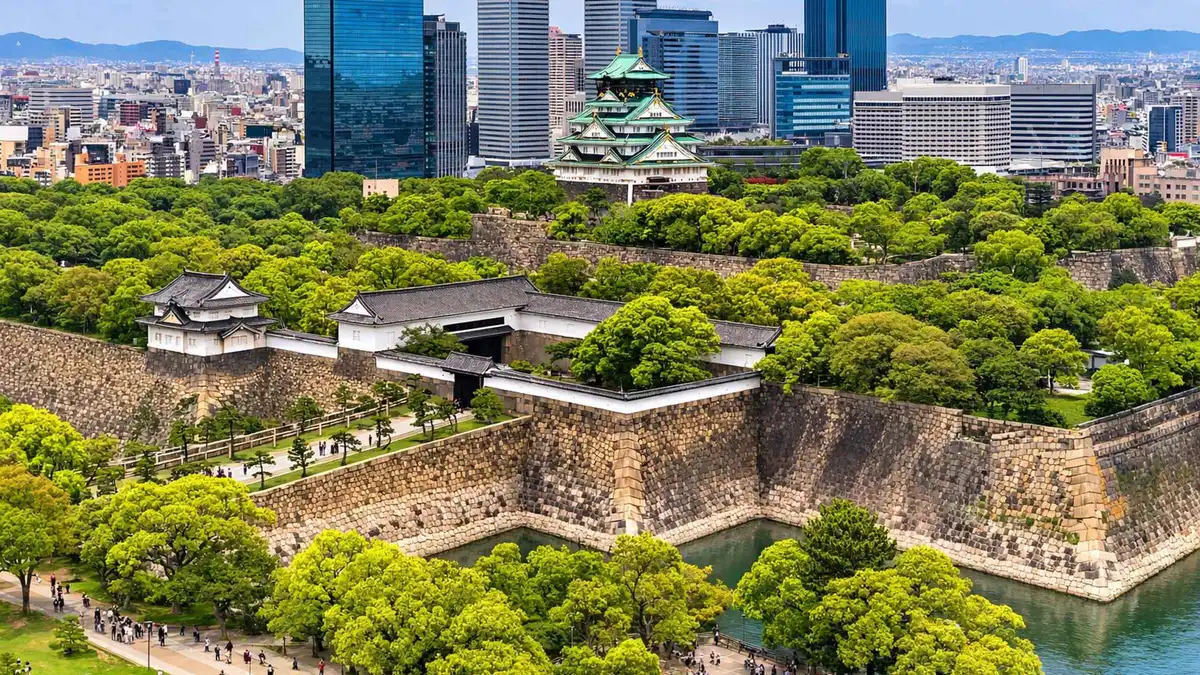
Osaka: Guided Walking Tour with a Native Expert – Top Sights
Four hours linking Osaka Castle, Tsutenkaku and Namba by metro, with the ¥1,200 keep admission included and the ¥430 of train fares not. A Japan Rail Pass buys you nothing here — the route runs on Osaka Metro.
Check Availability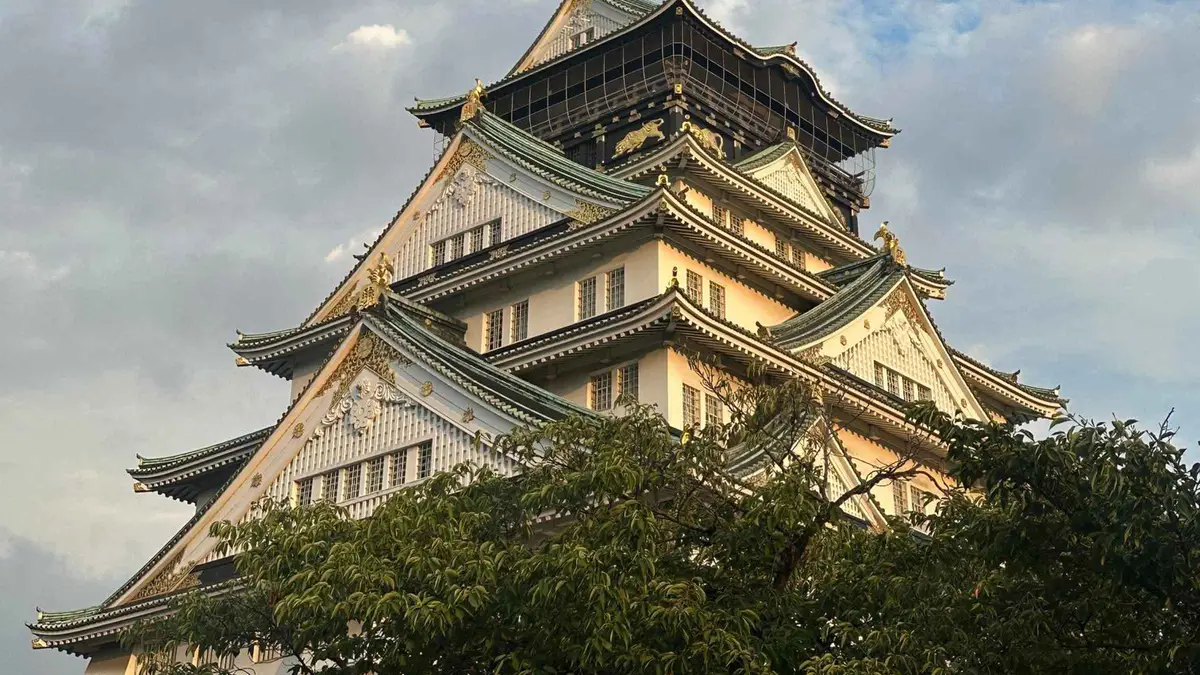 from $49.74
Osaka: Essential City Loop Tour with Local Guide
Five hours in a group of eight covering the castle, the Showa-era backstreets and the neon strip in one loop, with food bought stop by stop instead of a sit-down lunch. Only four people have rated it so far.
Check Availability from $35.71
Osaka: Private or Group Hotspots & Hidden Gems Walking Tour
A three-hour walk that stretches to seven if you want it to, private or shared, with a takoyaki and a retro vending-machine drink included. The longer options use trains, which you pay for — usually under ¥1,000 a head.
Check AvailabilityPrices, ratings and details are the platform's own. Dollar figures are the listed prices. The platform bills in your account's currency.
The four floors, top down
You ride to the tenth floor and walk down. The museum's own description of the route is a journey through time, and it is arranged strictly that way.
Tenth floor — Ancient. The lift opens 57 metres up, and the museum's own line for what waits there is that you are already standing in the great hall of the Nara-period Naniwa Palace. It is reconstructed at full size: vermilion-lacquered round pillars 70 centimetres across, a tiled floor, ranked figures of court officials, and a large screen running the court ceremonies. Through the windows you look down on the excavated palace site itself, laid out in the grass below.
Ninth floor — Medieval and early modern. An escalator down brings you to the Osaka of the Honganji temple that fought Nobunaga, then to the city's period as the tenka no daidokoro, the kitchen of the realm. A bunraku puppet called Naniwaya guides the route. The set piece here is a 1:20 scale model of the town, crowded with the life of its merchants.
Eighth floor — Digging history. The Naniwa Archaeological Research Institute: a full-size reconstruction of an excavation trench where you can learn how a dig is read, with workshops using real tools and materials. Note that the museum's own permanent-exhibition index still carries a notice closing this floor to prevent the spread of coronavirus infection. The notice is undated and we could not establish whether it is current, so treat the eighth floor as uncertain rather than guaranteed.
Seventh floor — Modern and contemporary. The end of the descent, and the floor most people photograph: street corners of Shinsaibashi-suji and Dotonbori from the late Taisho and early Showa years, rebuilt life-size at their original scale and shown with period film. It is the same two streets you can walk today, which is exactly why it works. Since the museum's floors retell the same history you meet in the streets below, following one of the osaka guided tours afterwards ties those reconstructed scenes to the living city.
The audio guide, and what it costs
Fifty points across the permanent exhibition carry commentary, and the museum rents a unit for $2.51 (¥400) in Japanese, English, Chinese and Korean. For a museum whose displays are largely in Japanese, that is the difference between an hour of looking and an hour of understanding, and at less than a dollar over a cup of coffee it is the easiest yes on this page.
There is also an AR layer, free, using the STYLY app — the museum publishes an AR Naniwa Palace experience and asks that you mind your surroundings while using it. A permanent-exhibition ticket is still needed to be in the galleries where it works.
The free tour into the palace under the building
Twenty places, twice an afternoon, no charge and no booking. It is the single best-value thing in the museum and the museum barely advertises it.
When this building went up, the ancient Naniwa Palace remains beneath it were preserved rather than destroyed, and part of them are kept in the basement. The museum runs a guided visit into them called 難波宮遺跡探訪 — an exploration of the Naniwa Palace remains — free with your admission ticket.
The terms are exact and short: twenty places, first-come, with departures at 14:00 and 15:00. There is no reservation, no online sign-up and no waiting list. If you want it, be in the building by early afternoon and ask at the desk.
What makes it worth arranging a day around is the continuity. On the tenth floor you stand in a reconstruction of the palace and look down at where it stood; in the basement you stand in what is actually left of it. Very few museums anywhere can do both, and almost no city guide mentions that this one does.
The palace itself is worth a line. Naniwa was an imperial capital in the seventh and eighth centuries, on the ground between here and Osaka Castle, and the site outside the museum windows is what archaeology has recovered of it. That is why the museum stands where it does.
Naniwa Rekishi-juku, the free study room
One more thing that costs nothing: the museum runs a learning centre called Naniwa Rekishi-juku, open to anyone without a ticket. It holds about 6,000 books on Japanese history and culture on open shelves, a searchable catalogue of the museum's 180,000-volume collection, reproductions of old documents you can request at the counter up to ten volumes at a time, and a viewing corner with about a hundred films and a searchable photo library of more than 7,000 images of old Osaka. Curators take research enquiries in person.
Two caveats from the museum's own notice: it was temporarily closed for stock-taking from 30 March to 6 May 2026, and from 7 May 2026 its opening days changed to Wednesday, Thursday, Friday and Saturday only. The reception hours are 09:30 to 12:00 and 13:00 to 16:30, extended on Fridays to 19:30. It does not accept requests to decipher old manuscripts or to appraise objects.
Getting there, and what is next door
The museum publishes exactly one access line, and it is a short one. Everything below is from the museum's own access page, dated 16 August 2025.
Exits 2 and 9 of Tanimachi Yonchome station, on the Osaka Metro Tanimachi and Chuo lines, come out at the building. The Osaka City Bus stop called Babacho is directly in front of it. That is the whole of the museum's published access information, and for once it is enough — the station is underneath the block.
A Metro single to Tanimachi Yonchome from Namba or Umeda falls in the ¥190 to ¥240 bands, about $1.19 to $1.50. If you are combining the museum with the castle and anything else in a day, the Enjoy Eco Card at ¥820 on a weekday or ¥620 at a weekend is the cheaper route once you pass three rides — though note the museum is also a free entry on the Osaka Amazing Pass, which covers both transport and admission.
| Route | Station or stop | Walk | Note |
|---|---|---|---|
| Osaka Metro Tanimachi line | Tanimachi Yonchome, exits 2 and 9 | At the door | The direct route from Tennoji and Umeda's Higashi-Umeda |
| Osaka Metro Chuo line | Tanimachi Yonchome, exits 2 and 9 | At the door | The route from Osaka Bay and Cosmosquare |
| Osaka City Bus | Babacho stop | Directly in front | The museum's own published stop |
| On foot from Osaka Castle | Otemae, across the park's western edge | About 10 minutes | The keep is ¥1,200 and takes no reservations at all |
The combined ticket that no longer exists
This needs saying plainly because the advice is still everywhere. The combined Osaka Castle and Museum of History ticket was withdrawn on 27 December 2024. It does not exist, it cannot be bought at either counter, and any page recommending it is out of date. The castle also ended its combined ticket with the Aqua-bus on 24 March 2025.
So the two are now two separate purchases: ¥600 here and ¥1,200 at the keep, ¥1,800 in total, about $11.29. The Osaka Amazing Pass carries both on its free list along with Nishinomaru Garden and the Yagura turret, which is the arithmetic that actually decides whether the ¥3,800 pass earns its price on a castle day.
Is the Osaka history museum worth a visit?
For ¥600 the bar is low, but the honest case is narrower than the price suggests.
Go if you are doing Osaka Castle anyway. Ten minutes apart, the same subway station, and the museum supplies the context the keep's own displays skate over — the city was an imperial capital eight hundred years before the castle existed, and this is where you see that.
Go if it is a Monday. Osaka's Monday closures take out the zoo, the science museum and the national art museum in one stroke. This place opens.
Go if you can be there for the 14:00 palace tour. Free, twenty places, and the reason this museum is more than a set of dioramas.
Think twice if you have one day in the city. Ninety minutes here is ninety minutes not spent in Dotonbori or at Kaiyukan, and the museum's greatest strength — the depth of local history — is the thing a first-time visitor is least equipped to enjoy.
A note on expectations: the displays are strong on reconstruction and light on English text, which is why the ¥400 audio guide is the difference between a good visit and a puzzling one. And the eighth floor may be shut.
Osaka Museum of History map: the museum, the palace site and the castle
The museum stands on the western edge of the Naniwa Palace site, with Osaka Castle ten minutes north-east across the park. Coordinates are Wikidata's; the walking time is our estimate from the mapped distance.
The combined castle and museum ticket was withdrawn on 27 December 2024 — the two are now separate purchases, unless you hold the Osaka Amazing Pass, which carries both.
Next stop from the Museum of History
Everything here is within a short walk or a couple of subway stops. Walking times are our estimates from the mapped distances.
Osaka Castle
¥1,200 for the keep, 09:00 to 18:00 with last admission 17:30, closed 28 December to 1 January. It takes no admission reservations at all — a web ticket exists, a booked slot does not.
10 minutes on footOsaka museums
Which ones close on Mondays and which on Tuesdays, in one table — the single most useful thing to check before you plan a museum day in this city.
Every other museum in the cityOsaka Amazing Pass
The museum is one of the 41 free entries. Whether ¥3,800 pays back depends on how many of the others you actually reach in a day that runs 03:00 to 02:59.
Before you buy anythingOsaka Museum of History questions
How much does the Osaka Museum of History cost?
$3.76 for the permanent exhibition (¥600), or $2.51 (¥400) for high school and university students with ID. Junior high age and under go free, as do Osaka City residents aged 65 and over with proof and disability-certificate holders with one carer. Groups of 20 or more pay ¥540 and ¥360. Special exhibitions are charged on top and priced per show — the full table is above.
What days is the Osaka Museum of History closed?
Every Tuesday, moving to the following day when the Tuesday is a public holiday, and from 28 December to 4 January. That is the opposite of most of the city's museums: Tennoji Zoo, the science museum and the national art museum all close on Mondays, which makes this the standard answer to an Osaka Monday and a wasted journey on a Tuesday.
How long does it take to visit the Osaka Museum of History?
The museum publishes no figure — almost no Osaka venue does. Our routing is 90 minutes for the four exhibition floors at a steady pace, or two hours if you take the free Naniwa Palace site tour at 14:00 or 15:00. Renting the ¥400 audio guide, which covers 50 points, will push you towards the longer end and is worth it.
What is the Naniwa Palace site tour?
A free guided visit into the preserved remains of the eighth-century palace kept in the basement of the building, included with your admission ticket. It takes twenty people, first-come, with departures at 14:00 and 15:00, and cannot be reserved. It pairs with the tenth floor, where you stand in a full-size reconstruction of the same palace and look down through the windows at its excavated foundations outside.
Can you still buy a combined museum and castle ticket?
Not any more. The combined Osaka Castle and Museum of History ticket was withdrawn on 27 December 2024 and a great many guides still recommend it. The two are now separate: ¥600 here and ¥1,200 at the keep, about $11.29 together. The Osaka Amazing Pass carries both, plus Nishinomaru Garden and the Yagura turret, on its free-entry list.
Is there an audio guide in English at the Osaka Museum of History?
Yes — $2.51 a unit (¥400), in Japanese, English, Chinese and Korean, covering 50 points across the permanent exhibition. Given how much of the display text is Japanese only, it is the difference between looking and understanding. There is also a free AR reconstruction of the Naniwa Palace through the STYLY app, which still needs a permanent-exhibition ticket to use in the galleries.
How do you get to the Osaka Museum of History?
Exits 2 and 9 of Tanimachi Yonchome station, on the Osaka Metro Tanimachi and Chuo lines, open at the building; the Osaka City Bus stop Babacho is directly in front. A Metro single from Namba or Umeda falls in the ¥190 to ¥240 bands, about $1.19 to $1.50 — more on fares and passes. Osaka Castle is about ten minutes on foot from the same door.
Where the museum fits in an Osaka day
It is the first half of a castle day, and the palace tour sets the clock.
The routing that gets the most out of ¥1,800 is museum first, castle second, and the 14:00 palace tour as the hinge. Arrive around 12:30, ride to the tenth floor and walk down through the four floors, be at the desk in time for the 14:00 underground tour, and come out at about 15:00 into the park. The castle keep takes last admissions until 17:30, so you have time — and having just stood in a reconstructed eighth-century palace, the sixteenth-century keep across the grass reads as a much later chapter of the same city rather than as its beginning.
Do it in the other order and you are rushing the tour or missing it, because 15:00 is the last departure and the museum's own last admission is 16:30.
One warning for a Monday plan: this is one of the few places open, so it will be busier than usual, and the twenty places on the palace tour go correspondingly faster. The two-day route puts the castle and the museum on the same morning for exactly these reasons.
The Museum of History on film: the tenth floor down
Three walk-throughs we checked ourselves — each id verified against YouTube's own oEmbed record and its thumbnail, so none is a dead player. All three show the descent through the floors, which is the only way to understand what ¥600 actually buys here.
Osaka Museum of History: a museum about over 1,350 years of history
A local walking channel's run through the permanent floors, top to bottom.
Video: Osaka Walk GuideOsaka Museum of History Tour: stunning miniatures and ancient Japan
Concentrates on the ninth-floor scale model of the merchant town, the museum's best set piece.
Video: Akina MiracleOsaka Museum of History | Osaka Japan travel vlog
A visitor's-eye version, including the view down onto the excavated palace site.
Video: Walk InsiderVideos load from YouTube only when you press play.
Prices, hours and terms are set by the venue or operator and confirmed at checkout.
We may earn a commission if you book through one of our links, at no extra cost to you. Full affiliate disclosure