 Osaka City Guide
Osaka vs Tokyo: Which City Deserves Your Nights
Osaka vs Tokyo is a comparison between a capital and a working city, and an Osaka guide owes you the awkward half up front: on the headline sight list Tokyo wins, and it is not close. What Osaka offers instead is a city you can read in a day, a food culture people come back for, and the best base in Japan for day trips — Kyoto is 29 minutes and $3.64 (¥580) away. This page sets the two side by side across seven dimensions. Every Osaka figure comes from this site's own pages, read from an operator or a government source; every Tokyo figure was read the same day from a Tokyo source that publishes it, and where Tokyo's own sites would not serve us a figure, this page says so instead of inventing one. Yen converts at ¥1,000 ≈ $6.27, the European Central Bank reference rate that day. Every Osaka figure below is the one printed on our page of things to do in Osaka, each figure read off the venue's own page.
Quick answer The verdict, the lodging-tax surprise, and the one dimension Tokyo takes outright
Choose Tokyo if this is your only trip to Japan and the famous list is what you came for — the capital's sights, museums and neighbourhoods outnumber Osaka's several times over, and no honest Osaka page will tell you otherwise. Choose Osaka if you want a city you can operate without effort, eat your way through at street prices, and use as a base: Kyoto, Nara, Kobe and Himeji are all inside an hour of one station. With eight nights or more, do both — more nights in Tokyo, the day trips hung off the Osaka end.
Key takeaways
- The lodging tax runs the other way from the reputation: on a $75.20 (¥12,000) room Tokyo charges $0.63 (¥100) a night and Osaka $1.25 (¥200) — the bands compared, and the rest of a day on the costs page
- Osaka's doors are cheap — castle keep $7.52 (¥1,200), Umeda Sky $12.54 (¥2,000) — with the big money in one place, Universal Studios Japan from $52.70 (¥8,400)
- As a base Osaka wins outright: Kyoto for $3.64 (¥580), Nara for $5.27 (¥840), Kobe for $2.63 (¥420), on ordinary trains from a station you are already standing in
- Moving around Osaka is a five-fare grid, $1.19 (¥190) to $2.45 (¥390) by zone, with a day card at $3.89 (¥620) on a weekend — the whole system
- Where Tokyo wins and it is not close: the sheer number of things worth doing. That section is below and unhedged
Size, and How Long the City Takes to Learn
Osaka is a two-centre city and that is the whole trick of it. Everything a first visit wants sits in Kita, around Osaka and Umeda stations at the top of the Midosuji subway line, or in Minami, around Namba and Shinsaibashi at the bottom of it. The two are about eight minutes apart underground on one line, and once you have understood that sentence you have understood Osaka's geography. The subway fare grid has five steps, $1.19 to $2.45 (¥190 to ¥390) by zone, with a one-day Enjoy Eco Card at ¥820 on a weekday and ¥620 at the weekend — the full fare picture is on the getting-around page.
Tokyo does not have a centre in that sense; it has a dozen of them, joined by a rail network run by several separate companies, and learning it is genuinely a project. That is a feature for a week of discovery and a tax on three days with a list.
One honest gap: no Tokyo fare appears here. Tokyo Metro's fare page returned an access-denied response to us and the Toei subway's fare pages returned a security block, so this site publishes no Tokyo subway figure rather than copying one from a blog. Treat that as the rule for this whole page.
Verdict: Osaka, for anyone whose trip is short enough that navigation time is a real cost.
The Headline Sights
Tokyo takes this one and the margin is not narrow. The capital carries the national museums, the imperial ground, the towers, the biggest temple names, whole neighbourhoods that are themselves attractions, and enough of everything that a fortnight does not exhaust it. Two prices read from the venues' own pages give the flavour: Tokyo Skytree sells its Tembo Deck at ¥1,800~ and the Deck-plus-Galleria combination at ¥3,000~ for an adult of 15 or over, with a ¥500 issuing fee added per ticket at the fourth-floor counter rather than online; the Tokyo National Museum charges ¥1,000 for its collection galleries, ¥500 for university students and nothing for visitors under 18 or over 69.
Osaka's list is shorter and its prices are lower: the castle keep is $7.52 (¥1,200) and takes no reservations at all, the Umeda Sky Building's open-air deck is ¥2,000, Tsutenkaku is ¥1,500 and now requires a timed reservation for every ticket, and the aquarium has no single price — a date-banded ¥2,800, ¥2,900, ¥3,200 or ¥3,500. The things-to-do hub lays the list out.
The exception that swallows the argument is Universal Studios Japan, a national-scale attraction inside Osaka's city limits, from ¥8,400 for a 1-Day Studio Pass.
Verdict: Tokyo, decisively — unless the theme park is on your list, in which case the two are not comparable and Osaka has the thing you want.
Food, and Why Osaka Argues Loudest Here
Osaka's reputation rests on food that is cheap, fast and eaten standing up: takoyaki, okonomiyaki, kushikatsu, the arcade stalls of Kuromon and the canal-side streets of Dotonbori and Shinsekai. The eating guide walks the whole of it.
This site will not attach either of the two famous dishes to a named shop, and the reason is checkable: the MICHELIN 2026 Bib Gourmand selection for Osaka contains no takoyaki venue and no okonomiyaki venue at all. Every ranked list of “the best takoyaki in Osaka” is somebody's opinion presented as a finding, so this site describes the dish and the street and leaves the stall to you. Tokyo is the larger restaurant city by any measure — more of everything, at every level — but we print no Tokyo restaurant count and no star count here, because we have not read one from a source we would stand behind.
Verdict: a draw on quality, Osaka on cost and on ease. In Tokyo the great meal is something you research and reserve; in Osaka it is what you walk into on the way back to the hotel, and on a five-day trip that difference outweighs any ranking.
The Bed Tax, Compared — and It Runs the Wrong Way
Both cities levy a per-person, per-night lodging tax on the room rate before meals and consumption tax. Osaka Prefecture's bands took effect on 1 September 2025; Tokyo's current bands and its 2027 replacement were read from the Tokyo Metropolitan Bureau of Taxation in Q3 2026.
| Room rate, per person per night | Osaka | Tokyo now | Tokyo from 1 April 2027 |
|---|---|---|---|
| Under ¥5,000 | No tax | No tax | No tax |
| ¥5,000 to under ¥10,000 | ¥200 | No tax | No tax below ¥13,000 |
| ¥10,000 to under ¥15,000 | ¥200 | ¥100 | 3% of the room rate above ¥13,000 |
| ¥15,000 to under ¥20,000 | ¥400 | ¥200 | 3% of the room rate |
| ¥20,000 and over | ¥500 | ¥200 | 3% of the room rate |
Read the middle rows twice. On an ordinary business-hotel room around ¥12,000 the traveller pays twice as much tax in Osaka as in Tokyo, and Osaka's tax reaches its ceiling at ¥500 while Tokyo's switches to a percentage in April 2027 — at which point a ¥20,000 Tokyo room carries ¥600 and the same room in Osaka still carries ¥500. Neither city publishes room rates, so this site prints none; the tax is the only bed figure on this page that comes from a government.
What a Day Costs in Each
Osaka's day is fully priced on the costs page: an ordinary sightseeing day comes to about $47.00 a head (¥7,500) before the room, built from figures this site reads itself rather than averages it borrows. The tax bands above are the only lodging figure either government publishes, and as the table shows, the belief that Osaka is automatically the cheaper night is not what the two schedules say.
Where Osaka is reliably cheaper is at the door and at the table: the admissions are lower and eating well costs less. Where Tokyo can be cheaper is the room, at least in the middle of the market, and it has far more rooms to be cheap with. Neither city government publishes room rates and this site prints none.
Verdict: a draw, and a genuinely close one. Anybody who tells you Osaka is half the price of Tokyo has not read either city's tax schedule.
As a Base for the Rest of the Region
This is Osaka's outright win, and it most often decides the whole question for a second trip to Japan. From Osaka's own stations, on ordinary trains at ordinary fares: Kyoto is ¥580 on JR and 29 minutes, or ¥410 on Hankyu; Nara ¥840 on JR or ¥680 on Kintetsu; Kobe ¥420 on JR or ¥330 on the Hankyu and Hanshin lines; Koyasan a ¥4,210 World Heritage Ticket including the cable car and the mountain buses. Himeji's castle went from ¥1,000 to ¥2,500 on 1 March 2026 and is still one of the great days out in the country. The day-trips hub prices each of them and the Kyoto page sets out that one in full.
A week based in Osaka is therefore a week in Kansai: you unpack once and five cities are inside an hour. Tokyo has its own days out, but four historic cities within a ¥1,000 fare of one another is a geometry that is unusual anywhere in the world.
Verdict: Osaka, decisively. On any trip with more than four nights in one place, this dimension outweighs the sight count Tokyo wins on.
Evenings, Pace and Street Life
Osaka's evening is its best hour, and the opening times back that up rather than merely asserting it. The Umeda Sky Building's open-air deck runs to 22:30 with last admission at 22:00, Abeno Harukas 300 to 22:00 with last admission at 21:30, and Tsutenkaku to 21:45 — three viewpoints still selling tickets at an hour when most Japanese attractions have been shut for four hours. Underneath them Dotonbori and Shinsekai are at their loudest, and the walk between neon and dinner is short.
Tokyo's nights are bigger in absolute terms; it is a city of many millions with whole districts devoted to going out. The difference is concentration again: in Osaka the evening happens in a strip you can walk end to end, in Tokyo in six places you must choose between and travel to. One rule that catches visitors and that we can source: street smoking has carried a ¥1,000 fine city-wide in Osaka since 27 January 2025, heated tobacco included.
Verdict: Osaka, on the specific measure of how much good evening you get per unit of effort.
Where Tokyo Wins, and It Is Not Close
An Osaka site that scored every dimension for Osaka would not be worth reading, so here is the concession stated plainly.
Tokyo has more of everything worth having. More museums, and better ones. More neighbourhoods with their own character, more architecture, more shopping, more theatre, more late-night everything, and a scale of urban spectacle Osaka does not try to match. If you have seven days in Japan and one city to spend them in, the odds are that city should be Tokyo, and every honest Kansai enthusiast knows it. Tokyo also wins the thing nobody lists: the probability of an unplanned good day. In Osaka a day without a plan becomes a food day, which is lovely but singular; in Tokyo it can become almost anything.
What Osaka answers with is not more, it is less friction — fewer decisions, shorter distances, cheaper doors, better street food and Kansai on the doorstep. Those are the terms of the trade.
Doing Both: the Minimum That Works
Most people asking this will eventually do both, so here is the shape that works. Give Tokyo the larger share of nights — three or four minimum, four or five if the museums matter. Give Osaka two or three and hang the day trips off that end: two days in Osaka covers the city itself, three days leaves room for Kyoto or Nara without moving hotels. With eight nights, four and four, one Osaka day spent in Kyoto. With five nights, do not split at all — two cities in five nights spends a whole day on the move and buys two thin visits instead of one good one.
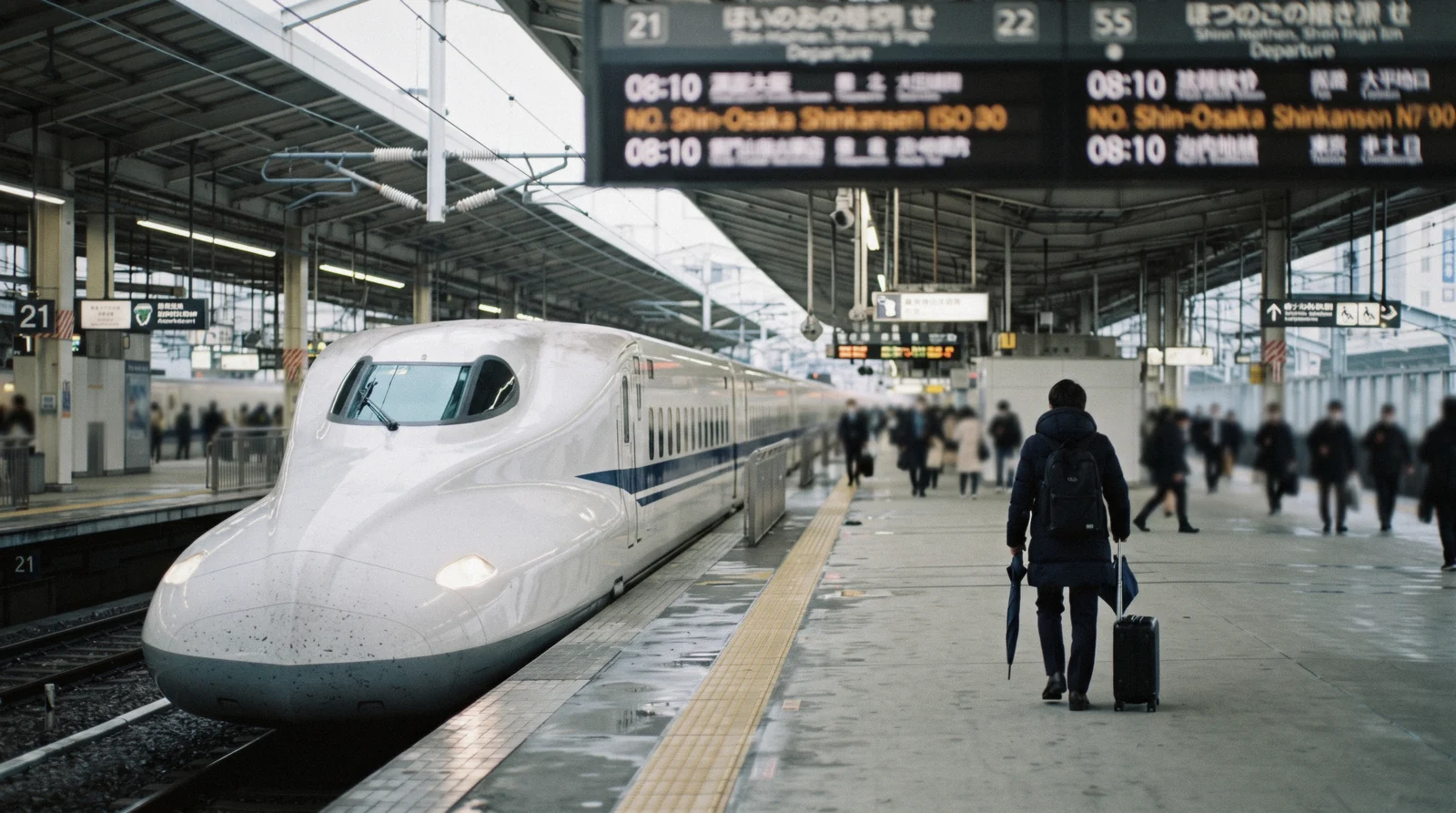
The two are joined by the Tokaido Shinkansen. This page prints no fare and no journey time for it: JR Central's own English fare table was unreachable, the fare document its site links to returning a 404, and we will not print a train fare we did not read from the railway. One planning note either way — where you sleep in Osaka changes the day-trip maths more than the sightseeing maths, because the JR platforms for Kyoto, Kobe and Himeji sit under the Kita side of the city.
The Scorecard, Dimension by Dimension
Seven dimensions, summarised from the sections above. Osaka figures come from this site's own sourced pages; the Tokyo figures were read from the Skytree ticket page, the Tokyo Metropolitan Bureau of Taxation and the Tokyo National Museum.
| Dimension | Osaka | Tokyo | Verdict |
|---|---|---|---|
| Learning the city | Two centres on one subway line, five fare steps | A dozen centres, several rail companies | Osaka |
| Headline sights | Short list, low prices, plus a theme park | The national list, and far more of it | Tokyo |
| Food | Street food culture, low prices, no named stalls we can cite | Deeper and broader at every level | Draw on quality, Osaka on cost |
| Lodging tax | No tax under ¥5,000, then ¥200 to ¥500 | No tax under ¥10,000, then ¥100 or ¥200 | Tokyo, on the mid-price room |
| Sight admissions | Castle keep ¥1,200, Umeda Sky ¥2,000 | Skytree from ¥1,800~, national museum ¥1,000 | Osaka |
| Base for day trips | Kyoto ¥580, Nara ¥840, Kobe ¥420, Koyasan ¥4,210 | Its own orbit, but no Kansai geometry | Osaka, decisively |
| Evenings | Three decks open past 21:45, one walkable strip | Bigger, but spread across the city | Osaka, per unit of effort |
Four to Osaka, one to Tokyo, one draw and one split — which reads like a home verdict until you notice that the single dimension Tokyo takes is the one most first trips are actually built around. The scorecard is not the answer; the kind of trip you are taking is.
Pick Osaka or Pick Tokyo, by the Trip You Are Taking
If this is your first trip to Japan and you have one week
Tokyo. Give it the nights, and add Osaka only if the days stretch past seven. The concession section above explains why an Osaka site says so.
If you are travelling with anyone who wants Universal Studios Japan
Osaka — the park is here, and the ticket picture is the one part of an Osaka trip that genuinely needs planning weeks ahead.
If you want one base and several historic cities around it
Osaka, and it is not close: Kyoto, Nara, Kobe and Himeji are all ordinary-train distance from one station.
If eating is the point of the trip
Osaka for street food at street prices, Tokyo if you want the reserved, researched, high-end version. The eating guide is honest about which named shops we will and will not cite.
If you dislike navigating and want to walk more than you ride
Osaka. Two centres, one line between them, five fare steps — the getting-around page is short for a reason.
If you have eight nights or more
Both, with more nights in Tokyo and the day trips hung off the Osaka end. The three-day Osaka plan fits that shape exactly.
If Osaka Gets the Nights, Start Here
Three ways to get your bearings in the Osaka half quickly — a first-evening walk, the castle, and the canal at its best hour. Each card opens the operator's own page and live calendar; the dollar figures are the platform's listings.
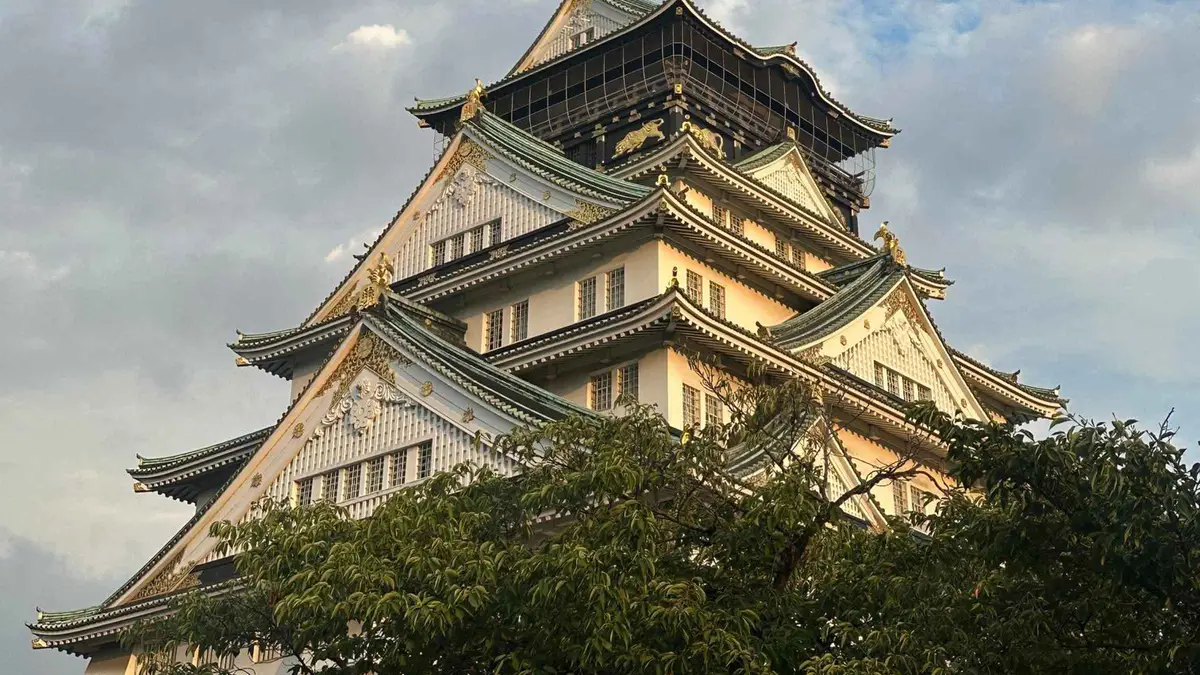 from $49.74
Osaka: Essential City Loop Tour with Local Guide
Five hours in a group of eight covering the castle, the Showa-era backstreets and the neon strip in one loop, with food bought stop by stop instead of a sit-down lunch. Only four people have rated it so far.
Check Availability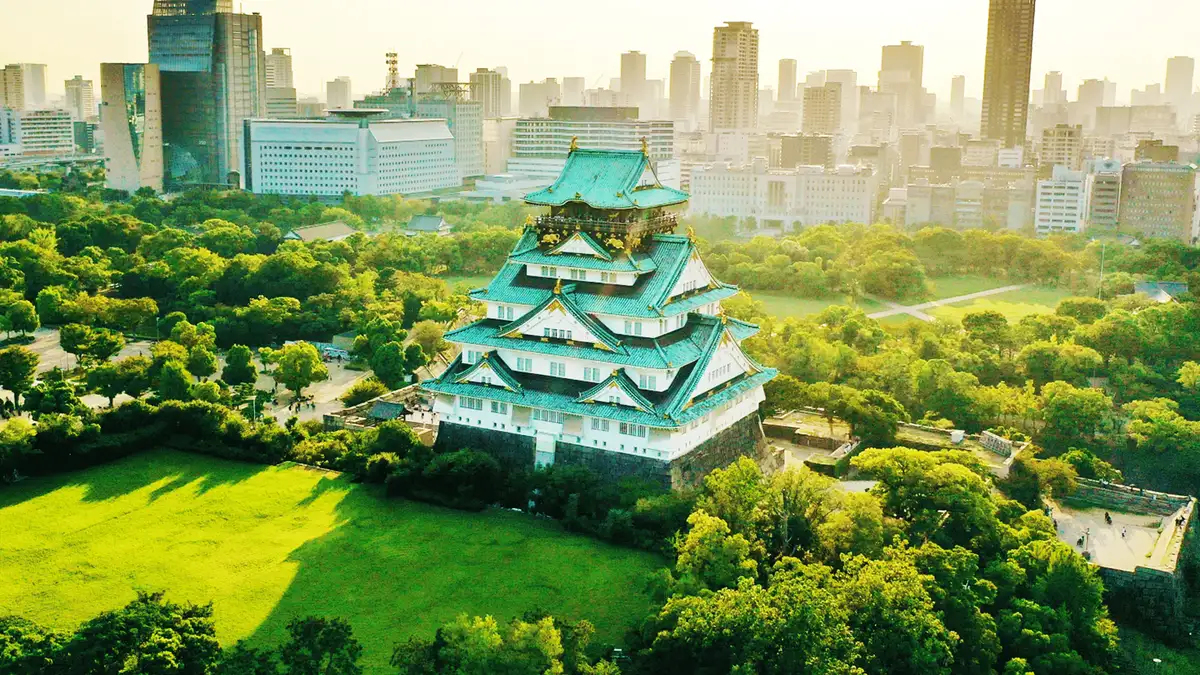 from $17.79
Osaka: Castle Tower Admission / Guided Walking Tour
An hour to 90 minutes through the keep's floors with the ¥1,200 admission included, so the guiding costs about ten dollars on top. Best rated of the castle group, and the museum's Japanese-heavy display captions are the reason a guide earns its fee.
Check Availability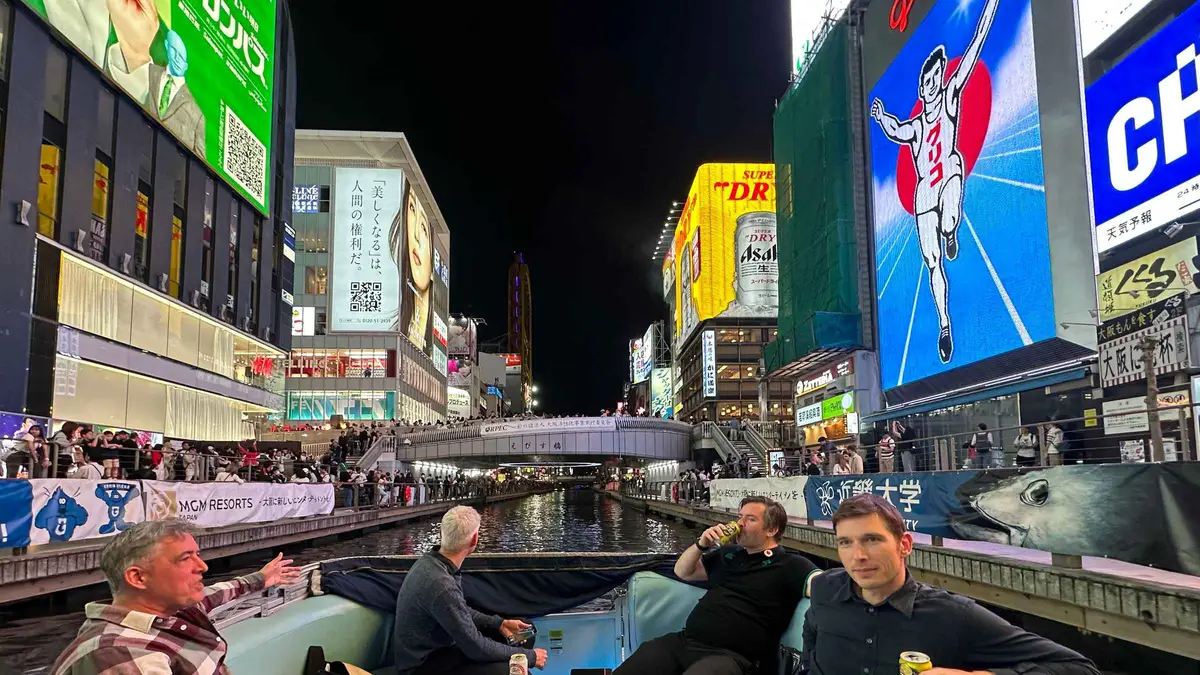 from $12.49
Osaka: Dotonbori River Cruise with Glico Sign & Neon Views
Twenty minutes on the water past the Glico sign, boarding at Minatomachi Pier rather than the Tombori River Walk, and you may bring your own drinks. The rival Tombori River Cruise is free with the Osaka Amazing Pass; this boat is not.
Check AvailabilityPrices, ratings and details are the platform's own. Dollar figures are the listed prices. The platform bills in your account's currency.
Osaka vs Tokyo: the Questions That Decide It
Is Osaka cheaper than Tokyo?
At the door and at the table, yes. In the room, not necessarily — and on the one bed figure both governments publish, the lodging tax, Osaka is the more expensive of the two on an ordinary mid-price room: ¥200 a person a night against Tokyo's ¥100 in the ¥10,000 to ¥15,000 band. The bands are compared above and a whole Osaka day is priced on the costs page. Anyone quoting a flat "Osaka is X per cent cheaper" is quoting an average, not a source.
How many days does each city need?
Tokyo takes three days as a minimum and rewards five. Osaka takes two for the city itself — the two-day plan is built for exactly that — and every day after the second is better spent on a day trip than on more of the city. That asymmetry is the practical argument for giving Tokyo more nights and using Osaka as the Kansai base.
Which city is better with children?
Osaka, on one specific ground: a theme park, an aquarium built around a whale shark, a free instant-noodle museum and a zoo are all inside the city, with short distances between them. Tokyo has more for families in absolute terms but spends more of the day moving. The family page lays out the Osaka side with prices and closed days.
Can I see Kyoto from either city?
From Osaka easily — 29 minutes and ¥580 on a JR train, several an hour, which is why the Kyoto day-trip page exists here. From Tokyo it is a Shinkansen journey and a very long day rather than a day trip, so most itineraries move to Kansai instead.
If I can only do one, which should it be?
Tokyo, for most first trips, and this Osaka site says so without flinching — the concession is set out above. Osaka takes the single-city question when the trip is about food, about Kansai's other cities, about the theme park, or about walking rather than navigating.
The Two Cities on Film, Before You Book
Three head-to-head videos on the choice this page makes — each id checked against YouTube's own record. They load only when you press play.
Osaka VS Tokyo Which One is Better? The Complete Guide to Japan
The comparison made in full, city against city, on the terms this page uses.
Video: Hoang PhamTOKYO vs OSAKA: Which Japanese Metropolis Should YOU Visit?
A second opinion on the same question, reached from a different order of priorities.
Video: Yellow ProductionsWhy Osaka is a Better Base Than Tokyo
The base argument specifically: why some travellers sleep in Osaka and visit Tokyo.
Video: Just Another Japan ChannelVideos load from YouTube only when you press play.