 Osaka City Guide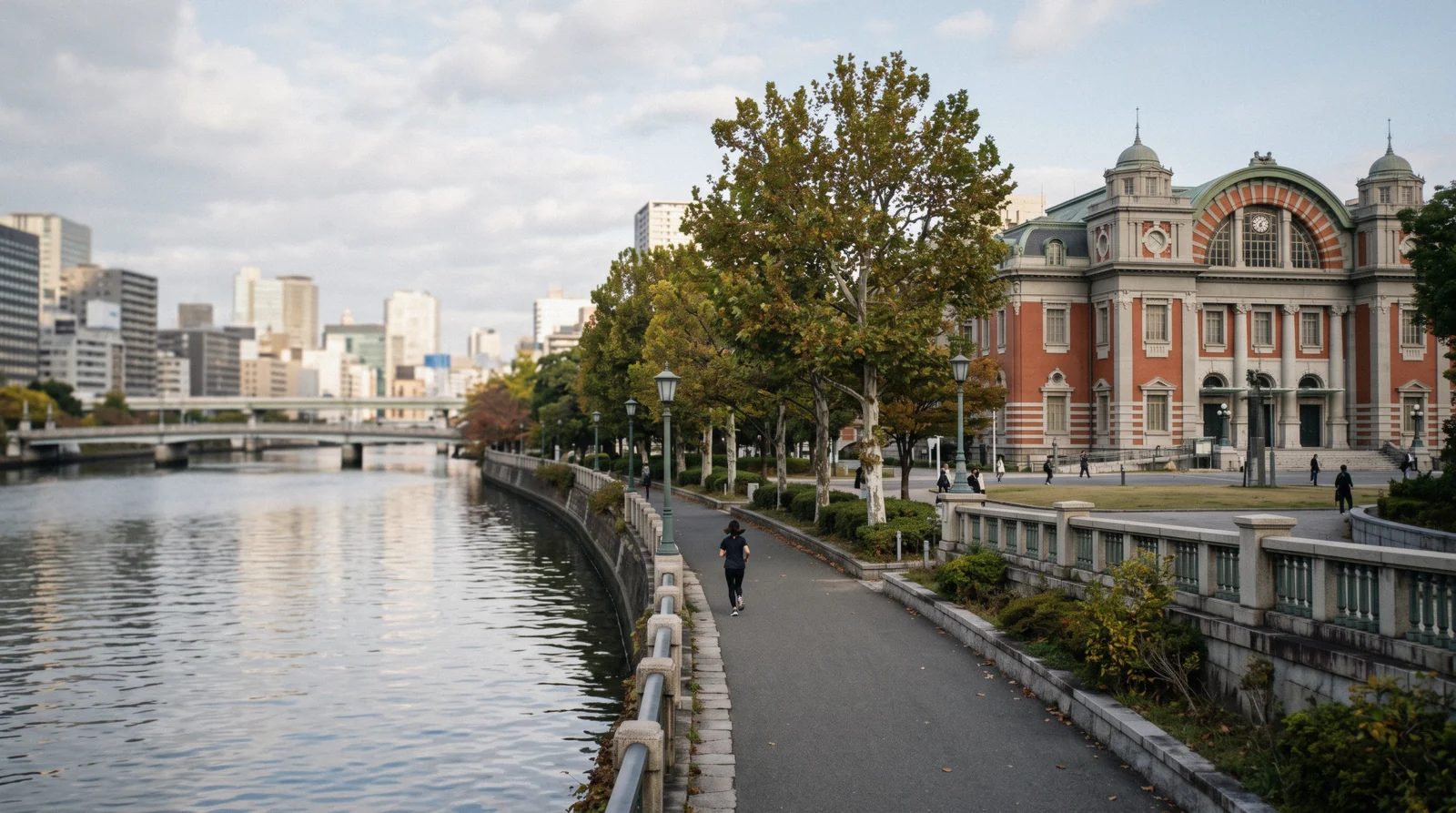
Nakanoshima
Nakanoshima is the sandbank in the middle of Osaka — about three kilometres long, roughly fifty hectares, wedged between the Dojima and Tosabori rivers and joined to both banks by more bridges than anyone bothers to count. It held the feudal domains' rice warehouses in the Edo period and their cultural replacements in the Meiji: a library, a concert hall, and later three public museums, a rose garden and a park along the eastern point. It is the quietest, greenest and most walkable part of central Osaka, it is a fifteen-minute walk from the northern terminals, and — the one thing to get right — most of it closes on Mondays. For the rest of the city, see top places to visit in Osaka.
Quick answer What is on the island, what it costs and the Monday problem — in four lines
Nakanoshima is a river island in Kita ward holding three public museums, a 1918 concert hall, a rose garden and a park, all within about a kilometre. The island itself is free and open at every hour; the museums charge between ¥400 and ¥600 for their permanent displays. Dollar figures below are converted at ¥1,000 ≈ $6.27, the European Central Bank reference rate.
Key takeaways
- Never plan this island for a Monday. The National Museum of Art, the Science Museum and the art museum all close on Mondays, which leaves you a park and a locked concert hall
- The cheapest good hour here is the National Museum of Art's collection at $2.70 (¥430), free for under-18s, and open to 20:00 on Fridays with a $1.57 (¥250) evening rate
- The rose garden holds about 3,700 plants of roughly 310 varieties across 13,000 square metres and costs nothing, which makes it the best free half-hour in central Osaka in May
- No operator sells a tour of this island; the private and group city walks will route through it if you ask, and the guided top-sights walk passes its eastern end
The island's four public buildings, priced
Four institutions within nine hundred metres of each other, and no two of them agree on price, closing day or opening hour. Every figure below was read on each venue's own site in Q3 2026; the National Museum of Art and the Science Museum publish full concession tables, and the art museum publishes none at all.
| Building | Adult price | Hours | Closed | The catch |
|---|---|---|---|---|
| National Museum of Art, Osaka — collection | $2.70 (¥430) | 10:00–17:00, last admission 16:30; Fridays to 20:00 | Mondays, 28 December – 4 January, exhibition changes | Free under 18; the Friday 17:00–20:00 rate drops to ¥250 |
| Osaka Science Museum — planetarium | $3.76 per show (¥600) | 09:30–17:00; the last show starts at 16:00 | Mondays, 28 December – 4 January, maintenance days | Seats for the whole day go on sale at 09:30 and stop when a show sells out |
| Osaka Science Museum — exhibition halls | $2.51 (¥400) | 09:30–17:00, entry and re-entry until 16:30 | As above | Free for junior-high age and under — collect the free ticket at the counter |
| Nakanoshima Museum of Art, Osaka | Varies by exhibition — no house rate published | 10:00–17:00 Tuesday to Sunday, last admission 16:30 | Mondays, plus unscheduled maintenance and changeovers | Groups of 20 or more must apply in advance; schools need four weeks |
| Osaka City Central Public Hall | No admission or tour price published on its own site | 09:30–21:30 | Fourth Tuesday of each month, and the New Year break | It is a working concert hall — what you can see depends on what is booked |
Read the closed-days column again before you build a day around this island. Three of the four shut on Mondays and the fourth shuts on a Tuesday — the fourth Tuesday of the month — so there is no single day of the week when the whole island is open and no day when all of it is shut.
Tours that reach the island
Nobody sells a Nakanoshima tour, and this catalogue has none: the island's institutions sell their own tickets at the door and no GetYourGuide product in Osaka is built around them. The three cards below are the city walks that can genuinely include it — the first is private or small-group with options running to seven hours, which is long enough to cross the river; the others pass its eastern end on the way between the castle and the northern terminals. Prices are the platform's US-dollar listings.
 from $35.71
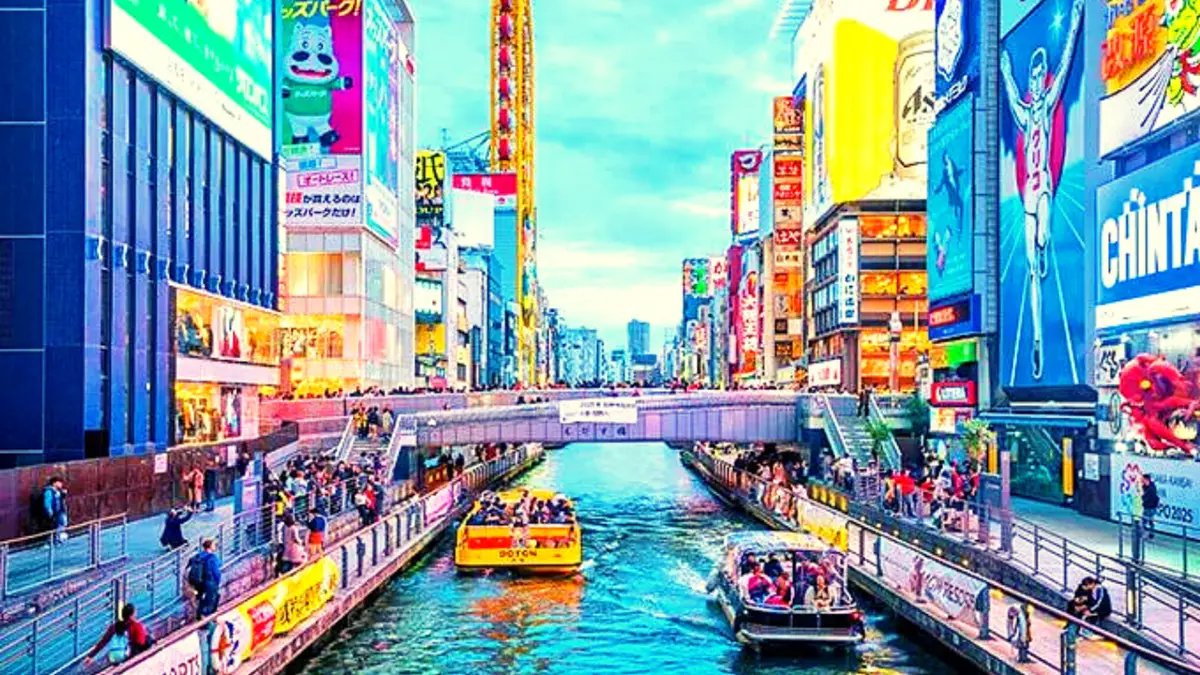
Osaka: Private or Group Hotspots & Hidden Gems Walking Tour
A three-hour walk that stretches to seven if you want it to, private or shared, with a takoyaki and a retro vending-machine drink included. The longer options use trains, which you pay for — usually under ¥1,000 a head.
Check Availability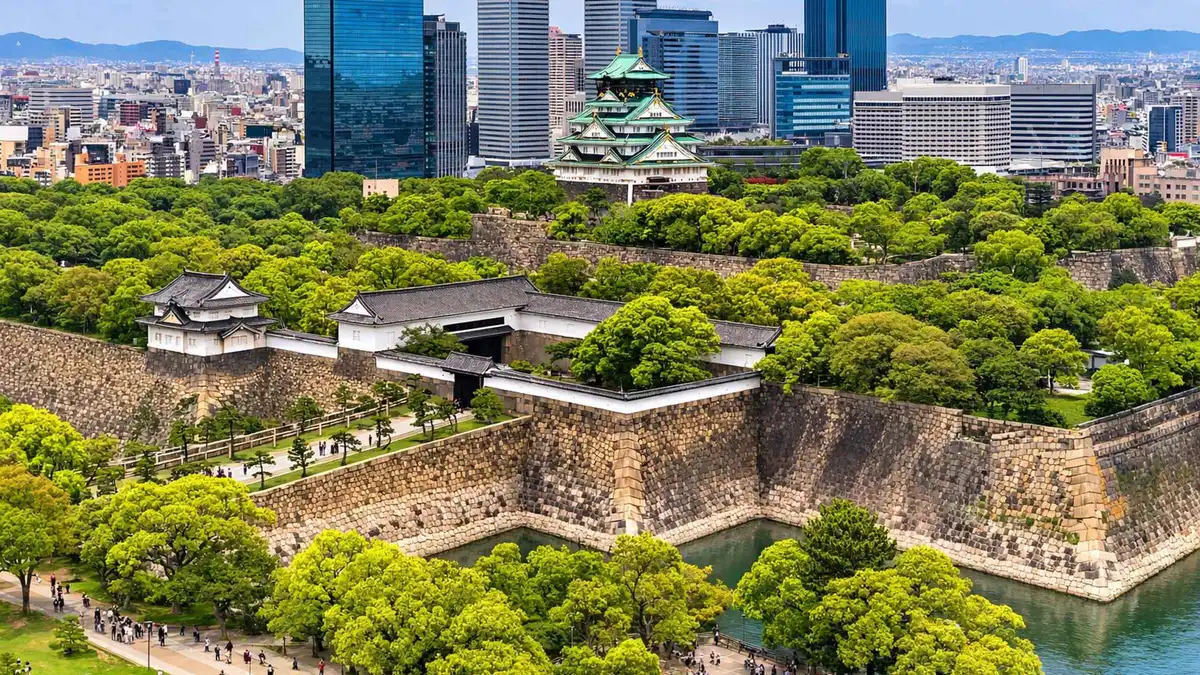 from $54.56
Osaka: Guided Walking Tour with a Native Expert – Top Sights
Four hours linking Osaka Castle, Tsutenkaku and Namba by metro, with the ¥1,200 keep admission included and the ¥430 of train fares not. A Japan Rail Pass buys you nothing here — the route runs on Osaka Metro.
Check Availability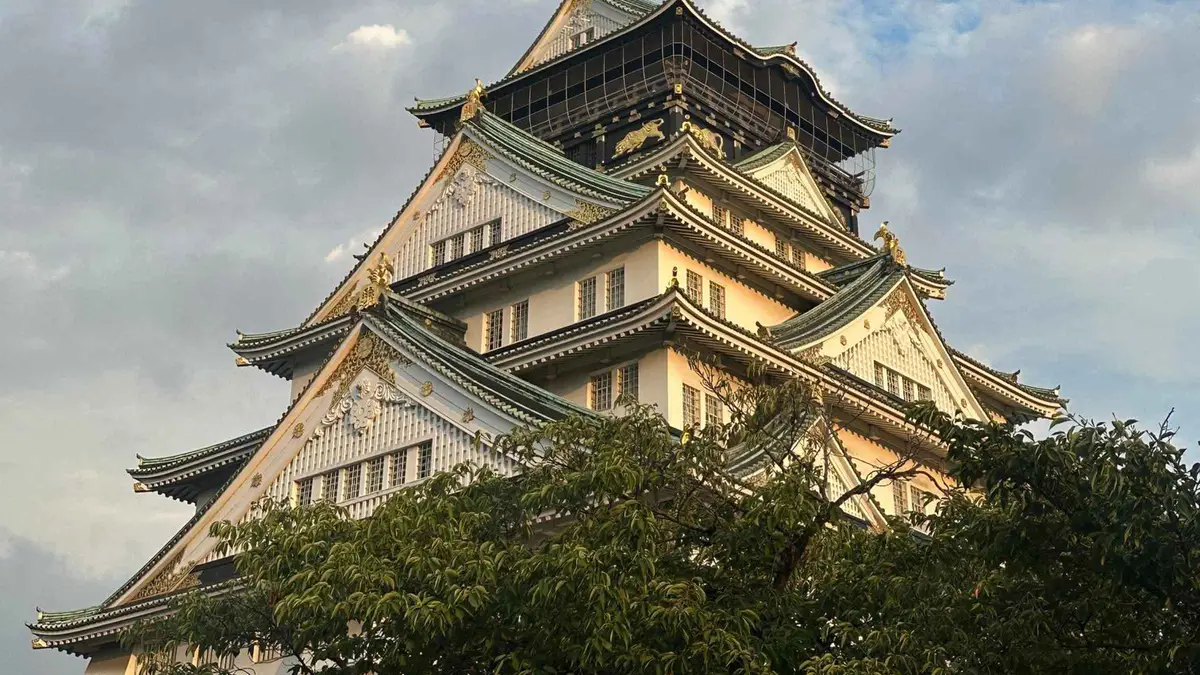 from $49.74
Osaka: Essential City Loop Tour with Local Guide
Five hours in a group of eight covering the castle, the Showa-era backstreets and the neon strip in one loop, with food bought stop by stop instead of a sit-down lunch. Only four people have rated it so far.
Check AvailabilityPrices, ratings and details are the platform's own. Dollar figures are the listed prices. The platform bills in your account's currency.
A sandbank with a civic complex on it
The island's shape explains its contents: it is long, thin, flat and surrounded by water, which made it useless for defence and perfect for warehouses.
The tourism bureau's own page gives the measurements: about three kilometres east to west and about fifty hectares, held between the Dojima river to the north and the Tosabori to the south. In the Edo period the feudal domains kept their storehouses here, because rice arrived by boat and this was where the boats could unload on both sides at once. In the Meiji era, the bureau says, "cultural facilities such as libraries and the Central Public Hall were completed" — and it stops there. It publishes no year for the Public Hall, nothing about the individual museums and nothing about the rose garden, which is unusual for a district page and worth stating rather than papering over.
What that leaves is a strip of civic Osaka that reads almost like a European riverfront: red brick and stone at the eastern end, glass and steel at the western, water on both sides the whole way, and a walking route between them that never crosses a major road. It takes about thirty-five minutes to walk the island end to end without stopping, which is our own measurement rather than anyone's published figure.
The island is also where the city puts things it wants to look official: the city hall, the prefectural library, the Bank of Japan's Osaka branch, the international convention centre at the western tip. None of those is a visitor attraction, and together they are why the island empties at 18:00 on a weekday and stays empty.
Getting on and off it
Two stations put you on the island itself: Yodoyabashi, on the Midosuji line and the Keihan line, at the eastern end, and Higobashi, on the Yotsubashi line, towards the middle. Keihan's own Nakanoshima line runs underneath the length of it, with Naniwabashi the useful stop for the concert hall and the park. From Umeda it is one Midosuji stop or a twenty-minute walk south; from Namba, four stops north.
Metro fares are banded by distance — ¥190 up to three kilometres, ¥240 to seven — and every hop to this island from the centre falls in the first band or the second.
The National Museum of Art: the best-value hour in Osaka
A wholly underground museum with a steel sculpture for a roof, and the cheapest serious collection in the city.
The National Museum of Art, Osaka — NMAO — charges $2.70 (¥430) for its collection exhibition, which is less than a subway ride across town. University students pay ¥130, high-school students and anyone under eighteen go free, a disability-certificate holder and one companion go free, and single-parent households go free. Groups of twenty or more pay ¥220. It opens 10:00 to 17:00 with last admission at 16:30, and on Fridays it stays open to 20:00 with last admission at 19:30 and a reduced ¥250 rate from 17:00.
It closes on Mondays — and when a Monday is a public holiday it opens and closes the following Tuesday instead. It also closes from 28 December 2026 to 4 January 2027 and during exhibition changeovers, and it publishes specific 2026 exceptions worth checking against your dates: open on 20 July, 21 September, 12 October and 2 November; closed on 21 July, 24 September and 13 October.
One detail that saves money and worry: the museum states plainly that its tickets are not date-and-time reserved and cost the same at its own counter as online. There is nothing to book. Walk in.
The special exhibitions are priced separately and steeply by comparison — the show running from 19 July to 3 November 2026 is ¥1,800, or ¥1,600 for groups, ¥1,200 for university students, and free for under-eighteens — and that ticket includes the collection exhibition, so if you want both, buy the exhibition ticket rather than two.
| Ticket | Price | Who |
|---|---|---|
| Collection exhibition, adult | $2.70 (¥430) | Everyone 18 and over |
| Collection exhibition, university student | ¥130 | With student ID |
| Collection exhibition, Friday evening | ¥250 (¥70 university) | From 17:00 to 20:00 on Fridays |
| Collection exhibition, free entry | Free | Under 18, high school and under, disability holder plus one companion, single-parent households |
| Special exhibition, 19 July – 3 November 2026 | $11.29 (¥1,800) | Includes the collection exhibition |
The Science Museum, and the only venue in Osaka that publishes how long it takes
Two separate tickets, two separate systems, and the city's one published duration.
The Osaka Science Museum splits its offer in two and prices each half on its own. The planetarium is ¥600 per show — ¥450 for high-school and university students with ID, ¥300 for junior-high age and under — and the exhibition halls are ¥400, with ¥300 for students and free entry for junior-high age and under, who still have to collect a free ticket at the counter. Osaka-city residents aged 65 and over and disability-certificate holders with one carer go free, and the planetarium is free once per person per day on that basis.
The museum publishes something almost nobody else in Osaka does: a duration. Each planetarium show runs about 45 minutes, with the seats cleared between shows. Everywhere else on this site the time-needed line has to be our estimate, because the venue does not state one; here it is the venue's own.
The booking mechanics are the part that catches people. Tickets for all of the day's shows go on sale at 09:30 and stop when a show sells out — so a late arrival on a wet Sunday can find every remaining show gone. Web tickets are sold from seven days ahead up to an hour before the show. The halls take entry and re-entry until 16:30, the last planetarium show starts at 16:00, and at weekends and on public holidays there is an extra 17:00 "curator special". Closed Mondays — open if the Monday is a public or substitute holiday, then closed the next weekday — plus 28 December to 4 January and maintenance days.
The practical version: if the planetarium is the reason you are coming, arrive by 09:30 on a weekend and buy first, look at the halls afterwards.
The art museum that publishes no price
A black cube on the island's western side, opened in 2022, whose admission is genuinely unpublished — and that is the fact, not an omission on our part.
The Nakanoshima Museum of Art, Osaka opened on 2 February 2022 and collects art and design from the late nineteenth century to the present. Its own visitor page states admission only as "varies by exhibition". There is no house price, no collection-exhibition rate and no concession table anywhere on the site — so any figure you see quoted for it belongs to one specific show and should be attributed to that show's page, not to the museum. We searched for a standing rate and there is none.
What the museum does publish: galleries open Tuesday to Sunday, 10:00 to 17:00, last admission 16:30, with some exhibitions running different hours; closed Mondays, plus unscheduled closures for maintenance and changeovers; group entry from twenty people must be applied for in advance, and school groups need four weeks' notice. Its own ticket site is ticket.nakka-art.com, and its address is Nakanoshima 4-3-1, next door but one to the National Museum of Art.
On access it is the most explicit institution on the island: wheelchair and pram users are directed to the 1F east entrance, the lift sits south of the ground-floor grand staircase, and assistance dogs are admitted.
The Central Public Hall, and two official pages that disagree
The red-brick building at the island's eastern end is the thing people photograph, and it is a working venue rather than a museum.
The Osaka City Central Public Hall opened in 1918 and was designated a national Important Cultural Property in December 2002, both according to the hall's own site. It stands at Nakanoshima 1-1-27, its number is 06-6208-2002, and its published hours are 09:30 to 21:30. It closes on the fourth Tuesday of each month — the following weekday when that Tuesday is a public holiday — and over the New Year.
Here the two official sources part company. The hall's own site gives that New Year closure as 27 December to 4 January; the city's own page for the same building gives it as 28 December to 4 January. Neither is obviously newer. If your visit falls on 27 December, phone.
What you can actually see is the awkward part. The hall's own site publishes no admission price, no opening hours for its basement exhibition room and no guided-tour fee — we looked and none of those pages exists. What is not in doubt is that it is a hall for hire: concerts, lectures and civic events, and the interior you can walk into depends on what is booked that day. The honest advice is to treat the exterior as the attraction, photograph it from the Naniwabashi side where the brick meets the water, and ring the number above if you want to be inside it.
One date does open the building to everybody, in a manner of speaking. OSAKA Hikari Renaissance, the December light programme, puts a projection-mapping show on this facade — in its most recent edition, 14 to 25 December 2025, running 17:00 to 21:00 as a roughly seven-minute show every twelve minutes, with the programme spread from the city hall surroundings to the park at the island's tip. The organising committee had not published 2026 dates for it or for the Midosuji illumination, and no admission is stated for either. We will re-check from October.
The park, the roses and the free half-hour
The eastern third of the island is public garden, and it is the reason to come here even on a Monday.
The park runs east from the Public Hall to the point where the two rivers rejoin, and its centrepiece is the rose garden: about 13,000 square metres holding roughly 310 varieties and about 3,700 plants, laid out with a patchwork bed tracing the history of the rose at its centre and three-dimensional plantings around it that read against the water. Those figures come from Osaka City's own press releases about the garden.
The city runs guided rose tours at the two peaks rather than publishing a season: its spring tour for 2026 was announced for 14 May. If you are here in May or in the second half of October, walk the eastern point before you do anything else on this page — it costs nothing, it takes half an hour, and it is the only formal garden in central Osaka.
The rest of the park is lawn, riverside path and bridges, open at every hour with no gate. It is where office workers eat lunch, where the illumination happens in December, and where the island stops being civic and starts being pleasant.
One rule applies here as everywhere in the city: street smoking has been fined ¥1,000 across the whole of Osaka since 27 January 2025, and the ordinance names parks explicitly. Heated tobacco counts.
How to spend a day, or two hours, on the island
Three routes work, depending on how much time and what day of the week you have.
Two hours, any day but Monday. Yodoyabashi station, the Public Hall from the outside, the rose garden and the eastern point, then west along the north bank to the National Museum of Art for its ¥430 collection. Out at Higobashi. That is the island's best hour per yen.
A half-day with children. Start at the Science Museum at 09:30 and buy the planetarium seat first — a 45-minute show is the right length for a child and the only published duration in the city. The halls afterwards, lunch on the island, then the park. Junior-high age and under go free in the halls, which makes this one of the cheapest family mornings in Osaka; the family page has the rest.
An evening. Friday only: the National Museum of Art runs to 20:00 with a ¥250 rate from 17:00, and the walk back along the river to the northern terminals takes twenty minutes with the office towers lit. In December, if the light programme's dates are out by then, the Public Hall facade is the thing to be standing in front of.
On a Monday, do the park and go somewhere else. The three museums are shut, and the Monday and Tuesday closures across the city are the thing to plan around before anything else.
Nakanoshima map: the island end to end
The four public buildings, the park and the three stations that put you on the island. Pin positions are ours, placed from the venues' published addresses.
End to end is about three kilometres and roughly thirty-five minutes at an unhurried pace, all of it on riverside paths.
Next stop from Nakanoshima
Walking times are our estimates from the published addresses; ride times follow the operators' line maps.
Umeda
The northern terminals, the underground arcades and the roof views — and the district most people sleep in when they come to the island.
One Midosuji stop, or 20 minutes on footOsaka Castle
The keep at ¥1,200 and the free park around it. The obvious second half of a day that starts among the museums.
About 12 minutes by train via Tanimachi 4-chomeTenjinbashisuji
About 2.6 kilometres of covered arcade and roughly 800 shops — where to eat cheaply after a morning of museums.
Two stops north, or 25 minutes across the riverSleeping on and around the island
No nightly rate is printed here: we did not price these areas on a fixed date, and a made-up band helps nobody. What follows is what each pocket is for, plus the prefecture's lodging tax, rebanded on 1 September 2025 and charged per person per night.
Nakanoshima and Yodoyabashi
- Where it sits
- On the island or a bridge from it, on the Midosuji and Keihan lines
- Suits
- Quiet nights, river views, an easy walk to the northern terminals
Business-district hotels that empty at the weekend. The trade-off is dinner: this is the one central district where the streets go quiet at 20:00, so eat in the north or the south and walk back.
See stays in NakanoshimaKitahama and Yodoyabashi south bank
- Where it sits
- Across the Tosabori river, 3 to 8 minutes from the island
- Suits
- River-facing rooms, coffee, and a short walk to the arcades
The old merchant quarter, now offices and small hotels, with the Keihan line under it and the eastern point of the park at the end of the bridge.
See stays in KitahamaHigobashi and Edobori
- Where it sits
- 5 to 10 minutes south-west of the museums
- Suits
- The art museums at opening, and cheaper rooms than the island itself
Plain, well-connected and within a ten-minute walk of both art museums and the Science Museum — the practical base if the collections are why you are in Osaka.
See stays in HigobashiThe prefecture's lodging tax is nothing under ¥5,000 per person per night, then ¥200, ¥400 or ¥500 as the rate crosses ¥5,000, ¥15,000 and ¥20,000 — the bands changed on 1 September 2025 and most sites still print the old ¥100 / ¥200 / ¥300. We may earn a commission if you book through these links, at no extra cost to you.
Nakanoshima questions
Is Nakanoshima worth visiting?
Yes, for half a day — three public collections, a 1918 concert hall and a rose garden within a kilometre, on the quietest riverside walk in central Osaka. It is not a nightlife district and it is not a shopping one: it empties after office hours. The four buildings are priced above, and the cheapest of them is ¥430.
How do you get to Nakanoshima?
Yodoyabashi, on the Midosuji and Keihan lines, for the eastern end; Higobashi, on the Yotsubashi line, for the museums; Naniwabashi, on the Keihan Nakanoshima line, for the park and the concert hall. From the northern terminals it is one stop or a twenty-minute walk, at a Metro fare of ¥190 to ¥240.
What is there to do on Nakanoshima?
The National Museum of Art's collection at ¥430, the Science Museum's planetarium at ¥600 a show and its halls at ¥400, the art museum's changing exhibitions, the Central Public Hall from the outside, and the rose garden — roughly 3,700 plants of about 310 varieties across 13,000 square metres, free and never closed.
Are the Nakanoshima museums open on Mondays?
No. The National Museum of Art, the Osaka Science Museum and the Nakanoshima Museum of Art all close on Mondays, opening instead on the following day's schedule when the Monday is a public holiday. The Central Public Hall closes on the fourth Tuesday of each month. The park and the rose garden have no gate and no closed day.
How much does the Nakanoshima Museum of Art cost?
The museum publishes no house price at all — its own visitor page says admission "varies by exhibition", with no collection rate and no concession table. Any figure quoted for it belongs to one particular show. Its galleries run 10:00 to 17:00, Tuesday to Sunday, with last admission at 16:30.
Can you go inside the Central Public Hall?
Sometimes, and the hall does not publish the terms. It is a working venue open 09:30 to 21:30, and its own site gives no admission price, no exhibition-room hours and no guided-tour fee — we checked. Ring 06-6208-2002 before making the trip for the interior; the exterior is free and best seen from the Naniwabashi side.
When do the Nakanoshima roses bloom?
The city does not publish a season, it runs guided rose tours at the peaks instead — its 2026 spring tour was set for 14 May. In practice that means May and the second half of October are the two windows worth planning around, and the garden costs nothing whenever you arrive.
Nakanoshima on film: the river path, the park and the walk north
Three walk-throughs we checked ourselves — each id verified against YouTube's own record and its thumbnail, so none of these is a dead player. They load only when you press play.
Walking around Nakanoshima area, Osaka — Long Take 4K
The island end to end in one unbroken take, which is the best way to judge the distances.
Video: NIPPON WANDERING TVOsaka Walk: Nakanoshima Park in the Heat | 4K Guided Walk
The eastern point, the park and the riverside paths in summer, with captions.
Video: Stays in JapanOsaka Nakanoshima to Umeda Walking Tour
The twenty-minute walk from the island up to the northern terminals, filmed at real pace.
Video: Video Street View JapanVideos load from YouTube only when you press play.
Prices, hours and terms are set by the venue or operator and confirmed at checkout.
We may earn a commission if you book through one of our links, at no extra cost to you. Full affiliate disclosure