 Osaka City Guide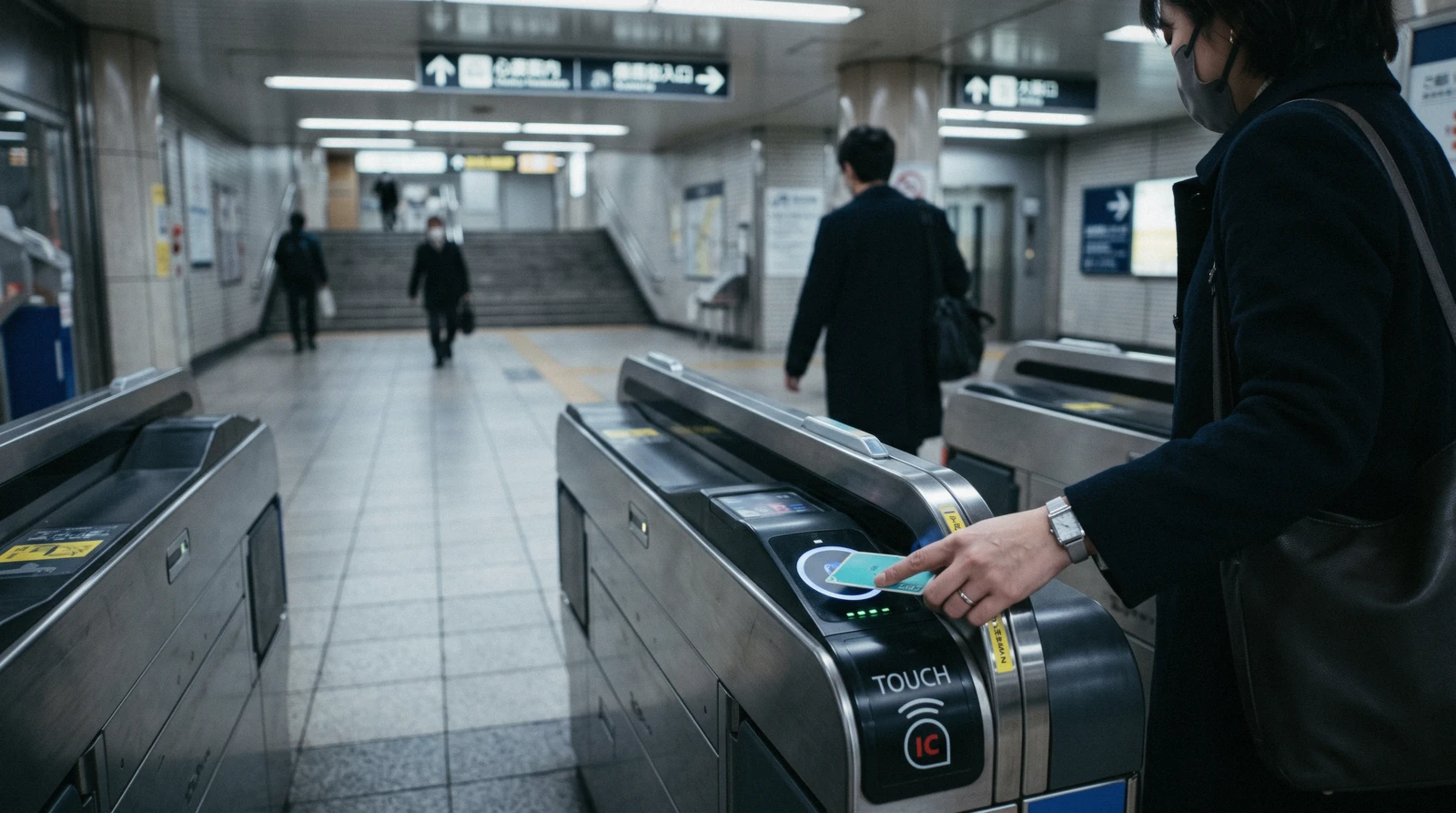
Osaka Amazing Pass
The Osaka Amazing Pass is a QR code on your phone that opens the metro gates, the city buses and 41 attractions for one day or two. Whether it saves you money is a straightforward sum — and one almost nobody publishes correctly, because the official sources do not agree on what the pass costs. The city's own tourism site prints one figure; the pass's own site prints two more, one of them for a version most visitors do not need. This page sets out which price is current, what the free entries are worth at the gate, where the break-even falls, and the rules that quietly void the thing. Yen figures come from the operators' own pages; dollars at ¥1,000 ≈ $6.27 (European Central Bank reference rate via frankfurter.dev). The rest of the city's tickets are compared on the tickets hub, and for general orientation see things to do in Osaka.
Quick answer The price, the break-even and the two attractions it will not open
The Osaka Amazing Pass costs $21.90 for one day and $31.40 for two (¥3,500 / ¥5,000) on the pass's own site, and covers unlimited Osaka Metro, city buses and the private railway sections inside the city plus free entry, once each, at 41 attractions. It pays for itself on a day with two $12.54 (¥2,000)-class entries in it, and not on a day with two cheap ones.
Key takeaways
- The prices disagree between official sites: the tourism bureau's own comparison table still prints $17.56 (¥2,800) and $22.60 (¥3,600) for this pass — which source we took and why
- The two attractions most visitors assume are covered are not: the aquarium and Universal Studios Japan are both off the free list, and the pass is not valid to or from Kansai Airport
- A pass day is 03:00 to 02:59, so a late night out ends the pass at 03:00 rather than 24 hours after you started it
- If your day has two entries and both are under $6.27 (¥1,000), the Enjoy Eco Card at $5.14 (¥820) plus the two tickets beats the pass — the arithmetic is worked three ways below
- One of the 41 is shut for the whole autumn: the Osaka Museum of Housing and Living is closed 1 September 2026 to 5 January 2027
Key facts
Opening hours
| A pass day | 03:00–02:59 |
|---|---|
| Transport valid | First train–Last train |
Closed None — the pass sells every day of its window. Individual attractions keep their own closed days, and the pass gives no refund for one that is shut
Admission
- Adult
- $21.90 one day, $31.40 two days (¥3,500 / ¥5,000); the Itami Airport version $23.80 and $33.90 (¥3,800 and ¥5,400)
- Reduced
- None — the price is the same for adults and children
- Free
- Nothing is free with it beyond the 41 listed attractions, once each
Planning it
- Time needed
- One day 03:00–02:59, or two consecutive days on the 2-day pass
- Book ahead
- Optional — walk-up usually fine
- Address
- Digital only: bought online, or at the counter of the Kansai Tourist Information Center. There is no paper ticket
Four products get confused with one another in every search result for this keyword: the pass itself, its airport variant, the entries-only e-Pass and the plain transport day card. Prices are each operator's own, read on in Q3 2026 and converted at ¥1,000 ≈ $6.27.
One question separates these five products: are you paying for the rides, the entries, or both? The Amazing Pass at $21.90 (¥3,500) is the only row that carries both — the e-Pass has no transport at all and the Enjoy Eco Card has no entries.
| Product | Price | Transport | Entries | Book |
|---|---|---|---|---|
| Osaka Amazing Pass, 1 dayA single packed day inside Osaka City, riding and entering freely | $21.90 (¥3,500) | Metro, city buses, New Tram and the private lines inside Osaka City | 41 attractions, once each | Official site |
| Osaka Amazing Pass, 2 consecutive daysTwo consecutive days — but the 41 attractions are once each across both, not per day | $31.40 (¥5,000) | As above, on both days | 41 attractions, once each across the two days — not once per day | Official site |
| Osaka Itami Airport (ITM) version, 1 or 2 daysAnyone flying into Itami who starts the day from the airport | $23.80 or $33.90 (¥3,800 or ¥5,400) | Everything above plus the Osaka Monorail from Osaka Airport, Kita-Osaka Kyuko and two Hankyu sections | The same list plus Expo'70 Commemorative Park and OSAKA WHEEL | Official site |
| Osaka e-Pass, 1 or 2 daysVisitors staying near their sights who will walk between them | $12.54 or $15.68 (¥2,000 or ¥2,500) | None at all — this is the whole difference | More than 25 facilities, once each, with a 30-minute wait between them | Official site |
| Enjoy Eco Card, 1 dayTransport only — a day of riding with show-and-save discounts, not free entry | $5.14 weekday, $3.89 weekend and holidays (¥820 / ¥620) | All Osaka Metro and Osaka City Bus lines for one calendar day | None — a show-and-save discount at about 20 attractions, not free entry | Official site |
Every link above goes to the seller's own page, with no tracking on it. The 2-day pass is two consecutive days and one visit per attraction across both of them — a detail that undoes the obvious plan of doing the castle twice or riding the same wheel at night. Children pay the adult price on every version of the Amazing Pass; the e-Pass has no child price at all, while the Enjoy Eco Card's child card is ¥310 every day of the week.
What you would otherwise be buying
The pass replaces gate tickets, so the honest comparison is with what those cost when bought singly. The first three cards are attractions the pass covers; the last is Abeno Harukas, which it does not — the clearest illustration of where the free list stops. Prices are GetYourGuide's own USD listings.
 from $7.49
Cheapest way in
from $7.49
Cheapest way in
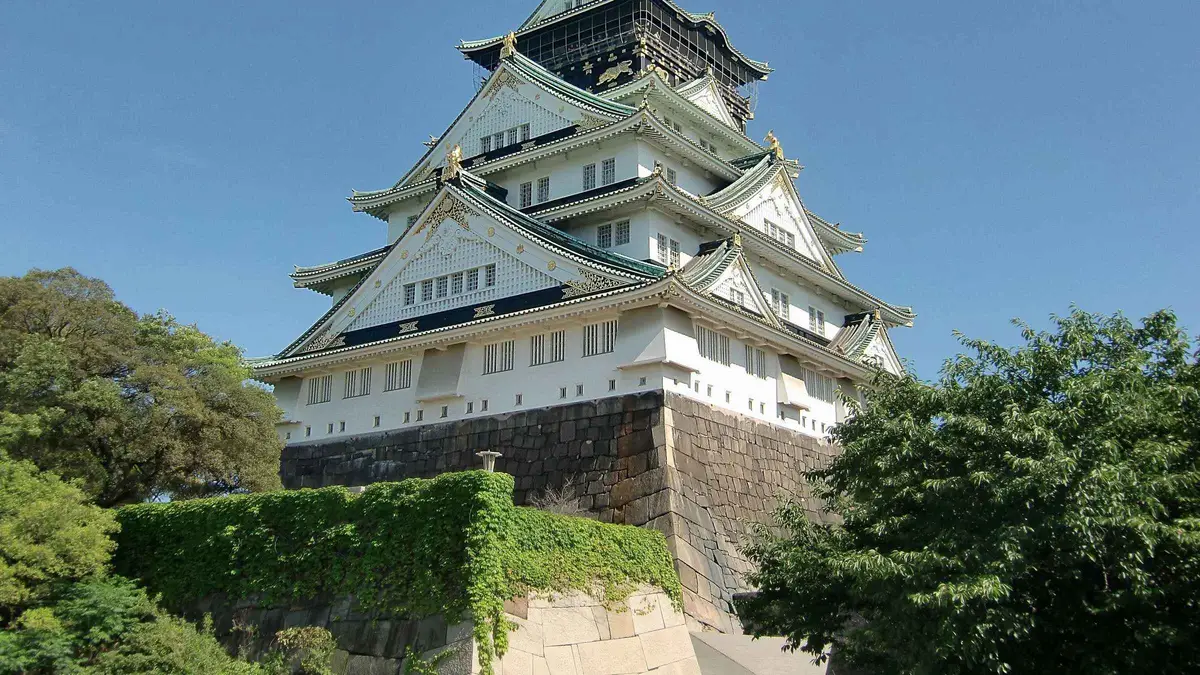
Osaka Castle: Museum and Tower Entry Ticket
The keep's own admission plus the Toyotomi Ishigaki Museum on one QR code, for roughly what the keep alone costs at the gate (¥1,200). The castle takes no reservations, so this saves the booth queue rather than securing a time slot.
Check Availability from $12.49
Osaka: Dotonbori River Cruise with Glico Sign & Neon Views
Twenty minutes on the water past the Glico sign, boarding at Minatomachi Pier rather than the Tombori River Walk, and you may bring your own drinks. The rival Tombori River Cruise is free with the Osaka Amazing Pass; this boat is not.
Check Availability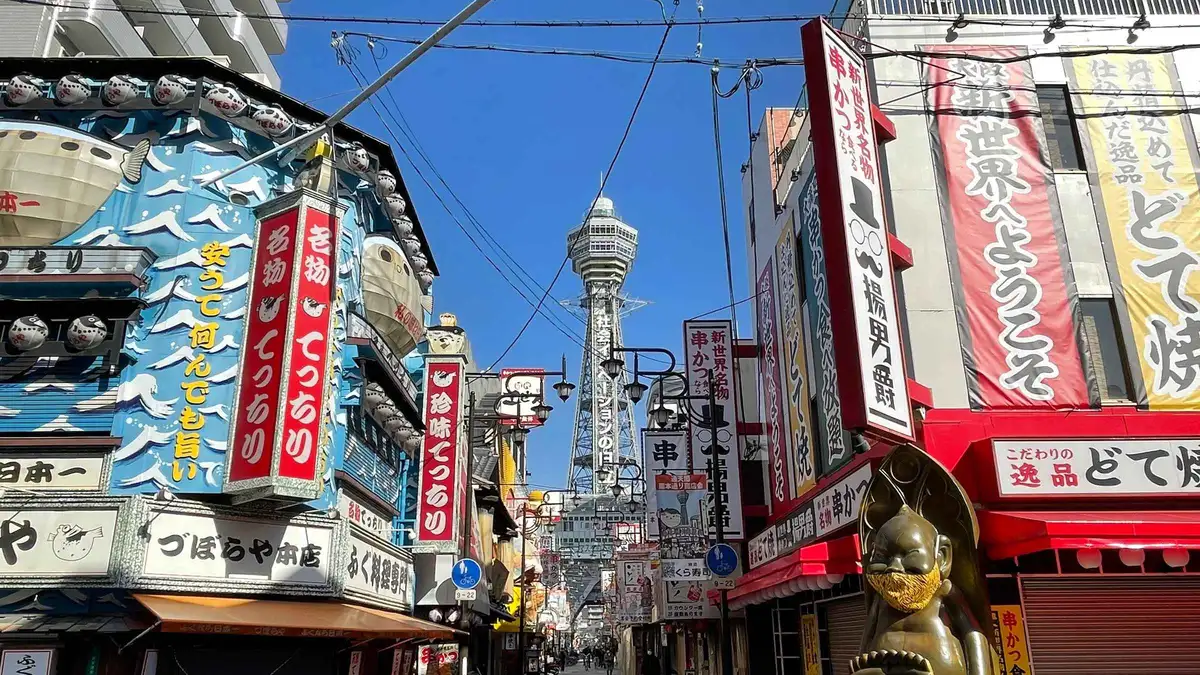 from $6.87
Official ticket
from $6.87
Official ticket
Osaka: Tsutenkaku Tower Experience Ticket
Options run from the 87.5-metre general deck up to the all-in ticket with the outdoor deck, the Tower Slider and Dive & Walk. The tower now requires a timed reservation for every ticket, pass holders included, so booking a slot is the point.
Check Availability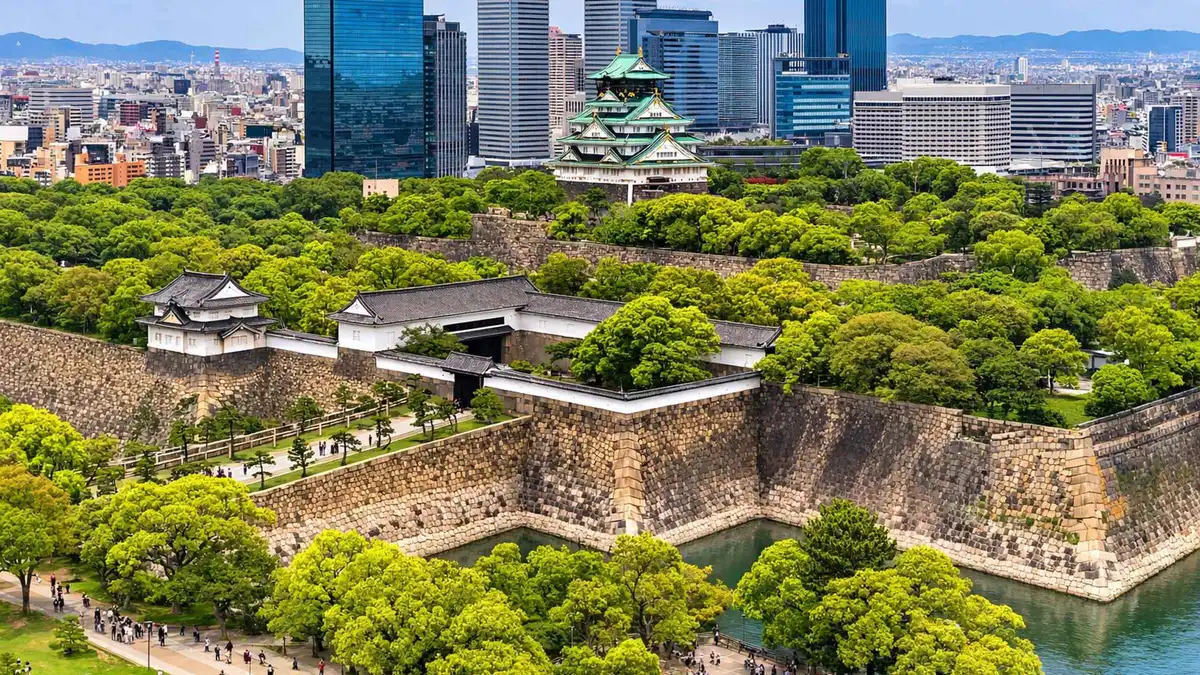 from $54.56
Osaka: Guided Walking Tour with a Native Expert – Top Sights
Four hours linking Osaka Castle, Tsutenkaku and Namba by metro, with the ¥1,200 keep admission included and the ¥430 of train fares not. A Japan Rail Pass buys you nothing here — the route runs on Osaka Metro.
Check Availability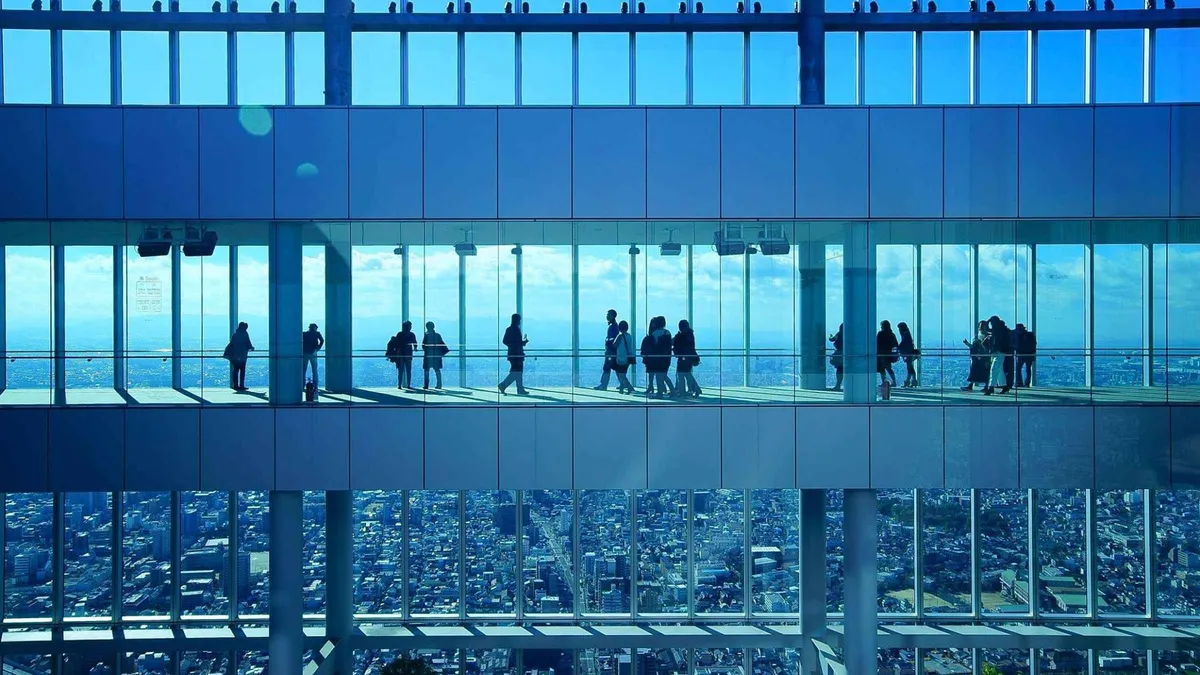 from $9.89
Cheapest way in
from $9.89
Cheapest way in
Osaka: Panoramic Observatory Abeno Harukas 300 E-Ticket
Admission to the 300-metre deck on Japan's tallest building, at roughly ¥1,580 against the venue's ¥1,980 web-advance rate and ¥2,200 walk-up. There is no timed slot, and the 16F counter can cap walk-up sales on busy days.
Check AvailabilityPrices, ratings and details are the platform's own. Dollar figures are the listed prices. The platform bills in your account's currency.
Two official prices, and the one we took
Before any arithmetic is possible, the price has to be settled, and the official sources contradict each other. This is the part of the page every review skips.
The Osaka Convention and Tourism Bureau runs the Osaka e-Pass site, and its comparison table — the one that explains how the e-Pass differs from the Amazing Pass — still prints the Amazing Pass at ¥2,800 and ¥3,600. The pass's own site, run by Surutto Kansai, prints something different on its INFORMATION page: ¥3,500 for one day and ¥5,000 for two, with the sales period 25 March 2026 to 31 March 2027 printed alongside. Directly underneath, the same table lists a second product, the Osaka Itami Airport (ITM) version, at ¥3,800 and ¥5,400.
We took the pass's own figures, for two reasons. It is the seller, and it is the page that carries this year's sales window; the bureau's table carries no window at all, which is what a stale figure looks like. The ¥3,800 and ¥5,400 pair is real but it is not the standard pass: that version adds the Osaka Monorail from Osaka Airport, the Kita-Osaka Kyuko section to Senri-Chuo and two Hankyu sections, and its facility list files Expo'70 Commemorative Park and OSAKA WHEEL under the heading 'Areas available for Osaka Itami Airport (ITM) ver. only'. If you are not flying into Itami and not going out to Expo City, the ¥300 difference buys you nothing.
| Source | 1 day | 2 days | Sales window printed? | Our reading |
|---|---|---|---|---|
| The pass's own site — standard pass | $21.90 (¥3,500) | $31.40 (¥5,000) | Yes: 25 March 2026 – 31 March 2027 | The figure to plan with |
| The pass's own site — Itami Airport version | $23.80 (¥3,800) | $33.90 (¥5,400) | Yes, same window | Only if you use the Itami monorail or Expo City |
| Osaka tourism bureau's e-Pass comparison table | ¥2,800 | ¥3,600 | No | Stale; do not budget on it |
What to do with the ¥2,800 you will still see quoted
Practical consequence: a seller offering the pass at ¥2,800 is listing either old stock or a different product, and a review quoting ¥2,800 was written before the March 2026 window opened. Budget ¥3,500 for the day version. The pass is sold online only — up to four per transaction, transferable to someone else after purchase — with the single exception of the counter at the Kansai Tourist Information Center.
Payment is by credit card; debit cards are refused, and so is a feature phone, because the whole thing is a QR code you show at a gate.
What the 41 free entries are worth at the gate
The pass publishes a reference fee against every attraction on its list, which makes this the rare case where the value side of the sum comes from the seller itself rather than from a guess.
Forty-one attractions carry free entry, once each. Two of them — Expo'70 Commemorative Park and OSAKA WHEEL — are on the Itami version only, so a standard pass opens 39. They are not evenly matched: a handful are worth ¥2,000 a head and the rest are worth a few hundred yen, which is the whole reason the pass wins some days and loses others.
These are the ones that carry the arithmetic, with the gate price the pass itself prints beside them.
| Attraction | Gate price | Where | Worth planning around? |
|---|---|---|---|
| Umeda Sky Building, Kuchu-Teien Observatory | $12.54 (¥2,000) | Umeda | Yes — but pass entry stops at 15:00, then 10% off |
| Tombori River Cruise | $12.54 (¥2,000) | Dotonbori | Yes — the single best-value entry on the list |
| Osaka Suijo Bus Aqua-Liner | $12.54 (¥2,000) | Osaka Castle / Nakanoshima | Yes, if the timetable fits |
| Osaka-jo Gozabune boat | $11.29 (¥1,800) | Osaka Castle moat | Yes, and it pairs with the keep |
| Cruise Ship Santa Maria, day cruise | $11.29 (¥1,800) | Tempozan | Yes, on a bay day |
| Tsutenkaku observation deck | $9.41 (¥1,500) | Shinsekai | Yes — but book a time at the counter |
| Osaka Castle Museum (the keep) | $7.52 (¥1,200) | Osaka Castle | Yes — the city's most-visited ticket |
| Sakishima Cosmo Tower Observatory | $7.52 (¥1,200) | Nanko | Only if you are already in the bay |
| HEP Five Ferris Wheel | $6.27 (¥1,000) | Umeda | Ten minutes, and it is on your way |
| Tempozan Giant Ferris Wheel | $6.27 (¥1,000) | Tempozan | Yes, beside the aquarium |
| Tennoji Zoo | $5.02 (¥800) | Tennoji | Half a day, so it competes with the rest of the list |
| Osaka Museum of History | $3.76 (¥600) | Osaka Castle | Yes on a wet day; closed Tuesdays |
| Osaka Castle Nishinomaru Garden | $1.88 (¥300) | Osaka Castle | Only in blossom season |
The rest of the list, and the one that is shut
The rest of the 39 fill in behind those: the Yagura turret at ¥900, the Kaiyodo Figure Museum at ¥1,000, Shitennoji at ¥800 for the full set of halls, the National Museum of Art at ¥430, the Kamigata Ukiyoe Museum at ¥700, Keitakuen Garden at ¥300, Peace Osaka at ¥250, the Tower Slider at Tsutenkaku at ¥1,100 and its Dive & Walk at ¥3,000, plus the Captain Line boat to Universal City at ¥1,700 return. A day that strings together five cheap ones still loses to a day that does two expensive ones.
One entry cannot be used at all this autumn. The Osaka Museum of Housing and Living, a ¥600 permanent exhibition and a good wet-weather stop, is temporarily closed from 1 September 2026 to 5 January 2027 — the pass prints the closure in its own facility table, which is more than most guides do, and gives no refund for it either.
The break-even, worked three ways
Three realistic days, each priced twice: once on the pass, once paying at each gate with the cheapest transport card that covers the same rides. All gate prices are the ones the pass itself publishes; the metro fares are the operator's own distance bands, ¥190 to ¥390 a ride.
Assume three metro rides in a day, which for most visitors is about ¥720 at single fares and ¥820 on the Enjoy Eco Card on a weekday, ¥620 at a weekend. The pass has to beat the sum of the entries plus that transport, and the answer is not the same for every itinerary.
| The day | Paid separately | On the pass | Verdict |
|---|---|---|---|
| Castle keep ¥1,200 + Tombori River Cruise ¥2,000 + Umeda Sky before 15:00 ¥2,000, three rides | ¥5,200 in entries + ¥820 card = $37.70 (¥6,020) | $21.90 (¥3,500) | Pass wins by ¥2,520 — the standard three-headliner day |
| Tsutenkaku ¥1,500 + Tennoji Zoo ¥800, three rides | ¥2,300 + ¥820 = $19.56 (¥3,120) | $21.90 (¥3,500) | Pass loses by ¥380 — two cheap entries do not carry it |
| Bay day: Tempozan wheel ¥1,000 + Santa Maria day cruise ¥1,800 + Captain Line ¥1,700, two rides | ¥4,500 + ¥820 = $33.40 (¥5,320) | $21.90 (¥3,500) | Pass wins by ¥1,820, even though the aquarium is paid separately |
| Two days, six mixed entries averaging ¥1,200, six rides | ¥7,200 + ¥1,640 in cards = $55.40 (¥8,840) | $31.40 (¥5,000) | Pass wins by ¥3,840 — the 2-day version is where it is strongest |
The rule, and the fatigue that breaks it
The rule that falls out of the arithmetic: two entries priced at ¥2,000-ish, or three of anything, and the pass pays. One headline entry and a couple of small ones and it does not. That is why the honest answer to "is it worth it" is a question back — what are you actually going to see?
The trap inside it is fatigue. A day that takes in the castle keep, a river cruise and an observation deck, moving by metro between them, is a full day; a family that manages two of the three has bought ¥3,500 of pass and used ¥3,200 of it. With small children, or anyone who wants a long lunch, price the day at the gate instead — what the city costs day by day sets out the rest of the budget the same way.
The rules that quietly void it
Everything below is from the pass's own caution page. Each of these has cost somebody a day.
The pass is a QR code, and the rules are the rules of a QR code. The most expensive one is the clock.
- A day is 03:00 to 02:59, not 24 hours from activation. Press 'Start Using' at 23:00 and you have three hours and fifty-nine minutes of pass, not a day
- Start it between 00:00 and 02:59 and it dies at 03:00 the same morning — the operator says this outright
- Screenshots and printouts of the QR are refused. The live screen, on a charged phone with a network and a working camera, or nothing
- At stations without QR gates you show the screen to staff; if nobody is there, you present it to the camera
- Ride beyond the covered zone and you settle the difference at the exit, like any Japanese fare
- Reserved-seat limited expresses on Kintetsu, Nankai, Keihan and Hankyu need a separate fee even with the pass
- Special exhibitions inside a covered museum cost extra; only the regular admission is free
- No refund once you have started using it — not for weather, not for a closed attraction, not for a suspended line. Unused and still valid, yes; started, never
- Passes bought outside the official store, including resale and auctions, carry no support at all
The two attractions with rules of their own
Umeda Sky Building admits pass holders free only until 15:00; from 15:00 the pass becomes a 10% discount on the ¥2,000 ticket, which quietly removes the sunset visit that is the reason most people go up there. And Tsutenkaku now requires a timed-entry reservation for every ticket, pass holders included, booked at the counter on the day — so an evening slot can be gone by the time you arrive holding a pass that says the deck is free.
What the pass does not cover
The exclusions are where the disappointment lives, and two of them are the two things visitors most often assume are in.
The aquarium is not on the list. Neither is Universal Studios Japan. Both are among the top three paid attractions in the city and both are absent from the 41, which means a pass holder pays the aquarium's own ¥2,800-to-¥3,500 band and the park's own ¥8,400-and-up Studio Pass exactly like everybody else — how the aquarium's dated bands work is a separate calculation entirely.
The airport is not covered. The pass states it is not valid to or from Kansai Airport, so the Nankai run in from KIX is bought separately whatever you are holding; the airport transfer options are their own decision. The Itami version does cover the monorail from Osaka's other airport, which is the one thing it is for.
JR is not covered, and that includes the Osaka Loop Line — the pass lists Osaka Metro, the city buses, the New Tram and the Hankyu, Hanshin, Keihan, Kintetsu and Nankai sections inside the city, and JR appears nowhere in that list. It is the single most common misunderstanding in the search results for this pass: a ride from Osaka Station round to Tennoji on the Loop Line is a normal JR fare, paid with an IC card, pass or no pass. Plan the day on the metro map instead and the problem disappears — how the networks divide up explains which company owns which line. Since the pass leaves attractions like the aquarium and JR lines out of its scope, working out what to see on the metro-covered side of the city is half the job, and osaka guided tours can hand you an itinerary that keeps to the pass's strengths.
And one that is on the list but shut
The Osaka Museum of Housing and Living, entry number four on the pass's own list, is closed from 1 September 2026 to 5 January 2027. It is worth ¥600 and it is one of the better rainy-afternoon entries in the north of the city, so a wet-weather plan built around it needs rebuilding — the museums page has the ones that are open, with the Monday and Tuesday closures that catch people out.
Osaka e-Pass and the Enjoy Eco Card compared
Two cheaper products do half the job each, and for a certain kind of day one of them is the better buy. Prices are each operator's own.
The Osaka e-Pass is the Amazing Pass with the transport removed: ¥2,000 for a day and ¥2,500 for two, more than 25 facilities free once each, no trains, no buses and no child price. Its validity is defined oddly — from the opening time of the first facility you enter to that day's last admission, explicitly not 24 hours — and it makes you wait 30 minutes after leaving one facility before entering the next, which is a real constraint on a dense day. The Enjoy Eco Card is the opposite half: ¥820 on a weekday, ¥620 at weekends and on public holidays, all Osaka Metro and city bus lines for one calendar day, no entries.
| If your day is… | Buy | Cost | Because |
|---|---|---|---|
| Three or more attractions, moving by metro | Osaka Amazing Pass | $21.90 (¥3,500) | The entries alone clear the price before transport is counted |
| Two or three attractions, all walkable in one district | Osaka e-Pass | $12.54 (¥2,000) | You are not paying for rides you do not take |
| One paid attraction and a lot of moving about | Enjoy Eco Card | $5.14 or $3.89 (¥820 or ¥620) | Four rides beat the card; the entry is cheaper at the gate |
| A weekend with two cheap entries | Enjoy Eco Card plus gate tickets | ¥620 + entries | The weekend card is ¥200 cheaper and the pass needs pricier entries to win |
| Day trips out of the city | None of the three | — | All three stop at the city boundary; the day-trip fares are separate |
One quirk of the Enjoy Eco Card: its weekend price follows the calendar, not the timetable, so Obon and the New Year run holiday timetables but still sell the ¥820 weekday card. It also does not cover the through-running private railways — Hankyu, Kita-Osaka Kyuko, Kintetsu — even where their trains run onto metro track, so a ride past the boundary is settled at the exit.
Osaka Amazing Pass questions
Is the Osaka Amazing Pass worth it?
It depends entirely on which attractions your day contains. Two entries at ¥2,000 each — say the Tombori River Cruise and the Umeda Sky observatory before 15:00 — clear the ¥3,500 price before a single train fare is counted. Two entries under ¥1,000 do not: Tsutenkaku and Tennoji Zoo together with a day's transport come to about ¥3,120, and the pass loses. The break-even worked three ways.
How much does the pass cost in 2026?
$21.90 for one day and $31.40 for two (¥3,500 / ¥5,000) on the pass's own site, with a sales window of 25 March 2026 to 31 March 2027. The Itami Airport version is ¥3,800 and ¥5,400. You will still find ¥2,800 and ¥3,600 printed on the city tourism bureau's own comparison table, which carries no sales window — why we took the seller's figure.
Where do I buy it?
Online, from the official store, up to four per transaction and transferable to someone else afterwards. Payment is by credit card — debit cards are refused. The only counter that sells it is the Kansai Tourist Information Center. It is digital only: no paper version exists, and screenshots of the QR code are not accepted at the gates.
Is the Osaka Loop Line included?
No. The Loop Line is JR, and JR is not on the pass at all. What is included is Osaka Metro, the Osaka City Bus network, the New Tram, and the Hankyu, Hanshin, Keihan, Kintetsu and Nankai sections that run inside Osaka City. Ride the Loop Line and you pay the normal JR fare with an IC card — which company owns which line.
Does the pass work at the airport?
Not at Kansai Airport: the pass states plainly that it is not valid to or from KIX, so the Nankai or JR run in from the airport is bought separately. The separate Itami Airport version, at ¥3,800 and ¥5,400, does cover the Osaka Monorail from Osaka Airport to Banpaku-kinen-koen, which is the only reason to pay the extra ¥300 — the arrival options compared.
How long does the pass actually last?
One day means 03:00 to 02:59 the following morning, not 24 hours from activation, and transport is valid from the first train to the last. Start it between midnight and 02:59 and it expires at 03:00 that same morning. The 2-day version is two consecutive days, and each attraction can still be entered only once across the pair, not once per day.
What happens if an attraction on the list is closed?
Nothing, and that is the point worth knowing: there is no refund once the pass has been started, for a closure, for bad weather or for a suspended line. Right now one entry is closed all season — the Osaka Museum of Housing and Living, until 5 January 2027 — and several others keep weekly closed days. Check the two or three entries your day depends on before you activate anything.
Which day to spend it on
Given that the pass rewards density, the practical question is which of your days can carry three attractions without becoming a forced march.
The strongest single day on this pass runs east to west and finishes high: the castle keep at opening, the Gozabune boat on the moat or the Museum of History across the road, the Aqua-Liner or the Tombori River Cruise in the middle of the day, and the Umeda Sky observatory before its 15:00 pass cut-off. Four covered entries worth about ¥6,000 at the gate, all on covered lines.
The day that looks good and is not is the bay: the aquarium anchors Tempozan and the pass will not open it, so you pay twice — though the ferris wheel, the Santa Maria cruises and the boat to Universal City are all covered, which makes the pass worth holding if the bay is a whole day rather than a morning. The day not to buy it for at all is a Monday or a Tuesday, when the zoo, the Science Museum and the National Museum of Art close on one and the Museum of History and the Cup Noodles Museum on the other. The itineraries put the covered entries in the order that works.
The pass on film: what a covered day actually looks like
Three videos from our verified list for this page — each id checked against YouTube's own oEmbed record and its thumbnail. Treat the prices spoken in them as of their filming date, not as present: the pass changed price in the March 2026 sales window.
Osaka Amazing Pass: Worth It in 2026? (Full Breakdown)
The most recent of the worth-it breakdowns, working through the attraction list.
Video: Traveler's MemoireJapan – Ultimate Guide to Osaka Amazing Pass w/ Free Attractions
A walk through the covered attractions, useful for seeing what the cheaper entries are like.
Video: Simplify TravelMaximize Your Osaka Amazing Pass: Ultimate 2-Day Itinerary for Top Attractions
A two-day route filmed end to end — the density the arithmetic on this page assumes.
Video: Krissa CharmaineVideos load from YouTube only when you press play.
Prices, hours and terms are set by the venue or operator and confirmed at checkout.
We may earn a commission if you book through one of our links, at no extra cost to you. Full affiliate disclosure