 Osaka City Guide
Planning a Trip to Osaka
Osaka trip planning is easier than it looks and gets made harder by the order most people do it in. There are five decisions, they bind in sequence, and only two of them involve buying anything: when to come, how many days to give it, which half of the city to sleep in, whether a pass earns its price, and which of the three sights that sell a time you need to book before you fly. Everything else — what to eat, which arcade, which museum — can be decided on the morning of the day. This page is the index of every planning page on this site, arranged in that order, with the figures that decide each one. All figures come with dollar glosses at ¥1,000 ≈ $6.27, the European Central Bank reference rate of that day. For the city itself, see our guide to things to do in Osaka.
Quick answer The five decisions, in the order they bind — in four lines
Osaka needs two full days at a minimum and rewards three; a fourth is best spent out of the city rather than in it. Base yourself in the north around Osaka Station if you are day-tripping and in the south around Namba if you are not. The city's sightseeing pass is $21.90 (¥3,500) for one day and $31.40 (¥5,000) for two, covers about forty entries and all city transport, and covers neither the aquarium nor the theme park. Only three sights sell a timed ticket. Everything else here is walk-up, and most of the good parts are free.
Key takeaways
- Decide the length first — two days or three changes the base, the pass and whether a day trip fits at all
- Decide the base second: the north-south split is the real choice, and the where-to-stay page turns it into a booking with the tax bands attached
- Book only what sells a time. The tickets hub lists the three, and everything else you buy at the window
- Arriving at Kansai Airport with luggage and no patience? A shared airport transfer is the one pre-booking that reliably saves a bad first hour
The five decisions, and when each one stops being reversible
The order below is the one that avoids rework: each row depends on the row above it. Deadlines are ours, drawn from what the operators themselves publish about sales windows and slot availability, read on in Q3 2026.
| Decision | Decide by | What it turns on | Where it is answered |
|---|---|---|---|
| When to come | Before flights | Cherry weeks, the rainy season, the typhoon months and three festival weekends | Best time to visit and the events calendar |
| How many days | Before hotels | Two is the honest minimum; the third day is either the bay or a day trip, not both | How many days and the routes |
| Which half of the city | Before hotels | Airport, day trips and how late you want to eat | Neighbourhoods and where to stay |
| Pass or no pass | Any time before the day | How many paid entries fall in one day, and whether the aquarium or the theme park is one of them | The sightseeing pass and the tickets hub |
| The timed bookings | Days ahead in season | Three sights sell a slot; evening slots go first | Tickets, the tower, the aquarium |
Nothing else on this site needs a decision before you land. Restaurants, arcades, temples, museums and every free street in the city are same-morning choices, and the two things people most often pre-book — the castle and the market — cannot be pre-booked at all.
Every planning page on this site, in the order you need them
Twenty-six pages, grouped by the decision they answer. The site menu carries only the dozen that most people need; this index carries all of them, including the ones that only matter when something goes wrong. Each page states the date its figures were read.
Before you book anything
-
Is Osaka worth visiting?
The first question
The honest case for and against, including what Osaka does not have that Kyoto does, and who should skip it.
-
How many days in Osaka
Length
Why two is the minimum, what the third day buys, and the point at which the fourth day belongs to a train out of the city.
-
Best time to visit Osaka
Season
Thirty-year monthly normals, the cherry-blossom dates from the meteorological agency's own record, the rainy season and the two typhoon months.
-
Osaka festivals and events
Dates
The 2026 dates published by the shrines and the city themselves — and the clock times that nobody publishes, whatever the listing sites print.
The routes
-
Osaka in 1 day
Itinerary
The castle in the morning and the southern quarters from mid-afternoon, with the walking minutes and the opening hours built in.
-
Osaka in 2 days
Itinerary
The honest minimum: three clusters, one observation deck and an evening on the canal, without crossing the city twice.
-
Osaka in 3 days
Itinerary
What the extra day is actually for, and why it should be either the bay or a trip out — not a slower version of the first two.
-
Day trips from Osaka
Out of town
Kyoto, Nara, Kobe, Himeji, Minoh and Koyasan with the operators' own fares and times, including the castle admission that rose two and a half times in March 2026.
Arriving, and moving around
-
Kansai Airport to Osaka
Arrival
Every route in from both airports priced and timed — the express that costs nothing extra, the one that costs ¥700 more, and the airport the city pass does not reach.
-
Getting around Osaka
Transport
Metro zone fares, the day card that is cheaper at weekends, the IC card rules, and the regional pass that was renamed and stopped covering buses in April 2026.
-
Osaka luggage storage
Practical
The smart-locker tariffs and the staffed counters, with the one counter that closes permanently on 28 September 2026.
-
Osaka map
Orientation
Every sight pinned and numbered, filtered by district, with each pin carrying its own price.
What it costs
-
Osaka costs
Budget
A day in this city priced from the bottom up — transport, entries, food and the lodging tax — with live exchange rates rather than a fixed conversion.
-
Osaka attraction tickets
Tickets
Every official price beside what the resellers charge, which sights sell a time slot, and where buying online genuinely saves money.
-
Osaka Amazing Pass
Passes
The arithmetic on both city passes, the 03:00 to 02:59 day rule, and the two attractions people assume are covered and are not.
-
Free things to do in Osaka
Budget
The layer of this city that charges nothing — canals, arcades, shrine grounds and a food museum — which is most of what people remember.
Where to base yourself, and what to eat
-
Osaka neighborhoods
Districts
The north-south split the whole trip hangs on, and the thirteen areas under it, grouped the way the city groups them.
-
Where to stay in Osaka
Hotels
The same areas judged as bases, with the prefecture lodging tax whose bands changed on 1 September 2025 and which most comparisons still print wrong.
-
Osaka food
Eating
What to eat and where the streets for it are — and why the two dishes this city is famous for cannot be attached to a named shop on this site.
Who you are travelling with, and what goes wrong
-
Osaka with kids
Family
The venues that price children separately, the ones that let under-fours in free, and the workshop that runs on same-day numbered tickets.
-
Osaka accessibility
Access
All 134 Metro stations have a step-free route and platform barriers; the venues' own accessibility rules differ far more than the transport does.
-
Rainy day in Osaka
Plan B
What survives a wet afternoon, factoring in the closed days — and which of the outdoor bookings to move rather than to cancel.
-
Osaka safety and scams
Safety
The emergency numbers the tourism bureau's own safety page never prints, the nurse-triage line, and the city rule that carries a fine.
The lists, once the planning is done
-
Things to do in Osaka
The list
Twenty-two sights priced, timed, mapped and grouped by area, nine of them free.
-
Museums in Osaka
The list
Eleven collections with the fee each window charges and the weekday it shuts — including the one closed until January.
-
Temples and shrines in Osaka
The list
One standing admission fee across seven sites, and the monthly days when even that comes off.
The site menu deliberately carries fewer pages than this index does: a dropdown past a dozen items is a list nobody reads. Every page above is also reachable from the footer and from the pages it belongs beside.
The two things worth booking before you land
Almost nothing in Osaka needs pre-booking, which is why this section is short. The exceptions are the airport run with luggage, and — if the connections are the part you dread — a guided first walk that gets the geography into your head on day one. Prices are the platform's listings in US dollars, confirmed in your own currency at checkout.
 from $15.98
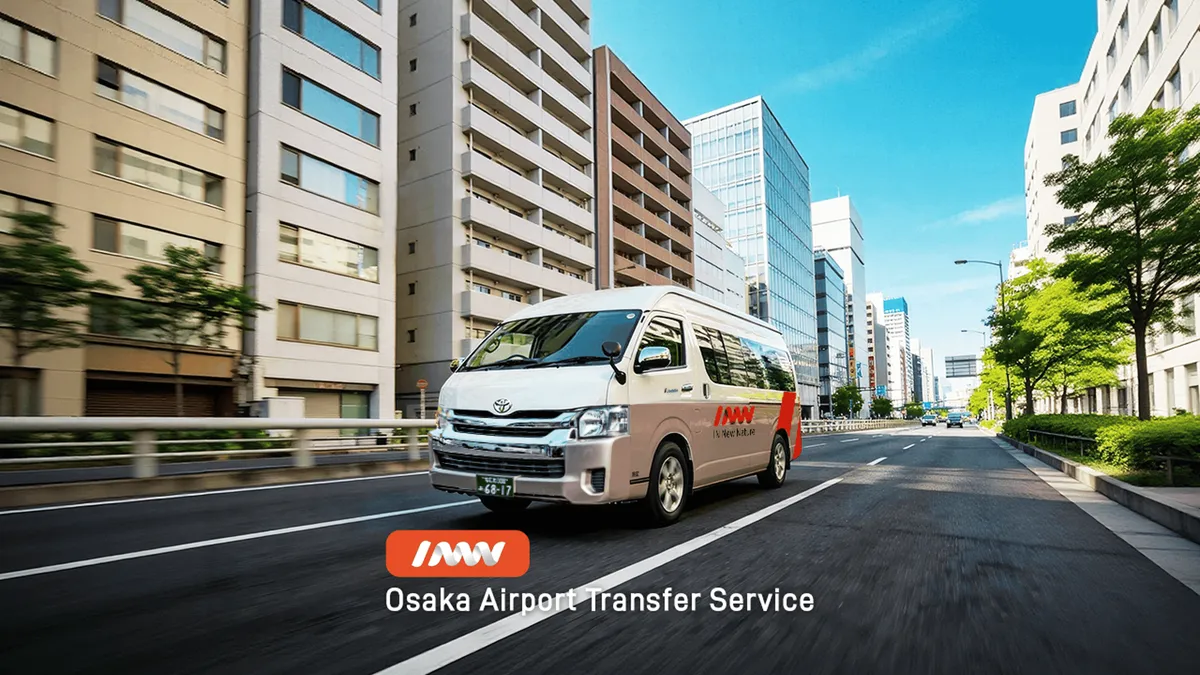
Osaka: Kansai Airport Shared Transfer Early Bird Reservation
A scheduled shared shuttle between Kansai Airport and 24 districts of the city, booked ahead and boarded with a QR code, tolls included. Cheaper than a taxi and closer to your door than the train, at the cost of a fixed departure time.
Check Availability from $64.79
Kansai Airport (KIX): Private One-Way Transfer to/from Osaka
A private one-way car to or from Kansai Airport, with 60 minutes of free waiting on arrivals and flight delays covered up to two hours. The case for it is luggage and a late landing rather than speed — the train takes about as long.
Check Availability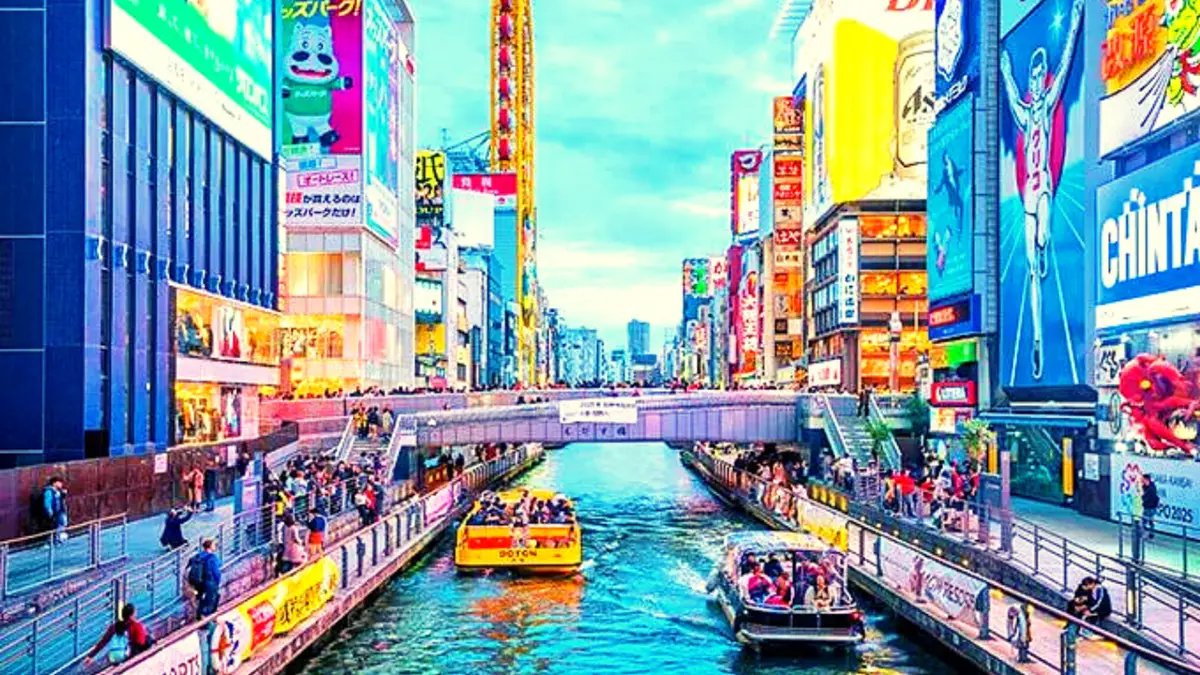 from $35.71
Osaka: Private or Group Hotspots & Hidden Gems Walking Tour
A three-hour walk that stretches to seven if you want it to, private or shared, with a takoyaki and a retro vending-machine drink included. The longer options use trains, which you pay for — usually under ¥1,000 a head.
Check AvailabilityPrices, ratings and details are the platform's own. Dollar figures are the listed prices. The platform bills in your account's currency.
Why the order matters more than the choices
Most bad Osaka plans are not wrong about anything in particular. They are made in the wrong sequence, and every later decision has to be redone.
The dependency runs one way. Dates set whether you are here for a festival weekend, the rainy season or the cherry window, and those change what a hotel costs before you have chosen a district. Length sets whether a day trip fits, and a trip that includes Kyoto or Himeji wants a northern base while one that does not is better off in the south. Base sets which pass, if any, has a chance of paying for itself, because the pass covers city transport and nothing to the main airport. And only after all of that does it make sense to look at which individual tickets need buying — because on any given plan, the answer is usually two or three of them.
The practical test for whether you have the order right: if you find yourself comparing ticket prices before you have settled how many days you are staying, you are planning backwards. The entries in this city are cheap enough that they almost never change the shape of a trip; the days and the base always do.
One thing that genuinely cannot be planned around is the closed days, because they disagree. Mondays shut the zoo, the science museum and the national art collection; Tuesdays shut the city history museum and the food museum in Ikeda; the digital-art garden closes on irregular Mondays that only its own calendar knows. The things-to-do list and the museums page both carry the grid.
The three bookings that need a date, and the one that refuses to take one
Osaka is unusually forgiving about advance booking. Four venues are the whole of the exception, and one of them is an exception in the opposite direction.
Tsutenkaku now requires a timed-entry reservation for every ticket, and that includes people holding a city pass, who have to book a time at the counter when they arrive. The tower recommends buying the online timed ticket in advance and warns that evening slots sell out. It publishes no closed day at all and announces unscheduled closures only on its official social account, which is worth knowing before building an evening around it.
teamLab Botanical Garden sells a date-and-time ticket at a price that moves by date, between $11.29 and $15.05 (¥1,800 and ¥2,400). Re-entry is not allowed, there is no limit on how long you stay, and an official ticket can be changed three times up to 21:00 on the day. It only exists after sunset — the opening hour moves between 18:00 and 19:00 through the autumn.
The aquarium prices and times itself by date, in bands of $17.56, $18.18, $20.10 and $21.90 (¥2,800, ¥2,900, ¥3,200 and ¥3,500), published about two months ahead. Its opening hour moves between 08:00 and 10:30 and its closing between 20:00 and 21:00, with last admission an hour before close. Its own site recommends the dated e-ticket, because a counter ticket may not admit you at the hour you wanted.
The castle does the opposite. It sells a web ticket but states plainly that it takes no admission reservations of any kind, so there is no slot to buy and the queue is the only variable. That is also why the two combined tickets guides still recommend no longer exist: the set with the city history museum ended on 27 December 2024 and the one with the river bus on 24 March 2025. The castle ticket page says what replaced them, which is nothing.
- Book ahead: the tower, timed for every ticket including pass holders
- Book ahead: the digital garden, dated and timed, changeable three times
- Book ahead in season: the aquarium, dated pricing and a moving opening hour
- Cannot be booked: the castle keep — turn up at 09:00 instead
- Separate case: the theme park, where the entry pass and the express pass are two different purchases
What a day here actually costs
Osaka is cheap to move around and cheap to enter. The two lines that catch people out are the lodging tax and the theme park.
The table below is the skeleton of a day: transport, one or two entries, and the tax that lands at check-out. Fares and fees are the operators' own, with dollar glosses at ¥1,000 ≈ $6.27.
| Line | Figure | Notes |
|---|---|---|
| Metro single fare | $1.19 to $2.45 (¥190 to ¥390) | By zone, not by distance — five bands from 3 km to over 19 km |
| Enjoy Eco Card, one day | $5.14 weekday, $3.89 weekend (¥820 / ¥620) | All Metro and city bus lines; pays for itself at four rides on a weekday |
| Osaka Amazing Pass, one day | $21.90 (¥3,500) | Transport plus one free entry at 41 attractions; not valid to Kansai Airport |
| A typical paid entry | $3.14 to $13.79 (¥500 to ¥2,200) | A temple precinct at the bottom, an observation deck at the top |
| Lodging tax, per person per night | Nothing, ¥200, ¥400 or ¥500 | By room rate band; nothing at all under $31.40 (¥5,000) |
Two things sit outside that skeleton and both are day-sized. A theme-park day starts at $52.70 (¥8,400) for the entry pass alone, with express passes running ¥11,800 to ¥21,800 on top and sold separately — and neither the park nor the aquarium is on the city pass. If either is in your plan, price it before anything else, because it will be the largest single line in the trip.
The honest headline is that the rest of Osaka is inexpensive by Japanese standards. Nine of the twenty-two sights on the things-to-do list charge nothing, most museums are under $6.27 (¥1,000), and the streets that people remember — the canal, the arcades, the market, the shrine grounds — have no gate at all. The costs page builds a daily figure properly, and the free-things page is the low end of it.
Getting in from the airport, priced
Two airports, and the cheap route from the main one is also the one nobody mentions.
From Kansai Airport, the Nankai Airport Express reaches Namba in about 44 minutes at the base fare with no surcharge and no reservation — the fastest cheap option in Japanese airport transport, and the one most itineraries skip in favour of the branded express. The figures below come from the operators' own pages.
| Service | Fare | Time | Lands you at |
|---|---|---|---|
| Nankai Airport Express | Base fare only | About 44 minutes | Namba |
| Nankai Rapi:t | Base fare + $4.39 (¥700) | About 34 to 38 minutes | Namba |
| Rapi:t Kanku Toku-wari ticket | $9.78 (¥1,560) all in | As above | Namba, Shin-Imamiya, Tengachaya or Sakai |
| JR HARUKA, discounted | $11.29 (¥1,800) to Osaka or Shin-Osaka | Direct | Tennoji ¥1,300, Kyoto ¥2,200 |
| Limousine bus | ¥1,400 to Namba, ¥1,800 to Osaka Station | 50 and 60 minutes | OCAT or Hankyu Sanban-gai |
From Osaka Itami, the monorail is $1.25 (¥200) to Hotarugaike for the Hankyu Takarazuka line or $2.13 (¥340) to Senri-Chuo for the Midosuji line — and if you are arriving there, the airport version of the city pass at ¥3,800 or ¥5,400 is the one that includes that monorail. The standard pass does not, and neither version is valid to or from Kansai Airport.
One figure this site cannot give you: the limousine-bus fare from Itami. Both the bus operator's site and the airport's own site refuse our requests — the operator serves a certificate for the wrong host and the airport answers 403 to every path — so the monorail figures above are what we can source. The airport page has every route in full, including what happened to the airport's flat-rate taxi fares in 2024.
Six things most Osaka planning pages still get wrong
Each of these is verifiable from an official page, and each of them is still printed the old way almost everywhere — including, in two cases, on the city's own website.
The station wifi is gone. Osaka Free Wi-Fi was withdrawn from every Metro, Kintetsu, Keihan and Nankai station on 31 March 2023, after the carriers ended station wireless LAN. The tourism bureau's own visitor page still says the service is available at train stations throughout the prefecture; its own termination notice says otherwise and is newer. Mobile coverage does reach every subway station and the tunnels between them.
The regional pass changed name and lost the buses. From 1 April 2026 the Kansai Thru Pass is the digital Kansai Railway Pass Lite, $32.60 and $40.80 (¥5,200 and ¥6,500), and buses are no longer covered — which was the old pass's whole selling point for anyone planning Kyoto.
The lodging tax bands moved on 1 September 2025. Nothing under ¥5,000, then ¥200, ¥400 and ¥500 per person per night. The old ¥100 / ¥200 / ¥300 bands, and the ¥7,000 threshold, are what most third-party pages still print.
Himeji Castle went to ¥2,500 on 1 March 2026, from ¥1,000, with under-18s now free. Every day-trip budget written before that date is wrong by $9.41 (¥1,500) a head.
The city sightseeing pass costs more than the city's own comparison table says. The pass's own page prints ¥3,500 and ¥5,000 for the standard product in the sales window running 25 March 2026 to 31 March 2027; the tourism bureau's comparison table still shows ¥2,800 and ¥3,600. Take the pass's own page.
Street smoking is fined. Since 27 January 2025 Osaka City has fined it across every road, square and park it manages, heated tobacco included, at $6.27 (¥1,000). It replaced an older system of six designated districts that most published advice still describes.
Picking the month, from the meteorological record rather than a vibe
Three published datasets decide when to come, and none of them is a listicle's idea of the best season.
Cherry blossom. The meteorological agency's Osaka record gives a flowering normal of 27 March and a full-bloom normal of 4 April, averaged over 1991 to 2020 on Somei-yoshino. What matters for planning is the spread: across the last six years flowering has landed anywhere between 19 and 30 March, an eleven-day range. Booking a week around 1 April gives you a good chance and no guarantee, which is the honest version of a promise every travel page makes.
The rainy season. The Kinki tsuyu normal runs from about 6 June to 19 July. In 2026 the confirmed figures were a start around 2 June and an end around 9 July, with rainfall at 116 per cent of normal — and 2025 ended around 27 June, the earliest on record since 1951. It is a season of heavy showers rather than constant rain, and it is also the cheapest time to be here.
Typhoons. The national normals put August and September at 3.3 approaches to Japan each, with September carrying the highest landfall normal of the year at 1.0. These are nationwide figures — no per-prefecture normal is published — so the honest statement is about Japan, not about Osaka specifically. September is also the month of the two biggest festivals in the prefecture.
Against those three, the festival calendar: Tenjin Matsuri on 24 and 25 July, the Kishiwada Danjiri on 19 and 20 September and again on 10 and 11 October, and the Naniwa Yodogawa fireworks, which for this edition moved out of August to Saturday 17 October 2026. The best-time page has the monthly normals in full and the events calendar has the dates as the organisers published them.
Where to ask when the plan breaks
The city runs its own visitor service, and it is better than most. These are the city's details, not ours.
Three tourist information centres are run year-round by the Osaka Convention and Tourism Bureau, all staffed in English, Chinese and Korean: inside JR Osaka Station's central concourse, open 07:00 to 22:00; at JR Shin-Osaka on the third-floor concourse, 08:00 to 22:00; and at Nankai Namba by the north exit, 09:00 to 20:00. One number serves all three, the Osaka Call Center on 06-6131-4550, every day from 09:00 to 17:30. Those details belong to the city and are published by it.
For anything urgent the numbers are 110 for police, 119 for fire and ambulance, and #7119 or 06-6582-7119 for the round-the-clock nurse-triage line that answers do I need an ambulance. The long number matters: during a mobile-network outage the short dial fails and the city says so itself. The national visitor hotline, 050-3816-2787, runs 24 hours in English, Chinese and Korean. The safety page has the full set, sourced to the police and the fire bureau rather than to a tourism site — which is where the bureau's own safety page is silent.
Where to start
The four pages most people open first.
Things to do in Osaka
Twenty-two sights priced, timed and mapped, grouped into the clusters the itineraries are built from.
The listGetting around Osaka
Zone fares, the day card that is cheaper at weekends, IC cards, and the regional pass that stopped covering buses.
The practical pageOsaka costs
A day priced from the bottom up, at live exchange rates, including the tax that lands at check-out.
The budgetWhere to stay in Osaka
Which half of the city to sleep in, what each district's hotel stock is, and the lodging-tax bands that changed in 2025.
The base decisionPlanning an Osaka trip: the questions
How far ahead should I plan a trip to Osaka?
Hotels and flights as early as you like; almost nothing else. Only three sights sell a timed ticket, and even those are days rather than months ahead outside peak weeks. The exceptions worth an early diary note are the festival weekends and the cherry window — the events calendar and the season page carry both.
What order should I make the decisions in?
Dates, then length, then which half of the city, then whether a pass pays, then the two or three timed tickets. The table above sets out what each one depends on, and every later step changes if you redo an earlier one — which is the single most common way an Osaka plan gets rebuilt from scratch.
Do I need to book anything before I arrive in Osaka?
Three sights sell a time — the tower for every ticket including pass holders, the digital garden and the aquarium with its dated pricing. Everything else here is walk-up, and the castle states it takes no admission reservations at all.
Is a city pass worth buying for an Osaka trip?
Only on a fast day with several paid entries. The one-day pass is $21.90 (¥3,500) including all city transport, its day runs 03:00 to 02:59 rather than 24 hours, and it covers neither the aquarium nor the theme park — the two most expensive days most visitors have. The arithmetic is on the pass page.
What is the biggest planning mistake people make here?
Crossing the city twice in one day. Osaka is four clusters and two full-day commitments, and the clusters do not interleave — the two-day route exists mainly to stop that happening. A close second is assuming Monday is a safe museum day, when seven of the eleven museums are shut.
Can I plan an Osaka trip around free days and cheap hours?
More than in most Japanese cities. Nine of the twenty-two main sights charge nothing, one national collection drops to $1.57 (¥250) on a Friday evening, and the oldest temple opens its walled centre free on the 21st and 22nd of every month. The free-things page collects the whole layer.
On Film: How Other People Plan It
Three run-throughs of a planned Osaka trip — each id checked against YouTube's own record. They load only when you press play.
How to Spend 3 Days in OSAKA - Japan Travel Itinerary
A three-day shape close to the one the routes on this site use.
Video: Inaka AdventureOsaka 2026 Travel Guide: Best Places & Things to Do • Itinerary & Expenses • Budget Japan Tour Vlog
One traveller's actual spend, which is a useful check against the cost table here.
Video: Angelica & Aileen Wanders5-Day Japan Travel Itinerary | OSAKA, KYOTO, NARA & KOBE: day trips, places to eat, travel tips
The five-day Kansai version, with Kyoto, Nara and Kobe hung off an Osaka base.
Video: Remi ShimazuVideos load from YouTube only when you press play.
Prices, hours and terms are set by the venue or operator and confirmed at checkout.
We may earn a commission if you book through one of our links, at no extra cost to you. Full affiliate disclosure