 Osaka City Guide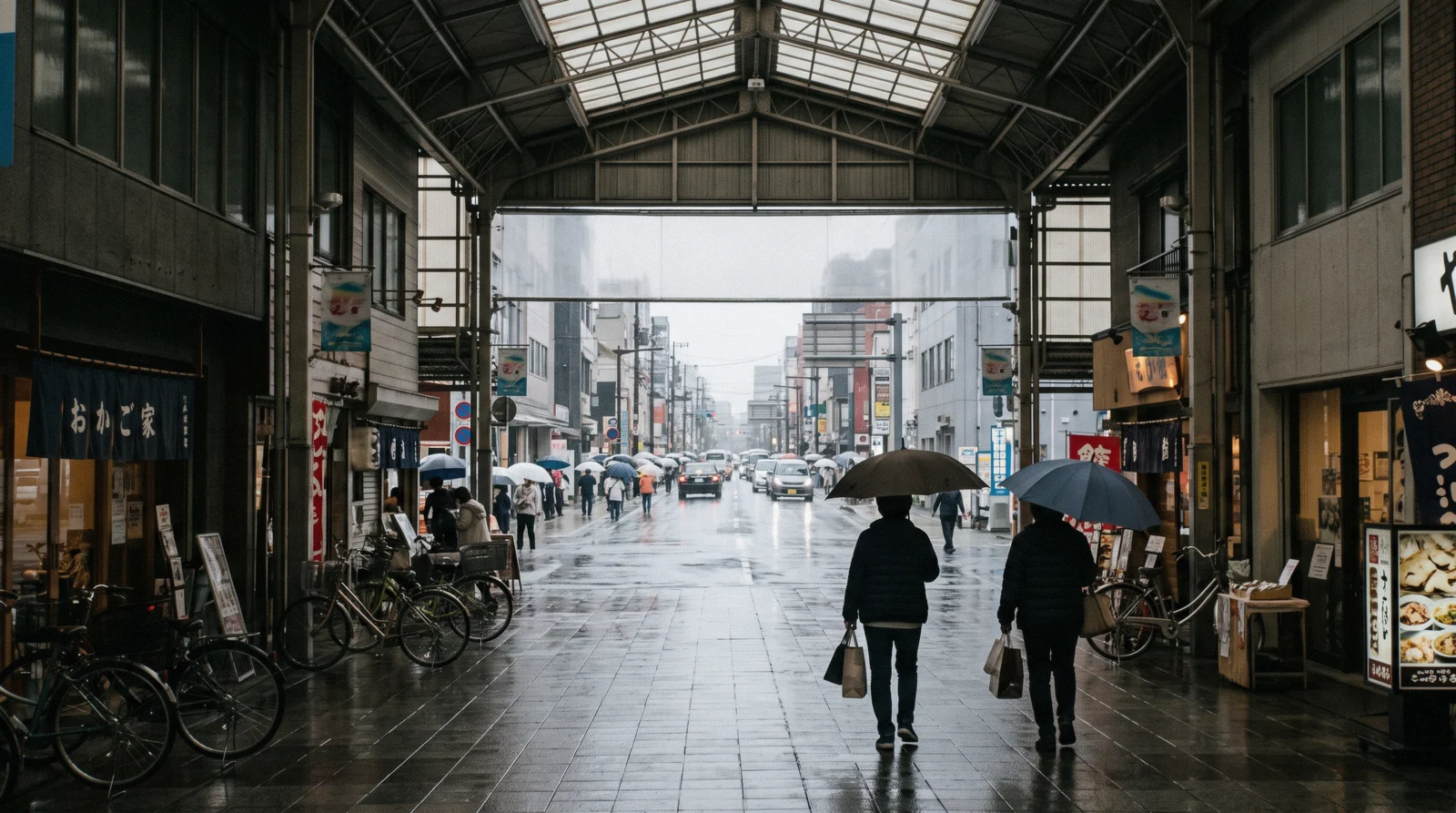
A Rainy Day in Osaka: The Indoor Plan
Rainy-day Osaka costs you far less than a wet day in most Japanese cities, and the reason is structural rather than cheerful: the two districts you were going to walk anyway are roofed, the subway reaches the aquarium and half the museums without you surfacing, and the single biggest attraction in the city runs in the wet. This page is built the same way as the rest of the site — from opening hours, admission prices and closed days read on the operators' own pages, plus a thirty-year rainfall record for the city centre rather than a guess about "the rainy season". Yen comes first with a dollar gloss at ¥1,000 ≈ $6.27 (European Central Bank reference rate via frankfurter.dev). The wider planning layer sits on the Osaka plan hub, the month-by-month numbers on the best time to visit, and for the city itself see top places to visit in Osaka.
Quick answer The four indoor days that work, and the two closed days that ruin them
On a rainy day in Osaka the four options that hold up are the aquarium at Tempozan, the Nakanoshima museum cluster, Spa World's bathhouse floors at Shinsekai, and a long walk under the arcades — Shinsaibashi-suji is about 580 metres of roof and Tenjinbashisuji about 2.6 kilometres of it. The trap is the calendar, not the weather: Mondays close the Science Museum and the National Museum of Art, Tuesdays close the Museum of History and the Cup Noodles Museum. Universal Studios Japan runs in the rain and publishes its hours only as a per-date calendar, which read 09:00–20:00.
Key takeaways
- Osaka's wettest months are July at 197 mm across 15.0 rainy days and June at 193 mm across 13.4 — our own computation from a 1995–2024 climate record, and the month-by-month table has the rest
- The aquarium is the single best wet-weather ticket in the city and its price moves with the date, so read the Kaiyukan ticket page before you buy; a castle museum and tower ticket is the indoor alternative on the other side of town
- Two decks are the wrong answer in rain: Umeda Sky is the only open-air observatory in Osaka, and Tsutenkaku sells its outdoor deck only as part of the set
- The cheapest dry hours in Osaka cost nothing at all — the covered length of Tenjinbashisuji and the underground malls at Umeda and Namba are on the free things to do list
Nine Indoor Options, With the Day They Are Shut
Every admission price, opening hour and closed day here was read on the venue's own Japanese page in Q3 2026. The "dry route" column is our own judgement about whether you can arrive without getting wet, not an operator claim.
| Where | Admission | Hours | Closed | Dry route in? |
|---|---|---|---|---|
| Osaka Aquarium Kaiyukan | $17.56–$21.90 by date (¥2,800–¥3,500) | Opens 08:00–10:30, closes 20:00–21:00 | 13–14 January 2027 only | Covered walkway most of the way from Osakako station |
| Osaka Museum of History | $3.76 (¥600) | 09:30–17:00, last admission 16:30 | Tuesdays, 28 Dec – 4 Jan | Direct from Tanimachi 4-chome station |
| Osaka Science Museum planetarium | ¥600 a show, halls ¥400 | 09:30–17:00, last show 16:00 | Mondays, 28 Dec – 4 Jan | Two minutes above ground from Higobashi |
| National Museum of Art, Osaka | $2.70 collection (¥430) | 10:00–17:00, Fridays to 20:00 | Mondays, exhibition changes | Same Nakanoshima block as the Science Museum |
| Spa World | ¥2,000 weekday, ¥2,700 weekend with pool | Onsen floors 10:00–08:45 next day | Not stated | Ebisucho or Dobutsuen-mae, both a short wet dash |
| Universal Studios Japan | Studio Pass from ¥8,400 | Per-date calendar; 09:00–20:00 when read | None published | No — the park is outdoors and you queue in it |
| Cup Noodles Museum Osaka Ikeda | Free; noodle cup ¥500 | 09:30–16:30, last admission 15:30 | Tuesdays, New Year | Ten minutes on foot from Ikeda station |
| Tenjinbashisuji arcade | Free | Varies by shop | Varies by shop | Yes — about 2.6 km of continuous roof |
| Shinsaibashi-suji arcade | Free | Varies by shop | Varies by shop | Yes — about 580 m of roof into Dotonbori |
The English pages of the aquarium and the tower are both thinner than the Japanese ones, which is why every figure above comes from the Japanese side. Kaiyukan's four price bands are published about two months ahead on the operator's own calendar; the range is the September–October 2026 set. Universal prints every entry price as "from", never as a flat figure. Dollar glosses at ¥1,000 ≈ $6.27.
How Wet an Osaka Day Actually Gets
Before the plan, the size of the problem — because most rainy-day articles are written as though Osaka were Vancouver.
Rain in Osaka is concentrated, not constant. Averaged over 1995 to 2024, July delivers 197 mm across 15.0 days with at least a millimetre in them and June 193 mm across 13.4 — which also means that in the wettest month of the Osaka year, roughly half the days record under a millimetre. The rain arrives in bursts and stops. That is what makes the plan below work: you are usually building a wet morning rather than a wet week.
The rainy season is a real, dated thing rather than a mood. The weather agency declares tsuyu by region and Osaka sits in Kinki, whose normal is a start around 6 June and an end around 19 July, averaged over 1991–2020. In 2026 the confirmed table gave a start around 2 June and an end around 9 July, with rainfall over the period at 116% of normal. If you are here in that window, assume you will spend at least one whole day indoors and plan which one.
The figures below are our own computation from the ERA5 reanalysis for the Osaka city centre, counting any day with at least 1 mm as a rainy one — the same numbers used on the best time to visit.
Rain by Month, on a Thirty-Year Record
Two columns, twelve rows, and the shape of the Osaka year in one glance: a wet early summer, a genuinely dry winter, and an autumn that is wetter than most people expect because it catches the tail of the typhoon season.
| Month | Rainfall | Days with 1 mm or more | What that means for a plan |
|---|---|---|---|
| January | 57 mm | 6.3 | The driest month — a wet day here is bad luck, not a pattern |
| February | 66 mm | 7.3 | Second driest; the castle plum grove is the reason to be outside |
| March | 112 mm | 10.8 | Rain arrives before the blossom does |
| April | 126 mm | 10.4 | One indoor afternoon in a week of blossom is the usual bill |
| May | 160 mm | 11.1 | Warm and increasingly wet in the second half |
| June | 193 mm | 13.4 | Rainy season from about the 6th; build a museum day in advance |
| July | 197 mm | 15.0 | Wettest month; also the hottest half of the arcade season |
| August | 126 mm | 12.4 | Less total rain than July, heavier bursts, and typhoons |
| September | 169 mm | 12.3 | The typhoon month — keep one flexible day |
| October | 156 mm | 9.6 | Wetter than its reputation, still the best all-round month |
| November | 86 mm | 7.4 | The driest of the mild months |
| December | 60 mm | 6.7 | Dry, cold and clear; illuminations rather than umbrellas |
The Aquarium Is the Best Wet-Weather Ticket in Osaka
If it is raining and you only get one indoor decision right, make it this one.
Osaka Aquarium Kaiyukan at Tempozan is one spiral route down through floors of tanks built around a central tank with whale sharks in it, and it takes a couple of hours to walk properly. It is the rare indoor attraction big enough that a wet day inside it is not a compromise, and the walk from Osakako station is covered for most of its length.
The part that catches people out is the price. Kaiyukan has no single admission price: it runs four bands — $17.56, $18.18, $20.10 and $21.90 (¥2,800, ¥2,900, ¥3,200 and ¥3,500) — assigned per date and published about two months ahead on the operator's own calendar. Children aged 7 to 15 pay ¥1,400 to ¥1,800 by the same bands, 3- to 6-year-olds ¥700 to ¥900, and under-3s go free. Opening hours move with the date too: the doors open somewhere between 08:00 and 10:30 and close between 20:00 and 21:00, with last admission an hour before closing. The only closure published for the year ahead is 13–14 January 2027 for maintenance.
The operator recommends the dated, timed e-ticket over the counter and says plainly that a counter ticket may not admit you at the hour you wanted; on a wet weekend that is not a formality. The band logic and the child rates sit on the Kaiyukan tickets page. One more thing before you build a pass around it: Kaiyukan is not on the Osaka Amazing Pass free list, and neither is Universal — the pass page does that arithmetic.
The Museums, and the Two Days of the Week That Ruin Them
Osaka's museums do not agree on a closing day, which is the single most useful thing to know before a wet morning.
Nakanoshima, the island between the Dojima and Tosabori rivers, holds four museums within a few hundred metres of each other and is the densest indoor block in the city. The catch is that the big two there close on Mondays while the Museum of History across town closes on Tuesdays — turn up on the wrong day and the plan does not degrade, it collapses.
Osaka Science Museum charges $3.76 (¥600) a planetarium show and ¥400 for the exhibition halls, opens 09:30–17:00 with the last show at 16:00, and closes on Mondays. It is the one venue in the city that publishes a duration for anything: a show runs about 45 minutes. Tickets for the whole day go on sale at 09:30 and stop when a show sells out, so a wet Saturday is a queue-early proposition.
The National Museum of Art, Osaka next door is mostly underground, which describes the visit as well as the architecture: $2.70 (¥430) for the collection exhibition, 10:00–17:00 with a Friday late opening to 20:00 at a discounted ¥250 evening rate, free for under-18s, closed Mondays. The Nakanoshima Museum of Art completes the block and is the one price this site will not print — its own visitor page says admission "varies by exhibition" and nothing else. Galleries run Tuesday to Sunday, 10:00–17:00, closed Mondays.
Across town the Osaka Museum of History is ¥600 for the permanent exhibition, 09:30–17:00 with last admission 16:30, closed Tuesdays. It holds the best free thing on any wet afternoon here: a guided tour down to the excavated Naniwa Palace site under the building, included with admission, at 14:00 and 15:00, twenty places, first come.
The Closed-Day Table
Six venues, six different answers, all read from the operators' own pages. This is the table to check before you leave the hotel, not after.
| Venue | Closed | Opens | Adult admission |
|---|---|---|---|
| Osaka Science Museum | Mondays (open on a public holiday, shut the next weekday) | 09:30 | ¥600 per planetarium show, ¥400 halls |
| National Museum of Art, Osaka | Mondays, plus exhibition-change periods | 10:00 (Fridays to 20:00) | ¥430 collection exhibition |
| Nakanoshima Museum of Art | Mondays, plus unscheduled maintenance | 10:00 | Varies by exhibition — not stated |
| Osaka Museum of History | Tuesdays, 28 December – 4 January | 09:30 | ¥600 permanent exhibition |
| Cup Noodles Museum | Tuesdays, New Year period | 09:30 | Free |
| teamLab Botanical Garden | Irregular Mondays — dated, not weekly | Evenings only, from 18:00–19:00 | ¥1,800–¥2,400 by date |
One correction worth making, because the rainy-day articles all recommend it: the Osaka Museum of Housing and Living is temporarily closed from 1 September 2026 to 5 January 2027, which is now. That is the museum with the reconstructed Edo-period street indoors, and the closure is published in the Osaka Amazing Pass's own facility table rather than anywhere a search engine will show you.
One venue is genuinely outdoors despite sounding indoors: teamLab's Botanical Garden is a night walk through Nagai Park's planting. In heavy rain it is the wrong ticket, though the official dated ticket can be changed up to three times until 21:00 on the day.
Kilometres Under a Roof: The Arcades and the Underground
The cheapest wet-weather asset in Osaka is the one nobody sells you a ticket for.
Osaka's shotengai are covered shopping streets, roofed end to end, and two of them are long enough to absorb a whole afternoon.
Tenjinbashisuji runs about 2.6 kilometres through Tenjinbashi 1–7 chome with roughly 800 shops along it — the tourism bureau's figures, worth attributing because the famous claim that it is "the longest shopping street in Japan" has no public certifier behind it, only a private register listing 2.6 km with no certification date. Walk it south from Tenjinbashisuji 6-chome and you can stay dry for an hour, eat twice and come out at Osaka Tenmangu.
Shinsaibashi-suji is the other: about 580 metres of roofed arcade from south of Nagahori-dori to Soemoncho-dori, about 380 years old, with a published footfall of roughly 60,000 on a weekday and 120,000 at a weekend. It delivers you into Dotonbori, where the roof ends and the neon starts — and a wet Dotonbori at night, the signs doubled in the canal, photographs better than a dry one.
Kuromon Ichiba adds about another 580 metres of arcade and roughly 150 stalls a few minutes east, though its usefulness depends on the hour: nobody publishes a market-wide opening time. The bureau's page says "varies by location" for hours and closed days alike, the market association's own site was behind a bot wall when we tried it, and any blanket "09:00–18:00, closed Sundays" is a guess.
Underground Osaka, and What Nobody Publishes About It
Both main stations sit on top of large underground shopping networks — Umeda north of the river, Namba in the south — air-conditioned, dry and connected to the subway barriers without a step outside. They are the standard local answer to weather of any kind.
We print no length or shop count for either, because no operator publishes one — the Umeda underground is several separately-owned malls stitched together rather than one facility with one set of figures. What is true is that you can cross much of central Umeda and central Namba without surfacing, and that it is very easy to lose an hour doing it.
One genuine loss down there: Osaka Free Wi-Fi was withdrawn from every station on 31 March 2023 — Metro, Kintetsu, Keihan and Nankai alike — after the carriers pulled their station wireless LAN, and the tourism bureau's own visitor page still claims the service covers stations. Mobile coverage does reach all subway stations and the tunnels between them, so a data SIM works underground; free station wifi does not exist any more. Getting around Osaka has the rest of that story.
Spa World, and the Case for Spending the Rain in Hot Water
The most Osaka answer to a wet afternoon, and the one that needs its rules explained before you go.
Spa World at Shinsekai is a bathhouse the size of a department store: Asian- and European-themed onsen floors that swap by sex on a schedule, a stone sauna and a pool with water slides. Admission including the pool is $12.54 on weekdays and $16.93 at weekends and public holidays (¥2,000 / ¥2,700), ¥1,200 and ¥1,700 for elementary-school age and under, and ¥1,500 on any day if you skip the pool. The onsen floors run 10:00 to 08:45 the next morning; the pool runs 10:00–22:00. Entering or staying between midnight and 05:00 adds ¥1,300 plus a ¥150 bathing tax.
The rain-specific argument is the location: Spa World sits at the foot of Shinsekai, five minutes from Tsutenkaku and the kushikatsu lane of Janjan Yokocho, so a wet afternoon runs bath, covered dinner, tower without the weather ever having to improve. It is also the cheapest four hours indoors in this guide.
Two honest warnings. Tattoo policies at Japanese bathhouses vary and are a live issue for visitors; the price and hours pages we read do not address it, so ask before you pay. And `spaworld.co.jp` was serving injected spam links on its home and error pages when we read it — the price and hours pages themselves were intact and are where the figures above come from, but re-check the tariff at the counter.
Universal Studios Japan Runs in the Rain
The biggest single-ticket day in Osaka is an outdoor one, and rain changes the maths rather than cancelling it.
Universal Studios Japan does not close for rain. Rain thins the crowd, which on a park where the queue is the product is not a small thing, and it moves the day towards the indoor rides, the shows and Super Nintendo World's interiors. The park sells ponchos and everybody wears them.
The pricing is the part to get right first. The 1-Day Studio Pass starts from $52.70 (¥8,400), the child pass from ¥5,500 and the senior pass from ¥7,600, and every one of those is printed as a "from" figure because the price is set per date and moves with stock — the park says so on its own page. Express Passes are a separate purchase from ¥11,800 to ¥21,800 and do not admit you to the park on their own. Hours come only as a per-date calendar, reading 09:00–20:00 when we checked. It is all on the USJ tickets page.
Our read: a rainy weekday at Universal beats a dry weekend, and if your dates allow the swap, make it.
The indoor alternative, if the group will not wear ponchos: the Cup Noodles Museum in Ikeda costs nothing to enter, opens 09:30–16:30 with last admission at 15:30 and closes on Tuesdays. Designing your own cup is ¥500 on a same-day numbered ticket, first-come and limited. It is half an hour out of Umeda and the best free hour in the prefecture with a child in tow — Osaka with kids has the rest of that day.
Three Rainy Days, Built
The same nine options, arranged into days that actually connect — with the walking minutes, because that is where a wet plan falls apart.
The Wet Monday
Mondays shut the Science Museum and the National Museum of Art, so Nakanoshima is out. Start at the Osaka Museum of History at 09:30 — open on Mondays, direct from the Tanimachi 4-chome subway barrier, no surfacing — and take the 14:00 underground palace tour if you can get one of its twenty places. Ride to Osakako for Kaiyukan in the afternoon, which admits until an hour before its 20:00 or 21:00 close, and eat at the bay.
If the group has energy left, Tsutenkaku admits until 21:15 with a timed slot booked at the counter. Expect those twenty tour places to go early: on a wet Monday everybody's plan B converges on the same building.
The Wet Tuesday
Tuesdays shut the Museum of History and the Cup Noodles Museum and open the Nakanoshima block. Do the Science Museum planetarium at 09:30 — buy for the whole day's shows the moment the desk opens — then the 200 metres to the National Museum of Art. From Yodoyabashi it is one stop to Namba, so the afternoon is Shinsaibashi-suji into Dotonbori.
The same day works better on a Friday, when the National Museum of Art runs to 20:00 at a discounted evening rate.
The Wet Day With Children
Spa World at 10:00 for the pool and the slides — ¥1,200 for elementary age and under — then kushikatsu in the covered lanes of Shinsekai, then the tower. For a younger group, the free Cup Noodles Museum in the morning and the aquarium after lunch: a lot of transport, almost no rain. Watch the day — the museum shuts on Tuesdays.
A guided indoor hour often saves a wet family day: a sushi-rolling class in Dotonbori or a ramen-making session near the castle puts everyone in a dry room with something to do until dinner.
One rule applies to all three. Osaka's subway is a dry network — all 134 subway and New Tram stations have a lift and a step-free route from the street, and most central stations open directly into the buildings above them — so the plan that works is the one where each stop is a station exit rather than a walk. Fares run ¥190 to ¥390 by zone, and the Enjoy Eco Card at ¥820 on a weekday or ¥620 at a weekend pays for itself on any day with four rides in it.
It also carries a show-and-save discount at about twenty attractions on the day it is used.
What Not to Do in the Rain
Four things this site would otherwise recommend, and would not on a wet day.
Umeda Sky Building is the only genuinely open-air observatory in Osaka — the Floating Garden's top level is a roofless ring, which is the whole reason to go. It is $12.54 (¥2,000), open 09:30–22:30 with last admission at 22:00, and in rain you pay full price for a wet circle and a view of cloud. Save it — and whenever you do go, note that the observatory has its own entrance, outside the building, which the venue itself flags as the most common wrong turn.
Tsutenkaku sells its ticket only as a set including the outdoor observatory above the enclosed deck, ¥1,500 for anyone 15 and over — in rain, an outdoor deck you will not use. Every ticket now needs a timed reservation, pass holders included.
Osaka Castle's keep is indoors and fine at ¥1,200, last admission 17:30, but the park is the point and the walk in from any station is long and open. If you are set on it, the museum-and-tower entry ticket or a guided hour inside keeps the wet part short.
The shrines. Sumiyoshi Taisha is an outdoor walk over an arched bridge and Shitennoji's Central Precinct is a courtyard. Both are better on a clear morning, and both sit on the free things to do list.
What to Book When the Forecast Turns
Six things that work with a roof over them — two cooking classes, two ticketed interiors and two food walks that run mostly under arcade cover. Prices are GetYourGuide's own listings in US dollars, and they move with the platform; the figure at checkout is the one that counts.
 from $43.70
Osaka: Roll and Authentic Sushi Making Class in Dotonbori
A hundred minutes making rolled and hand-formed sushi in central Dotonbori, then eating it — ingredients, English instruction and the meal included. The most reviewed cooking class in this list and the cheapest of them.
Check Availability from $64.92
Osaka Castle Area Ramen-Making Experience with Souvenir
Two hours making noodles, broth and chashu from scratch a short walk from Osaka Castle, with a drink and a souvenir to take away. Every English-speaking reviewer so far has scored it five; vegetarian and vegan versions need advance notice.
Check Availability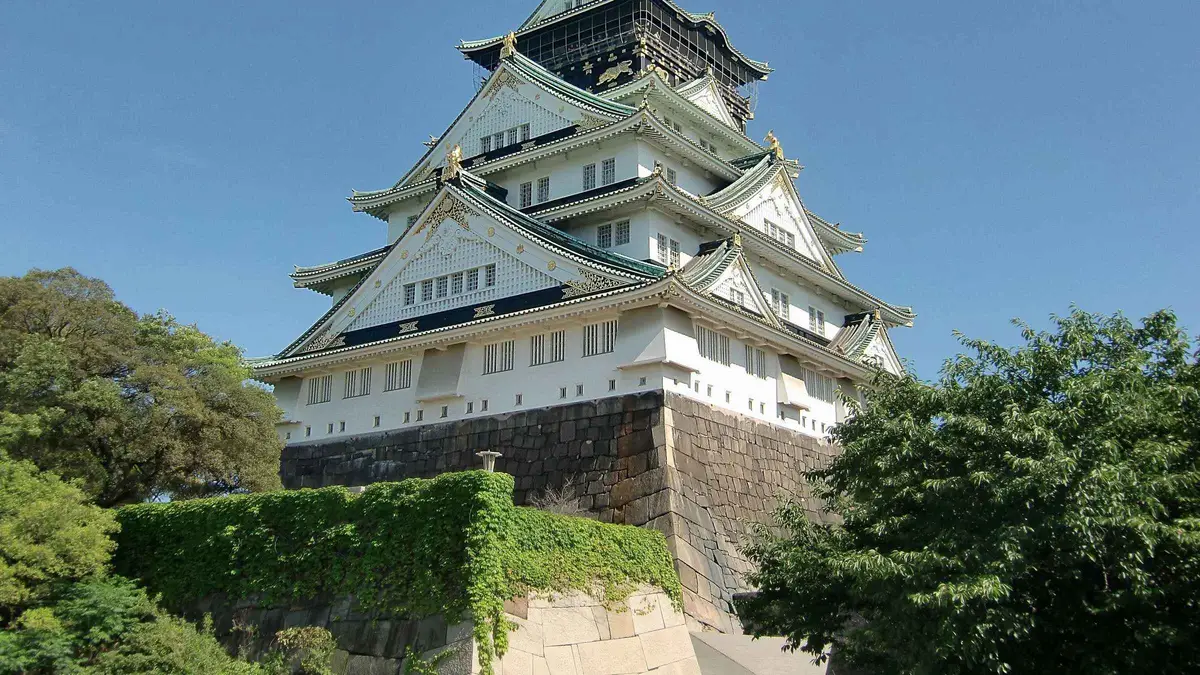 from $7.49
Cheapest way in
from $7.49
Cheapest way in
Osaka Castle: Museum and Tower Entry Ticket
The keep's own admission plus the Toyotomi Ishigaki Museum on one QR code, for roughly what the keep alone costs at the gate (¥1,200). The castle takes no reservations, so this saves the booth queue rather than securing a time slot.
Check Availability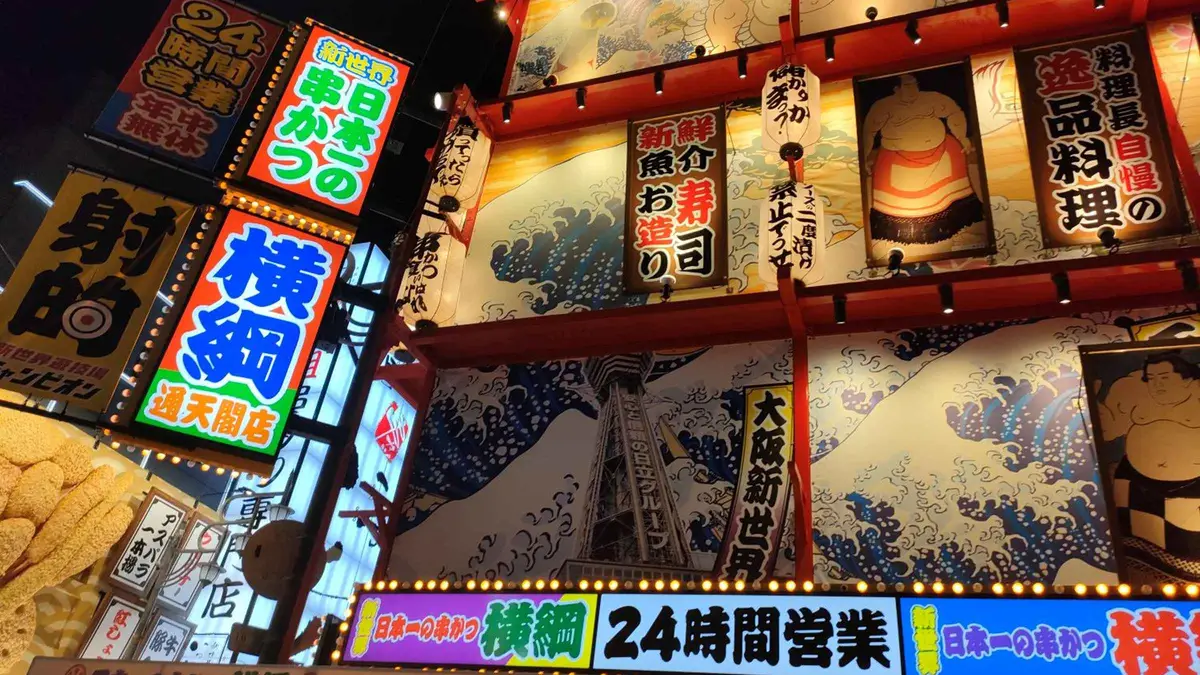 from $69.79
Hungry Osaka Street Food Tour Shinsekai: 15 Tastings 3 Drinks
Fifteen tastings and three drinks across an izakaya, a stall, a standing bar and two restaurants in Shinsekai, over three hours. The best rated of the big evening food walks; getting there and home afterwards is your own affair.
Check Availability from $61.80
Official ticket
from $61.80
Official ticket
Osaka: Universal Studios Japan Entry Ticket
The park's own 1-day Studio Pass, delivered as a QR code so you walk past the ticket booth. USJ prices by date from ¥8,400, and the platform's A–F categories mirror those tiers — check your date before assuming it beats the counter.
Check Availability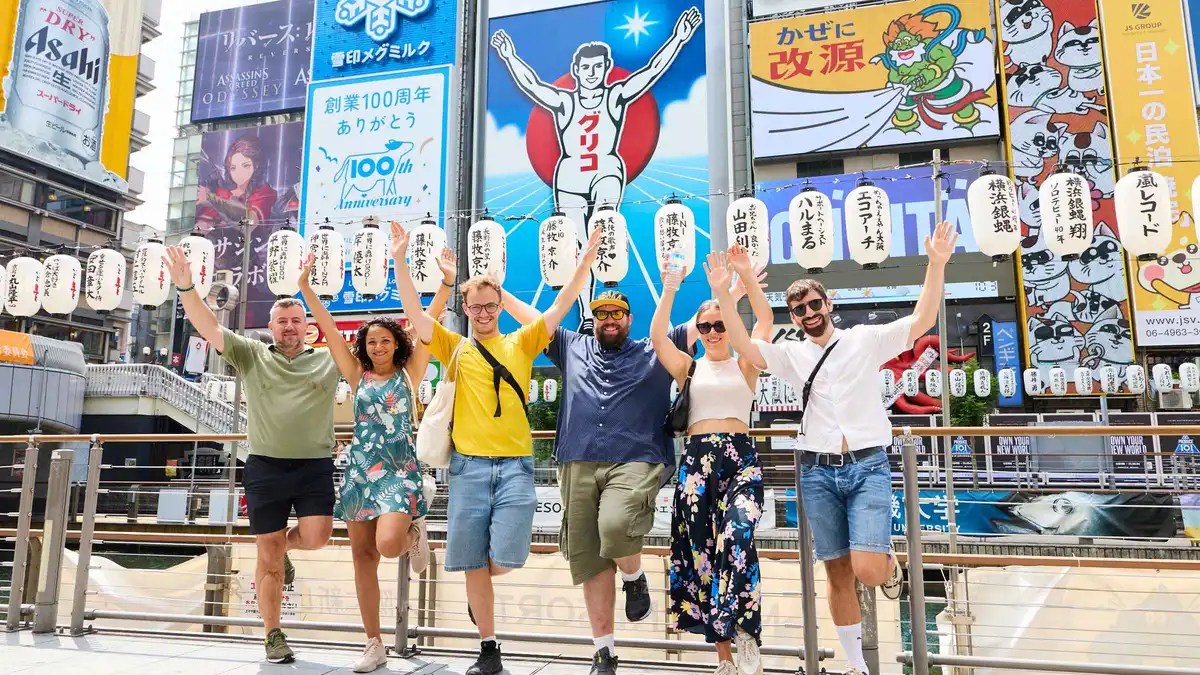 from $17.48
Osaka Walking Tour: Dotonbori, Kuromon Market & Street Food
Two and a half hours from Shinsaibashi through Hozen-ji, Kuromon Market and Den Den Town with a licensed guide and some food included. Cheap for a guided walk, but only 23 people have rated it so far.
Check AvailabilityPrices, ratings and details are the platform's own. Dollar figures are the listed prices. The platform bills in your account's currency.
Where to Go Next
Three pages that pick up where a wet day leaves off.
The best time to visit Osaka
The same thirty-year record month by month, the rainy-season dates and the typhoon normals, with the price calendar beside them.
The forecastFree things to do in Osaka
The arcades, the underground, the temple grounds and the parks — what costs nothing, and what nobody publishes a fee for.
The budgetOsaka with kids
The indoor half of this page, rebuilt around what a five-year-old will tolerate for three hours.
The groupA Rainy Day in Osaka: The Questions
What is there to do in Osaka when it rains?
Four things hold up. Kaiyukan aquarium is a two-hour indoor route and the strongest wet-weather ticket in the city. The Nakanoshima museum block — the Science Museum's 45-minute planetarium at ¥600, the National Museum of Art's underground galleries at ¥430 — fills a morning on any day except Monday. Spa World is ¥2,000 on a weekday for a bathhouse the size of a department store. And the arcades cost nothing: about 2.6 km of roof at Tenjinbashisuji, about 580 m at Shinsaibashi-suji. For a dry room with something to do in it, a sushi class in Dotonbori is the booking.
What is the rainiest month in Osaka?
July, at 197 mm across 15.0 days with at least a millimetre of rain, with June a close second at 193 mm across 13.4 days — our own figures, computed from the ERA5 reanalysis for the Osaka city centre over 1995–2024. September is third at 169 mm and carries the typhoon risk as well; January is the driest month at 57 mm.
When is the rainy season in Osaka?
Osaka sits in the Kinki region, whose rainy-season normal runs from around 6 June to around 19 July, averaged by the weather agency over 1991–2020. The 2026 season came early at both ends: the confirmed table gives a start around 2 June and an end around 9 July, with 116% of normal rainfall. The agency's provisional dates differ from the confirmed ones by two days at each end; these are the confirmed figures.
Which indoor sights close on Mondays and Tuesdays?
Mondays close the Osaka Science Museum, the National Museum of Art, the Nakanoshima Museum of Art and Tennoji Zoo. Tuesdays close the Osaka Museum of History and the Cup Noodles Museum. teamLab's botanical garden closes on irregular dated Mondays rather than every Monday. The aquarium publishes one closure for the year ahead, 13–14 January 2027, and Universal Studios Japan publishes none.
Does Universal Studios stay open in the rain?
Yes. The park does not close for rain, it sells ponchos, and the crowd thins — which on a park whose real cost is queueing time is an argument for going on a wet day. Hours are published only as a per-date calendar and read 09:00–20:00 when we checked, and the 1-Day Studio Pass starts from ¥8,400 with every price dated: the tickets page explains what "from" means here.
What should I skip in Osaka when it is raining?
The two observation decks and the outdoor gardens. Umeda Sky is ¥2,000 for the only open-air observatory in the city, which in cloud is a wet circle. Tsutenkaku sells its outdoor deck only as part of the ¥1,500 set. teamLab's garden is an outdoor night walk despite the name. And skip the Osaka Museum of Housing and Living, which half the rainy-day lists recommend: it is closed from 1 September 2026 to 5 January 2027.
Indoor Osaka on Film
Three videos filmed in Osaka in the rain — each id checked against YouTube's own record. They load only when you press play.
Osaka Travel Guide:What to do on a Rainy Day (Indoor & Budget Friendly)
An indoor, low-cost wet day, which is the shape this page recommends.
Video: Retire2RoamOSAKA Places We Wish We Knew Earlier 🌧️ Rainy Day in Osaka City | JAPAN VLOG
A wet day in the city centre, with the spots the film-makers wish they had known about.
Video: Mei TimeRainy Day in Osaka City 🌧️ hidden gem cafe in Nakazakicho 🌿 walk around Osaka station
A rainy walk around Osaka Station and the Nakazakicho cafes, at the pace rain forces.
Video: Mei TimeVideos load from YouTube only when you press play.
Prices, hours and terms are set by the venue or operator and confirmed at checkout.
We may earn a commission if you book through one of our links, at no extra cost to you. Full affiliate disclosure