 Osaka City Guide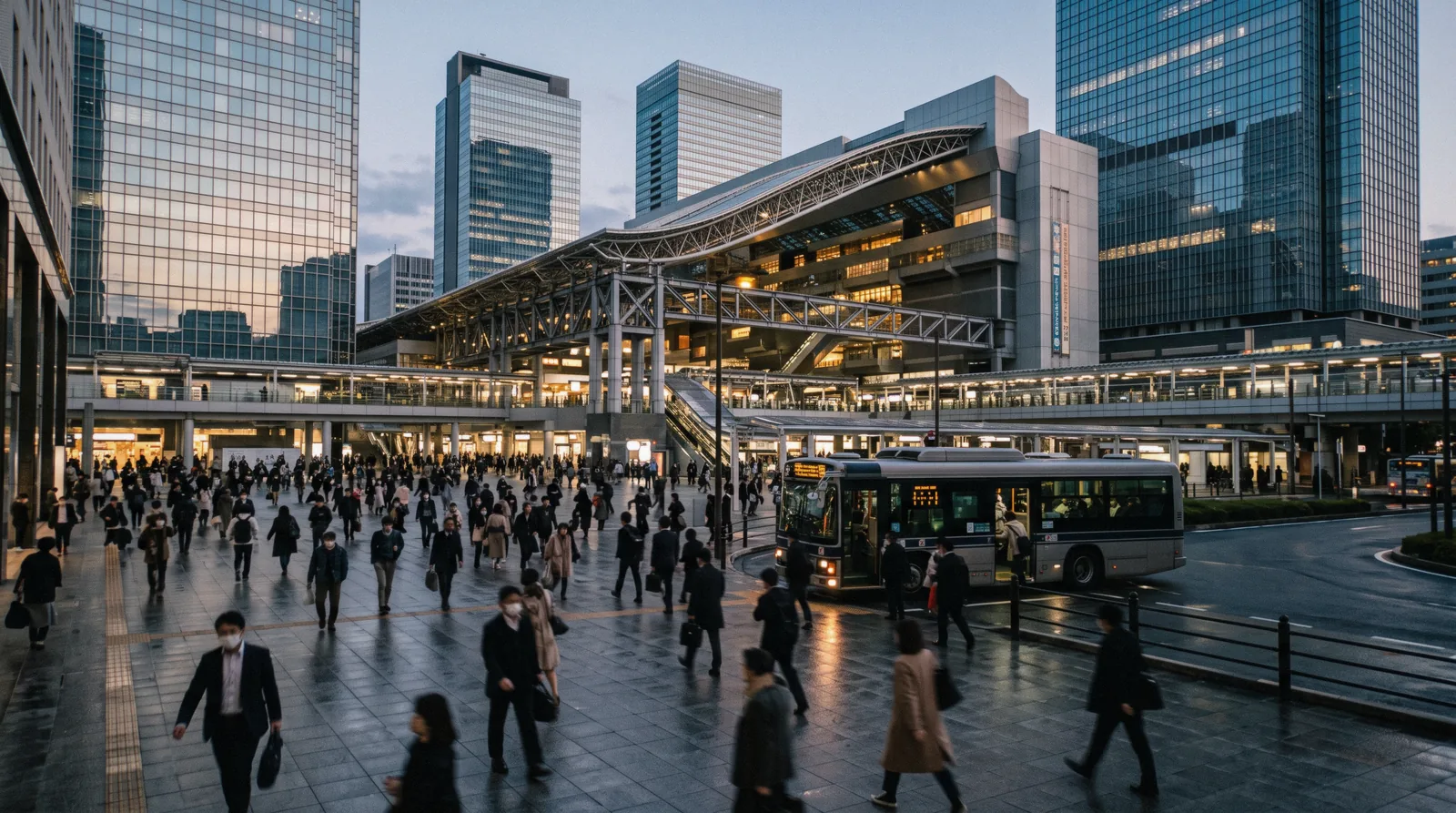
Umeda
Umeda, Osaka's northern half, is not a sight — it is the machine the rest of the city plugs into. Five separate railway terminals sit within a ten-minute walk of each other under two different names, the department stores are stacked on top of them, the real shopping street is underground, and the two things a visitor actually queues for are a ferris wheel bolted to a shopping centre roof and an open-air deck slung between two towers. This page is the district: what is worth your afternoon, what the transfers cost, and why the station you booked a ticket to may not be the station your hotel is next to. The city itself has a guide to top places to visit in Osaka; the tower on the western edge has its own page at Umeda Sky Building.
Quick answer What Umeda is, what to do, and why there are five stations — in four lines
Umeda is the northern of Osaka's two centres, in Kita ward, and it is a transport-and-shopping district rather than a sightseeing one. Everything in it is free to walk into except two paid views; the arcades below ground trade from 10:00 to 21:00 and the restaurant floors to 22:00. Dollar figures on this page are converted at ¥1,000 ≈ $6.27, the European Central Bank reference rate.
Key takeaways
- Yes, Umeda is worth an afternoon — but for the underground city, the roof views and the food halls, not for monuments; the monuments are at Osaka Castle and in the south
- The ferris wheel on the HEP Five roof costs $6.27 (¥1,000) and boards until 22:45; the open-air deck at the Umeda Sky Building costs $12.54 (¥2,000) and is the better view of the two
- A guided walk that includes the Sky Building ticket and the Whity arcades is the only tour in this catalogue built around this district; the city loop walks pass through it
- Osaka Station and Umeda Station are different stations with the same doorstep — five terminals share the name and the walk between the furthest two is about ten minutes, all of it under cover
The five terminals that all mean Umeda
This is the single thing that catches people out, so it goes first. Station names below are the operators' own as they appear on their signage and on Osaka Metro's network map, read on in Q3 2026; the walking times between them are ours, measured at an unhurried pace along the covered routes.
| What the sign says | Operator | You want it for | Walk to Osaka Station |
|---|---|---|---|
| Osaka | JR West | Kyoto, Kobe, Nara via Osaka Loop, and the discounted HARUKA in from Kansai Airport | — |
| Osaka-umeda | Hankyu | Kyoto by the cheaper private line, Takarazuka, Kobe-Sannomiya | about 4 minutes, covered |
| Osaka-umeda | Hanshin | Kobe along the coast, and the ballpark crowd | about 3 minutes, mostly underground |
| Umeda · Higashi-Umeda · Nishi-Umeda | Osaka Metro | Midosuji line south to Namba and Tennoji; Tanimachi and Yotsubashi lines | 2 to 6 minutes underground, by which door you use |
| Kitashinchi | JR West (Tozai line) | A quieter way through to Kyobashi and the eastern suburbs | about 6 minutes underground |
Three of the five have the word Umeda in them and two do not, which is why a hotel described as "next to Osaka Station" and one described as "next to Umeda Station" can be the same building. The rule that works: if your ticket says JR, walk to the sign that says Osaka; anything else is Umeda. Osaka Metro's own network map is the arbiter, and its three Umeda stations are separate ticket gates, not one station with three exits — leaving one to walk to another restarts your fare.
Guided walks that actually cover Umeda
Only one product in this catalogue is built around this district — the first card, which includes the ¥2,000 observatory admission and then goes underground into the Whity arcades and out to the old houses of Nakazakicho. The night walk pairs the same deck with the neon in the south, and the three city loops below it start or finish here without being about it. Prices are GetYourGuide's listings in US dollars; the operator charges in your own currency at checkout.
 from $56.62
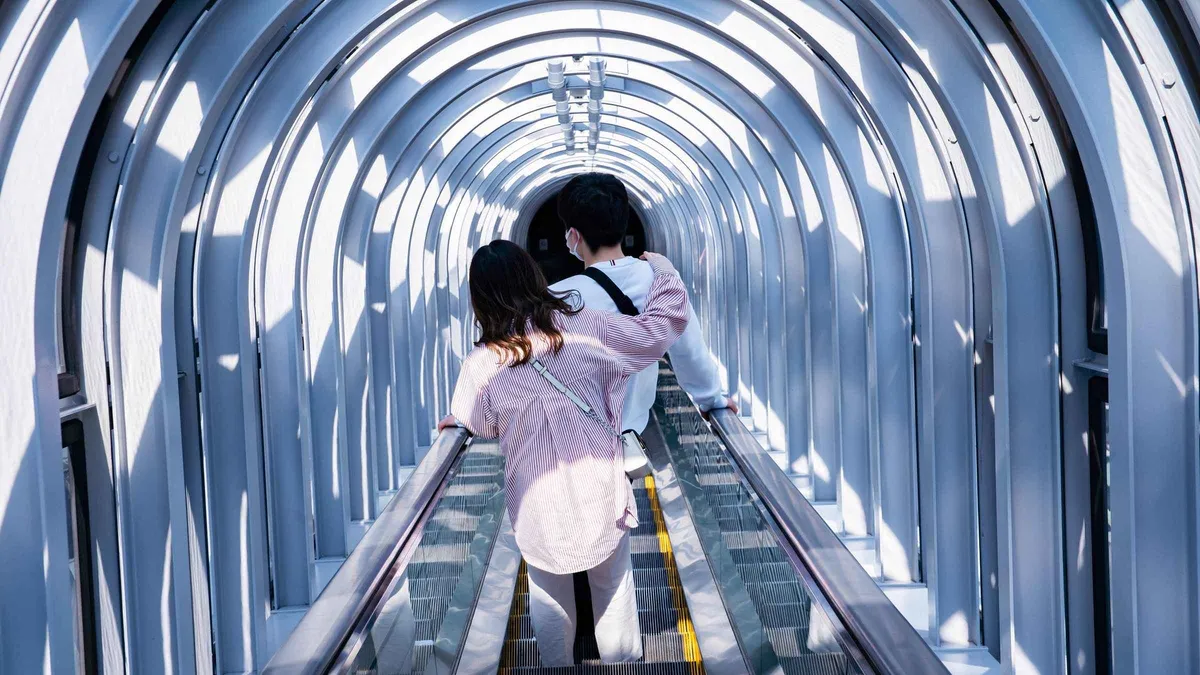
Osaka: Umeda Sky, Underground Mall & Nakazakicho Walk
Four hours with the ¥2,000 Floating Garden admission included, then the Whity Umeda arcades underground and the old houses and cafes of Nakazakicho. The guiding is what you are paying for; four ratings so far.
Check Availability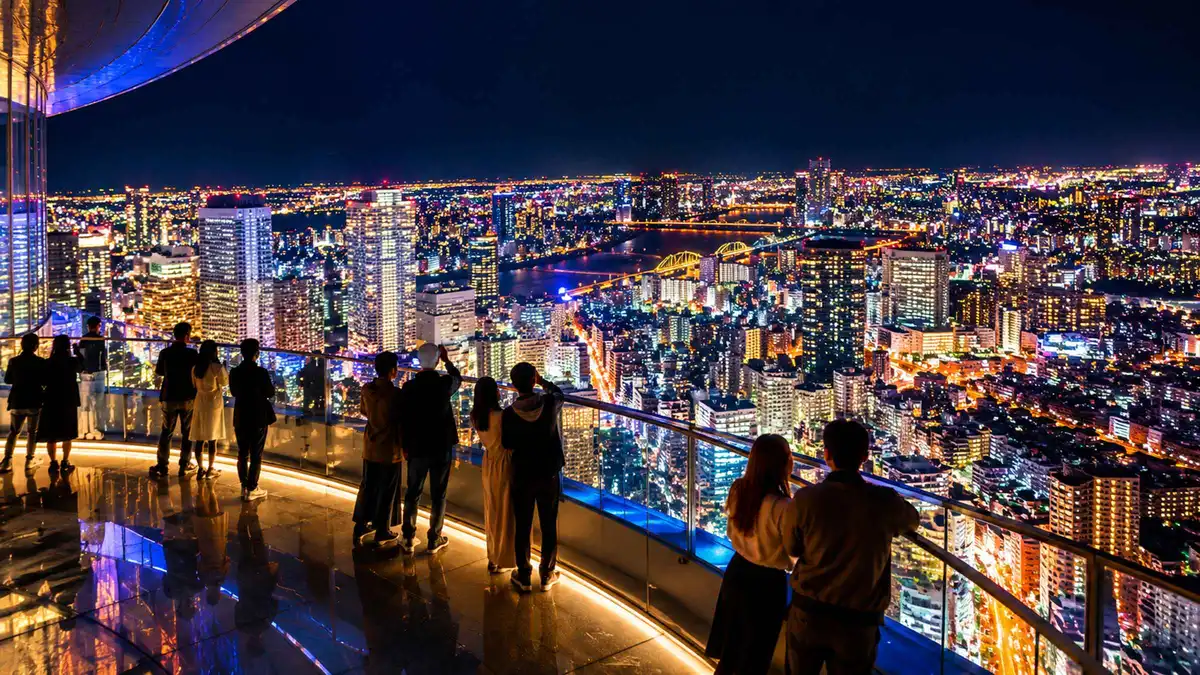 from $69.92
Osaka Night: Umeda Sky Building + Shinsekai Neon
Timed for sunset on the open roof at Umeda, then down into the Shinsekai neon, with the observatory ticket included and the guide taking your photographs. A new listing, so there are no ratings behind it yet.
Check Availability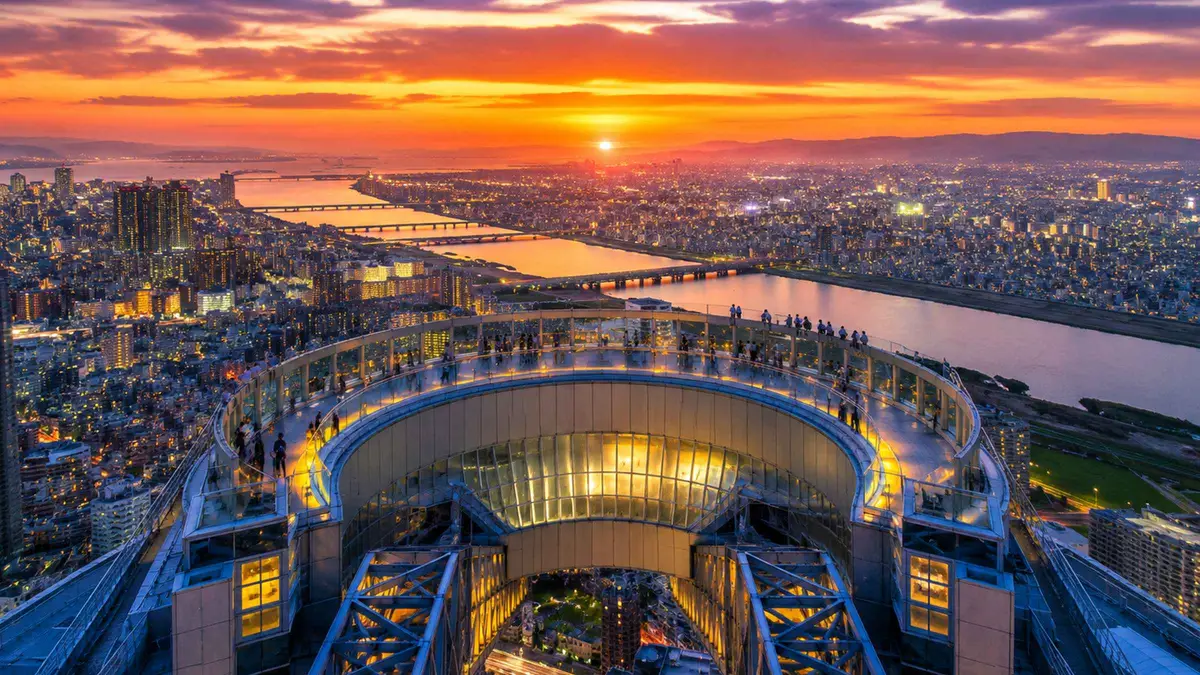 from $199.76
Osaka: Umeda Sky Ticket & Private Transfer
A private car from your hotel and back with the ¥2,000 observatory ticket included — almost the whole price is the vehicle. It makes sense for a group splitting the fare or anyone who wants a door-to-door ride; the driver speaks Japanese and Chinese.
Check Availability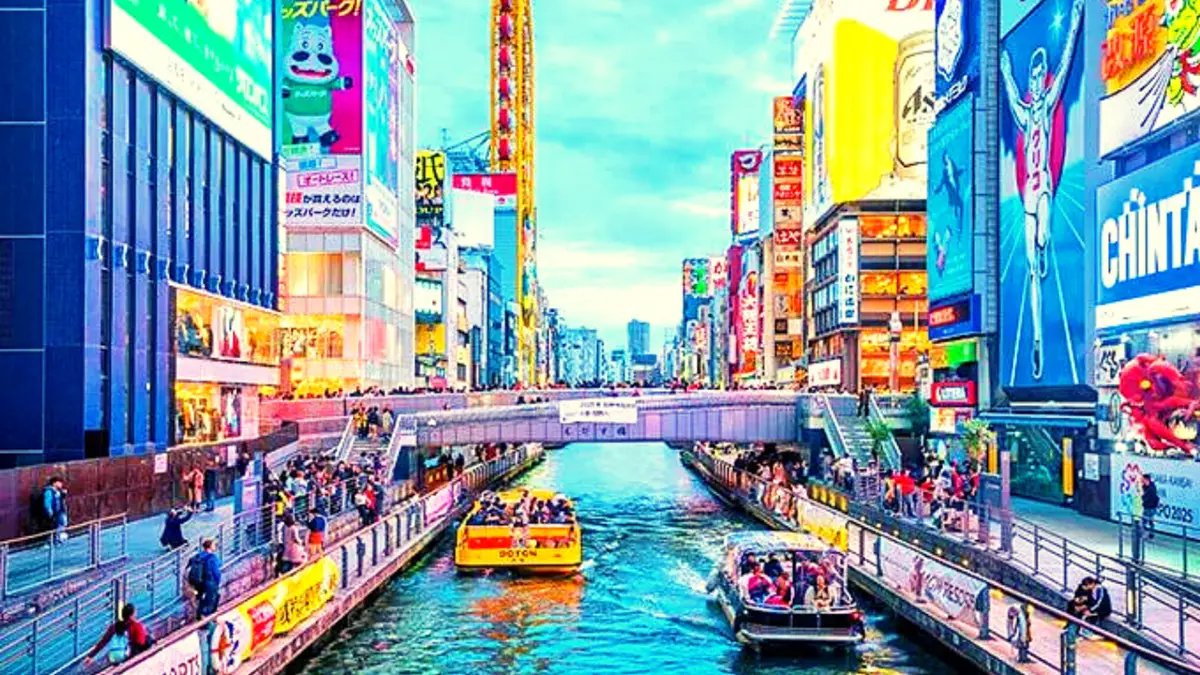 from $35.71
Osaka: Private or Group Hotspots & Hidden Gems Walking Tour
A three-hour walk that stretches to seven if you want it to, private or shared, with a takoyaki and a retro vending-machine drink included. The longer options use trains, which you pay for — usually under ¥1,000 a head.
Check Availability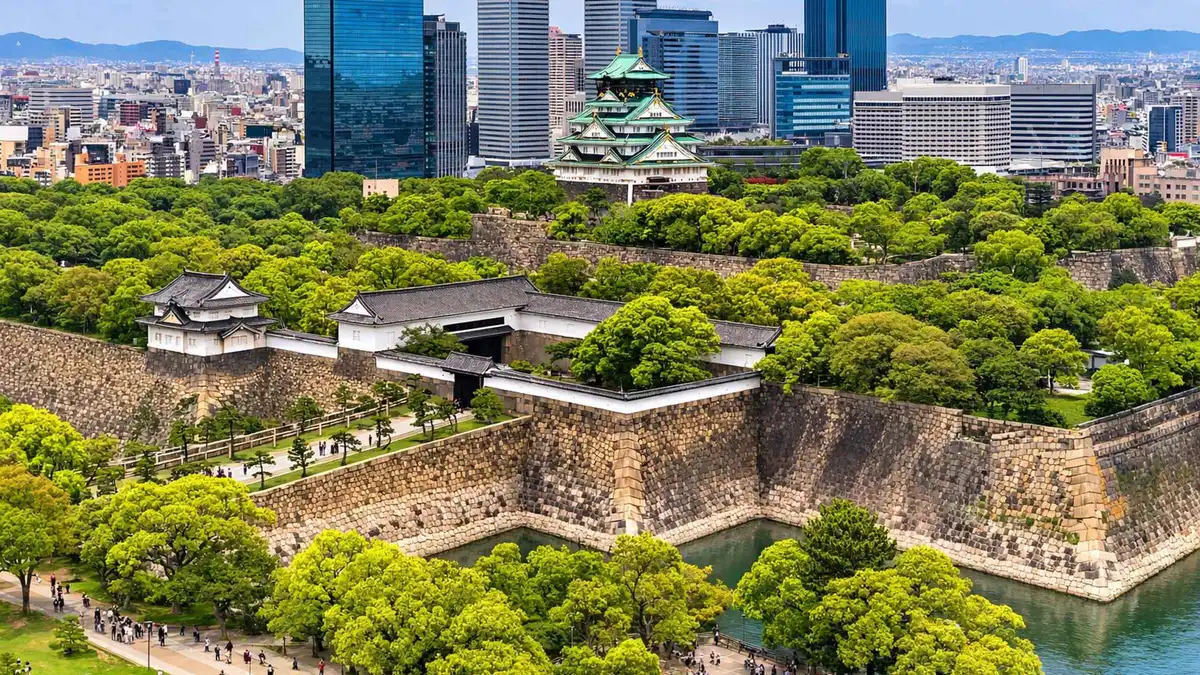 from $54.56
Osaka: Guided Walking Tour with a Native Expert – Top Sights
Four hours linking Osaka Castle, Tsutenkaku and Namba by metro, with the ¥1,200 keep admission included and the ¥430 of train fares not. A Japan Rail Pass buys you nothing here — the route runs on Osaka Metro.
Check Availability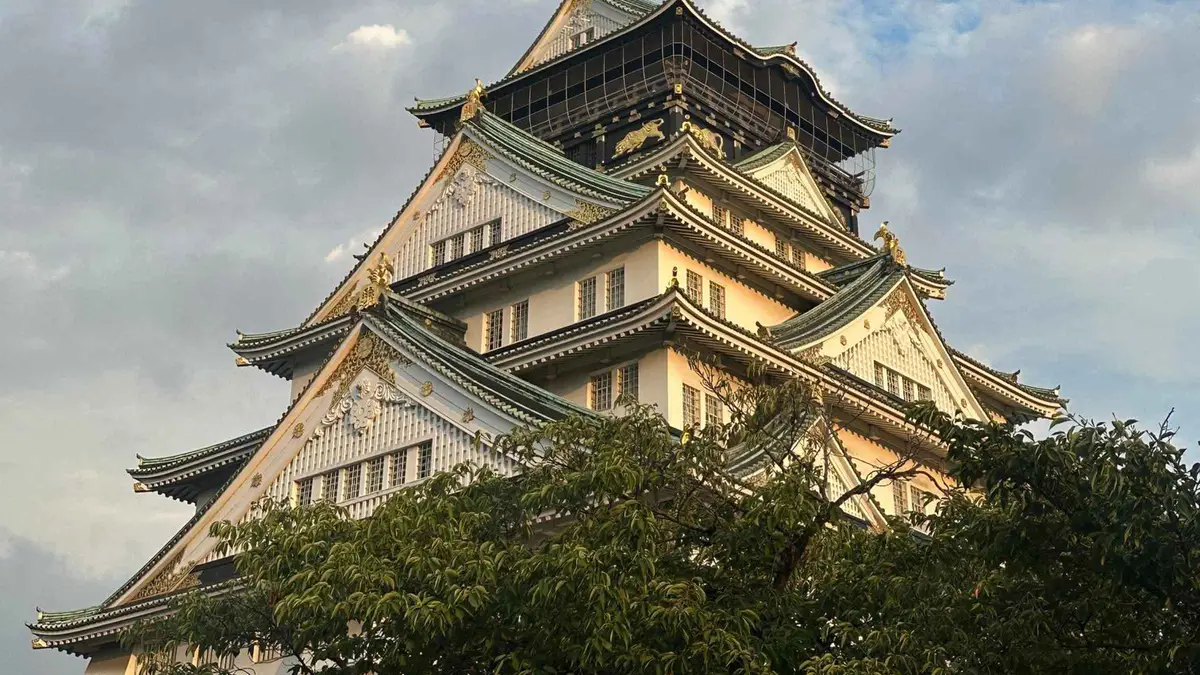 from $49.74
Osaka: Essential City Loop Tour with Local Guide
Five hours in a group of eight covering the castle, the Showa-era backstreets and the neon strip in one loop, with food bought stop by stop instead of a sit-down lunch. Only four people have rated it so far.
Check AvailabilityPrices, ratings and details are the platform's own. Dollar figures are the listed prices. The platform bills in your account's currency.
Kita, Umeda and why the district has two names
The name you meet depends on whether you are reading a map, a train ticket or a restaurant listing.
Kita means north, and it is the ward: Kita-ku, the administrative slab that runs from the Yodo River down to the Dojima. Umeda is the commercial quarter inside it, the few hundred metres around the stations. Osakans use Kita when they mean the whole northern half of the centre — as opposed to Minami, the southern half around Namba and Shinsaibashi — and Umeda when they mean the shops and the trains. Guidebooks use them interchangeably, and both are correct.
What separates the two halves of Osaka is not distance, it is temperament. Kita is offices, department stores, hotel towers and underground concourses; the ground floor of the district is largely indoors. Minami is street-level, louder, later, and the place people photograph. Eight minutes on the Midosuji line connects them, and most visitors end up using both — sleeping in one and eating in the other.
The tourism bureau, unusually, publishes no district page for Umeda in English at all: the obvious slugs on its own site returned 404 when we checked. So everything on this page is built from the operators' and venues' own pages, each cited where it is used, rather than from a bureau blurb that does not exist.
What Umeda is not
It is not where the historic city is. Osaka's set pieces — the castle keep, the temple in the south, the covered market, the canal with the running man — are all somewhere else, and none of them is within walking distance. If you have two days in Osaka and you spend one of them in Umeda, you have spent it in a shopping district with a good skyline.
It earns an afternoon, an evening and your luggage locker; it does not earn a day.
The underground city, and the hours it keeps
Umeda's real high street has no sky. The arcades under the stations were built to move commuters and ended up as the district's shopping centre, and their published hours are the most useful figures on this page.
Whity Umeda is the main one, running east from the Metro gates under Midosuji and the station forecourt. Its own site publishes the hours by category rather than by shop, and lists a single closed day each month — for September 2026 that is Thursday 17 September. Note that the HEP Five wheel above ground is shut on exactly the same date for its own inspection, so 17 September is a genuinely poor day to plan around Umeda.
What is down there: cheap standing noodle counters, sweets, cosmetics, phone accessories, drugstores, and — the reason to bother — restaurants that are half the price of the ones on the department-store floors above. The passages connect the JR concourse, both private terminals, all three Metro stations and most of the big buildings, so in bad weather you can cross the whole district without going outside once.
The catch is that the underground was not designed as one thing. Whity, the station basements and the department-store lower floors run into each other with no obvious seam and the signage switches language and colour scheme as you pass between owners. Nobody publishes a single map of the whole warren. The practical fix is to navigate by exit number rather than by shop: every Metro exit is numbered, the numbers are on the ceiling, and your hotel's directions will name one.
| Where | Opens | Closes | Note |
|---|---|---|---|
| Whity Umeda — fashion, goods, cosmetics, services, food | 10:00 | 21:00 | One closed day a month; September 2026 is Thursday the 17th |
| Whity Umeda — restaurants and cafes | 10:00 | 22:00 | Some units open earlier for breakfast trade |
| Whity Umeda — NOMOKA drinking area | 11:00 | 23:00 | The late option that is still under cover |
| HEP Five ferris wheel | 11:00 | 23:00 | Last boarding 22:45, earlier when queues are long |
| Tourist Information OSAKA, JR Osaka Station 1F | 07:00 | 22:00 | In front of the central ticket gates; staffed in English |
The one rule that costs money down here
Osaka City banned street smoking across the entire city on 27 January 2025, replacing the six designated districts with roads, squares, parks and other public places the city manages, and heated tobacco is covered as well as cigarettes. The penalty is a $6.27 (¥1,000) non-criminal fine. Umeda's concourses and the plazas above them are exactly the sort of space the ordinance names, and the smoking rooms inside the buildings are the alternative.
What there is to do above ground
Four things in Umeda are worth a visitor's time, and only two of them charge.
The HEP Five ferris wheel is the red one on the roof, and it is the most photographed object in the district. Riding it costs $6.27 (¥1,000) per person, children five and under go free, and showing a Hankyu-Hanshin Odekake card or app, or a STACIA card, takes ¥200 off — not combinable with anything else. It runs 11:00 to 23:00 with last boarding at 22:45, and the operator warns that last boarding moves earlier when it is busy. Two 2026 closures are published: Thursday 17 September for a scheduled inspection and Thursday 15 October, when the whole building shuts. It is free with the Osaka Amazing Pass, which is the main argument for riding it at all.
The Floating Garden Observatory at the Umeda Sky Building, fifteen minutes' walk north-west, is the better view: ¥2,000, open 09:30 to 22:30 with last admission 22:00, and the only genuinely open-air deck in the city. One warning from the venue's own page is worth repeating here because it catches people daily — the observatory has its own entrance, and it is not inside the building; the Tower East and Tower West lifts do not reach it.
Grand Green Osaka, the redevelopment on the old freight yard immediately north of the JR station, is the newest thing in the district and free. Hankyu Hanshin Properties opened the first phase on 6 September 2024 around a city park of about 45,000 square metres, with the whole scheme due in the 2027 financial year. The developers announced on 23 April 2026 that the wooded northern section, Umekita no Mori, about 0.9 hectares, opens early on Friday 20 November 2026, ahead of the full park in spring 2027. If you are here after that date it is the one genuinely new thing to see in Osaka.
Nakazakicho is the fourth: two Metro stops or a twelve-minute walk north-east, a grid of pre-war wooden houses that escaped the air raids and now hold second-hand shops and small cafes. It costs nothing, it takes an hour, and it is the antidote to the concourses. From there it is a short hop to Tenjinbashisuji, the 2.6-kilometre arcade the tourism bureau calls Japan's longest.
Which of the two paid views to buy
If you are buying one: the Sky Building deck, and go at dusk. It is open air, it faces west over the river towards the bay, and 22:00 last admission means you can eat first. The HEP Five wheel is fifteen minutes of a good view of rooftops from a slow cabin, and it is worth the ¥1,000 mainly if you are already inside the building, if you have the pass in your pocket, or if it is raining and the deck is closed to the weather.
Buying both in one evening is not a plan, it is a queue.
Getting to Umeda from either airport
Umeda is the more expensive of the two centres to reach from Kansai Airport and the cheaper one from Itami, and both facts are published by the carriers themselves. Fares below were read from the operators' own pages; dollar figures at ¥1,000 ≈ $6.27.
From Kansai International, the discounted HARUKA ticket for passport holders is the one to buy: $11.29 (¥1,800) to Osaka or Shin-Osaka, sold at the airport station counters. The airport limousine bus to the Hankyu Sanban-gai terminal beside the station is ¥1,800 adult / ¥900 child and takes about 60 minutes, with a 14-day open return at ¥3,300. There is no cheap fast option here in the way there is to the south: Nankai's fast trains run to Namba, not to Umeda, so arriving at Umeda from KIX means either JR or a bus.
| Route into Umeda | Fare | Time | Where you buy it |
|---|---|---|---|
| KIX → Osaka / Shin-Osaka, HARUKA discounted one-way | $11.29 (¥1,800) | not stated by the carrier | Airport station counter, passport required |
| KIX → Hankyu Sanban-gai, airport limousine bus | ¥1,800 adult / ¥900 child | about 60 minutes | Bus stand, first-come, no reservation |
| Itami → Senri-Chuo, Osaka Monorail | $2.13 (¥340) | not stated by the carrier | Station machines; change to the Midosuji line |
| Itami → Hotarugaike, Osaka Monorail | $1.25 (¥200) | not stated by the carrier | Station machines; change to Hankyu |
| Itami → Umeda, limousine bus | not published on a site we could read | not stated | Operator and airport sites both refuse our requests |
From the other airport, and the fare nobody publishes
From Osaka Itami, the monorail is the answer: $2.13 (¥340) from Osaka Airport to Senri-Chuo, where you change to Kita-Osaka Kyuko and run straight down the Midosuji line into Umeda, or ¥200 to Hotarugaike for the Hankyu Takarazuka line. The operator's own limousine-bus fares to Umeda are published only on sites that refuse our requests — the bus company's server drops plain fetches and the airport answers 403 to every path — so we do not print a bus figure for Itami at all rather than repeat one we cannot source.
One trap worth stating plainly: the Osaka Amazing Pass is not valid to or from Kansai Airport. The ¥3,800 / ¥5,400 version that does cover an airport covers Itami, via the monorail, and it is the only version that opens Expo'70 Park and the Osaka Wheel. The standard pass is ¥3,500 / ¥5,000.
What it costs to leave Umeda again
Every Osaka day starts with the same arithmetic: single fares, the one-day metro card, or the pass with the free entries. The figures below come from Osaka Metro's own fare page and the two passes' own sites.
Osaka Metro prices by distance zone, not by station pair: ¥190 up to 3 km, ¥240 for 3–7 km, ¥290 for 7–13 km, ¥340 for 13–19 km and ¥390 beyond. It publishes the pair-by-pair zone table only as a PDF image and otherwise sends you to its own fare search, so we will not print a station-to-station figure it does not print in text — but every hop inside the central grid, Umeda to Namba or Umeda to the bay, sits in the first two bands. Budget ¥190 to ¥240 a ride and you will not be wrong often.
The Enjoy Eco Card covers all Metro lines and city buses for one calendar day at ¥820 on a weekday and ¥620 at weekends and on public holidays — the only pass in the city whose price depends on the day, and the weekend price follows the calendar rather than the timetable, so Obon and New Year run at the holiday rate. Four rides makes it pay on a weekday, three at the weekend. It does not cover Yumeshima station or the private lines that run through onto Metro track, and riding past that boundary means settling the difference at the exit.
| Ticket | Price | Covers | Worth it when |
|---|---|---|---|
| Single Metro ride, zone 1 / zone 2 | $1.19 / $1.50 (¥190 / ¥240) | One journey, up to 3 km / 3–7 km | Two or three rides in a day |
| Enjoy Eco Card, weekday | $5.14 (¥820) | All Metro lines and city buses, one calendar day | Four rides or more |
| Enjoy Eco Card, weekend or holiday | $3.89 (¥620) | The same, at the calendar rate | Three rides or more |
| Osaka Amazing Pass, 1 day | $21.90 (¥3,500) | Transport plus 41 free entries, 03:00–02:59 | Three paid attractions in one day |
| Osaka Amazing Pass, 2 day | $31.40 (¥5,000) | The same over two consecutive days | A full sightseeing weekend |
The pass, and the day that starts at 03:00
The Osaka Amazing Pass is ¥3,500 for one day and ¥5,000 for two, sold 25 March 2026 to 31 March 2027, and its "day" runs 03:00 to 02:59 rather than 24 hours from activation. It carries 41 free entries, several of them in this district and along the river. What it does not carry is the aquarium or the theme park, and it is not valid to Kansai Airport.
The full arithmetic — and the fact that the tourism bureau's own comparison table still prints a stale price for it — is on the pass page.
Bags, wifi and the two things every guide gets wrong
Umeda is where most visitors arrive with a suitcase and no room yet, so this is the part of the district that matters most on day one.
Lockers. Neither JR West nor the private carriers publish a coin-locker tariff for Osaka Station — JR West's own station page says only "coin lockers: yes" — so the only prices anyone can honestly quote here are the staffed counters and Osaka Metro's smart lockers. What JR does publish is the count: 157 small, 180 medium and 162 large across eleven banks at the Central Exit alone. Osaka Station City adds attendant hours of 09:00–21:30 and a real-time vacancy checker. Osaka Metro runs a coin-locker service centre at Higashi-Umeda, 23 units, 07:30–22:30, open since 2 September 2024.
Staffed counters, with published prices. Crosta Osaka, beside the JR station, takes bags at ¥1,000 a piece for storage or ¥2,000 a piece for delivery to a hotel, card only, 09:00–20:00 year-round. The TiS desks at Osaka and Umeda charge ¥1,000 a piece and keep shorter hours — 10:00–19:00 and 10:00–18:00. If your bag is going to your hotel rather than waiting for you, the delivery cut-off is the thing to ask about, not the price.
| Where to leave a bag | Hours | Price | Note |
|---|---|---|---|
| Crosta Osaka, JR Osaka Station | 09:00–20:00, year-round | $6.27 per piece (¥1,000) | Card only; ¥2,000 a piece to forward it to a hotel |
| TiS Osaka | 10:00–19:00 | ¥1,000 per piece | Travel-agency counter inside the station |
| TiS Umeda | 10:00–18:00 | ¥1,000 per piece | The earliest closer of the three |
| Higashi-Umeda coin-locker service centre | 07:30–22:30 | not published per size | 23 units, run by Osaka Metro since 2 September 2024 |
| JR Osaka Central Exit lockers | station hours | not published | 157 small, 180 medium, 162 large across 11 banks |
Wifi: the line that has been wrong for three years
Wifi. The line every guide still prints — free wifi at every station — has been wrong since 31 March 2023, when Osaka Free Wi-Fi was withdrawn from every Osaka Metro, Kintetsu, Keihan and Nankai station after NTT Docomo pulled out. Osaka Metro confirms it from its own side and offers commercial router rental instead. The service still exists at non-station venues under three SSIDs, two of which reset every hour and re-prompt for a login every time you move between access points.
The tourism bureau's own visitor page still claims station coverage; the termination notice is newer and more specific, and it is the one to believe.
Umeda or the south: which half to base yourself in
The question every Osaka thread asks, answered as a decision rather than a survey.
Stay in Umeda if your trip is regional. This is where the fast trains to Kyoto, Kobe and Himeji leave from, where the Shinkansen connection at Shin-Osaka is one stop away, and where the covered walk from platform to hotel door means rain never touches you. It is also quieter after 23:00, which people read as either an advantage or the whole problem.
Stay in the south if your trip is Osaka. Namba puts the canal, the arcades, the market and the eating streets within ten minutes on foot, and it is where the airport train from Kansai actually arrives. The trade is noise and a longer haul to Kyoto.
The honest version: eight minutes on the Midosuji line separates them, both are fine, and the deciding factor is usually which one your hotel is cheaper in on your dates. What is not a coin toss is the arrival: if you land at Kansai and your hotel is in Umeda, you have a ¥1,800 train or a 60-minute bus ahead of you; if it is in Namba, you have a 44-minute local express at base fare. The full area comparison puts all five districts side by side.
Umeda map: the five stations and what sits between them
Terminals in blue, the things worth walking to in copper. Pin positions are ours, placed from the operators' and venues' published addresses.
Everything on this map is within a fifteen-minute walk of the JR concourse, and most of the route between the pins is under cover.
Next stop from Umeda
Walking and riding times are our estimates from the published distances and the operators' line maps.
Umeda Sky Building
The open-air deck at ¥2,000, open to 22:30 with last admission at 22:00 — the one paid view in this district that is worth planning an evening around.
15 minutes north-west, under the tracksNakanoshima
The museum island between two rivers: three public collections, a 1918 concert hall and a rose garden, all within a kilometre of each other.
20 minutes south on foot, or one stop to YodoyabashiTenjinbashisuji
About 2.6 kilometres and 800 shops of covered arcade — the cheapest eating within reach of Umeda, and nothing about it is aimed at visitors.
Two Metro stops, or a 25-minute walk via NakazakichoSleeping in the north
We are not printing a nightly rate for these areas: we did not price them ourselves on a fixed date, and a made-up band is worse than none. What we can tell you is what each pocket buys you, and what the prefecture will add to the bill — Osaka's lodging tax was rebanded on 1 September 2025 and is charged per person per night.
Umeda and Osaka Station
- Where it sits
- On top of the five terminals; covered walkways to most doors
- Suits
- Day trips to Kyoto, Kobe and Himeji, early Shinkansen departures, rain
The most expensive pocket in the district and the most convenient. Ask which station the hotel actually adjoins before you book — "Umeda" covers a ten-minute spread. The lodging-tax bands start at ¥200 a head above ¥5,000 a night.
See stays in UmedaNakazakicho and Ogimachi
- Where it sits
- One or two Metro stops north-east, 12 to 20 minutes on foot
- Suits
- Small hotels and guesthouses, cafes, a quieter street at night
Pre-war houses that survived the air raids, now the district's independent quarter. You trade the covered walkway for a real neighbourhood and a shorter hop to the long arcade.
See stays in NakazakichoFukushima and Nishi-Umeda
- Where it sits
- One JR stop or a 15-minute walk west of Osaka Station
- Suits
- Eating and drinking after 21:00 without the station crowds
Office blocks by day and one of the city's denser izakaya strips by night, with the museum island a short walk south across the river.
See stays in FukushimaOsaka's lodging tax, levied by the prefecture and collected by the property, is nothing under ¥5,000 per person per night, then ¥200, ¥400 or ¥500 as the rate crosses ¥5,000, ¥15,000 and ¥20,000 — the bands changed on 1 September 2025 and most sites still print the old ¥100 / ¥200 / ¥300. We may earn a commission if you book through these links, at no extra cost to you.
Umeda questions
Are Osaka Station and Umeda Station the same station?
No — they are separate stations that share a doorstep. JR's terminal is signed Osaka; Hankyu's and Hanshin's are both signed Osaka-umeda; Osaka Metro runs three more called Umeda, Higashi-Umeda and Nishi-Umeda, each with its own ticket gates. The table above lists all five and the walk between them, which runs from two to about ten minutes and is almost entirely under cover.
Is Umeda worth visiting in Osaka?
For an afternoon and an evening, yes: the underground arcades, the food halls, the roof views and the new park at Grand Green Osaka. For a full day, no — the city's sights are elsewhere, starting with Osaka Castle and the districts in the south. Treat Umeda as the place you sleep, transfer and eat rather than the place you sightsee.
How much is the HEP Five ferris wheel in Umeda?
$6.27 (¥1,000) a person, free for children five and under, and ¥200 off on a Hankyu-Hanshin Odekake or STACIA card. It runs 11:00–23:00 with final boarding at 22:45, and it is closed on 17 September and 15 October 2026. It is one of the 41 free entries on the Osaka Amazing Pass.
What is there to do in Umeda at night?
The open-air deck at the Umeda Sky Building takes its last admission at 22:00, the wheel boards until 22:45, the Whity restaurant floors trade to 22:00 and its drinking section to 23:00. After that the district is genuinely quiet — the late-night city is in the south, which is what a night walk pairing the deck with the neon is built to solve.
How do you get from Kansai Airport to Umeda?
The discounted HARUKA for passport holders at $11.29 (¥1,800) to Osaka or Shin-Osaka, or the airport limousine bus to the Hankyu terminal at ¥1,800 in about 60 minutes. Nankai's fast trains do not come here — they run to the south — and the Osaka Amazing Pass is not valid to Kansai Airport at all. The full arrival comparison prices every route.
Is there free wifi at the stations in Umeda?
No. Osaka Free Wi-Fi was withdrawn from every Osaka Metro, Kintetsu, Keihan and Nankai station on 31 March 2023 and has no station replacement, although the tourism bureau's own visitor page still says otherwise. Mobile coverage reaches all subway platforms and the tunnels between them; for data, buy a SIM or an eSIM before you land.
Should you stay in Umeda or further south?
Umeda if your trip includes Kyoto, Kobe or Himeji, or an early Shinkansen; the southern half if your trip is Osaka itself and you are arriving from Kansai Airport, which lands you there for a base fare. Eight minutes on the Midosuji line separates the two, so the real tie-breaker is price on your dates — the district-by-district comparison has the rest.
Umeda on film: the concourses, the backstreets and the night
Three walk-throughs we checked ourselves — each id verified against YouTube's own record and its thumbnail, so none of these is a dead player. They load only when you press play.
Umeda: The Best of Modern Osaka | Walking Tour | 4K
A daylight walk through the station complex and the streets around it, at real pace.
Video: THE JAPAN WALKUmeda Osaka: From Retro Backstreets to the Elegant Side of Kitashinchi | Walking Tour | 4K HDR
The half of the district visitors miss: the lanes behind the department stores and the bar quarter south of the tracks.
Video: THE JAPAN WALKOSAKA - Umeda Station JAPAN 4K WALKING TOUR Sunset & Night Life City Walk
Sunset to night around the station, which is when the district looks like the photographs.
Video: World Wanderings: 4K Walking ToursVideos load from YouTube only when you press play.
Prices, hours and terms are set by the venue or operator and confirmed at checkout.
We may earn a commission if you book through one of our links, at no extra cost to you. Full affiliate disclosure