 Osaka City Guide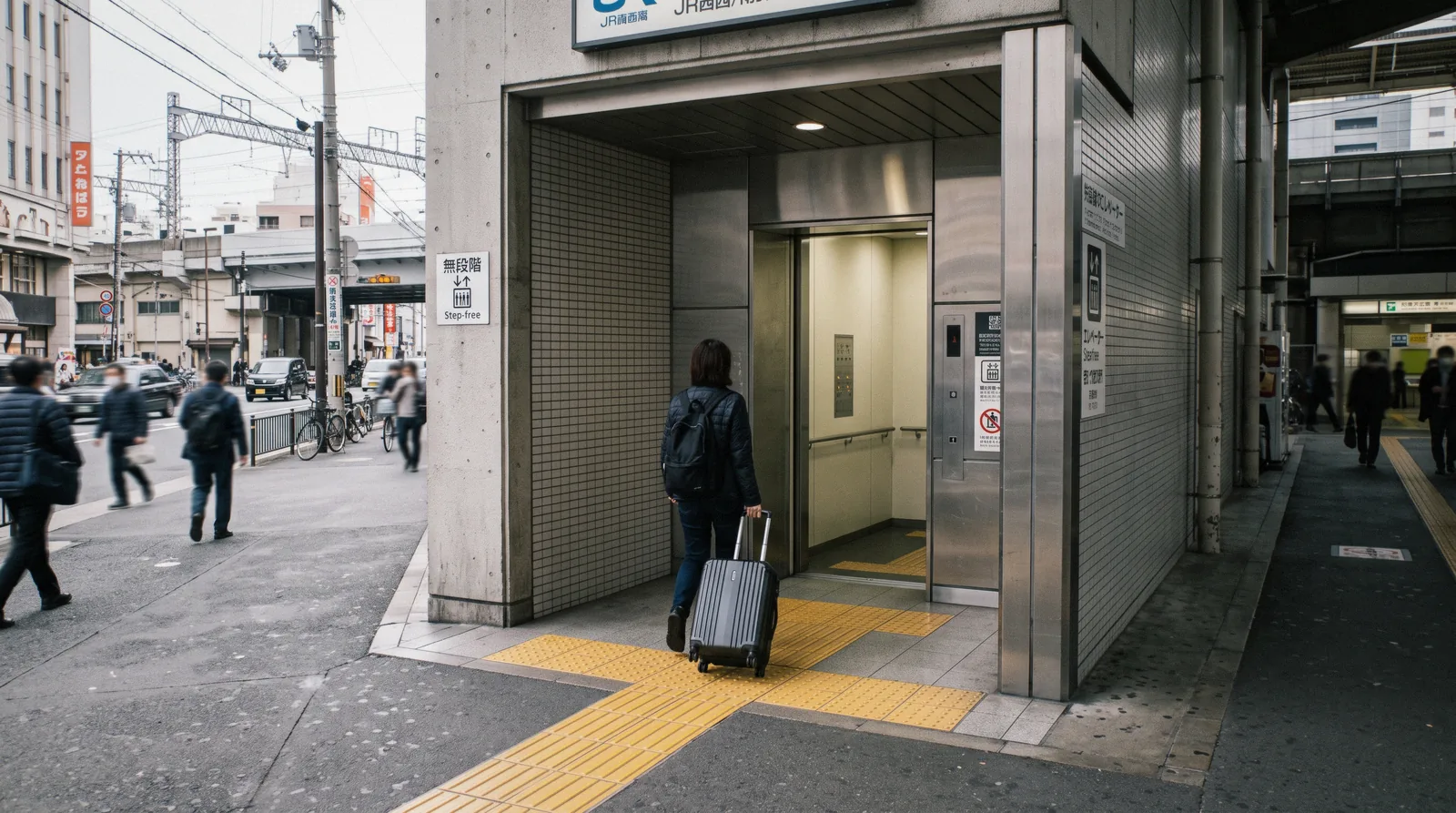
Accessible Osaka
Osaka accessibility is better than its reputation and better documented than most of Japan, and the reason is one number: every one of the 134 stations on the city's subway and New Tram network has a lift and a completed step-free route from street to platform. What varies is the buildings at the end of those routes, and the honest position is that some of them publish detailed provision while others publish nothing at all. This page prints what each venue states on its own site, including the disability rates — which in Osaka are not one rule but a dozen different ones, ranging from free entry with two carers to a flat reduced tariff to half of a price that itself changes by date. Where a venue publishes nothing, we say so rather than guess. Yen first with a dollar gloss at ¥1,000 ≈ $6.27 (European Central Bank reference rate via frankfurter.dev). The rest of the planning layer is on the plan hub, and the city itself on things to do in Osaka.
Quick answer The transport, the buildings and the discounts — in four lines
Osaka's transport is genuinely accessible: all 134 Osaka Metro and New Tram stations have a lift, a completed step-free route from street to platform and platform screen doors or movable barriers, and every station holds a folding ramp and an accessible toilet. The buildings vary. Osaka Castle's keep is the sharpest example — its lift runs up only as far as floor 5, and floor 6 is a closed gallery — while Kaiyukan is a single one-way descending route with loan wheelchairs at the door. Every statement here comes from the operator or venue itself.
Key takeaways
- The discount is real and it is not one rule: free at the castle, Tennoji Zoo and the Museum of History, half price at Kaiyukan and Umeda Sky, $6.90 (¥1,100) at Abeno Harukas, $8.15 (¥1,300) at Tsutenkaku, $6.27 (¥1,000) at teamLab
- Carer allowances differ too — one at most venues, up to two at Tennoji Zoo, and “as many as there are disabled visitors” at Umeda Sky and Abeno Harukas
- The city publishes a district-by-district Transport Barrier-Free Map in an edition dated June 2026, and the tourism bureau runs five accessible model itineraries — both are listed below
- A private transfer removes the one part of an Osaka trip that step-free stations do not solve: luggage on an airport train
What Each Venue Publishes About Access
Every cell is the venue's own statement on its own site, read on in Q3 2026, and “publishes nothing” means exactly that — we looked and there is no accessibility statement to quote, which is itself worth knowing before you travel across the city.
| Venue | What it states | Step-free? | Loan wheelchairs |
|---|---|---|---|
| Osaka Castle keep | Staff-operated lift runs up only, to floor 5; floors 5–8 up and 8–1 down are stairs; floor 6 is a closed gallery. Wheelchair users and those who cannot manage the stairs get the lift in both directions on all floors | Only with staff assistance | 5, in-building use only, first come |
| Osaka Aquarium Kaiyukan | A single one-way descending route; wheelchairs lent at the information desk beside the ticket window and at the 3F entrance-building service counter | Yes, the whole visiting route | Yes, limited numbers |
| Tennoji Zoo | Wheelchairs at the Shinsekai and Tenshiba gates, no reservations taken; assistance dogs need a call ahead on 06-6771-8401 because some animals react and part of the route is then closed; no car park | Largely, on made paths | Yes, at both gates, no reservations |
| Umeda Sky Building | The observatory has its own dedicated entrance, which is not inside the building — the Tower East and Tower West lifts do not reach it. The venue warns about this itself | Yes, once you find the right entrance | Not stated |
| Tsutenkaku | Assistance dogs — guide, service and hearing — admitted under the 2002 Act; the tower may ask to see the health-management booklet, certification and vaccination record. Tripods are banned. A timed reservation is required for every ticket | Not stated | Not stated |
| Nakanoshima Museum of Art | Wheelchair and pram users are directed to the 1F east entrance; the lift is south of the 1F grand staircase; assistance dogs admitted | Yes, by the east entrance | Not stated |
| Osaka Museum of History | Free entry for a certificate holder including one carer, and it accepts the Mirairo ID app rather than only a physical certificate | Not stated | Not stated |
| teamLab Botanical Garden | A flat ¥1,000 rate for the holder and one companion; the venue is an outdoor garden after dark with no re-entry once you enter | Not stated | Not stated |
| Shitennoji | Free for a certificate holder and their companion on individual visits; nothing else about access is published | Not stated | Not stated |
| Sumiyoshi Taisha | Publishes nothing on access — the shrine's site gives gate times and prayer fees and no accessibility statement of any kind | Not stated | Not stated |
| Namba Yasaka Shrine | Publishes nothing at all — no fee, no opening hours and no access information on its own site; phone 06-6641-1149 | Not stated | Not stated |
| Universal Studios Japan | A disability Studio Pass from ¥4,700 with certificate upload at purchase; the park publishes no accessibility route information on the ticket pages we read | Not stated | Not stated |
The division is clean and worth planning around: the purpose-built modern venues — the aquarium, the museums, the observation decks — publish and deliver; the historic sites and the shrines publish nothing, and the one historic building with a lift, the castle keep, has a lift that only goes half way. If a wheelchair user has one Osaka sight to spend a morning on, it is Kaiyukan.
What Each Venue Charges With a Disability Certificate
Published by each venue on its own site, in yen with the dollar gloss at ¥1,000 ≈ $6.27. Bring the physical certificate — only one venue in this table says it will accept a phone app instead — and note that the carer allowance is a separate rule from the price.
| Venue | Standard adult | With a certificate | Companion |
|---|---|---|---|
| Osaka Castle keep | $7.52 (¥1,200) | Free | One carer, free |
| Tennoji Zoo | $5.02 (¥800) | Free | Up to two carers, free |
| Osaka Museum of History | $3.76 (¥600) | Free, Mirairo ID accepted | One carer, included |
| Osaka Science Museum planetarium | $3.76 (¥600) | Free, once per person per day | One carer, free |
| National Museum of Art, Osaka | $2.70 (¥430) | Free | One companion, free |
| Shitennoji central precinct | $3.14 (¥500) | Free on individual visits | Companion free |
| Osaka Aquarium Kaiyukan | $17.56 (¥2,800)–$21.90 (¥3,500) by date | Half the day's band price | One carer, same half rate |
| NIFREL | $15.05 (¥2,400) | ¥1,200; ¥600 and ¥350 on the child bands | One companion, same rate |
| Umeda Sky Building | $12.54 (¥2,000) | Half price | As many carers as there are holders, half price |
| Spa World | $12.54 (¥2,000) weekday / $16.93 (¥2,700) weekend | Half price | Not stated |
| Abeno Harukas 300 | $13.79 walk-up (¥2,200) | ¥1,100 adult, ¥450 child 6–14 | Companions up to the same number, same rate |
| Tsutenkaku | $9.41 (¥1,500) | ¥1,300 adult, ¥700 child | One companion at the disability rate; from the second, full price |
| teamLab Botanical Garden | $11.29 (¥1,800)–$15.05 (¥2,400) by date | ¥1,000 flat | One companion, ¥1,000 |
| Universal Studios Japan | from $52.70 (¥8,400) | from ¥4,700; child from ¥3,200 | One companion may buy the same pass |
Two things to take from this table. First, the free venues are the public ones — the city's castle, zoo and museums — and the paid concessions are at the commercial attractions, which is a consistent pattern across Japan. Second, Abeno Harukas and Umeda Sky are the two that will discount an entire group of carers rather than one, which changes the arithmetic for a family travelling with a wheelchair user.
The Transport, Which Is the Good News
Osaka Metro publishes more about barrier-free access than almost any operator in Japan, and the detail is unusually specific.
The headline figures, from the operator's own barrier-free pages: all 134 subway and New Tram stations have a lift and a completed step-free “one route” from street to platform, every interchange station has a step-free transfer route between lines, and all 134 have platform screen doors or movable barriers. Every station holds a folding ramp, and every station has an accessible toilet with handrails on both sides, a care bed, a nappy table and ostomate fittings. Wide fare gates, low ticket machines, braille fare tables and tactile paving run throughout the network.
The operator also publishes the gap, which is the sort of honesty that lets someone plan. Its design standard for the platform-to-train interface is a 2–6 cm step and a 2–3 cm gap; older rolling stock still runs steps of 20 to 70 mm; comb-shaped rubber fillers close the gap to roughly 20 to 35 mm; and curved platforms are wider than that. A self-propelling wheelchair user can read those numbers and know whether a ramp is wanted.
How you ask for help: you tell the staff at the ticket gate on the day. There is no advance booking system and none is needed, but the operator says plainly that you may have to wait if staff are busy — so allow a few minutes at each end of a journey rather than arriving for a specific train. Metro publishes lift-inspection calendars and live barrier-free works notices, so a route can be checked before you travel, and it runs separate guidance pages by need: wheelchair, visual impairment, hearing and speech, children and pregnancy, assistance dogs, illness or injury, and handle-type electric wheelchairs. Once the metro route is planned around those step and gap numbers, guided tours in Osaka can be checked against the same access needs before the day is set.
The Surcharge You Are Already Paying
The fare table for Osaka Metro shows a figure in brackets beside most bands — usually ¥10. That is not an extra to be added at the gate: it is the railway-station barrier-free surcharge, already inside the fare, and it has been charged since 1 April 2023 to fund exactly the lifts and screen doors described above. Fares run ¥190 / ¥240 / ¥290 / ¥340 / ¥390 by zone band, about $1.19 to $2.45, on Osaka Metro and the New Tram.
One small consequence worth knowing: Enjoy Eco Card day passes bought before the surcharge started, at the old ¥800 and ¥600 prices, are still honoured with no top-up. The current card is ¥820 on weekdays and ¥620 at weekends. Osaka Metro also publishes disability-certificate fare discounts of its own — the getting around page covers the fare and pass structure in full.
What the step-free network does not solve is luggage. The airport routes from Kansai involve a long train with limited luggage space, and for a wheelchair user arriving with cases it is the weakest link in an otherwise strong chain — which is the argument for a private transfer on the arrival day even if the rest of the trip is on the subway.
The Maps and Services the City Actually Runs
Three official resources that between them cover most of what a visitor needs, and the caveats on each.
Osaka City's Transport Barrier-Free Map, in an edition dated June 2026, is the most detailed of the three. It is published district by district — Umeda, Namba, Tennoji and Abeno, Kyobashi, Tsuruhashi, Minamimorimachi and Osaka Tenmangu, Tenmabashi, Kitahama and Yodoyabashi — with sub-maps for step-free accessible toilets, underground and overhead routes, and interchanges. Screen-reader text versions exist, and a DAISY audio CD is posted free on request from the Transport Policy Division on 06-6208-7823. There is no English edition offered, so treat it as a Japanese-language resource you may need help reading.
OSAKA-INFO Universal Tourism, run by the tourism bureau, is the visitor-facing one: a barrier-free facility search covering hotels, attractions and restaurants, guidance on planning a wheelchair trip, and five accessible model itineraries — Tsuruhashi and Tennoji; the Expo '70 Commemorative Park; Osaka Castle and Umeda; Osaka Port and USJ; and Namba and Shinsekai. It links the Osaka Universal Design Map, the prefecture's register of “mental barrier-free” certified facilities, the city map above, Osaka City Heartful Web, and MoVA wheelchair and stroller rental. A KIX Universal Tour Desk was added on 12 May 2025.
One warning about that site, in its own words rather than ours: the English version is machine-translated and says so on the page. Use it for the figures, the facility lists and the itinerary structure; do not rely on its phrasing for anything that matters, and check a venue's own site before travelling to it.
What to Do Before You Travel
A short checklist that follows from everything above, in the order it saves the most trouble:
- Carry the physical certificate. Only the Museum of History states that it accepts a digital ID (Mirairo). Everywhere else, assume paper.
- Check the lift-inspection calendar for the stations on your route — Osaka Metro publishes it, and a lift out of service turns a step-free station into a stepped one.
- Decide the carer count before you buy. Tennoji Zoo covers two; Tsutenkaku covers one and charges the second at full price; Umeda Sky and Abeno Harukas cover as many carers as there are certificate holders.
- Book the dated venues early. teamLab sells a dated time slot and Tsutenkaku now requires a timed reservation for every ticket, pass holders included — an accessible visit is not exempt from either.
- Ring ahead if you travel with an assistance dog. Tennoji Zoo asks for it explicitly on 06-6771-8401; Tsutenkaku may ask to see the dog's paperwork at the door.
Options That Remove the Walking
Where a step-free station still leaves a hard kilometre, a transfer or a seated experience does the work instead. These are the options on the platform that involve the least ground covered on foot; prices are GetYourGuide's own listings in US dollars, and access requirements should be confirmed with the operator at booking.
 from $64.79
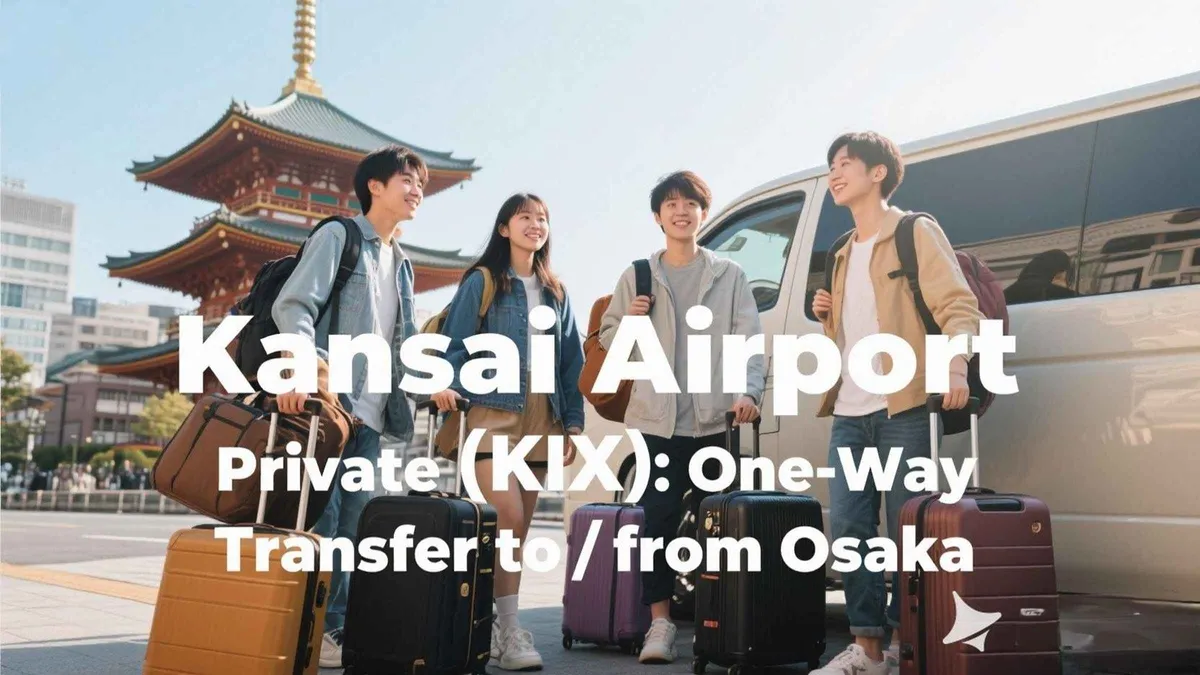
Kansai Airport (KIX): Private One-Way Transfer to/from Osaka
A private one-way car to or from Kansai Airport, with 60 minutes of free waiting on arrivals and flight delays covered up to two hours. The case for it is luggage and a late landing rather than speed — the train takes about as long.
Check Availability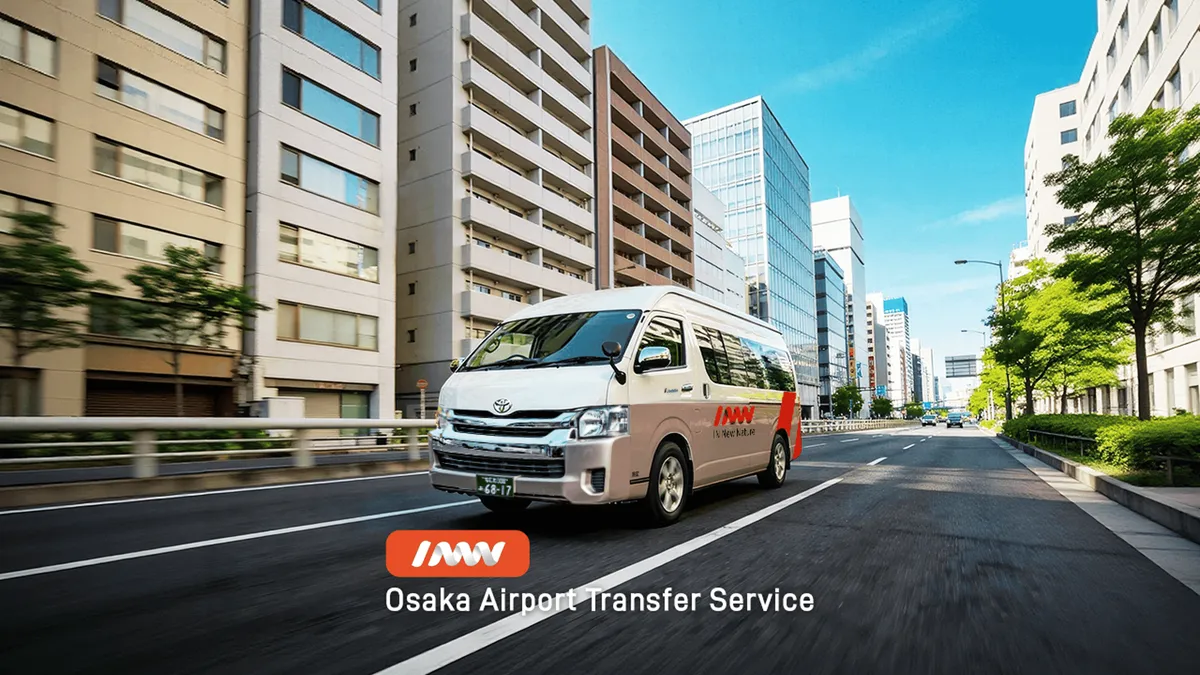 from $15.98
Osaka: Kansai Airport Shared Transfer Early Bird Reservation
A scheduled shared shuttle between Kansai Airport and 24 districts of the city, booked ahead and boarded with a QR code, tolls included. Cheaper than a taxi and closer to your door than the train, at the cost of a fixed departure time.
Check Availability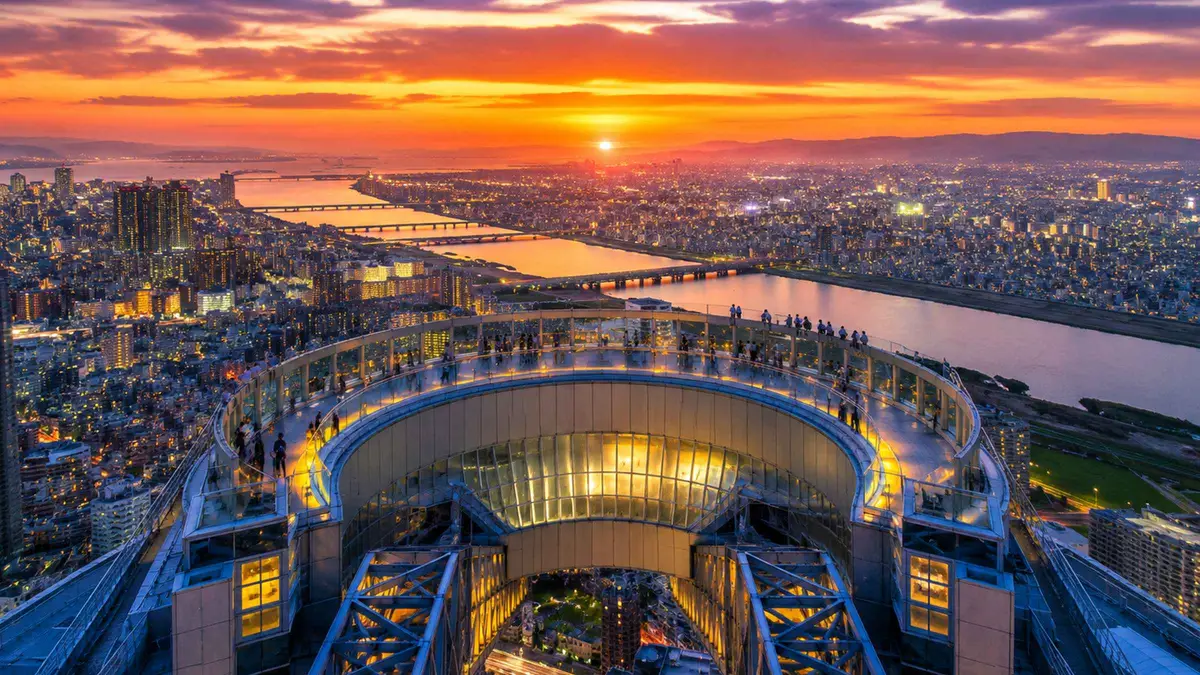 from $199.76
Osaka: Umeda Sky Ticket & Private Transfer
A private car from your hotel and back with the ¥2,000 observatory ticket included — almost the whole price is the vehicle. It makes sense for a group splitting the fare or anyone who wants a door-to-door ride; the driver speaks Japanese and Chinese.
Check Availability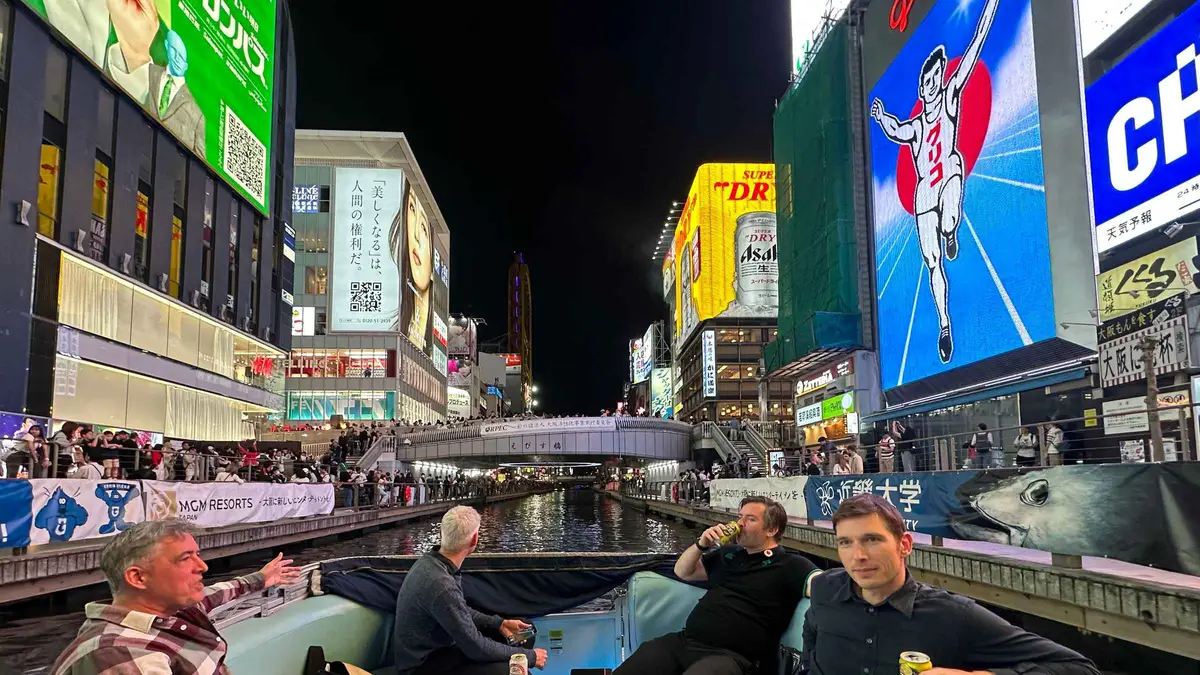 from $12.49
Osaka: Dotonbori River Cruise with Glico Sign & Neon Views
Twenty minutes on the water past the Glico sign, boarding at Minatomachi Pier rather than the Tombori River Walk, and you may bring your own drinks. The rival Tombori River Cruise is free with the Osaka Amazing Pass; this boat is not.
Check Availability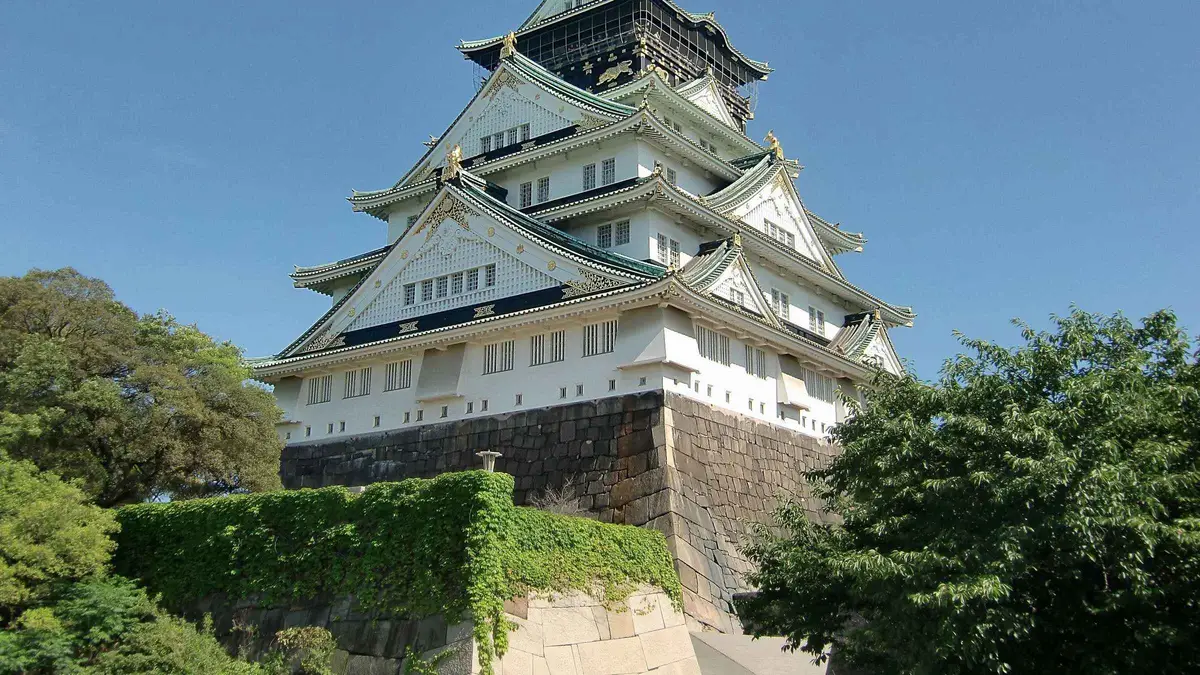 from $7.49
Cheapest way in
from $7.49
Cheapest way in
Osaka Castle: Museum and Tower Entry Ticket
The keep's own admission plus the Toyotomi Ishigaki Museum on one QR code, for roughly what the keep alone costs at the gate (¥1,200). The castle takes no reservations, so this saves the booth queue rather than securing a time slot.
Check Availability from $76.52
Osaka: One-Way Private Transfer to/from Kyoto
A private car between Osaka and Kyoto, door to door in about an hour. The train covers the same ground for a few hundred yen, so this is for heavy bags, small children or an early start, not for saving time.
Check AvailabilityPrices, ratings and details are the platform's own. Dollar figures are the listed prices. The platform bills in your account's currency.
The Hard Parts, Named
Where an accessible Osaka trip actually runs into trouble, and what to do about each.
The castle keep is the one that disappoints people. Osaka Castle's tenshukaku is a 1930s reconstruction with a museum inside and eight floors, and its internal lift is staff-operated and runs up only, as far as floor 5. Floors 5 to 8 upward and 8 back down to 1 are stairs, and floor 6 is a closed gallery that no visitor sees. The exception the castle itself publishes is the important one: wheelchair users and visitors who cannot manage the stairs are taken by lift in both directions on all floors. So the top-floor view is reachable — it just needs staff, and it is not a route you take unassisted.
The other castle details worth knowing before you arrive: there are no coin lockers inside, bag check-in at the ticket window is $0.63 (¥100) an item between 09:00 and 17:30 with collection by 18:00, and five wheelchairs are available for in-building use only, first come, no reservation. Prams are discouraged and taken at the gate.
The shrines publish nothing. Sumiyoshi Taisha and Namba Yasaka between them publish no accessibility statement of any kind — Namba Yasaka publishes no opening hours and no admission statement either. We are not going to describe their ground from memory. If access to a specific shrine is trip-critical, the phone numbers are the answer: Namba Yasaka on 06-6641-1149, and the Osaka Call Center on 06-6131-4550 for anything else.
Streets, Markets and Crowds
Osaka's famous streets are its least documented spaces from an access point of view, because nobody owns them. No authority publishes accessibility information for Dotonbori, Kuromon Ichiba, Shinsekai or the arcades — the tourism bureau's entry for Dotonbori answers even the opening-hours question with “varies by store”.
What can be said without inventing anything is structural. The great shopping arcades — Shinsaibashi-suji and Tenjinbashisuji — are flat, covered and continuous, which makes them the most reliably wheeled streets in the city and a genuinely good wet-weather route. Kuromon Ichiba is likewise flat and covered but narrow, and from late morning it is dense with standing eaters. Dotonbori's canal-side walk is level; the bridges over it are not, and Ebisubashi in the evening is one of the most crowded pieces of pavement in Japan.
The practical answer to all of it is the clock rather than the map. These streets are quiet before eleven in the morning and impassable after seven in the evening, and an early visit removes more obstacles than any published route ever could. The best time to visit page makes the same argument seasonally.
What Nobody Publishes
In keeping with how the rest of this site works, here is the list of things we could not source, so that you know they are absent rather than overlooked.
No venue in Osaka publishes a wheelchair-accessible toilet inventory for its own site — the Metro does, the attractions do not. No attraction publishes a hearing-loop statement. No venue publishes a “time needed” figure except the Science Museum, which gives 45 minutes for a planetarium show, so any duration you see for an accessible visit is somebody's estimate. The city's barrier-free map has no English edition. And USJ publishes no street address and no accessibility route on the ticket pages we read, only its disability pass price.
None of that makes Osaka a difficult city for a disabled visitor — the transport genuinely carries the trip, and the discounts are among the most generous in Japan. It does mean that the last hundred metres, from the station exit to the door, is the part you have to check yourself, venue by venue, with the phone numbers above.
Where to Go Next
Three pages that an accessible Osaka plan needs alongside this one.
Getting around Osaka
Fare bands, day passes, ICOCA and how the step-free network fits together across the operators.
The networkKansai Airport to Osaka
Every route into the city with times and fares — the leg where luggage, not steps, is the constraint.
The arrivalOsaka with kids
The same lifts and step-free routes read for prams, plus every child price and the closed days that break a plan.
The family versionAccessible Osaka: The Questions
Is Osaka wheelchair accessible?
The transport is, comprehensively: all 134 Osaka Metro and New Tram stations have a lift, a completed step-free route from street to platform and platform screen doors, and every station holds a folding ramp and an accessible toilet. The buildings vary — the modern attractions publish and deliver, the historic sites and shrines largely publish nothing at all.
Can a wheelchair user reach the top of the castle keep?
Partly, and the detail matters. The keep's staff-operated lift runs up only, as far as floor 5, with floors 5 to 8 up and 8 to 1 down as stairs, and floor 6 closed to visitors. The castle states that wheelchair users and those who cannot manage the stairs are taken by lift in both directions on all floors, so the top is reachable with staff assistance. Entry is free for a certificate holder and one carer.
What is the disability discount at the city's sights?
There is no single rule. Entry is free at the castle, Tennoji Zoo, the Museum of History, the Science Museum planetarium, the National Museum of Art and Shitennoji; half price at Kaiyukan, NIFREL, Umeda Sky and Spa World; and flat reduced tariffs of ¥1,100 at Abeno Harukas, ¥1,300 at Tsutenkaku and ¥1,000 at teamLab. The full table has the carer allowances, which differ again.
Can I borrow a wheelchair at the sights?
At three of them, all first come and none reservable: Osaka Castle has five for in-building use only, Kaiyukan lends at its information desk and 3F service counter in limited numbers, and Tennoji Zoo has them at the Shinsekai and Tenshiba gates. The zoo's own advice is to bring your own if you can. The tourism bureau also links MoVA wheelchair and stroller rental.
Do I need to book assistance on the Metro?
No, and you cannot. Osaka Metro's own instruction is to tell the staff at the ticket gate on the day; there is no advance booking system. The operator does warn that you may wait if staff are busy, so allow a few minutes at each end rather than aiming at a specific train.
Are assistance dogs allowed at the city's sights?
Tsutenkaku admits guide, service and hearing dogs under the 2002 Act and may ask to see the health-management booklet, certification and vaccination record. Tennoji Zoo asks you to call ahead on 06-6771-8401, because some animals react and part of the route is closed when a dog is on site. Nakanoshima Museum of Art admits them. Most other venues publish nothing either way.
Is there an accessibility map for Osaka?
Yes — Osaka City publishes a Transport Barrier-Free Map in an edition dated June 2026, district by district with sub-maps for step-free accessible toilets and underground routes, plus screen-reader versions and a free DAISY audio CD on request from 06-6208-7823. It has no English edition. The tourism bureau's Universal Tourism site adds a facility search and five accessible model itineraries, listed above.
Accessible Osaka on Film
Three wheelchair-user videos filmed in Osaka itself — each id checked against YouTube's own record. They load only when you press play.
Osaka Castle Wheelchair Accessibility Guide | Accessible Japan Travel
A wheelchair user's route through the castle park and up the keep, lifts included.
Video: Wheelchair TravelExploring Osaka as a wheelchair user (July 2024)
A full Osaka trip in a wheelchair, filmed on the pavements and platforms this page describes.
Video: Bethany Evans (Bethswheels)Visiting Kuromon Market in Osaka as a Wheelchair User - What It's Really Like?
The market aisles at chair height, which is the crowding problem no floor plan shows.
Video: Wheelchair TravelVideos load from YouTube only when you press play.
Prices, hours and terms are set by the venue or operator and confirmed at checkout.
We may earn a commission if you book through one of our links, at no extra cost to you. Full affiliate disclosure