 Osaka City Guide
Where to Stay in Osaka
Where to stay in Osaka is one decision with three footnotes. The decision is Kita or Minami — the business-and-transport half around Osaka and Umeda stations, or the eating-and-neon half around Namba — and it is really a question about what you want to hear at eleven at night. The footnotes are the three cheaper edges: the Bay, Tennoji in the south, and Shin-Osaka up on the Shinkansen line. This page sets the five against each other on trains, airport time and what you give up, then prints the one number every booking page leaves out: Osaka Prefecture's lodging tax, rebanded on 1 September 2025 and still shown at its old tariff almost everywhere. Yen is the primary figure; dollar glosses use ¥1,000 ≈ $6.27, the European Central Bank reference rate. The rest of the trip is on things to do in Osaka and the planning hub.
Quick answer Kita or Minami, the three cheaper edges, and the tax nobody shows you
First-time visitors should sleep in Minami, around Namba and Shinsaibashi, because the food streets, the Metro's three busiest lines and the direct Kansai Airport train all meet there. Sleep in Kita, around Osaka and Umeda stations, if you are doing day trips to Kyoto, Kobe or Himeji or you want a quiet room. The Bay, Tennoji and Shin-Osaka are the cheaper edges, each with one specific reason to choose it.
Key takeaways
- First visit, eating and nightlife: Minami — Namba, Shinsaibashi, Dotonbori, where the food streets are the walk home rather than a train ride.
- Day trips and an early start: Kita — Osaka and Umeda stations, where the JR platforms for Kyoto (¥580) and Kobe (¥420) are downstairs.
- The three cheaper edges, in one line each: the Bay for families beside the aquarium, Tennoji for value and the south, Shin-Osaka for a Shinkansen morning.
- Whatever you pick, add the tax: $1.25 (¥200) to $3.14 (¥500) per person per night since 1 September 2025, collected at the property and not shown on your booking page.
- Once you have chosen an area, see stays by area at the bottom of this page; for an orientation walk on the first evening, the city loop tour covers the ground in five hours.
Five Bases Compared
The five areas that answer this question, set against the four things that actually decide it: your station, the airport, what the area is good at, and what you give up.
| Area | Your station | From Kansai Airport | Best for | The trade-off |
|---|---|---|---|---|
| Minami (Namba, Shinsaibashi) | Namba — Nankai, Kintetsu, Metro Midosuji, Sennichimae and Yotsubashi lines | Nankai Airport Express, about 44 minutes at base fare; limousine bus to OCAT ¥1,400, 50 minutes | A first visit; eating; being able to walk home from dinner | Noise until late, the highest crowd density in the city, and small rooms |
| Kita (Umeda, Osaka Station) | Osaka / Umeda — JR, Hankyu, Hanshin, Metro Midosuji and Tanimachi | HARUKA discounted one-way ¥1,800; limousine bus to Hankyu Sanban-gai ¥1,800, 60 minutes | Day trips, business travel, department stores, a quiet room | Dinner is a decision rather than a walk, and the district goes flat after the offices empty |
| Osaka Bay (Tempozan) | Osakako, on the Metro Chuo line | No direct airport rail — change in the city; allow an hour and a half | Families doing the aquarium and the ferris wheel; larger rooms | You commute into the city for everything else, and evenings out there are thin |
| Tennoji and Abeno | Tennoji — JR, Kintetsu, Metro Midosuji and Tanimachi | HARUKA discounted one-way ¥1,300, the cheapest of the three rail options | Value, the Koyasan and Nara direction, an early temple morning | Further from the canal, and the streets around the station divide opinion at night |
| Shin-Osaka | Shin-Osaka — Shinkansen, JR, Metro Midosuji | HARUKA discounted one-way ¥1,800 | A Shinkansen departure, a one-night stop, arriving late and leaving early | It is a station district, not a neighbourhood — you are two stops from anything to do |
Fares and journey times are the operators' own — Nankai, JR West and Kansai Airport Transportation Enterprise — read on in Q3 2026; the district characterisations are our reading, not a published figure. The HARUKA fares above are the discounted one-way tickets for passport holders on a temporary-visitor stamp; one intermediate stop-off voids the ticket. The Nankai Airport Express carries no surcharge and needs no reservation, which is why Minami wins the airport row outright. Every option is set out on the Kansai Airport page.
Kita or Minami: The Decision, in One Page
Osaka splits north and south along the Midosuji line, and almost every argument about where to stay is really an argument between these two halves.
Minami is the southern half: Namba, Shinsaibashi, Dotonbori, Amerikamura, Nipponbashi. It is where the tourism bureau puts konamon — takoyaki and okonomiyaki are "abundant in the Minami area" in its own words — and where the city's night-time image comes from. Namba station is the meeting point of the Nankai line from Kansai Airport, the Kintetsu line towards Nara, and three Metro lines: Midosuji, Sennichimae and Yotsubashi.
In practical terms, staying here means the airport is a single train, dinner is a walk, and the Dotonbori canal is closer than the nearest convenience store in some blocks.
Kita is the northern half: Umeda, Osaka Station City, Nakazakicho, and the Sonezakishinchi drinking quarter behind it. It is where the JR network lives, which is the whole argument for it. From Osaka Station a Special Rapid reaches Kyoto for ¥580 and Sannomiya in Kobe for ¥420; Himeji, Nara and the airport all start here too.
If your trip is really a Kansai trip with an Osaka base, Kita saves you twenty minutes twice a day and puts you above a department store rather than above a bar.
How to choose in one question
Ask what you will be doing at 22:00. If the answer is "still eating", sleep in Minami and accept that you will hear the street. If the answer is "asleep, because we are on the 07:30 to Kyoto", sleep in Kita.
That is the whole decision, and everything below is a footnote to it. For what it is worth, for a first two- or three-night visit we would take Minami: the food streets are the reason most people come, and the airport train is the tie-breaker.
One thing that is not a real difference: safety. Osaka is a large city with the ordinary large-city caveats, and neither half is dangerous in any sense a visitor will meet. Nobody publishes district-level crime figures we could cite, so this page prints none.
What is real is noise, and the difference in noise between a room on Midosuji and a room two streets back from it is larger than the difference between the two districts.
Minami: Namba, Shinsaibashi and the Streets Around the Canal
The default answer for a first visit, and the one that needs the most care about which street you book on.
Everything visitors come to Osaka for is inside a twenty-minute walk of Namba station. The Dotonbori canal and its signs are five minutes north; Hozenji Yokocho, the stone-paved lane that is the quiet opposite of the canal, is two streets off it; Kuromon Ichiba — about 580 metres of arcade and about 150 stores — sits immediately outside Nippombashi station one stop east; and the roofed Shinsaibashi-suji arcade runs 580 metres north from the canal, carrying about 60,000 people on a weekday and roughly twice that at the weekend. Amerikamura, the second-hand and streetwear quarter, is the block to its west.
The transport case is the strongest in the city. Nankai's Airport Express reaches Namba from Kansai Airport in about 44 minutes at the base fare with no surcharge and no reservation — the single most useful transport fact on this page for anyone landing with luggage. The Rapi:t limited express does the same run in about 34–38 minutes for ¥700 more, or ¥1,560 all-in on the Kanku Toku-wari ticket.
The airport limousine bus to OCAT, beside the station, is ¥1,400 and 50 minutes. Metro fares from Namba to anywhere you are likely to go run ¥190 to ¥290 by zone.
Which street, and what it costs you in sleep
This is where the area is won or lost. Rooms facing Midosuji, the canal or the Sennichimae arcade hear the street until roughly 01:00 at weekends; rooms in the blocks east of Nipponbashi or south towards Namba Parks are as quiet as anywhere in the city and still a ten-minute walk from dinner. Ask which way the room faces and on which floor before you book — it is a more consequential question here than the choice of hotel.
Note also that street smoking has carried a ¥1,000 fine city-wide since 27 January 2025, heated tobacco included, so the smokers who used to gather under a hotel awning at midnight are now inside.
Who should not book here: light sleepers, anyone travelling with small children who go to bed at eight, and anyone whose trip is mostly day trips. Everyone else, and particularly anyone visiting Osaka for the food, should take Minami and stop reading.
Kita: Umeda, Osaka Station and the Day-Trip Case
The half of the city that exists to move you somewhere else — which is exactly why it is the right base for some trips.
Kita is built around one enormous interchange. JR Osaka Station, Hankyu Osaka-Umeda, Hanshin Osaka-Umeda and two Metro lines all land within a few hundred metres, and the whole complex is joined by underground concourses so you can cross it in the rain. That is the case for the area in a sentence: from here, Kyoto is ¥580 on JR or ¥410 on Hankyu, Kobe is ¥420 on JR or ¥330 on the Hankyu–Hanshin route, and Nara is ¥840 on JR — all figures from the operators' own tables.
If you are doing three day trips in five days, staying anywhere else costs you an extra change every morning.
From Kansai Airport, Kita is served by the discounted HARUKA one-way ticket at ¥1,800 to Osaka or Shin-Osaka for passport holders on a temporary-visitor stamp, or by the airport limousine bus to Hankyu Sanban-gai at ¥1,800, about 60 minutes. Both are more expensive and slower than the ¥1,560-or-less run into Namba, which is the price you pay for the JR network being on your doorstep. Arriving at Itami instead, the Osaka Monorail costs ¥340 to Senri-Chuo, where the Midosuji line runs straight down into Umeda.
What the district is actually like
Kita is where Osaka works and shops rather than where it eats standing up, though that undersells it: Sonezakishinchi, the block of small bars behind the station, is where the MICHELIN Bib Gourmand kushiage entry on our food page sits, and Nakazakicho, ten minutes east, is the low-rise café quarter that survived the redevelopment. The Umeda Sky Building, the only open-air observation deck in the city, is a nine-minute walk from Hankyu Osaka-Umeda through an underpass — worth knowing that it is a walk, not a station exit, because the towers look closer than they are.
The honest downside is atmosphere. Between the towers, the department stores and the underground malls, Kita after nine at night is quiet in a way that surprises people who booked Osaka expecting neon. If that is a problem, the Metro runs south to Namba in about eight minutes on the Midosuji line for ¥190 to ¥240 — which is a real answer, and the reason experienced repeat visitors often stay in Kita and eat in Minami.
The Three Cheaper Edges: Bay, Tennoji and Shin-Osaka
Each one is a specific trade rather than a general saving. Take the one whose reason matches your trip, and ignore the other two.
Osaka Bay and Tempozan, for families
The bay is a different city: wide, modern, low-density, built around Osaka Aquarium Kaiyukan at 1-1-10 Kaigandori, Minato-ku, the Tempozan Giant Ferris Wheel beside it and the ferry terminal. Rooms here are larger than anything you will find inside the loop and the district is genuinely calm at night. The trade is total: you ride the Metro Chuo line into town for every meal and every other sight, and there is no direct airport train — you change in the city.
Book here if you are travelling with children whose day is the aquarium, or if you want space more than you want a five-minute walk to dinner. Note the pass trap while you are planning: Kaiyukan is not on the Osaka Amazing Pass free list, and neither is Universal Studios Japan — the details are on the pass page.
Tennoji and Abeno, for value and the southern half
Tennoji is the interchange at the bottom of the Midosuji line and it does one thing better than anywhere else: it is the cheapest rail arrival from Kansai Airport, at ¥1,300 on the discounted HARUKA — ¥500 less than Umeda or Shin-Osaka. It is also the base for the southern sights: Shitennoji, Tennoji Zoo and the park, Abeno Harukas with its observatory directly above the station, and Shinsekai with its kushikatsu counters a few minutes north. Trains towards Koyasan and Nara run from here or from Namba one stop up the line.
The trade is distance from the canal — about ten minutes on the Metro — and a station district that some visitors find scruffier than they expected after dark. On the numbers it is the best value of the five.
Shin-Osaka, for a Shinkansen morning
Shin-Osaka is not a neighbourhood; it is a Shinkansen station with hotels around it, in Nishinakajima, Yodogawa-ku, two stops north of Umeda on the Midosuji line. There is exactly one reason to sleep here and it is a good one: if your Osaka nights bracket a bullet-train departure — Hiroshima, Tokyo, Kyushu — you can be on a platform ninety seconds after leaving the lobby. The tourist information centre is on the third-floor concourse opposite the Shinkansen Central Exit, open 08:00–22:00.
Be aware of one closure if you are planning around luggage: the Shin-Osaka Luggage Station closes permanently on Monday 28 September 2026, and it is one of only four staffed counters in the city whose price we can quote — the storage options are here.
What none of the three buys you is a cheaper city. Osaka's sights, transport and food cost the same wherever you sleep; what changes is the number of Metro rides you buy — ¥190 to ¥390 a journey by zone, or ¥820 for a one-day Enjoy Eco Card on a weekday and ¥620 at the weekend, which is the figure that decides whether an outer base is genuinely cheaper for your party. Two people on four rides a day are better off in the middle.
Where to Sleep, by Area
Five areas, each with the station it hangs off, what it suits and the trade you make by sleeping there. We print no nightly rate bands on this page: we could not source a rate survey for Osaka we are willing to stand behind, and a number invented from memory would be the least trustworthy thing on the page. What each card buys you is stated instead, and each one opens that area's stays with today's real prices attached. Picking the area is the decision this page exists for — the comparison above makes it. The prefecture's lodging tax is added at the property on top of whatever you see; the bands are below.
Minami (Namba and Shinsaibashi)
- Getting around
- Namba station — Nankai from the airport, Kintetsu towards Nara, three Metro lines
- Suits
- A first visit, two to four nights, anyone here to eat
The canal, the arcades and the food streets are all a walk. Ask which way the room faces: fronts on Midosuji, the canal and the Sennichimae arcade hear the street until about 01:00 at weekends, while the blocks east of Nipponbashi are quiet.
See stays in MinamiKita (Umeda and Osaka Station)
- Getting around
- Osaka / Umeda — JR, Hankyu, Hanshin and two Metro lines, joined underground
- Suits
- Day trips to Kyoto, Kobe, Nara and Himeji; quiet rooms; shopping
Kyoto ¥580 and Kobe ¥420 leave from downstairs, and the whole interchange is walkable in the rain. The area empties after the offices close — the Midosuji line reaches Namba in about eight minutes for ¥190 to ¥240 when you want dinner.
See stays in KitaOsaka Bay and Tempozan
- Getting around
- Osakako, on the Metro Chuo line; no direct airport train
- Suits
- Families built around [the aquarium](/osaka-aquarium/); bigger rooms; a calm night
Kaiyukan, the ferris wheel and the ferries are the district. Everything else is a Metro ride, and remember that Kaiyukan is not on the Osaka Amazing Pass free list.
See stays in the BayTennoji and Abeno
- Getting around
- Tennoji — JR, Kintetsu, Metro Midosuji and Tanimachi; HARUKA from the airport at ¥1,300
- Suits
- Value, an early temple morning, the Koyasan and Nara direction
The cheapest rail arrival from Kansai Airport of the five, with Shitennoji, the zoo and Abeno Harukas on the doorstep and Shinsekai a few minutes north.
See stays in TennojiShin-Osaka
- Getting around
- Shin-Osaka — Shinkansen, JR and the Metro Midosuji line, two stops north of Umeda
- Suits
- A Shinkansen departure, a late arrival, a single night between cities
A station district rather than a neighbourhood: you are two stops from anything to do. The tourist centre on the 3F concourse opens 08:00–22:00, and the staffed luggage counter closes permanently on 28 September 2026.
See stays in Shin-OsakaArea cards open a hotel search for that district. We take a commission if you book through one, at no extra cost to you; official links elsewhere on this site are never affiliate links. Whatever rate you are quoted, the prefecture's lodging tax is collected on top of it at the property — ¥200, ¥400 or ¥500 per person per night since 1 September 2025.
The Lodging Tax Your Booking Page Will Not Show You
Osaka Prefecture rebanded its accommodation tax on 1 September 2025, and most travel sites still print the bands it replaced. Figures from the prefecture's own tax pages.
The tax is levied by Osaka Prefecture, not by the city, it is charged per person per night, and it is collected by the property — which is the whole reason it catches people out. It is not part of the room rate you compare on a booking site, it usually does not appear in the total you pay online, and it is asked for at check-in or check-out, frequently in cash. For a family of four on five nights it is a real number, so here it is in full:
| Room rate, per person per night | Tax per person per night | Approx. USD | Four people, five nights |
|---|---|---|---|
| Under ¥5,000 | None | — | ¥0 |
| ¥5,000 to under ¥15,000 | ¥200 | about $1.25 | $25.10 (¥4,000) |
| ¥15,000 to under ¥20,000 | ¥400 | about $2.50 | $50.20 (¥8,000) |
| ¥20,000 and over | ¥500 | about $3.15 | $62.70 (¥10,000) |
Three things about this table matter more than the numbers. First, the threshold is per person, not per room: a ¥16,000 double occupied by two people is ¥8,000 a head, which falls in the ¥5,000–¥15,000 band at ¥200 each, not in the ¥400 band. Second, nothing under ¥5,000 per person per night is taxed at all, which exempts most hostel and capsule stays outright.
Third, and this is the part to check against every other page you read: the old bands were nothing under ¥7,000, then ¥100 / ¥200 / ¥300, and those are what most third-party guides, aggregators and even some hotel FAQs still print. If a page quotes you ¥100 a night, it has not been updated since the rebanding.
Who pays it and who does not
The tax applies across the whole prefecture — hotels, ryokan, simple lodgings, special-zone minpaku and registered private lodging alike — so moving to a guest house or a licensed apartment does not avoid it, only a rate under ¥5,000 a head does. School-trip pupils and their accompanying staff are exempt, and that exemption continues past the Expo-era window from 1 November 2025 onwards; foreign ambassadors are likewise exempt. Everybody else pays.
Budget for it as a flat line: at the ¥200 band, two people on four nights is ¥1,600, about $10 — annoying at the desk, trivial in a trip budget. At the ¥500 band on a longer family stay it is worth putting in the spreadsheet. Either way, know it is coming, and carry a little cash, because the desk that asks for it is not always the desk that took your card.
Getting From the Airport to Each Base
The area you choose changes your arrival by up to twenty minutes and ¥500, and it changes which ticket you should buy before you leave the terminal. All fares are the operators' own — Nankai, JR West, Kansai Airport Transportation Enterprise and Osaka Monorail.
From Kansai International Airport (KIX), the three routes that matter are Nankai to Namba, JR's HARUKA to Tennoji, Osaka and Shin-Osaka, and the limousine buses. The table sets them against the five bases:
| Route | Fare | Time | Lands you at | Worth knowing |
|---|---|---|---|---|
| Nankai Airport Express | Base fare only, no surcharge | About 44 min | Namba (Minami) | No reservation; the cheapest and simplest arrival in the city |
| Nankai Rapi:t | Base fare +¥700 regular / +¥910 Super Seat | About 34–38 min | Namba (Minami) | ¥1,560 all-in on the Kanku Toku-wari ticket; ¥300 more if bought on board |
| JR HARUKA, discounted one-way | Tennoji ¥1,300 · Osaka and Shin-Osaka ¥1,800 | — | Tennoji, Kita, Shin-Osaka | Passport holders on a temporary-visitor stamp; one stop-off voids it |
| Limousine bus to OCAT | ¥1,400 adult / ¥700 child | 50 min from Terminal 1 | Namba (Minami) | First come, no reservation; ¥2,500 open return valid 14 days |
| Limousine bus to Hankyu Sanban-gai | ¥1,800 adult / ¥900 child | 60 min | Umeda (Kita) | ¥3,300 open return; useful with large luggage |
Reading that table as a decision: Minami wins on both cost and simplicity, Tennoji wins on the cheapest seat if you are on HARUKA, and Kita costs you both money and time in exchange for the JR network the next morning. The Bay has no direct link at all — you arrive into the city and change onto the Metro Chuo line, so allow about an hour and a half door to door.
Arriving at Itami instead
Osaka Itami (ITM) handles domestic flights and is much closer in. The Osaka Monorail costs ¥200 to Hotarugaike for the Hankyu Takarazuka line, or ¥340 to Senri-Chuo, where the Kita-Osaka Kyuko line runs straight onto the Midosuji line and down through Umeda, Namba and Tennoji — so every base on this page is one train from Senri-Chuo. If you are arriving at Itami and buying a city pass, note that the Osaka Amazing Pass has a separate Itami version at ¥3,800 / ¥5,400 that includes the monorail, against ¥3,500 / ¥5,000 for the standard pass; the comparison is on the pass page.
One caution that applies to every base: the Osaka Amazing Pass is not valid to or from Kansai Airport, and neither is the Enjoy Eco Card. Arrival tickets are always bought separately, whatever pass you plan to use in the city afterwards. And if you are landing late, check what your route's last service is before you commit to a bus — the arrival page carries the full picture.
Booking Timing, and the Things That Fill the City
Osaka's rooms are not priced evenly across the year, and three of the peaks are predictable a long way out.
The dates that fill hotels are the ones the city's own calendar publishes. Tenjin Matsuri runs on 24 and 25 July 2026, from Osaka Tenmangu's own notice, and it is the single busiest night of the Osaka summer. Kishiwada Danjiri runs 19–20 September and again 10–11 October 2026, drawing crowds south of the city. The Naniwa Yodogawa fireworks have moved to Saturday 17 October 2026, which is worth checking against any river-view room you are considering. Cherry blossom is the other peak: the normals put flowering around 27 March and full bloom around 4 April, and everything within walking distance of Osaka Castle prices accordingly for that fortnight.
The stretch to avoid if you want a comfortable stay rather than a cheap one is the rainy season, which the normals put at 6 June to 19 July for the Kinki region, and the weeks either side of it when the heat and humidity make a walking day genuinely hard work. The month-by-month case is set out on the best time to visit page, and if your dates are fixed, the rainy-day options matter more than the area you sleep in.
Two small things that change the stay
Osaka Free Wi-Fi was withdrawn from every station on 31 March 2023 — the tourism bureau's own visitor page still implies otherwise — so a hotel with reliable in-room wifi or a rented pocket router matters more here than in cities with a working public network. And an ICOCA card costs ¥2,000 including a ¥500 refundable deposit, cash only, and works on every operator you will meet in Osaka; on iPhone you can issue one directly in Apple Wallet with an overseas card, which is the easiest route if you land late. Both are covered on the getting-around page.
Finally, a word on room size, because it is the most common complaint from first-time visitors and it is not area-specific. Japanese city hotel rooms are small by European and North American standards, and the difference between a 14 m² room and an 18 m² one is far more noticeable on a five-night stay than the district is. If you are travelling with luggage for a longer Japan trip, filter on floor area before you filter on location — the Bay and Shin-Osaka are where the larger rooms tend to be, and both are on the cards above.
Getting Your Bearings on the First Evening
Nothing on this page decides an area better than one walk through it. These guided walks all start in the middle of the city and cover the ground between Kita and Minami, which is the decision this page is about; the food walks double as a way to work out whether you want to sleep above that noise or two stops away from it. Prices are the platform's listed USD, and each card opens the operator's own calendar.
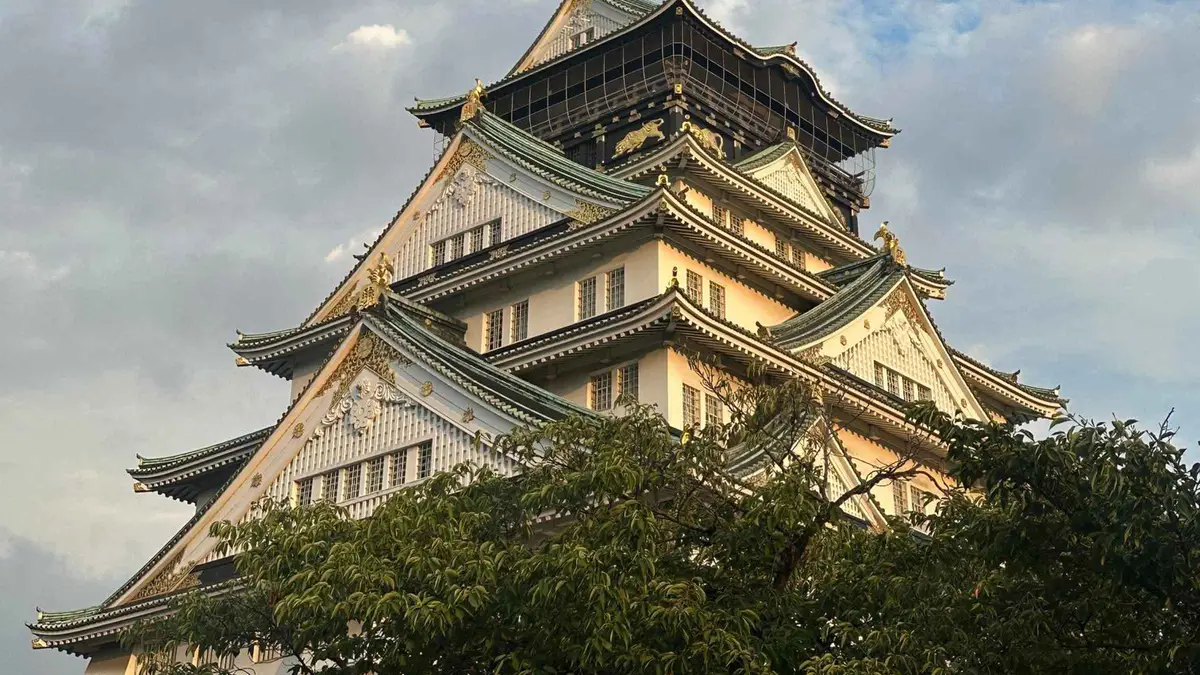 from $49.74
Osaka: Essential City Loop Tour with Local Guide
Five hours in a group of eight covering the castle, the Showa-era backstreets and the neon strip in one loop, with food bought stop by stop instead of a sit-down lunch. Only four people have rated it so far.
Check Availability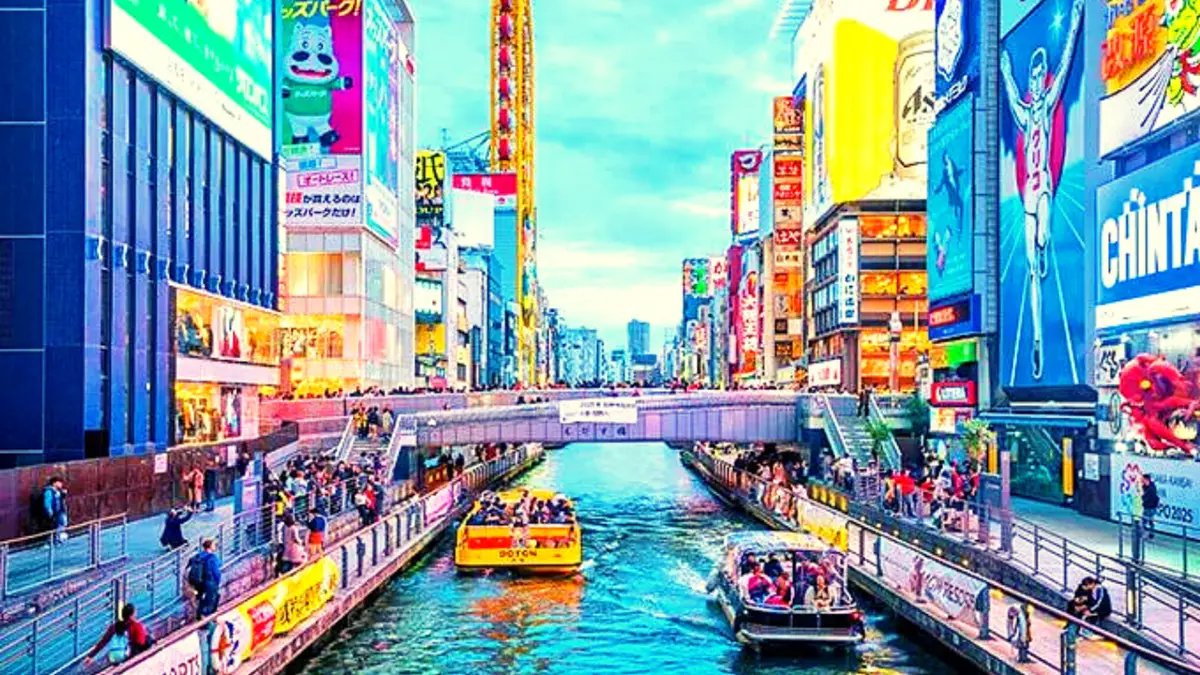 from $35.71
Osaka: Private or Group Hotspots & Hidden Gems Walking Tour
A three-hour walk that stretches to seven if you want it to, private or shared, with a takoyaki and a retro vending-machine drink included. The longer options use trains, which you pay for — usually under ¥1,000 a head.
Check Availability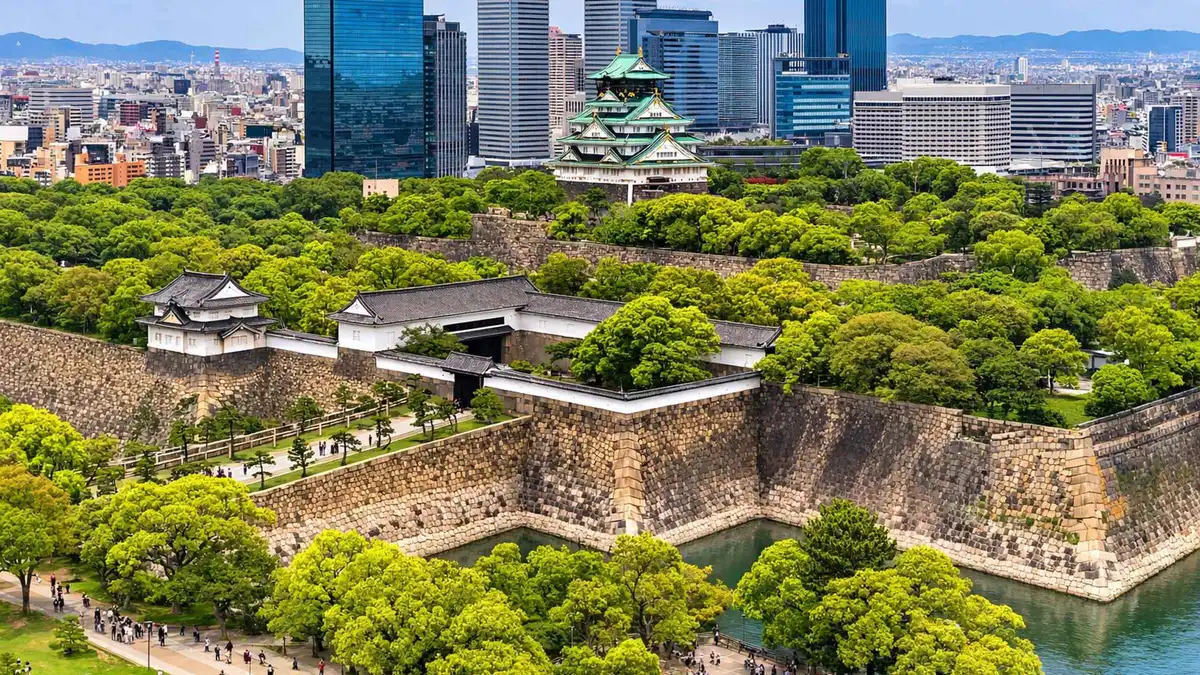 from $54.56
Osaka: Guided Walking Tour with a Native Expert – Top Sights
Four hours linking Osaka Castle, Tsutenkaku and Namba by metro, with the ¥1,200 keep admission included and the ¥430 of train fares not. A Japan Rail Pass buys you nothing here — the route runs on Osaka Metro.
Check Availability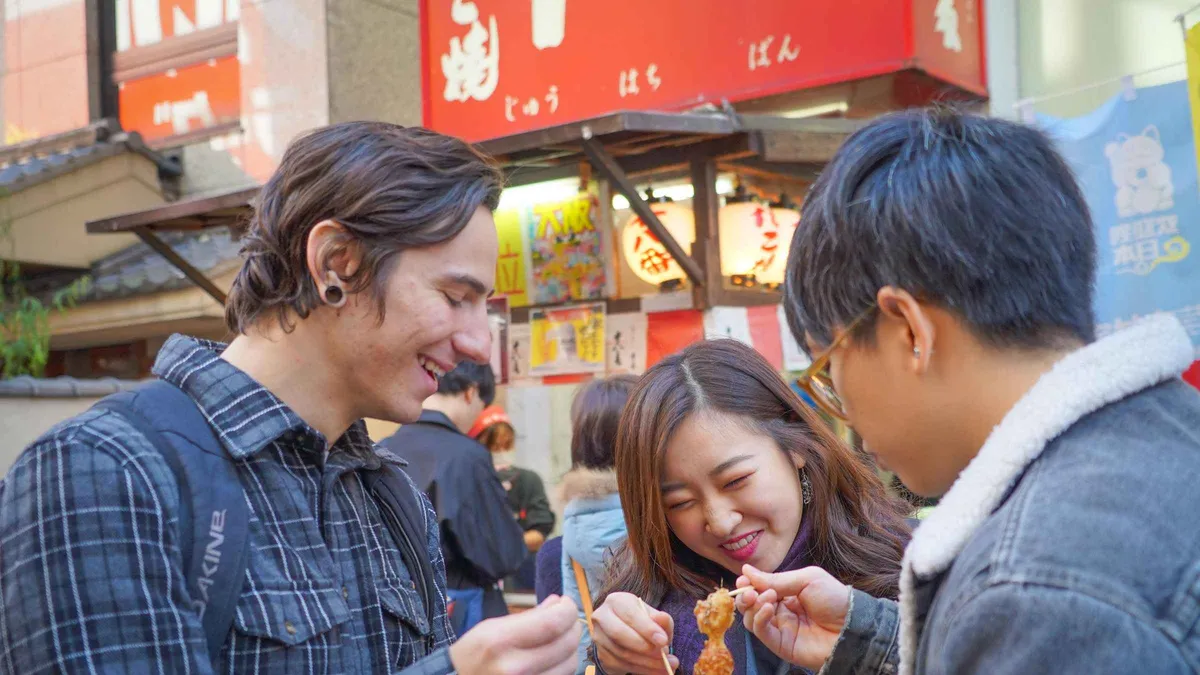 from $104.87
Osaka: Local Foodie Tour in Dotonbori and Shinsekai
Three hours across Shinsekai and Dotonbori taking in kushikatsu, takoyaki and an okonomiyaki you cook yourself, with two drinks. The dearest food walk here, and the ¥190 train fare between the two districts is on you.
Check Availability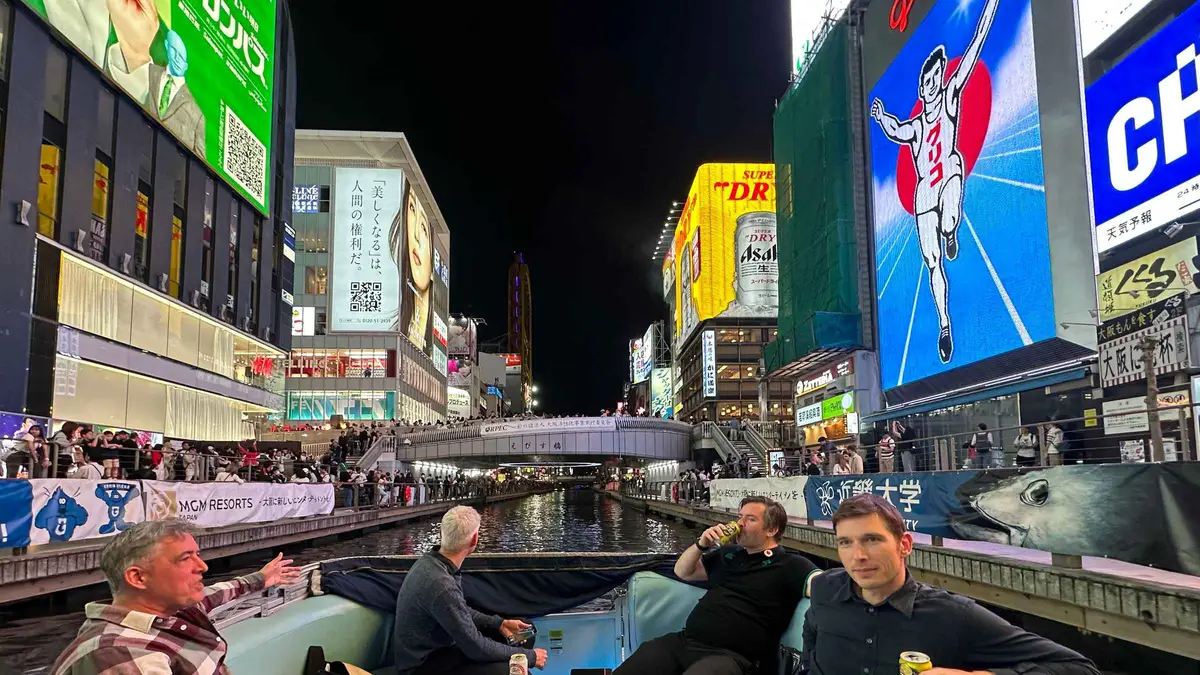 from $12.49
Osaka: Dotonbori River Cruise with Glico Sign & Neon Views
Twenty minutes on the water past the Glico sign, boarding at Minatomachi Pier rather than the Tombori River Walk, and you may bring your own drinks. The rival Tombori River Cruise is free with the Osaka Amazing Pass; this boat is not.
Check AvailabilityPrices, ratings and details are the platform's own. Dollar figures are the listed prices. The platform bills in your account's currency.
Where to Go Next
The districts, one by one
What each area is actually like at street level, beyond the sleeping question: the Osaka neighbourhoods hub.
Kita, Minami and the edgesArriving from the airport
Every route from Kansai and Itami with fares and journey times: Kansai Airport to Osaka.
About 44 minutes to NambaEating where you are sleeping
The dishes, the food streets and the eleven venues a published guide names first: Osaka food. Or start again from Osaka attractions.
Minami is the konamon halfFares, cards and passes
Metro zones from ¥190, the ¥820 weekday day pass and the ICOCA card: getting around Osaka.
¥620 at the weekendWhere to Stay in Osaka: The Questions
Where should I stay in Osaka for the first time?
Minami, around Namba and Shinsaibashi. The food streets, three Metro lines and the direct Nankai train from Kansai Airport — about 44 minutes at base fare — all meet there, so your first evening needs no planning at all. The full case is here, and the areas are set against each other in the comparison table.
Is it better to stay in Kita or Minami?
Minami if you are here to eat and want to walk home from dinner; Kita if you are doing day trips, because Kyoto at ¥580 and Kobe at ¥420 leave from underneath Osaka Station. The one question that settles it is what you will be doing at 22:00 — the reasoning in full. Experienced repeat visitors often stay in Kita and eat in Minami, eight minutes apart on the Midosuji line.
Is there a tourist tax in Osaka, and how much is it?
Yes — a prefectural lodging tax, per person per night, collected at the property rather than by your booking site. Nothing is charged under ¥5,000 a person a night, then ¥200, ¥400 or ¥500 by rate band, in force since 1 September 2025. Most travel pages still print the old ¥100 / ¥200 / ¥300 bands. The table and the exemptions are here.
Where should I stay in Osaka with family?
The Bay at Tempozan if the trip is built around the aquarium and you want larger, quieter rooms, accepting a Metro ride into town for everything else; Tennoji if you want value and an early start; Minami only if your children sleep through noise. Room area matters more than district on a longer stay — the three cheaper edges are compared here.
Is Shin-Osaka a good place to stay?
Only for one reason, and it is a good one: a Shinkansen departure or a late arrival. It is a station district two stops north of Umeda on the Midosuji line rather than a neighbourhood, with the tourist centre on the 3F concourse open 08:00–22:00. Note that the staffed luggage counter there closes permanently on 28 September 2026 — the storage alternatives.
Which area of Osaka is cheapest to stay in?
Tennoji, on the numbers we can cite: it is also the cheapest rail arrival from Kansai Airport at ¥1,300 on the discounted HARUKA, ¥500 less than Umeda or Shin-Osaka. We print no nightly rate bands anywhere on this page because we could not source a rate survey for Osaka we are willing to stand behind. What an outer base really costs you is Metro fares — ¥190 to ¥390 a ride, or ¥820 for a weekday day pass, ¥620 at the weekend.
Do I need a car or a hotel with parking in Osaka?
No. Every area on this page sits on at least two rail lines, the Metro reaches everything a visitor wants, and parking in the centre is expensive and scarce. Buy an ICOCA card — ¥2,000 including a ¥500 refundable deposit, cash only — or issue one in Apple Wallet, and use the fares and passes page to work out whether a day pass beats single fares for your days.
Osaka's Areas on Film, Before You Book One
Three walk-throughs of the same decision this page makes on paper: what Kita, Minami and the outer bases look like at street level, and how loud each of them actually is.
Where to Stay in Osaka Japan: Best Areas Plus Places to Avoid!
The areas filmed in turn, including the streets this page flags as noisy rather than unsafe.
Video: Kensho Quest4 BEST AREAS to Stay in OSAKA & KYOTO • Umeda, Namba, Shin-Osaka
Umeda, Namba and Shin-Osaka compared at street level — the same three bases as our table, seen from the pavement.
Video: THE POOR TRAVELERWhere to Stay in Osaka Japan 2026: 6 Best Areas + Areas to Avoid
A local's run through six districts, useful for how each one feels after dark.
Video: Toshi Guide from JapanVideos load from YouTube only when you press play.
Prices, hours and terms are set by the venue or operator and confirmed at checkout.
We may earn a commission if you book through one of our links, at no extra cost to you. Full affiliate disclosure