 Osaka City Guide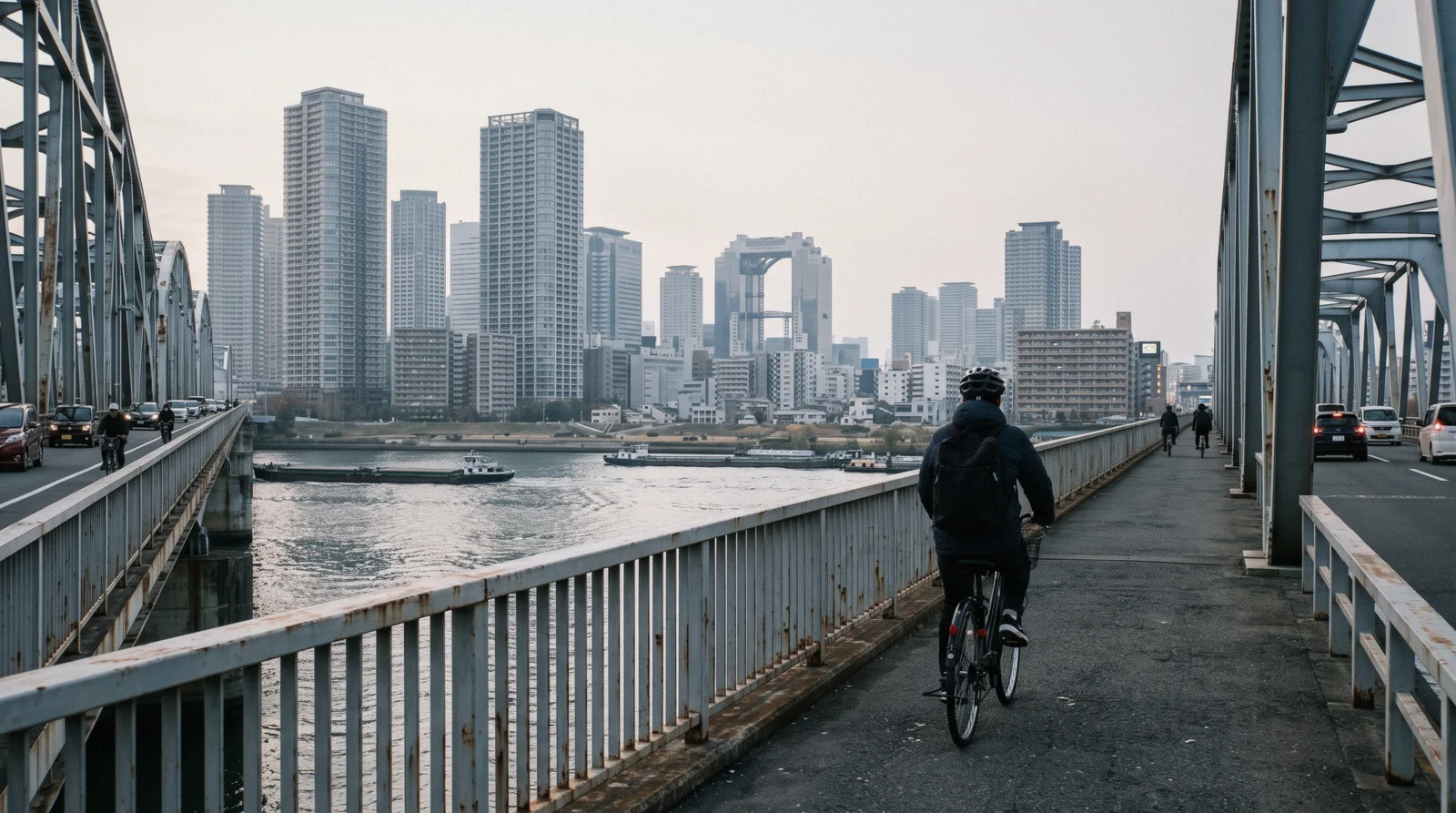
Osaka in 2 Days
Osaka in 2 days works because the city divides along a line rather than a circle. Everything old and loud — the keep, the covered market, the canal, the tower — sits on one north-south axis through the middle; everything wide and modern — the aquarium, the harbour, the arcades and the sky decks — sits on the water and in the north. Give each half a day and you never double back. Give it two loose halves and you spend an hour a day on the Midosuji line for nothing. This page runs the two routes hour by hour from the venues' own published times, with dollar glosses at ¥1,000 ≈ $6.27 — the European Central Bank reference rate of that day. If you have less time, one day compresses the first route; if you have more, three days adds the southern temples and an evening in the dark. For the city as a whole, see things to do in Osaka.
Quick answer The split, the cost, the two bookings — in four lines
Day one runs the central spine: Osaka Castle keep at 09:00, the Museum of History across the road, Kuromon Ichiba for lunch, the Shinsaibashi arcade, a booked Tsutenkaku slot at half past four and Dotonbori after dark. Day two runs the water and the north: Osaka Aquarium Kaiyukan at opening, the Tempozan harbour, the 2.6 km Tenjinbashisuji arcade, then the open-air deck at Umeda Sky Building at sunset. About $55.00 (¥8,770) in admissions and fares across both days, before food.
Key takeaways
- Book two things and only two: a Tsutenkaku time slot, which is now compulsory for every ticket, and a dated aquarium e-ticket — the counter sells the same admission but cannot promise your hour
- The 2-day Osaka Amazing Pass at $31.40 (¥5,000) does pay on this plan, by roughly $12.54 (¥2,000) — but the aquarium and Universal Studios Japan are not on its free list, so price those separately
- Do not split the city by "north in the morning, south in the afternoon". The two halves are 25 minutes apart and the crossing is the only wasted time in this itinerary
- Want the navigation done for you on day one? A five-hour city loop with a local guide at $49.74 covers most of the same spine
How the two days split, and why in that order
Four published facts decide the shape. None of them is a matter of taste.
The castle sets day one's start. The Tenshukaku keep opens at 09:00, stops admitting at 17:30, and — this is the part that changes plans — takes no admission reservations at all. There is no timed ticket and no priority door; the castle says so on its own visitor page. The queue is therefore purely a function of when you turn up, and nine o'clock is when there isn't one.
The aquarium sets day two's start, and it moves. Kaiyukan publishes a different opening and closing time for almost every date, drawn from its own calendar: it opens somewhere between 08:00 and 10:30 and closes between 20:00 and 21:00, with last admission an hour before. It also has no single price — a date falls into one of four bands at ¥2,800, ¥2,900, ¥3,200 or ¥3,500 — and the calendar is only published about two months ahead. Check your date before you plan the morning around it.
Put the water on day two, not day one. Osakako is roughly 25 minutes and a ¥290 zone-3 fare from the centre. That crossing is worth making once, at the start of a day, and is pure waste in the middle of one.
End each day high, but not on the same deck. Abeno Harukas 300 in the south runs to 22:00 and Umeda Sky Building in the north to 22:30 — both outlast every other sight in the city. This plan spends day two's sunset on the Umeda roof because it is the only genuinely open-air deck in Osaka, and leaves Harukas as the day-one option for anyone who would rather see the city from the other end.
What two days in Osaka cannot hold
A full day at Universal Studios Japan and a day trip cannot both be added; on two days, neither can be added without deleting a route. USJ is a whole day by design — a 1-Day Studio Pass starts at $52.70 (¥8,400), Express Passes run from ¥11,800 to ¥21,800 and buy you nothing at the gate without one — and the park was showing 09:00–20:00 hours when we read its calendar. If a theme-park day is non-negotiable, it eats day two whole; the section below sets out what survives.
Day trips are the other trap, and they are cheap enough to tempt: Kyoto is 29 minutes and ¥580 on JR's Special Rapid, Nara 38 minutes and ¥680 on the Kintetsu Express, Kobe 27 minutes and ¥330 on the Hankyu Limited Express. On two days all three are a mistake — that is what the third day is for.
What two days cost before you eat
Six admissions across two days, ten Metro hops and one pass decision. Every yen figure below is the venue's own published gate price, glossed at ¥1,000 ≈ $6.27.
Metro fares are the operator's zone bands — ¥190 up to 3 km, ¥240 to 7 km, ¥290 to 13 km, ¥340 to 19 km, ¥390 beyond — applied to the length of each hop, and the machine at the gate prints the exact figure. Day one keeps to the first two bands; day two's run out to the bay is the only zone-3 hop in the plan. The aquarium line shows the cheapest of its four date bands.
| Item | Yen | USD gloss | Running total |
|---|---|---|---|
| Day 1 — Osaka Castle keep | ¥1,200 | about $7.50 | ¥1,200 |
| Day 1 — Osaka Museum of History | ¥600 | about $3.75 | ¥1,800 |
| Day 1 — Tsutenkaku, timed ticket | ¥1,500 | about $9.40 | ¥3,300 |
| Day 1 — four Metro hops | ¥810 | about $5.10 | ¥4,110 |
| Day 2 — Osaka Aquarium Kaiyukan, lowest band | ¥2,800 | about $17.55 | ¥6,910 |
| Day 2 — Umeda Sky Building observatory | ¥2,000 | about $12.55 | ¥8,910 |
| Day 2 — four Metro hops incl. the run to the bay | ¥860 | about $5.40 | ¥9,770, about $61 |
| Optional — HEP Five ferris wheel | ¥1,000 | about $6.30 | Deduct ¥1,000 if you skip it |
The two-day pass arithmetic, done properly
The Osaka Amazing Pass sells a 2-day version at $31.40 (¥5,000) in its standard form; the ¥5,400 pair is the Itami Airport edition, which adds the monorail from Osaka Airport. The tourism bureau's own comparison page still prints an out-of-date ¥3,600 — take the pass's own site, which carries this year's 25 March 2026 sales window.
On this plan the pass's free list, as its page prints it, carries the castle keep, the Museum of History, the Tsutenkaku deck, the Umeda Sky observatory, the HEP Five wheel and the Tombori River Cruise: ¥6,300 of admissions plus about ¥1,670 of Metro — roughly ¥7,970 of value against a ¥5,000 price. The pass wins by about ¥2,970, and wins again in a way the arithmetic hides, because the cruise and the wheel become free experiments rather than ¥1,000 decisions.
Two conditions. Kaiyukan is not on the free list — the aquarium is a separate ¥2,800–3,500 either way — and neither is Universal Studios Japan. And the two days must be consecutive, each "day" running 03:00 to 02:59 rather than 24 hours from activation.
The transport-only Enjoy Eco Card is ¥820 on a weekday and ¥620 at weekends and public holidays against about ¥810–860 of daily Metro, so it roughly breaks even. The Osaka e-Pass at ¥2,500 covers entries only, with a 30-minute wait imposed between venues — awkward on a plan this tightly sequenced. Everything compared on the tickets page.
Day 1, morning: the keep and the ground under it
Two stops, about 1.5 km on foot and one ¥190 Metro hop at the end. Walking times are ours, paced from the map distances; hours and prices are the venues' own.
-
Osaka Castle keep
$7.52 (¥1,200)Tanimachi 4-chome on the Tanimachi and Chuo lines, then ten minutes through the Otemon gate, past the Sengan turret and across the inner moat. Be at the window when it opens: with no reservation system of any kind, the arrival hour is the only queue control that exists.
The keep is eight floors of museum with a viewing balcony on top, and the lift is a known frustration — it runs up only, as far as floor five, for everyone, with stairs from five to eight and eight back down to one. Wheelchair users and anyone who cannot manage stairs get the lift in both directions on every floor if they ask at the gate. Bag check is ¥100 an item at the ticket window, 09:00 to 17:30, collected by 18:00; there are no lockers inside.
Allow 75 minutes including the walk out along the moat. If the blossom is your reason for coming, Nishinomaru Garden below the keep is now $1.88 (¥300), up from ¥200 on 1 April 2026, with ¥350 for the cherry-blossom evening openings. Its hours are a genuine blank: the park operator's own website is still an unfinished template carrying placeholder text where the garden's opening times should be, so no official source publishes them at all.
walk about 12 min to next
-
Osaka Museum of History
$3.76 (¥600)Across the junction from the castle's south-west corner — eight minutes' walk, which is the whole argument for including it. The Naniwa Palace excavation sits under the building and the upper-floor windows look straight back at the keep.
¥600 for the permanent exhibition, 09:30–17:00 with last admission at 16:30, closed Tuesdays (the following day when the Tuesday is a public holiday) and 28 December to 4 January. An hour is enough. Admission includes a free guided tour of the palace site at 14:00 and 15:00, twenty places, first come — no use on this schedule, but a reason to reshuffle if archaeology is your thing.
The combined castle-and-museum ticket was withdrawn on 27 December 2024 and the castle's Aqua-bus combination on 24 March 2025. Both are still recommended by guides written years ago; neither exists at the window.
On a Tuesday, replace this hour with the castle park itself — the plum grove east of the inner moat holds about 1,245 trees across 105 varieties on 1.7 hectares, it is inside the free part of the park, and the operator runs a per-variety bloom tracker rather than publishing a season.
Day 1, afternoon and evening: market, arcade, tower, canal
Four stops, three short Metro hops and about 4 km on foot, ending on the canal after dark. This is the half of the day where the booking matters.
-
Kuromon Ichiba for lunch
Free to walk; counters roughly $3.14 (¥500)–$12.54 (¥2,000) a plateOne stop down the Tanimachi line to Nippombashi, ¥190, and the arcade begins at the exit: about 580 metres of covered market and around 150 shops on the tourism bureau's count — its own second page says almost 170, which shows how firm the counting is.
What nobody can tell you is when it is open. The market publishes no hours and no closed day: the bureau says "varies by location" for both, and the market association's own site was unreadable, sitting behind a bot challenge that turned away every browser we tried. Any blanket "09:00 to 18:00" you have read is invention. The reliable window is the middle of the day, which is where this plan puts it.
Merchants have sold here since fish from Sakai and Kishu came to Enmyoji temple in 1822–23; the market burned in the Great Namba Fire of 1912 and again in the wartime raids. Eat at the stall you bought from — and keep the cigarettes away: street smoking has been fined ¥1,000 across the whole city since 27 January 2025, heated tobacco included.
walk about 12 min to next
-
Shinsaibashi arcade and Amerikamura
FreeTwelve minutes north-west and you are at the south end of the Shinsaibashi-suji arcade — about 580 metres of roofed shopping street with 380 years behind it, carrying roughly 60,000 people on a weekday and 120,000 at a weekend on the bureau's figures. Its own merchants' association publishes no length, no shop count and no hours, so those numbers are the city's, not the street's.
Turn west two blocks and the register changes completely. Amerikamura grew out of converted warehouses in the 1970s — and that decade is the only date its own association will commit to. No founding year, no boundary, no shop count, no event calendar: a district everyone maps and nobody defines.
This is the flexible hour. In rain, spend it in the arcade and the department-store food halls; in good weather, walk the canal end of Soemoncho; with children, trade it for something else entirely.
walk about 10 to Namba station min to next
-
Shinsekai and the booked Tsutenkaku slot
Tower $9.41 (¥1,500); the streets freeMidosuji line from Namba to Daikokucho and the Sakaisuji line one stop to Ebisucho, ¥190 the whole way. Shinsekai dates from 1903 and the 5th National Industrial Exposition, and it is the one district in Osaka never renovated into politeness.
Tsutenkaku is the booking on this itinerary. Every ticket now needs a timed-entry reservation — the general and special open-air decks are sold only as a ¥1,500 set, and even Amazing Pass holders take a time slot at the counter on arrival. Evening slots go first, which is why a late-afternoon slot booked from home is the version that works. Hours run 09:00 to 21:45, last admission 21:15, outdoor deck to 21:35, and the tower publishes no closed days at all, announcing unscheduled closures only through its official X account.
Underneath, Janjan Yokocho packs about 50 establishments into 130 metres, mostly kushikatsu counters where the single rule is real: one dip in the shared sauce, never a second. A same-day Tsutenkaku ticket also drops Tennoji Zoo from ¥800 to ¥720 until the end of the following month.
walk about 10 to Ebisucho min to next
-
Dotonbori and Hozenji Yokocho after dark
Free to walk; the 20-minute river cruise from $12.49Sakaisuji line back to Nippombashi or Midosuji to Namba, ¥190, and the canal is five minutes' walk either way. The waterway is man-made: the bureau credits Doton Yasui, "who devoted his wealth to have this river excavated in 1612".
About the sign every visitor photographs, the honest line is that no official source publishes anything at all — not its height, not which generation is lit, not a switch-on time. The bureau mentions it among "giant three-dimensional signs" and says no more.
Two minutes south, Hozenji Yokocho is a lantern-lit flagstone lane the bureau does not mention on its Dotonbori page, with a moss-covered Mizukake Fudo that takes a ladle of water instead of a coin.
On dinner the site's rule holds: the MICHELIN Guide's 2026 Bib Gourmand selection for Osaka contains no takoyaki and no okonomiyaki venue among its 67 addresses, so neither dish gets a named shop here. Pick the counter with the local queue, or let the 20-minute Tombori River Cruise — free on the Amazing Pass — fill the gap while you decide.
Day 2, morning: the bay
Two stops on the water, about 1 km of walking and one ¥290 zone-3 Metro hop to get there. Check the aquarium's own calendar for your date before you set an alarm — its opening time moves between 08:00 and 10:30.
-
Osaka Aquarium Kaiyukan
$17.56–$21.90 (¥2,800–¥3,500) by dateChuo line to Osakako, ¥290 from the centre, then five minutes on foot. Kaiyukan is the one major Osaka attraction with no single price: every date falls into one of four bands — ¥2,800, ¥2,900, ¥3,200 or ¥3,500 for adults, with children aged 7–15 at ¥1,400 to ¥1,800 and 3–6 at ¥700 to ¥900 — and the calendar is published only about two months ahead.
Hours move the same way: it opens between 08:00 and 10:30, closes between 20:00 and 21:00, and admits until an hour before closing. The venue's own advice is unusually direct — buy the dated, timed e-ticket, because a counter ticket may not admit you at the hour you want. Its only published closure is 13 and 14 January 2027.
The building is a single descending spiral around a central tank, so the visit has a fixed direction and a natural length: two to two and a half hours in our routing, though as with every Osaka venue except the Science Museum's planetarium, the operator publishes no duration. Wheelchairs are lent at the information desk by the ticket window and at the third-floor counter, in limited numbers. Pass holders: Kaiyukan is not on the Amazing Pass free list.
walk about 6 min to next
-
Tempozan waterfront and lunch
Free to walk; the harbour attractions priced separatelyThe harbour square outside the aquarium is the only part of Osaka that looks like a port city. The giant ferris wheel, the market hall and the Santa Maria cruise boat all sit within a few hundred metres, and the wheel and the Santa Maria's day and twilight sailings are on the Amazing Pass free list — which is where a pass day quietly earns back its price.
Eat here rather than holding out ninety minutes for the arcades: the crossing back into town is 25 minutes, and doing it hungry makes the next stop worse.
This is also the natural swap point for families, because Universal Studios Japan is two stops away on the JR Yumesaki line from Nishikujo. A family that starts here at ten and reaches the park at one is having a much worse day than one that gave USJ the whole of day two. Read the section below before improvising it.
Day 2, afternoon and evening: the long arcade and the open-air deck
Three stops in the north, about 3.5 km on foot, ending 173 metres up in the open air. Two ¥190–240 Metro hops connect them.
-
Tenjinbashisuji, the long arcade
FreeChuo line back to Hommachi and the Tanimachi line north to Minamimorimachi, about ¥290 in total, and the arcade runs from the station exit. About 2.6 kilometres and roughly 800 shops on the tourism bureau's figures — the longest covered shopping street in Japan, as everybody including the bureau repeats.
The part worth knowing: no public authority certifies that claim. The street's own website covers only the 2-chome and 3-chome blocks and publishes neither a length nor a shop count; the only body that has ever certified the record is the Japanese Records Certification Association, a private register, which lists 2.6 km and gives no certification date. Probably true; definitely not official.
This is the least touristed hour in the two days — knife shops, tea sellers, standing bars open at three, coffee at prices the canal has forgotten. Walk 15 minutes of it from the southern end, so Osaka Tenmangu, the gate-town origin of the whole street, is a two-minute detour. Its festival, Tenjin Matsuri, falls on 24 and 25 July 2026, with the processions and votive fireworks on the Saturday.
walk about 8 to Minamimorimachi min to next
-
Umeda, HEP Five and the food halls
Ferris wheel $6.27 (¥1,000); walking freeOne stop on the Tanimachi line to Higashi-Umeda, ¥190, and you are in the densest retail block in western Japan. The HEP Five ferris wheel is ¥1,000 a head, runs 11:00 to 23:00 with last boarding at 22:45, and takes ¥200 off for holders of a Hankyu-Hanshin Odekake or STACIA card; under-6s ride free. Two 2026 dates to avoid: 17 September for its scheduled inspection and 15 October, when the building closes.
More useful than the wheel, for most people, are the department-store basement food halls — which is where to buy dinner if you would rather picnic on the roof than sit down after it. This hour is the deliberate slack in the plan, because the next stop is best at a time you cannot control.
walk about 15 min to next
-
Umeda Sky Building, the Floating Garden Observatory
$12.54 (¥2,000)Fifteen minutes on foot from Osaka Station, most of it through a pedestrian underpass. ¥2,000 for adults, ¥500 for children from four to elementary-school age, under-fours free, and half price for a disability-certificate holder plus the same number of companions. Open 09:30 to 22:30 with last admission at 22:00 — the longest hours of any sight in this itinerary.
One warning the venue itself gives, and the reason people miss their slot: the observatory has its own dedicated entrance, and it is not inside the building. The Tower East and Tower West lifts do not reach it. Follow the observatory signs at ground level rather than walking into the nearest lobby.
What you are paying for is the only open-air deck in Osaka — a ring on the roof at 173 metres, uncovered, with the escalator crossing the void between the two towers to get there. Sunset is the hour; the city grid lighting up to the south and the bay going dark to the west is a genuinely different photograph from the glass boxes.
Two dates in the diary: it closes early at 19:00 on 8 November 2026 and at 18:00 on 18 April 2027, and it runs a web-ticket-only 06:00 sunrise opening at New Year. The observatory is on the Amazing Pass free list. If you would rather do this stop as a night walk with a guide, the Umeda Sky and Shinsekai neon evening pairs it with the other end of the city.
Plan B: closed days and the swaps that cost you least
Osaka's closed days contradict each other, which is the most common way a two-day plan loses an afternoon. These are the venues' own published closures, read on in Q3 2026, with the substitution we would make and what it does to the day's cost.
| Venue | Closed | The swap we would make | Cost effect |
|---|---|---|---|
| Osaka Museum of History | Every Tuesday | Stay in the castle park — the plum grove and Nishinomaru Garden — and start the market hour early | $1.88 (¥300) instead of $3.76 (¥600) |
| Tennoji Zoo | Every Monday | Not on this two-day plan; if you have swapped it in, use Shitennoji instead, which admits until 16:00 | $3.14 (¥500) instead of $5.02 (¥800) |
| Osaka Science Museum, National Museum of Art | Every Monday | Both are on Nakanoshima, both shut the same day — take the aquarium morning instead, which has no weekly closure | $17.56 (¥2,800) instead of $2.70 (¥430)–$3.76 (¥600) |
| Cup Noodles Museum, Ikeda | Every Tuesday | Out of the city on the Hankyu line, so it belongs to three days rather than two | Free either way |
| teamLab Botanical Garden | Irregular Mondays — 14 and 28 September, 26 October 2026 | The Umeda Sky roof does the same job after dark and is open every night to 22:30 | $12.54 (¥2,000) instead of $11.29 (¥1,800)–$15.05 (¥2,400) |
Nothing on the core two-day route closes weekly: not the castle, the market, the arcades, the tower, the aquarium or either deck. The dated closures that do bite are 28 December to 1 January at the castle, 28 December to 4 January at the Museum of History, and 13–14 January 2027 at the aquarium.
If one of your two days is Universal Studios Japan
It is the single most common two-day reshuffle in Osaka, and it works — as long as you accept that it deletes a route rather than compressing one.
Give the park day two, whole. It replaces the bay, the arcade and the deck in one move, at a price you should see before deciding: a 1-Day Studio Pass starts at $52.70 (¥8,400), child from ¥5,500, senior from ¥7,600, under-4s free. USJ never prints a flat figure — every price on its own site reads "from", because it moves with demand, and the park says only its WEB Ticket Store shows the current one.
Express Passes are separate tickets and do not admit you to the park. They run from ¥11,800 to ¥21,800 depending on how many attractions they cover, go on sale about two months ahead, are capped in number, and some lock you to an experience time chosen at purchase. Only the ¥21,800 Express Pass 7 carries a Super Nintendo World area-entry guarantee. USJ states the "you still need a Studio Pass" rule at the top of its own Express page, which tells you how often people get it wrong.
Park hours are published only as a date-by-date calendar; the site header read 09:00 to 20:00, with a warning that hours change without notice. Neither the Amazing Pass nor the e-Pass covers any of it.
What survives is day one exactly as written — that route is the city, and it is the one to keep. What you lose is the aquarium and the open-air roof. If you cannot give up either, you are planning a three-day trip: the three-day page fits both without breaking either.
The other reshuffle: two days with children
Keep the aquarium morning; it is the strongest stop here for anyone under twelve, and the spiral layout means nobody has to be dragged back through a room. Cut Tenjinbashisuji, which is two and a half kilometres of adult shopping, and cut the Shinsaibashi hour on day one.
In their place: the Tempozan wheel and the Santa Maria sailings on the bay, both free with an Amazing Pass, or Spa World beside Shinsekai — ¥2,000 on a weekday and ¥2,700 at weekends and public holidays with the pool, ¥1,200 or ¥1,700 for elementary-school children and under, with water slides extra at ¥500 a ride or ¥1,500 for the day.
One warning about the castle keep with a pram: the venue discourages prams inside and takes them free at the ticket gate, and the up-only lift means the eighth-floor balcony involves stairs. With a toddler, do the moat and the outer bailey and skip the climb.
Five practical things that decide how these two days feel
Each of these is something we watched a published guide get wrong while researching this page.
1. There is no free wifi in the stations. Osaka Free Wi-Fi was withdrawn from every Metro, Kintetsu, Keihan and Nankai station on 31 March 2023, after the carriers pulled their service, and nothing replaced it. The tourism bureau's own visitor page still claims otherwise; the termination notice is newer and more specific, and Osaka Metro confirms it. Mobile signal does reach every subway station and the tunnels between them, so an eSIM solves it.
2. One card covers every operator in this plan. ICOCA works across JR West, Osaka Metro, Hankyu, Hanshin, Keihan, Kintetsu, Nankai and the buses. A plastic card is ¥2,000 including a ¥500 deposit and the machines take cash only; ICOCA in Apple Wallet has worked with an overseas-issued card since 27 June 2023, minimum first top-up ¥1,000. There is no Google Wallet version.
3. Left luggage is a solved problem. Osaka Metro's smart lockers at Hommachi and Nipponbashi are free under an hour, then ¥300 for three hours in the small size and ¥900 for 24 hours, with hotel delivery from ¥1,900 for bags dropped by 14:00. Staffed counters: n·e·s·t at Nankai Namba ¥800 an item a day, Crosta Osaka ¥1,000. The Shin-Osaka Luggage Station closes permanently on 28 September 2026.
4. The lodging tax changed and most sites print the old bands. Osaka Prefecture charges per person per night: nothing below ¥5,000, then ¥200, ¥400 and ¥500 as the room rate crosses ¥5,000, ¥15,000 and ¥20,000, in force since 1 September 2025. The ¥100/¥200/¥300 bands elsewhere are two years out of date.
5. Street smoking is a ¥1,000 fine, city-wide, since 27 January 2025, covering roads, squares, parks and other public places the city manages — heated tobacco included. Once the cards, luggage and wifi are sorted, the best tours in Osaka cover the ground this two-day itinerary leaves out, with guided options listed at best tours in Osaka.
Guided versions of these two days
Three of these replace a half-day of navigation, three are single tickets that save a counter queue on a stop this plan already includes. Prices are the platform's own USD listings, and are what you pay at checkout — the yen figures elsewhere on this page are the venues' gate prices.
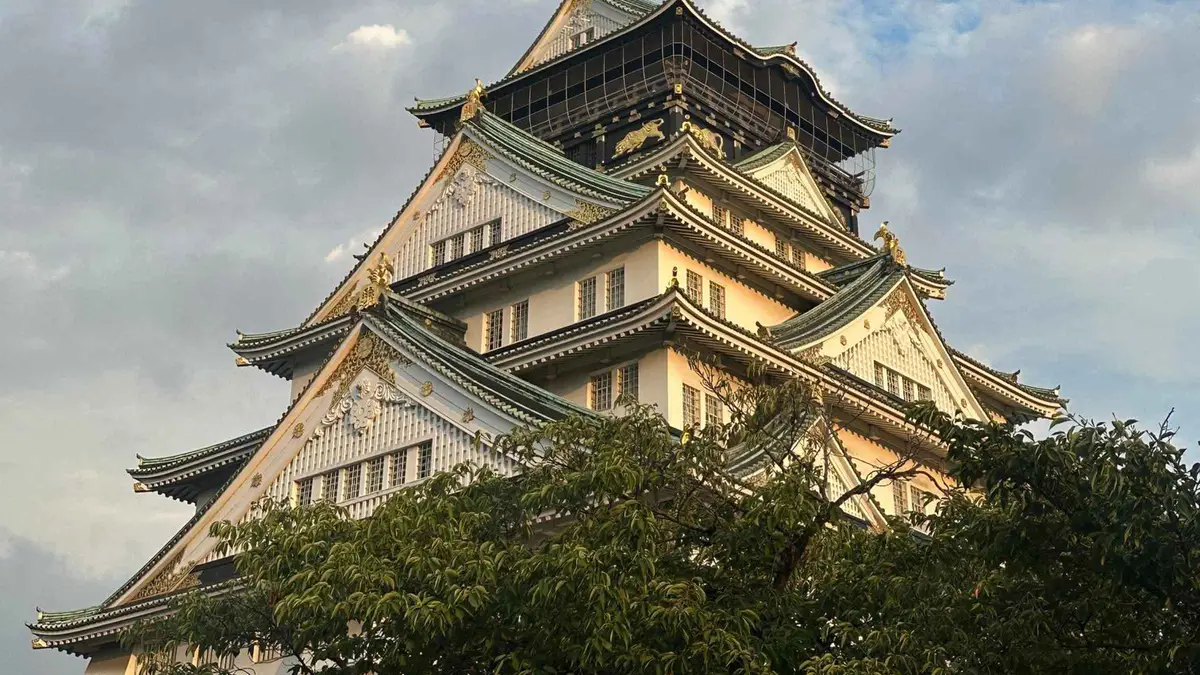 from $49.74
Osaka: Essential City Loop Tour with Local Guide
Five hours in a group of eight covering the castle, the Showa-era backstreets and the neon strip in one loop, with food bought stop by stop instead of a sit-down lunch. Only four people have rated it so far.
Check Availability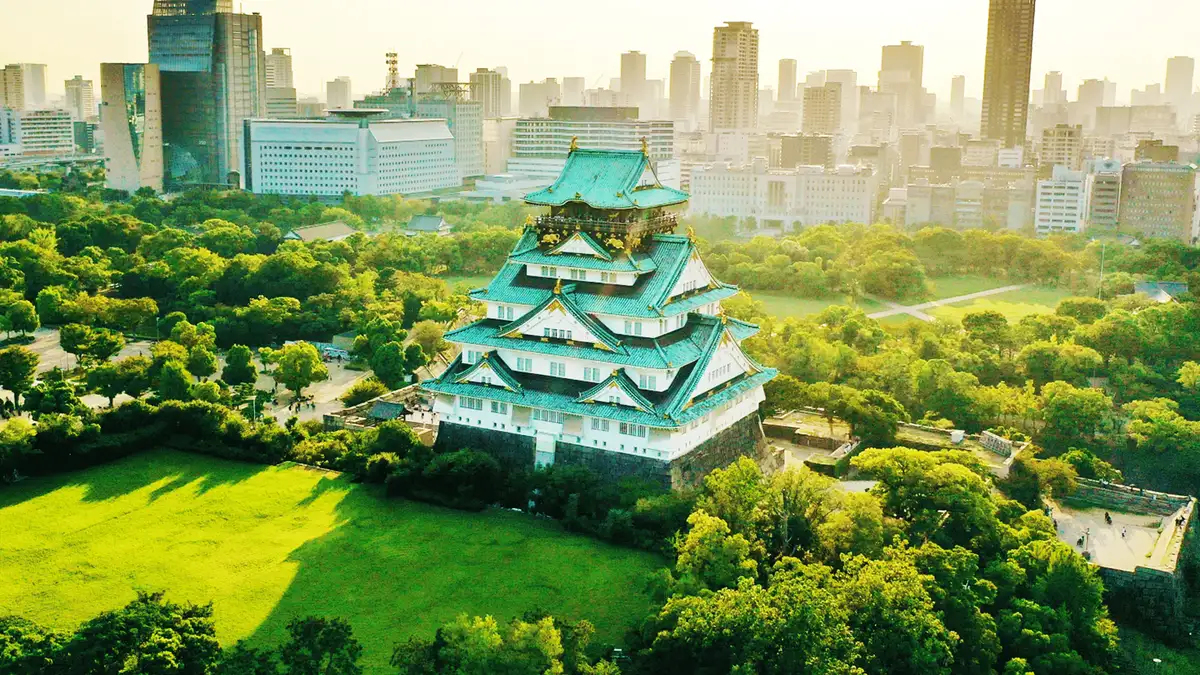 from $17.79
Osaka: Castle Tower Admission / Guided Walking Tour
An hour to 90 minutes through the keep's floors with the ¥1,200 admission included, so the guiding costs about ten dollars on top. Best rated of the castle group, and the museum's Japanese-heavy display captions are the reason a guide earns its fee.
Check Availability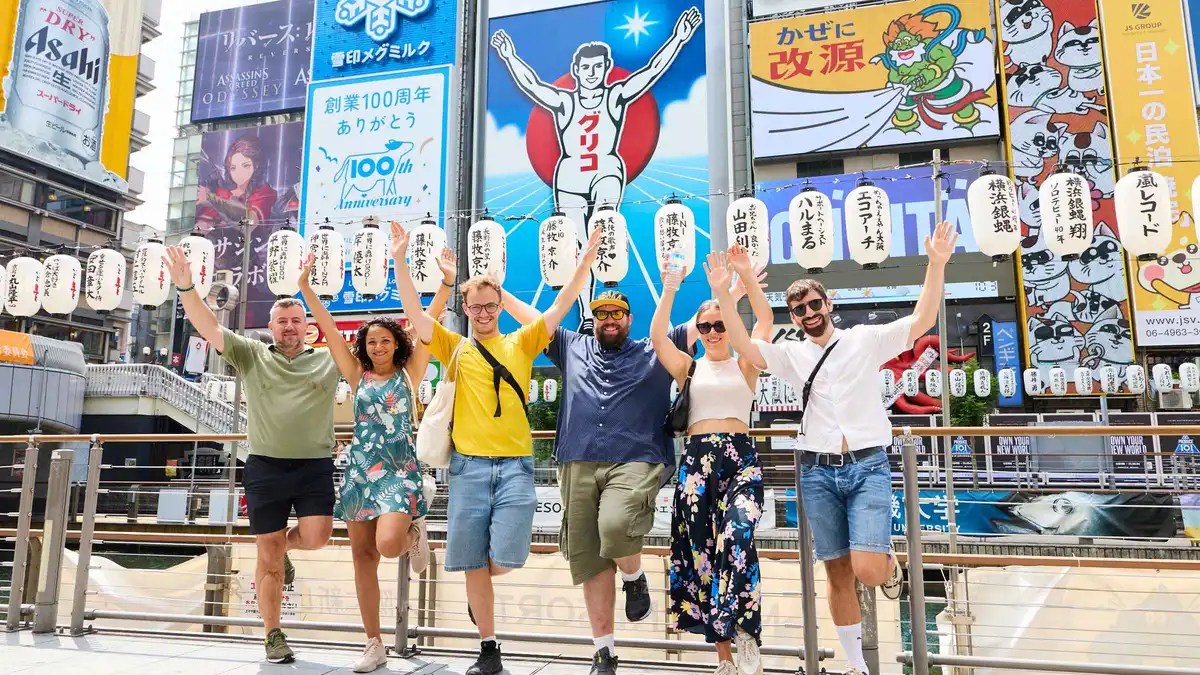 from $17.48
Osaka Walking Tour: Dotonbori, Kuromon Market & Street Food
Two and a half hours from Shinsaibashi through Hozen-ji, Kuromon Market and Den Den Town with a licensed guide and some food included. Cheap for a guided walk, but only 23 people have rated it so far.
Check Availability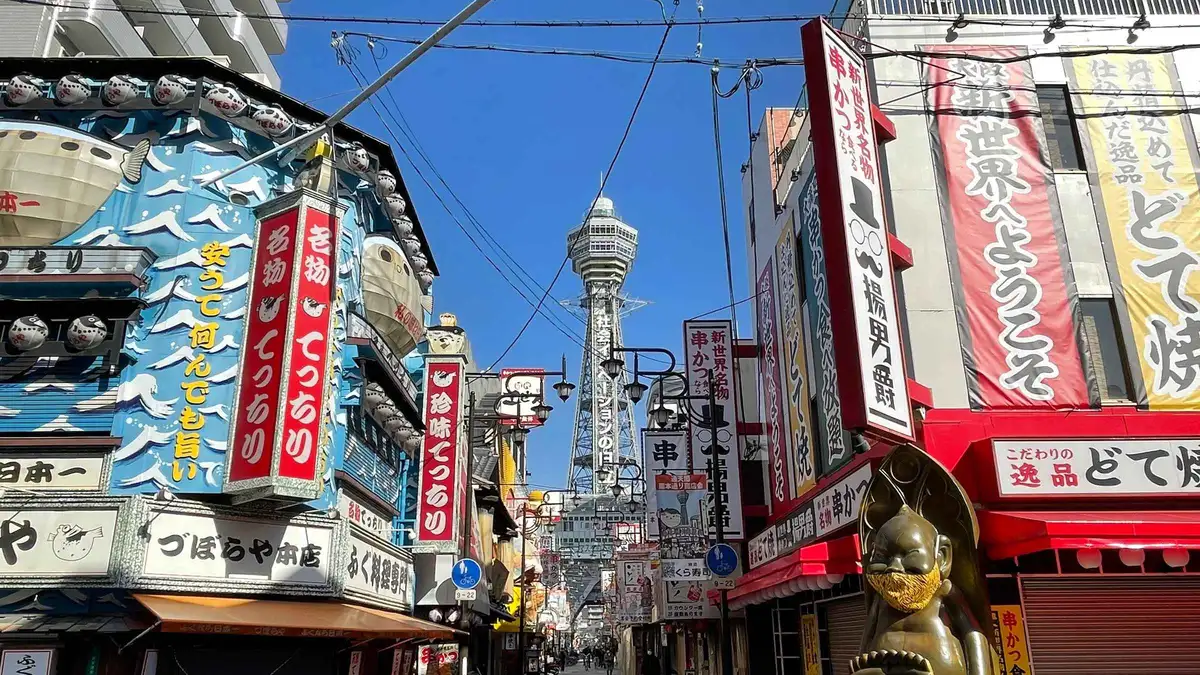 from $6.87
Official ticket
from $6.87
Official ticket
Osaka: Tsutenkaku Tower Experience Ticket
Options run from the 87.5-metre general deck up to the all-in ticket with the outdoor deck, the Tower Slider and Dive & Walk. The tower now requires a timed reservation for every ticket, pass holders included, so booking a slot is the point.
Check Availability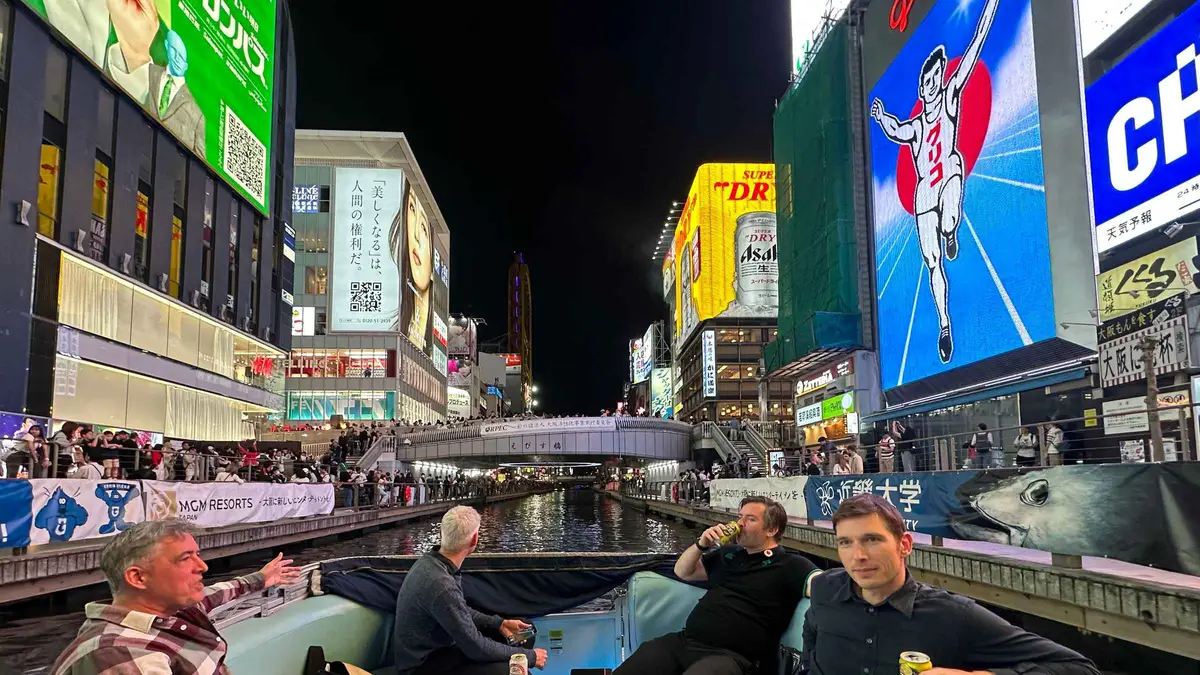 from $12.49
Osaka: Dotonbori River Cruise with Glico Sign & Neon Views
Twenty minutes on the water past the Glico sign, boarding at Minatomachi Pier rather than the Tombori River Walk, and you may bring your own drinks. The rival Tombori River Cruise is free with the Osaka Amazing Pass; this boat is not.
Check Availability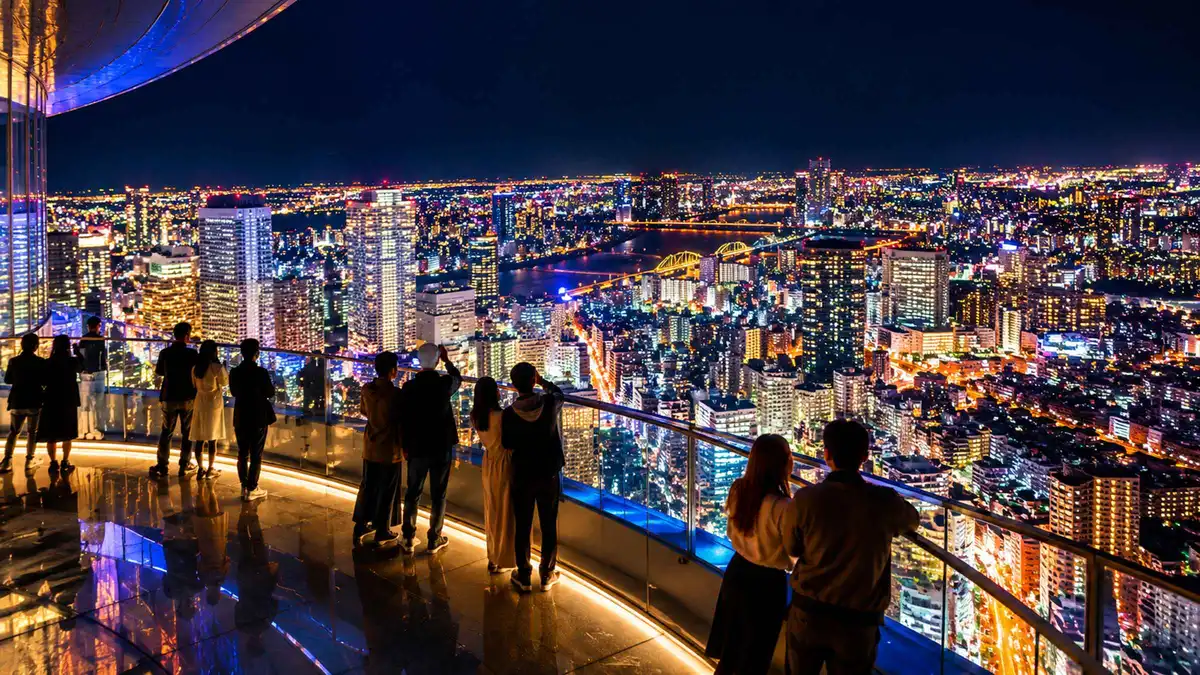 from $69.92
Osaka Night: Umeda Sky Building + Shinsekai Neon
Timed for sunset on the open roof at Umeda, then down into the Shinsekai neon, with the observatory ticket included and the guide taking your photographs. A new listing, so there are no ratings behind it yet.
Check AvailabilityPrices, ratings and details are the platform's own. Dollar figures are the listed prices. The platform bills in your account's currency.
Both days, mapped
Day one in red down the central spine, day two in blue from the bay to the northern arcades. Coordinates are the venues' own where they publish them; where they do not, the pin sits on the station or district point that venue's page names.
Shorter, longer, or the same stops in detail
Where this plan sits between the other two, and where each stop is written up in full.
Osaka in one day
Day one of this plan, tightened, with the Abeno Harukas deck at sunset instead of an arcade hour.
CompressedOsaka in three days
Adds the southern temples, the shrine with no published admission, a dated evening at teamLab and the choice between a day trip and the theme park.
Day threeEvery sight, priced
What these two days leave out, each entry with its own gate price, hours and closed day.
The full listPasses and tickets compared
The Amazing Pass, the e-Pass and the Enjoy Eco Card against the gate prices, with the arithmetic for a two-day trip.
Before you goTwo days in Osaka: the questions
Is 2 days in Osaka enough?
For the city itself, comfortably. Two days is the length at which Osaka stops feeling rushed: one day carries the castle, the market, the arcades, the tower and the canal, and the second carries the aquarium, the harbour, the long arcade and an open-air deck at sunset — with slack in both afternoons. What two days cannot absorb is a full day at Universal Studios Japan or a day trip to Kyoto or Nara. Either of those makes it a three-day trip in practice, whatever the calendar says.
How should you split two days in Osaka?
By geography, not by theme. The central spine — castle, Kuromon Ichiba, the arcades, Shinsekai, the canal — is one day, and the bay plus the northern district is the other. The crossing between them is about 25 minutes and a ¥290 Metro fare, so it is worth making once at the start of a day and never in the middle of one.
What needs booking in advance for two days in Osaka?
Two things. Tsutenkaku now requires a timed-entry reservation for every ticket, pass holders included, and its evening slots sell out first. The aquarium is not compulsory to book, but it prices and times by date and says plainly that a counter ticket may not admit you at your chosen hour. Everything else on this plan is pay-at-the-gate, and the castle takes no reservations at all.
How much do two days in Osaka cost?
About ¥9,770, roughly $61, for both routes as written, including the ferris wheel and before any food; drop the wheel and it is ¥8,770, about $55. With a 2-day Osaka Amazing Pass at ¥5,000 carrying the castle, the museum, the tower, the Umeda deck, the wheel and the river cruise, plus the aquarium bought separately at ¥2,800, the same two days come to about ¥7,800 — roughly $49. Add ¥4,000–10,000 for meals. Figures at ¥1,000 ≈ $6.27.
Does a two-day city pass beat paying at each gate?
On this plan, yes, by roughly ¥2,970. The 2-day pass is ¥5,000 in its standard form and the entries it covers here — the castle keep, the Museum of History, the Tsutenkaku deck, the Umeda Sky observatory, the HEP Five wheel and the Tombori River Cruise — come to ¥6,300 at the gate, before about ¥1,670 of Metro fares. Two caveats: the aquarium and Universal Studios Japan are not on the free list, and the two days must be consecutive, with each "day" running 03:00 to 02:59 rather than 24 hours from activation.
Can you see Kyoto or Nara on a two-day Osaka trip?
You can — Kyoto is 29 minutes and ¥580 on JR's Special Rapid, Nara 38 minutes and ¥680 on the Kintetsu Express — but you should not. On two days, either trip deletes a whole route and leaves you with a thin version of both cities. That is the argument for the three-day plan, which has a day built for exactly this.
Which two days of the week are best for this Osaka itinerary?
Any pair that avoids putting a museum day on a Monday or a Tuesday. Mondays close Tennoji Zoo, the Science Museum and the National Museum of Art; Tuesdays close the Museum of History and the Cup Noodles Museum. Nothing on the core two-day route has a weekly closure — the castle, the market, the arcades, the tower, the aquarium and both decks all open every day — so the fix is a swap rather than a rebuild. The plan-B table has each one.
Two days in Osaka, on film
Three videos we checked ourselves: each id was verified against YouTube's own record and its thumbnail, so none of these is a dead player. They load only when you press play.
2 Days in Osaka, Japan - The Perfect Itinerary!
A two-day split close to this one, filmed stop by stop.
Video: Town Travel TipsOsaka Travel Guide 🇯🇵 What to Eat, See & Do in 2 Days
Heavier on the eating half of the two days than this page is.
Video: Mike and Ashley2 days in Osaka, Japan | 48 Hours of Eating, Shopping, Cafes & City Views | Japan Travel VLOG
Useful for the pace: 48 hours at the speed a visitor actually moves.
Video: Sol LifeVideos load from YouTube only when you press play.
Prices, hours and terms are set by the venue or operator and confirmed at checkout.
We may earn a commission if you book through one of our links, at no extra cost to you. Full affiliate disclosure